Selecting a white marble dining table for your dropshipping store or wholesale catalog requires more than just aesthetic appeal; it demands a rigorous understanding of material variations, structural integrity, and supply chain logistics. As an importer sourcing from China, you are likely evaluating two dominant stone types: Carrara and Calacatta. While both fall under the umbrella of white marble, their veining patterns, density, and market positioning differ significantly. A high-end retailer needs to know exactly what they are getting to avoid customer returns due to “unmet expectations.” This guide breaks down the technical specifics of these stones to help you build a profitable inventory line without compromising on quality.
Understanding Stone Variations: Carrara vs. Calacatta
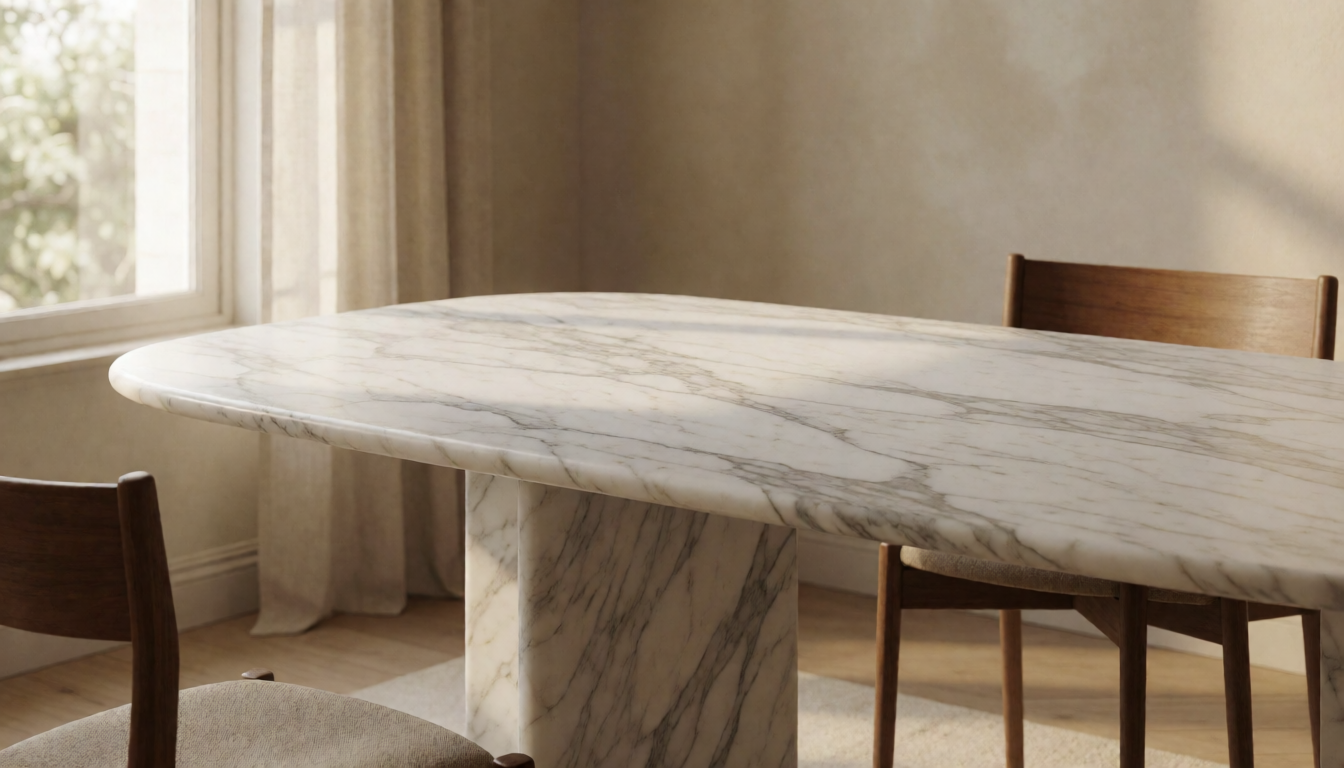
The primary distinction lies in the veining and mineral composition, which directly impacts pricing and perceived value. A typical carrara dining table features soft, gray-blue veins that are relatively uniform. The stone is generally denser and more resistant to acid stains compared to other white marbles, though it can still scratch under heavy knife use. In the wholesale market, this variety often commands a lower price point because of its wider availability in quarries like Tuscany and India.
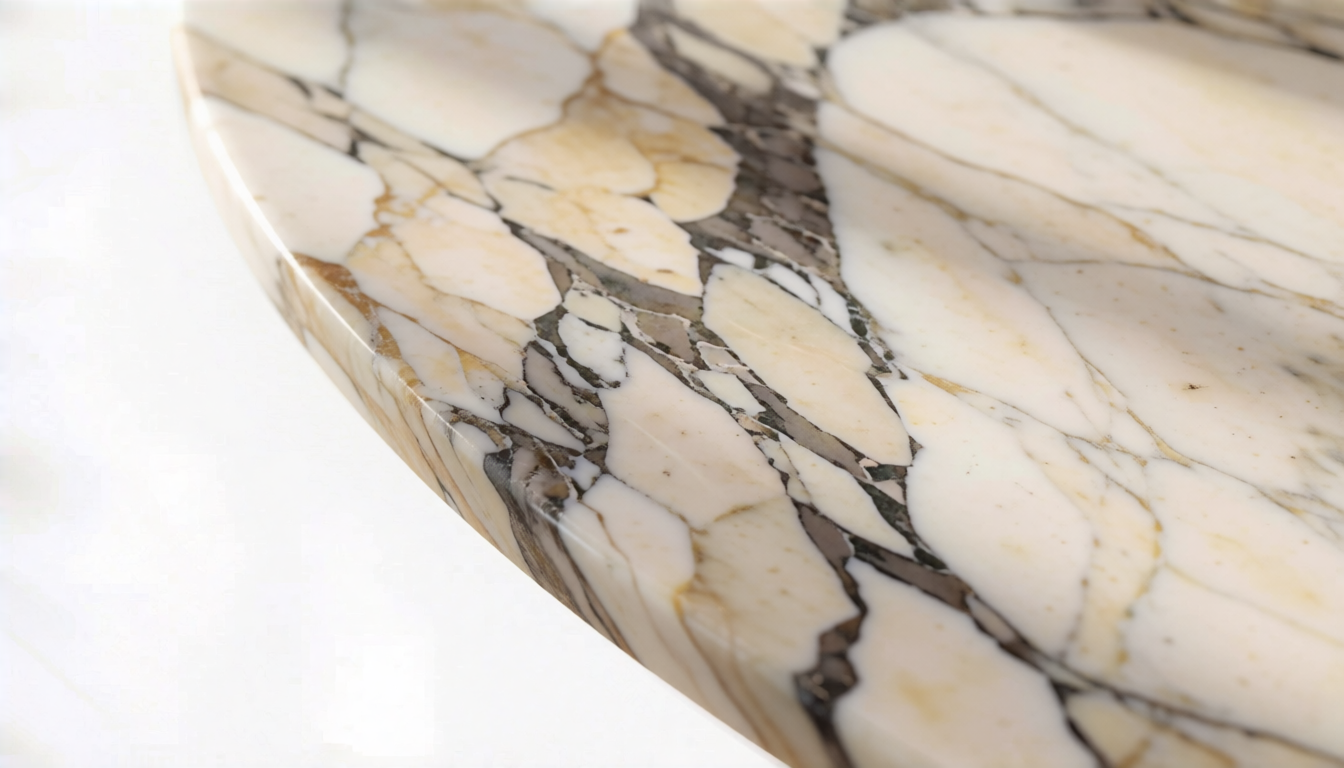
Conversely, a calacatta table is characterized by stark white backgrounds with bold, dramatic veins in gray or gold. The veining can be linear or cloud-like, offering a much higher degree of visual uniqueness. However, Calacatta marble is softer and more porous than Carrara, making it susceptible to etching from citrus juices or vinegar unless sealed correctly. For dropshippers targeting the US luxury market, Calacatta usually carries a premium price tag roughly 20% to 30% higher than Carrara of similar dimensions. When negotiating with a factory like Gladystone, you must specify which vein pattern your customers expect, as mixing these two in the same SKU description leads to disputes.
Structural Engineering and Dimensions
Beyond the stone surface, the engineering of the table is critical for preventing breakage during long-distance shipping from China to Europe or the US. A standard white marble dining table designed for commercial use typically measures 180 cm to 240 cm in length, with widths ranging from 90 cm to 120 cm and heights at 75 cm.
The weight is a major logistical factor. A solid slab top for a 180×90 cm table can weigh between 150 kg and 250 kg depending on the thickness (usually 2cm or 3cm) and stone density. This heavy load requires reinforced packaging, often involving double-layered plywood with corner protectors and heavy-duty air pillows. Expect lead times of 25 to 40 days for standard stock sizes, while custom cuts may extend this to 60 days.
When asking a manufacturer about structural integrity, request details on the base materials. Steel bases with powder-coated finishes offer better stability than solid wood legs, which can warp over time. For high-end lines, consider specifying a “floating” design where the stone slab is supported by hidden brackets, reducing the visual bulk while maintaining strength. Always verify the factory’s ability to reinforce internal supports for slabs exceeding 200 cm in length to prevent sagging under weight.
Cost Factors and Profit Margins
Understanding what drives the unit cost allows you to calculate realistic profit margins for your B2B clients. The raw material cost fluctuates based on quarry output, but labor and finishing processes add significant value. A typical price range for a bare slab is roughly $40 to $60 per square foot depending on the quality of the marble. However, once cut, polished, edged, and assembled with a base, the finished unit price increases substantially.
For a 180×90 cm carrara dining table, wholesale prices in China might range from $350 to $450 USD per unit for basic finishes. A premium calacatta version could jump to $550 to $700 USD or higher, reflecting the rarity of the stone and the complexity of matching veining patterns. These figures exclude shipping and duties, which can easily add another 30% to 40% to the landed cost when importing into the EU or US.
To maximize margins, focus on value-added services rather than just lowering unit costs. Ask suppliers about custom edging profiles (e.g., bullnose, ogee, or beveled edge), which can increase perceived luxury without drastically raising material costs. Also, inquire about packaging that minimizes damage rates; shipping losses destroy profitability faster than a slightly higher unit cost. Negotiate MOQs (Minimum Order Quantities) based on your sales velocity rather than the factory’s standard batches to reduce inventory risk.
Quality Control and Customer Trust
Your reputation as an importer hinges on consistent quality. When sourcing from a B2B partner, establish clear protocols for inspecting stone before sealing or shipping. Look for factories that offer pre-shipment video inspections where they show the specific slab ID and vein pattern of every piece in your order. This transparency is crucial when selling online, as customers cannot physically touch the product.
Common failure points include hidden cracks (crazing) and uneven polishing. A professional finish should be high-gloss or honed uniformly across the entire surface. Ask the manufacturer to seal the stone with a penetrating sealer, which adds a layer of protection against staining. This step is non-negotiable for white marble products destined for busy households with children or pets.
Finally, ensure your supplier understands the cultural nuances of Western interior design. A calacatta table might be marketed as “luxury,” but if it arrives with rough edges or inconsistent coloring that looks like a defect rather than natural variation, returns will mount quickly. Clear communication regarding acceptable stone variations is essential. By defining these parameters upfront, you protect both your brand image and your bottom line while delivering the classic elegance of marble to your end customers.