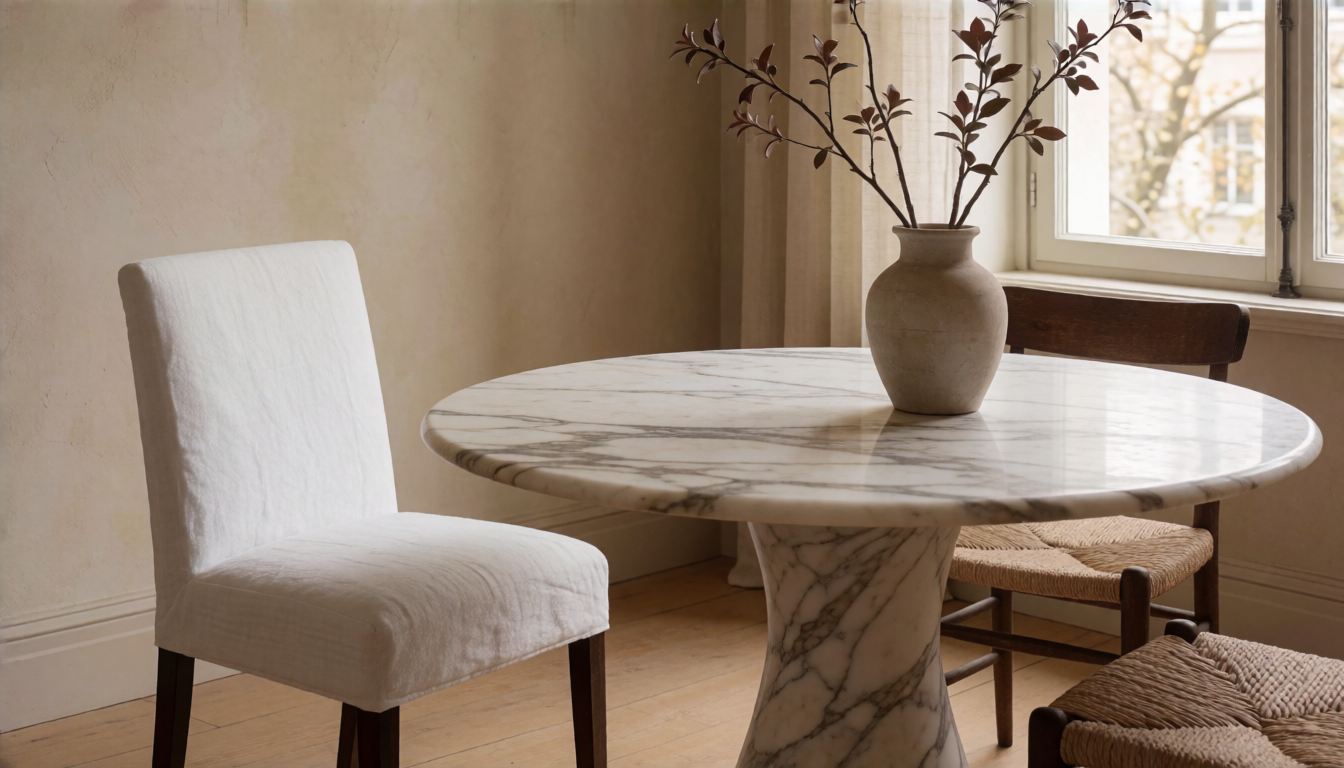
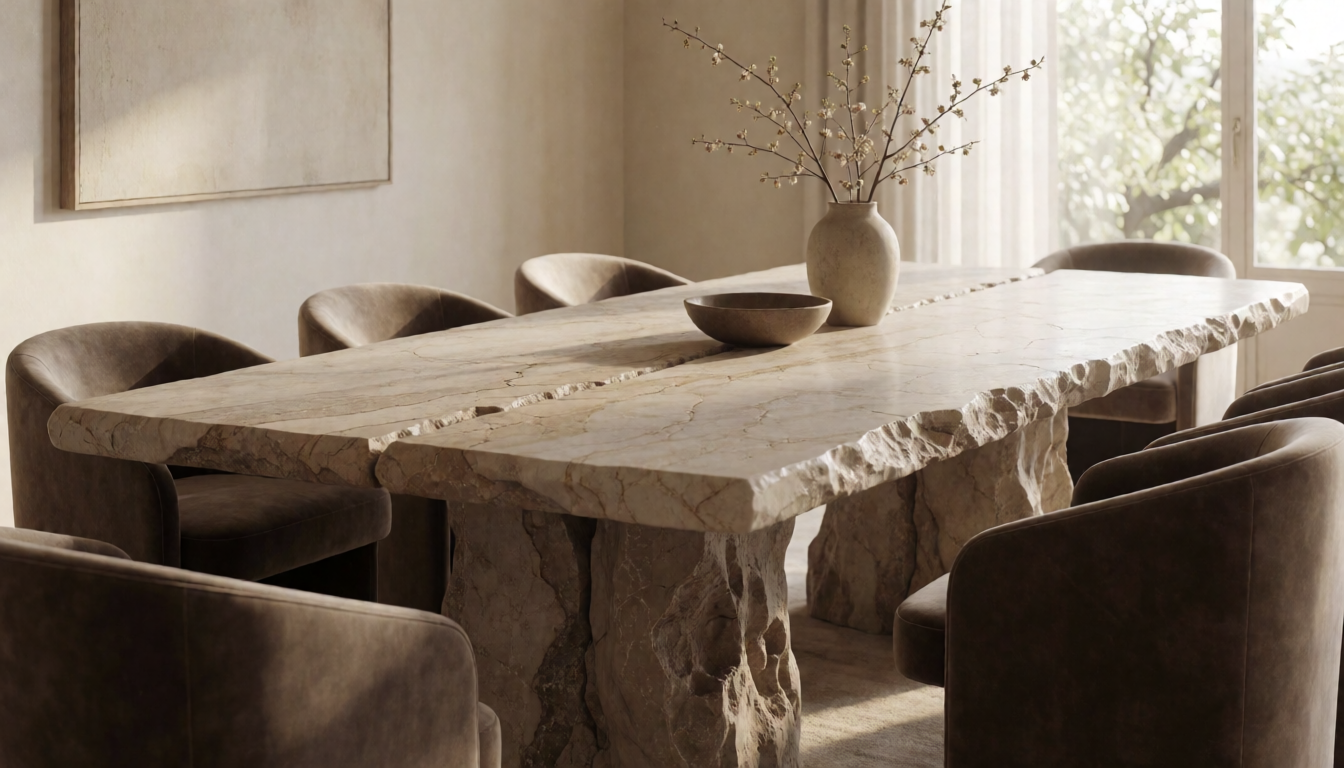
When sourcing stone furniture for a Shopify store or a white-label brand, one of the most critical variables is the marble dining table size. Unlike wood or metal, natural stone comes with fixed physical constraints that directly impact shipping costs, lead times, and final pricing. As an importer looking to build a reliable supply chain, you need to understand exactly how dimensions translate into logistics challenges and cost structures. This guide breaks down standard stone table dimensions, weight considerations, and the realities of ordering a custom marble table from a factory like Gladystone.
Standard Capacities and Physical Dimensions
To stock a successful online catalog, you first need a baseline of standard product offerings. Most factories produce tables in three primary configurations: seating four, six, or eight people. These are not arbitrary; they correspond to specific slab sizes available in quarries like Carrara or Calacatta Gold.
For a table seating four, the industry standard is roughly 120cm x 90cm (approx. 47″ x 35″). The top thickness usually sits between 2cm and 3cm. Even at this modest footprint, a solid slab of Carrara marble weighs approximately 80kg to 100kg. This weight dictates packaging requirements; you cannot ship these on standard pallets without reinforced corner protection.
Moving to a six-person configuration, the length typically extends to 160cm (63″) while maintaining a width of 90cm or 100cm. The surface area increases significantly, but the thickness remains consistent unless requested otherwise. At this size, the weight of the top alone often exceeds 120kg. If you are shipping these to the US or EU, freight forwarders will classify these as heavy cargo, which can double your per-unit shipping cost compared to lighter materials like quartz or engineered stone.
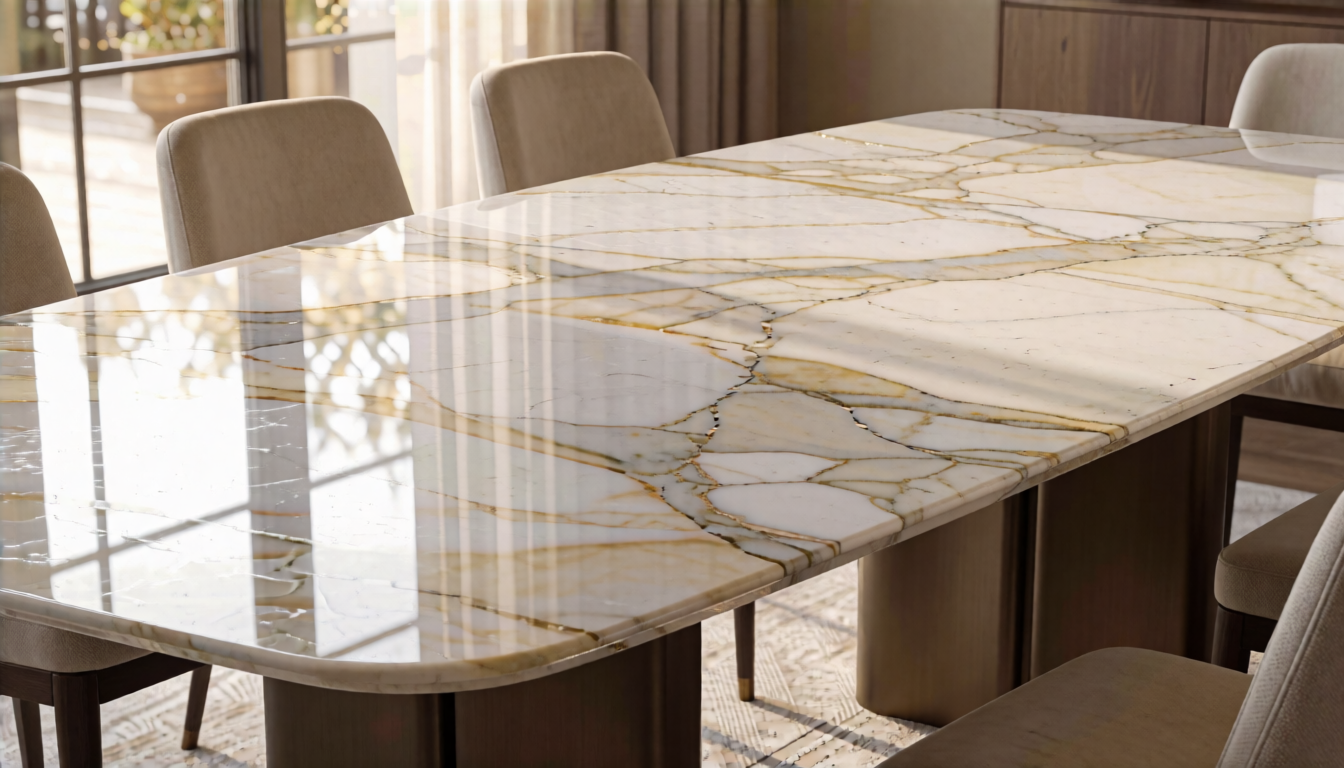
An eight-person table usually requires a length of 180cm to 200cm (70″ to 79″). Here is where the complexity spikes. A single slab often cannot cover a 2-meter length without seams. Factories typically use two slabs joined together. This seam, whether polished or hidden under an overhang, affects structural integrity and requires specific finishing techniques. The weight of an eight-seater top can reach 160kg or more. When calculating your landed cost, remember that heavier cargo attracts higher freight rates and stricter handling fees at the destination port.
Structural Integrity and Seam Management
One common misconception among new dropshippers is that any stone table will hold up indefinitely regardless of size. This is false for natural marble. The internal grain structure dictates how large a single piece can be before it risks cracking during extraction or transport.
For tables seating six or eight, you are almost certainly dealing with a seamed top. When sourcing these, ask your supplier about their seam-hiding techniques. Gladystone and similar manufacturers use epoxy resins that match the stone’s color to minimize visibility. However, this adds to the production time. A seamless table might be possible for smaller formats (under 150cm length), but for anything larger, seams are inevitable.
The base structure is equally important. Marble is heavy, so the legs must be robust enough to prevent wobble or tipping under load. Standard bases include pedestal designs with two or three supports, or four sturdy square columns. For a table seating eight, a three-point pedestal base is often preferred over four thin legs to distribute weight evenly across the large surface area. If you choose a custom design with a unique base, factor in the extra machining time required for welding and polishing complex metalwork.
Custom Orders and Lead Time Realities
Ordering a custom marble table opens up design possibilities but introduces significant delays. In the stone industry, “custom” rarely means instant gratification. Every request for a non-standard dimension or unique shape requires a new quote and a re-evaluation of slab availability.
If a buyer requests a specific length that does not align with standard slab widths, the factory may need to cut slabs at an angle or combine three separate pieces. This increases material waste and labor costs. Expect lead times for custom orders to range from 25 to 40 days after payment. Standard stock items usually ship within 10 to 15 days because the raw material is already cut and polished.
When negotiating MOQs (Minimum Order Quantities) for custom pieces, be realistic. A factory might agree to a lower MOQ for a specific design if you commit to a volume of other standard items. For example, ordering 50 units of a standard 160cm table and requesting 20 custom variations as a one-off run is often more feasible than placing a single order for 30 custom pieces. Always discuss the deposit structure; typically, factories require 30% to 50% upfront before cutting begins, as stone cannot be returned once it has been processed.
Cost Factors and Quality Checks
The final price of your stone furniture is driven by three main factors: raw material grade, slab thickness, and finishing details. High-end veins like Calacatta Gold or Statuario cost 20% to 30% more than standard Carrara per square meter. Thickness variations also impact cost; a 3cm thick top costs more to ship and process than a 2cm option, even if the visual difference is subtle.
Before finalizing a purchase order, request high-resolution photos of the actual slabs allocated to your batch. Since marble is natural, no two pieces look identical. Ensure the supplier shows you the specific grain patterns and veining density for each unit. Ask about the polishing process; a 1200-grit polish creates a mirror finish, while an 800-grit or satin finish reduces the risk of etching from acidic spills—a practical detail for dropshipping to households with pets or children.
Finally, verify packaging specs. For heavy stone items, the cost of protective foam, cardboard corner guards, and double-wall corrugated boxes can add $15 to $30 per unit to your landed cost. Insist on video inspections before sealing containers to ensure no chips occur during the loading process at the factory. Clear communication regarding these specifics will save you from costly returns and damaged reputations in your target markets.