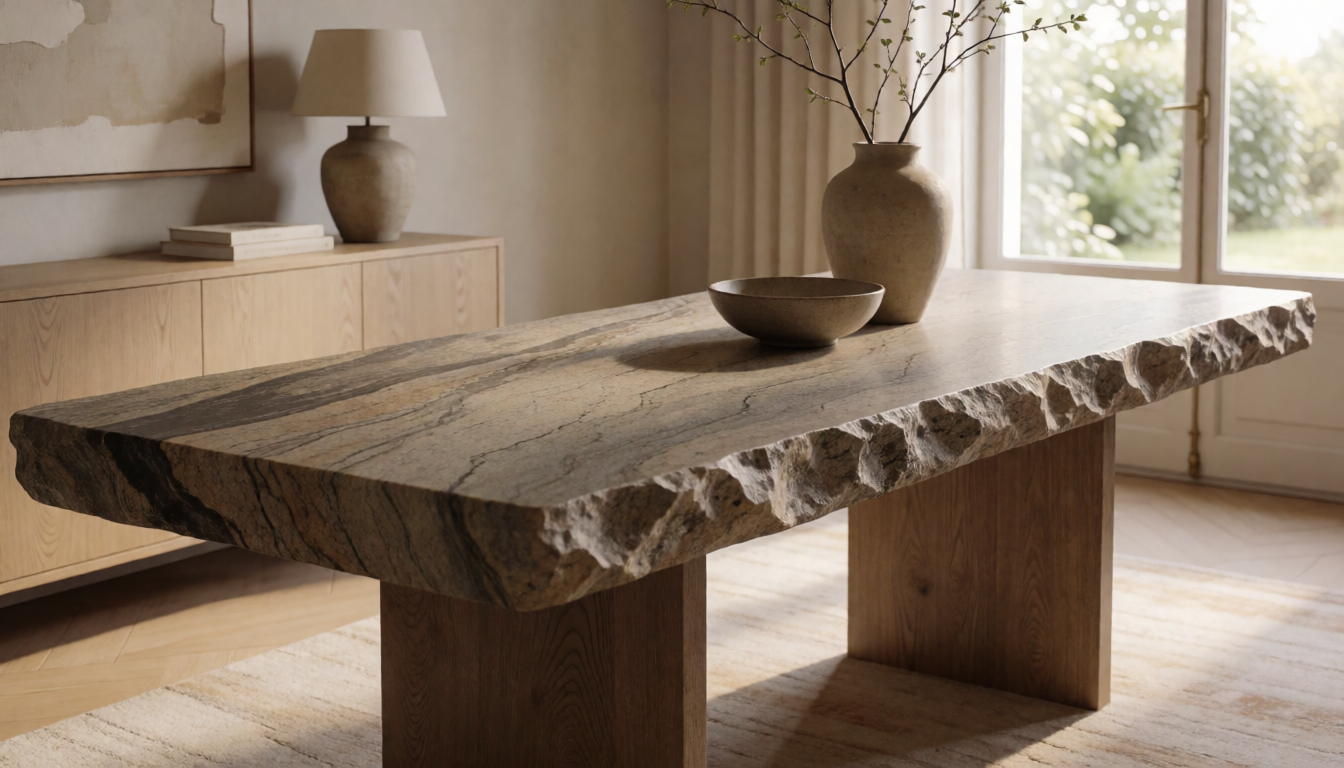
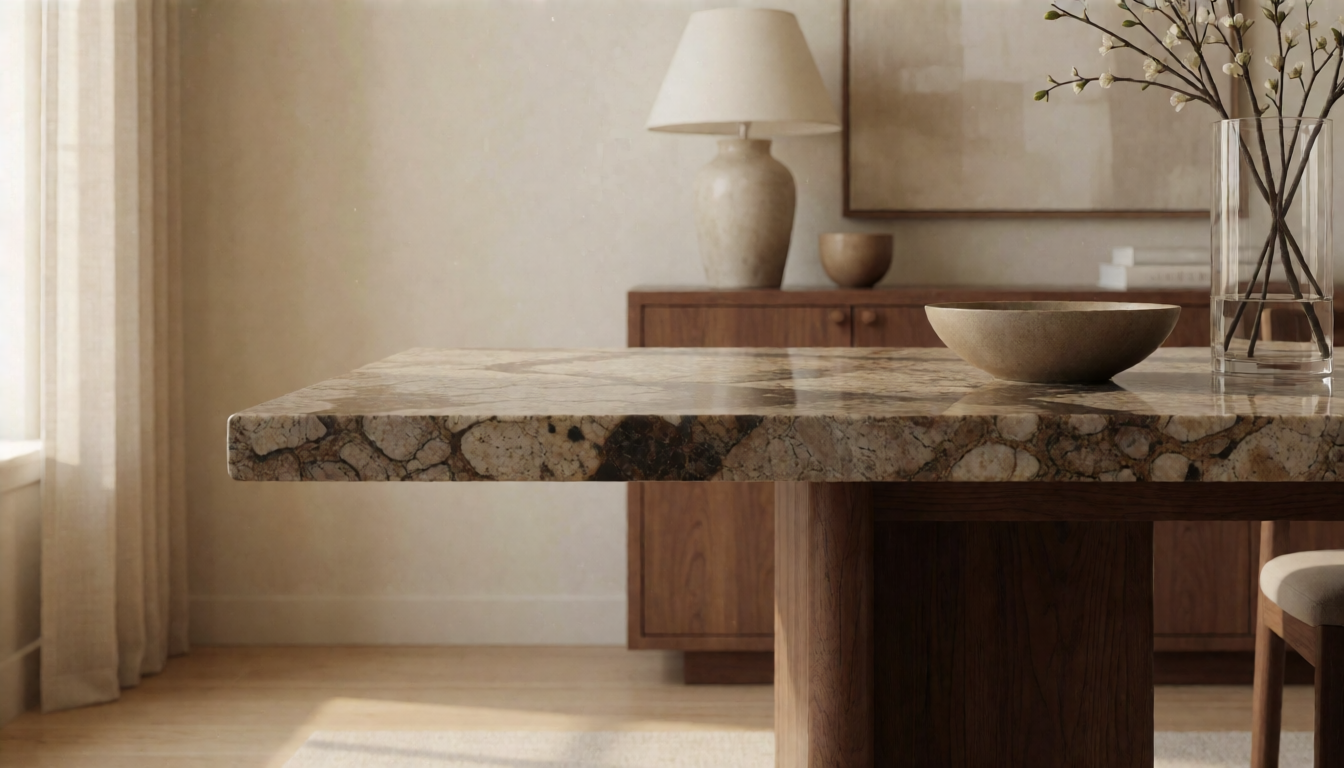
When sourcing for your furniture brand or stocking a high-end showroom, the choice between organic materials and engineered stone often comes down to longevity and perceived value. As an importer looking at the stone vs wood table market, the numbers tell a clear story. A standard solid granite dining unit typically weighs between 150kg and 250kg depending on the slab size. This density translates directly to customer trust; buyers can feel the weight when they lift a chair. In contrast, wood tables of similar dimensions often require extensive finishing to match that heft, adding labor costs you cannot pass to retailers without inflating prices. For white-label brands and dropshippers targeting the US or EU markets, shifting inventory toward heavy stone pieces reduces return rates associated with warping, scratching, or fading finishes common in lower-grade wood products.
Structural Integrity and Longevity
The primary advantage of a natural stone dining table lies in its structural permanence. Wood expands and contracts with humidity changes, leading to gaps at joints or cupping on tabletops over time. Stone does not move. When you order from a factory like Gladystone, you are buying a product that requires minimal maintenance for the end consumer. A typical slab measures 180cm x 90cm x 2.5cm but maintains its flatness regardless of seasonal humidity shifts in California or London.
For wholesalers managing large inventory turnover, this durability means fewer customer complaints. If a retailer sells a wood table that warps after six months, it damages their reputation. Stone absorbs moisture without swelling and resists rot entirely. Even if a client spills red wine or drops a heavy pot, the surface can be sealed or lightly honed to remove stains. This resilience is a selling point you can highlight in your marketing materials. Buyers appreciate that a stone table lasts for generations, effectively turning a purchase into an investment rather than a disposable item.
Cost Efficiency and Supply Chain Reliability
One of the most common misconceptions about natural stone is its prohibitive cost compared to wood. However, looking at the raw material costs reveals why stone often offers better value for B2B buyers. Wood prices fluctuate wildly based on harvest seasons, beetle infestations, or supply chain disruptions in Southeast Asia. Granite and quartzite prices are more stable because they are mined from fixed locations with consistent geological deposits.
Consider a basic rectangular slab: a wooden top of 180cm x 90cm might cost roughly $450 to $600 depending on the veneer quality and edging complexity. A comparable granite slab of similar dimensions typically ranges between $350 and $500 at the factory gate, excluding shipping. While stone requires heavier shipping due to weight (often calculated per tonne rather than per cubic meter), the raw material cost is frequently lower than the high-grade timber required for a non-warping product.
For dropshippers, this margin stability allows for more predictable profit calculations. You do not need to constantly renegotiate contracts when oak prices spike due to drought conditions. Furthermore, stone production lines in China operate with high efficiency. Lead times for standard slab sizes are generally 15 to 25 days from order confirmation. This is comparable to wood manufacturing but without the risk of receiving defective batches due to natural grain irregularities that were not screened during cutting.
Aesthetics and Perceived Value
Visually, stone offers a unique texture that engineered surfaces struggle to replicate perfectly. The crystalline structure of marble or granite creates depth and movement that no wood stain can mimic. When a customer touches a marble table, they feel the coolness of the stone under their fingertips, a tactile experience distinct from warm wood. This sensory difference drives premium pricing in retail environments.
Importers should note that natural veining patterns vary with every slab, providing uniqueness for each piece sold. Wood grain repeats patterns more often, though high-end veneers can mitigate this. For interior designers working on luxury projects, the “cool” aesthetic of polished stone fits modern and industrial design trends effectively. It pairs seamlessly with brass hardware, chrome legs, or raw concrete bases.
Gladystone specializes in offering various finishes to match these design needs. You can source a slab with a high-gloss polish for a sleek look or a honed matte finish for a softer texture. The ability to customize edge profiles—such as bullnose, ogee, or waterfall edges—adds significant value without drastically increasing costs. When you present a catalog of stone options, customers perceive higher quality immediately because the material itself signals luxury.
Sourcing Strategy for Importers
To maximize success in this sector, focus on slab dimensions that fit standard vanities and dining setups. Standard widths usually range from 80cm to 120cm, with lengths up to 360cm. Oversized slabs exceeding 4 meters often incur surcharges due to transportation logistics. Always ask suppliers about their capability to cut large sheets into custom sizes to minimize waste.
Verify the quarry source of your stone. Italian Calacatta or Carrara marble commands premium prices but may have supply constraints. Chinese quarries offer excellent alternatives like G603 granite or local white marbles that perform similarly at a fraction of the cost. Discuss MOQs (Minimum Order Quantities) early; many factories will accept smaller initial runs for new clients if you commit to long-term volume.
Quality control is non-negotiable. Request photos of back-up slabs before cutting to ensure no major cracks or veins are hidden. For white-label partners, establish clear standards on edge finishing and polishing consistency. The goal is to provide a product that feels substantial, looks unique, and withstands daily use without degradation. By prioritizing stone over wood for your core catalog, you secure a brand image built on durability and timeless elegance.