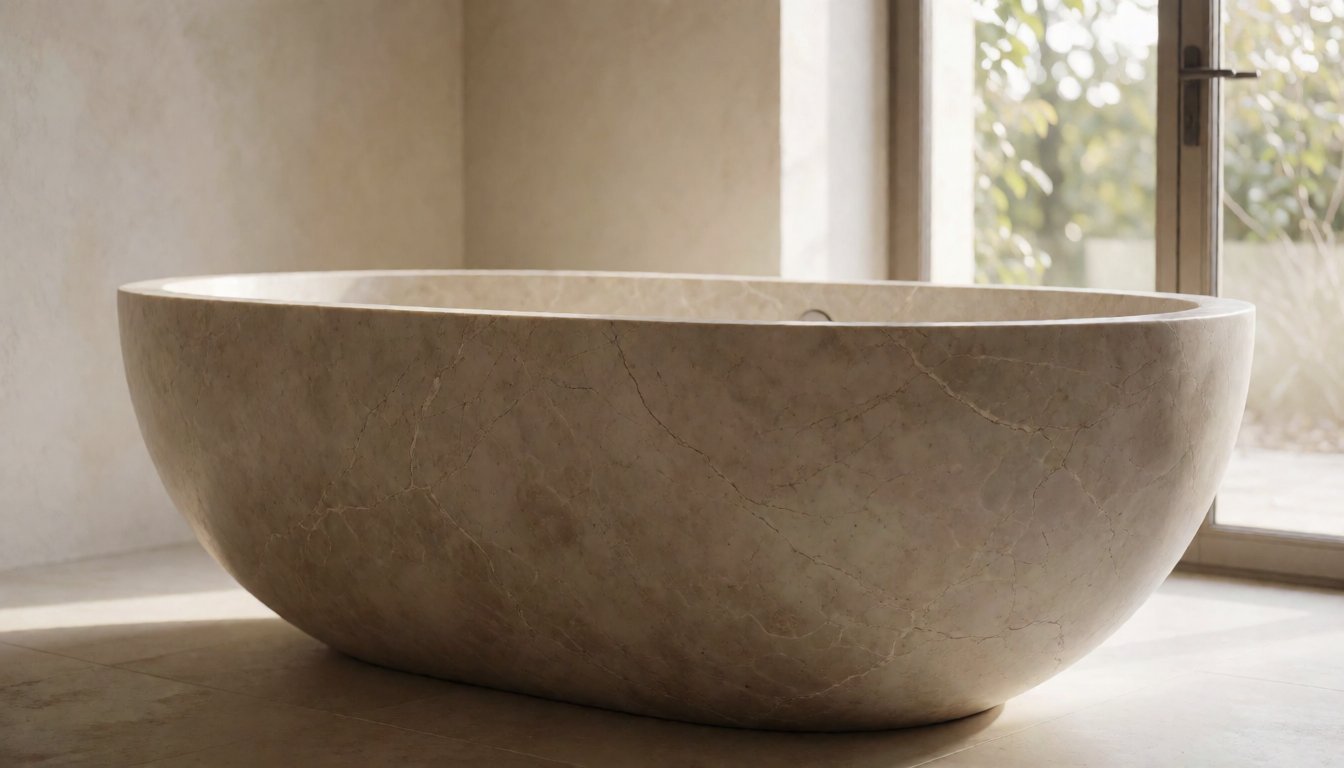
The surface texture of a stone bathtub is not merely an aesthetic choice; it is a critical factor in production costs, shipping weight, installation complexity, and long-term customer satisfaction. As an importer sourcing for the US or EU market, understanding the technical differences between finishes helps you negotiate better terms with manufacturers like Gladystone and avoid costly returns. The three primary options—honed, polished, and raw—each present distinct challenges regarding sealing requirements, slip resistance, and visual depth. Selecting the right finish depends on your target demographic and the specific specifications of your dropshipping or wholesale catalog.
Honed Marble Tub: The Standard for Luxury Retail
A honed stone bathtub finish offers a matte, satin-like surface that feels soft to the touch. This is currently the preferred specification for high-end residential projects in Europe and increasingly popular among US interior designers seeking a modern, understated look. Unlike polished stone, which reflects light, a honed surface diffuses it, hiding minor scratches better over time.
For B2B buyers, the practical advantages of a honed stone bathtub finish are significant. The matte texture provides natural slip resistance, reducing liability concerns for customers who install tubs in wet environments without additional grip strips. From a production standpoint, achieving a consistent honed look requires precise control during the grinding process. At Gladystone, we typically apply this finish to our standard 170cm x 80cm soaking tubs. The weight remains roughly 120kg for a single-person model, but the surface treatment adds negligible extra mass compared to polished equivalents.
When sourcing honed marble or quartzite tubs, you must specify the degree of haze. A “medium” honed finish is safer for dropshipping than a “deep” matte, as deep matting can sometimes trap oils from packaging or handling during transit. The lead time for standard honed finishes is generally 15–20 days after payment confirmation, assuming the raw material inventory is available. For custom thicknesses exceeding 2cm, this timeline may extend slightly due to additional grinding cycles required to achieve the uniform matte texture.
Polished Stone Bathtubs: High-Gloss and Maintenance Demands
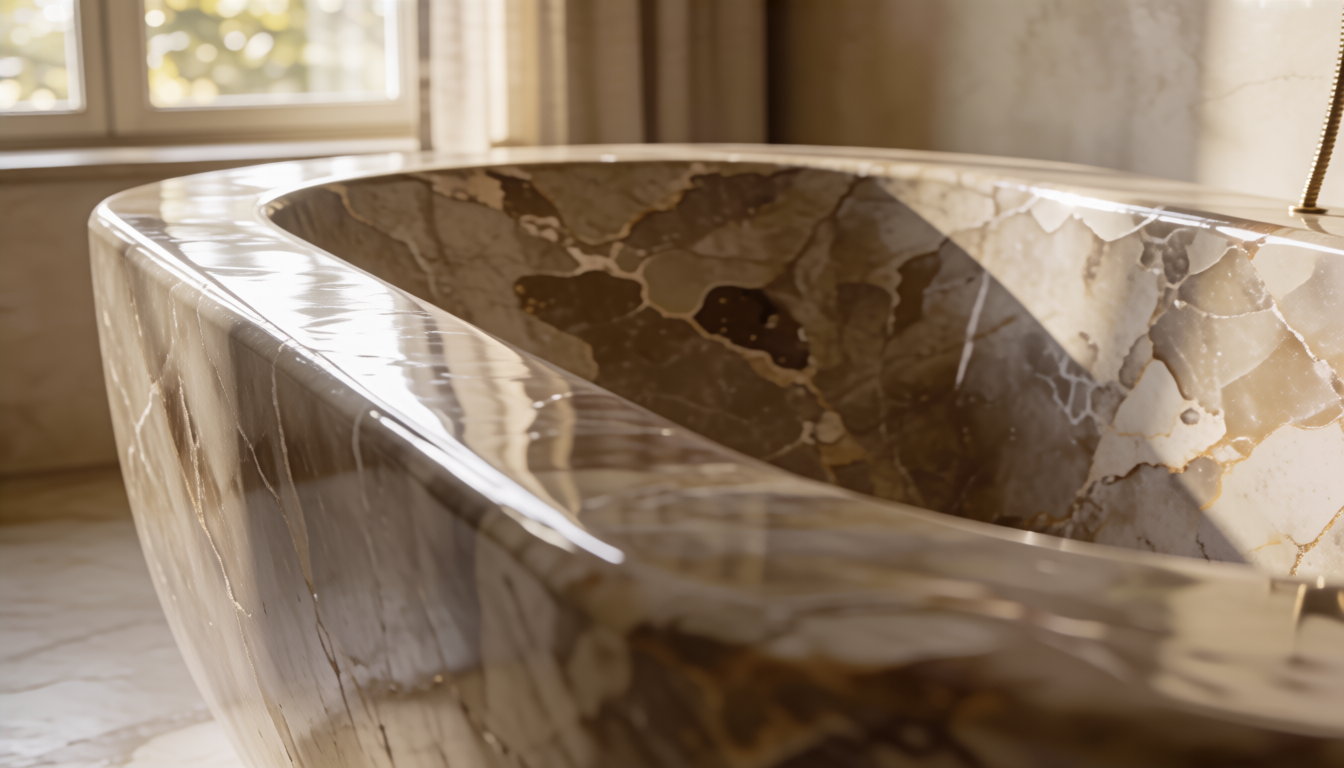
A polished stone bathtub finish delivers a mirror-like sheen that maximizes the visual depth of the natural veining in marble or granite. This high-gloss look is iconic for traditional luxury bathrooms but comes with specific operational constraints that importers must factor into their business models.
The primary drawback from a buyer’s perspective is maintenance. A polished stone bathtub finish acts like a magnifying glass for water spots, soap scum, and fingerprints. If you are dropshipping to homeowners in hard-water areas, the likelihood of negative reviews regarding “streaking” increases significantly unless you clearly communicate care instructions. Furthermore, shipping costs can be slightly higher because the final polishing stage is often done after packing to ensure zero surface defects reach the customer.
From a manufacturing angle, a polished tub requires a multi-step process involving progressively finer diamond grits up to 3000 or higher. This increases labor time per unit by roughly 10–15 minutes compared to honed processing. Consequently, if you are negotiating price breaks for volume orders (MOQ 50+ pieces), the polished variant commands a premium of approximately $40–$80 USD per unit depending on the stone type. Polished finishes also show etching from acidic cleaners more readily than honed surfaces, so your customer support team will need stockpiled mild pH-neutral cleaning kits to assist with warranty claims.
We typically offer polished options in our 180cm freestanding series, weighing around 145kg. The added weight of the denser surface layer is minimal, but the shipping volume remains consistent with honed counterparts. Lead times for fully polished custom orders can stretch to 25–30 days if the factory must reserve specific quarry blocks to guarantee color consistency across a batch.
Raw Stone Tub: Texture and Natural Imperfections
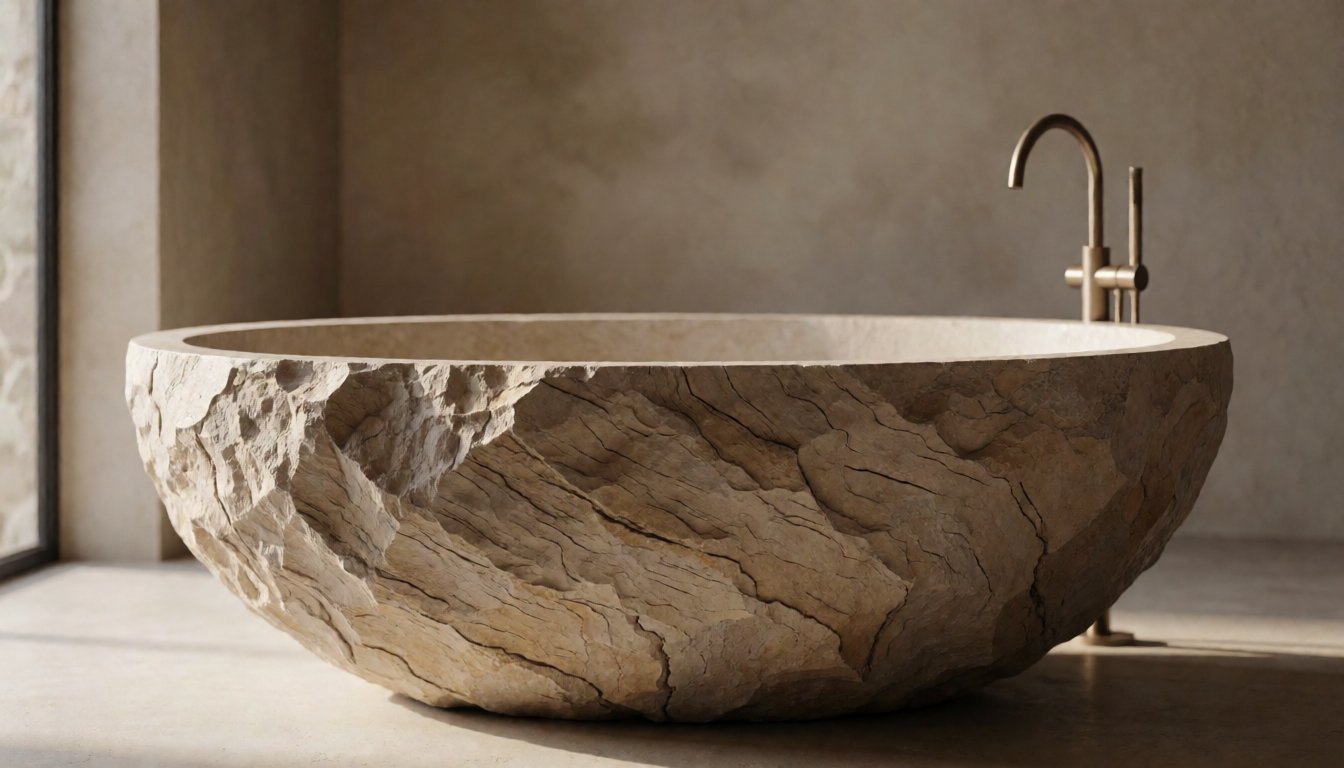
A raw stone tub finish leaves the material in its natural state after carving, exposing the grain and any inherent fissures or pits. This industrial-chic aesthetic is gaining traction among younger demographics who value sustainability and “organic” design. However, it presents the highest risk factor for B2B buyers due to quality control variability.
Sourcing a raw stone tub means accepting that no two units will look exactly alike. While this uniqueness is a selling point, it complicates inventory management. If you are fulfilling orders for a specific SKU, even minor variations in pit depth or grain direction can lead to mismatched returns if the customer expects a uniform batch. The surface of a raw tub is naturally rougher, offering excellent slip resistance without additives. However, the porous nature of unsealed raw stone makes it susceptible to staining from wine, coffee, or oil spills immediately upon installation.
Manufacturers like Gladystone often treat raw finishes with a penetrating sealer rather than a topical wax to allow the natural texture to breathe. This sealing process adds a cost but is essential for longevity. The lead time for raw finishes is generally shorter, around 10–14 days, because they skip the final grinding and polishing steps. However, you must inspect incoming cargo carefully for “flash” marks or tooling scars from the carving process that might be unacceptable for a polished catalog but passable for raw.
For dropshippers, the rough texture of a raw stone bathtub finish can sometimes make it difficult to apply protective films during packaging without tearing them. You may need to source specialized non-slip edge guards or foam inserts specifically designed for the irregular contours of raw-carved stone. Weights are slightly lower than polished equivalents since less material is removed, typically ranging between 100–115kg for standard sizes.
Strategic Considerations for Importers
When finalizing your order specifications with a supplier, focus on sealing protocols and post-installation guidance. A honed or raw tub usually requires an initial sealant application by the installer to prevent staining. If you supply unfinished stone, clarify who bears the cost of this sealing service. Is it included in the FOB price, or is it an extra charge for the customer?
Ask your manufacturer about their defect tolerance rates. For a polished order, scratches are strictly unacceptable. For raw or honed, minor surface imperfections might be acceptable within a 5% allowance. These nuances directly impact your return rate and profit margins. Always request photos of actual stock rather than digital renders, particularly for raw and honed finishes where lighting plays a massive role in perceived quality.
Finally, consider the target market’s climate. In humid regions, polished marble can develop efflorescence (white salt deposits) faster than sealed quartzite or honed surfaces. Align your finish choices with the demographic you serve to minimize after-sales friction. By understanding these technical distinctions, you position yourself as a knowledgeable partner capable of curating a high-performing product line.