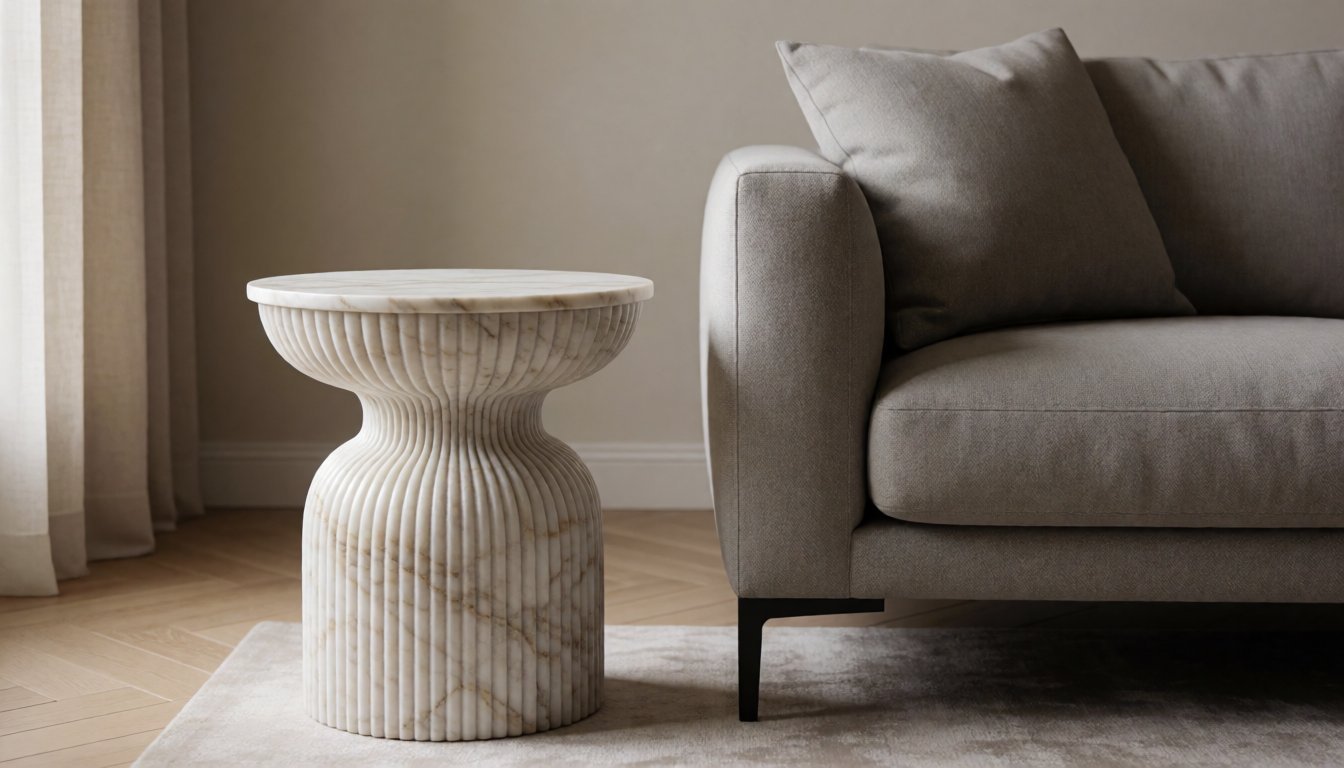
Selecting a stone accent piece for a living room isn’t just about aesthetics; it requires precise dimensional planning to ensure functionality and visual balance. For interior designers, wholesalers, and dropshippers sourcing from Chinese manufacturers like Gladystone, understanding the technical specifications of natural stone furniture is critical before finalizing an order. A mismatched height can ruin the ergonomics of a seating area, while incorrect proportions can make a large sofa look dwarfed or a small table look lost. When importing stone side tables for the US or EU market, you must guide your clients on how to pair these heavy pieces with existing sofas effectively. This guide breaks down the essential sizing and height rules that dictate a successful marble table sofa pair, helping buyers specify the right dimensions to avoid costly returns or design complaints.
The Golden Rule of Height Alignment
The most common mistake in furniture sourcing is ignoring the vertical relationship between a table and a sofa. For a natural stone side table, the standard working rule is that the top surface height should align closely with the sofa armrest height, typically within a 2 to 3 cm tolerance. However, this isn’t a one-size-fits-all metric; it depends on the specific style of the seating furniture and the user’s habits.
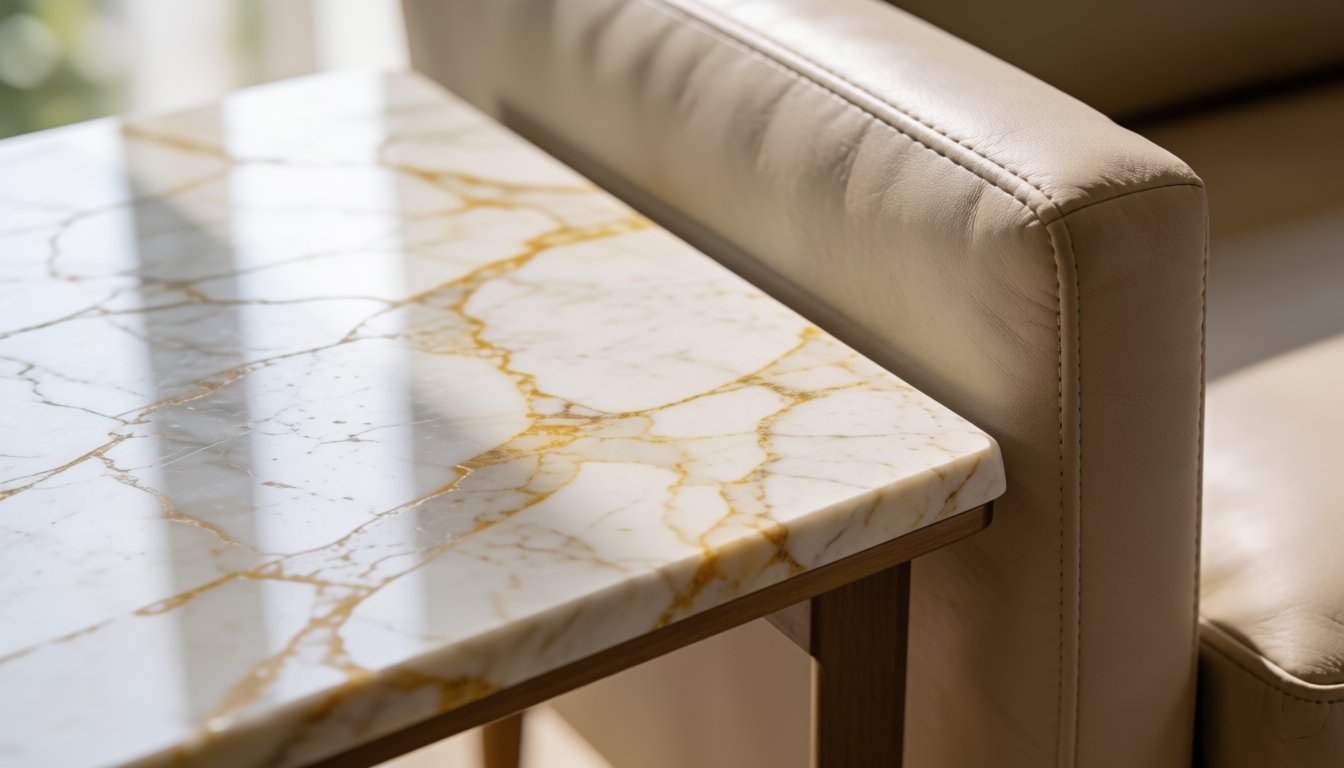
Most modern sofas in the US market have armrests ranging from 60 cm to 65 cm (approx. 24 to 26 inches). Consequently, a standard stone side table height should fall between 50 cm and 60 cm (roughly 20 to 24 inches). If you order a stone side table that is 80 cm tall for a low-profile mid-century modern sofa, the result will be visually jarring and functionally awkward. The user cannot place their arm comfortably on the back of the sofa or lean against it while using the table.
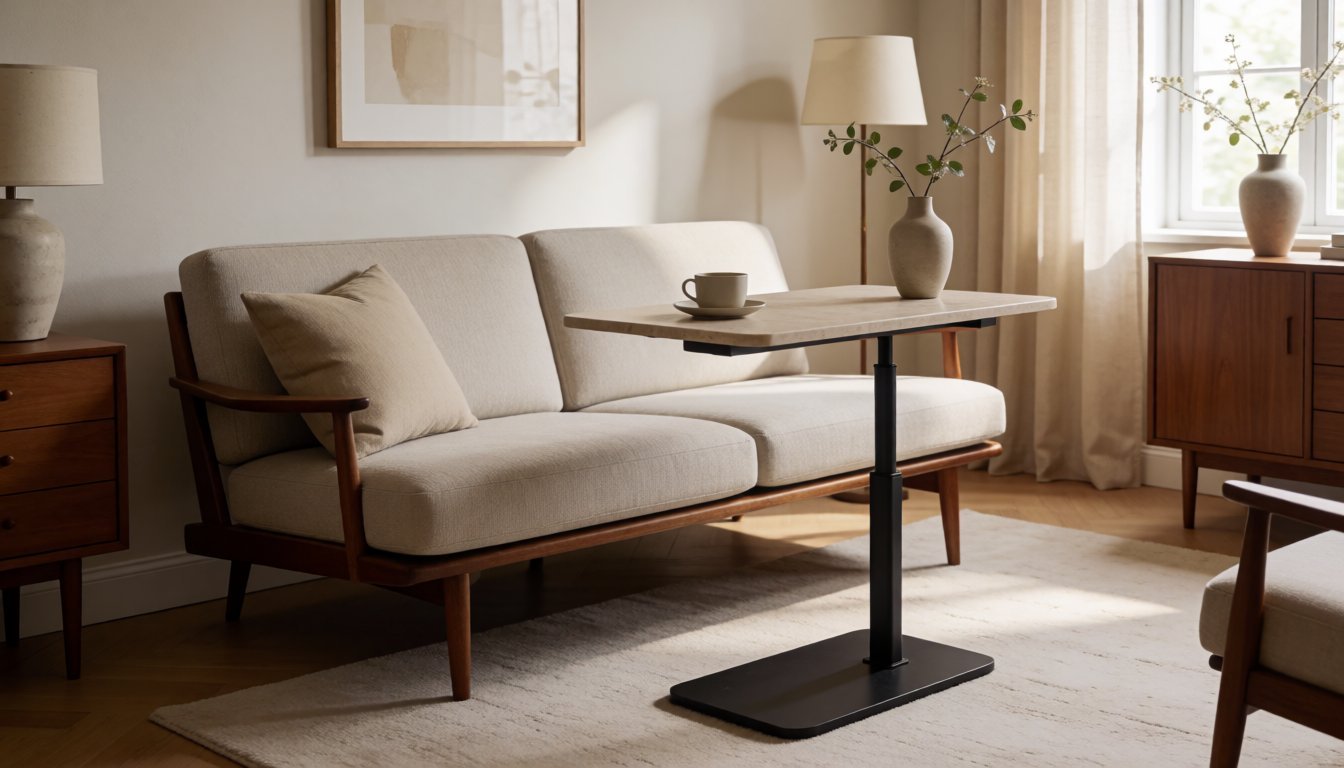
When working with dropshippers who sell to end consumers, you must provide clear specifications sheets that include these height ranges. Buyers should measure the client’s sofa armrest before placing an order for a custom stone slab cut. For example, if a client specifies a marble side table with legs adjustable from 45 cm to 65 cm, it offers the flexibility needed for various sofa heights. This adjustability is a key selling point when marketing stone furniture to interior designers who work with eclectic collections.
Proportional Width and Depth Sizing
While height dictates usability, width and depth determine the visual weight of the piece in relation to the sofa. A proper marble table sofa pair requires the side table to be substantial enough to hold a lamp and books but not so wide that it obstructs legroom or overwhelms the seating unit.
A typical stone side table width ranges from 40 cm to 55 cm (16 to 22 inches). If the sofa seat depth is 60 cm, a side table with a top width of 50 cm usually looks balanced. However, if you source a massive granite slab that results in a table top of 70 cm or more, it will compete aggressively with the sofa rather than complementing it. The visual ratio should generally keep the table surface no wider than half the depth of the sofa cushion.
Depth is equally important for functionality. A standard stone side table depth is often around 45 cm to 50 cm. This allows a user to pull out a chair slightly and still have space to place items without knocking them over. For larger dining room or living room settings, you might see stone tables with depths up to 60 cm, but these are less common for standard sofa pairings. When specifying sizes for white-label brands, ensure the factory can offer modular options. For instance, a Gladystone production line could cut slabs into 45×45 cm squares or rectangular shapes like 50×80 cm to fit different architectural constraints.
Material Weight and Structural Considerations
Natural stone adds significant mass compared to wood or metal alternatives, and this weight impacts how buyers should approach sizing and structural integrity. A typical cubic meter of marble weighs approximately 2,700 kg, meaning a thick stone slab (3 cm thickness) for a side table can weigh between 40 kg and 60 kg depending on the dimensions. If you specify a wide and deep table without accounting for this weight, the legs may need to be thicker or reinforced with steel brackets hidden beneath the stone.
For wholesalers importing these goods, understanding the logistics of weight is crucial. Shipping costs in the US and EU are calculated based on volumetric weight, but actual mass affects packaging durability. A 50×50 cm stone table with a 3 cm thickness weighs roughly 45 kg. If you design a table that is too heavy relative to its footprint, customers may struggle to move it into place without assistance. This is a common complaint in the dropshipping sector where items are shipped directly to residential doorways.
When discussing specifications with your factory partners, ask about the maximum safe load for their stone designs. Typically, standard natural stone furniture can support 15 kg to 20 kg on the surface without cracking or sagging over time. If a side table is intended to hold a heavy floor lamp (often 8 kg) plus books and decor, the manufacturer must ensure the base structure is robust. For fireplaces or vanities which are larger pieces, the weight considerations differ, but for side tables, keeping the mass manageable while maintaining aesthetic thickness is key.
Lead Times and Customization Constraints
Sourcing stone furniture involves longer lead times than standard wood furniture due to quarrying, cutting, polishing, and shipping logistics. For a B2B buyer, understanding these timelines helps manage client expectations regarding custom sizes. Standard stock pieces of marble or travertine might have a lead time of 7 to 14 days from deposit in China, whereas custom-cut dimensions for specific sofa pairings can extend this to 30 to 45 days.
If a client requests a non-standard height or an irregular shape to fit a unique niche next to a curved sofa, the factory needs to calculate cutting waste. Natural stone is not always perfectly uniform; veins and patterns dictate where cuts can be made. A buyer asking for a specific custom size must verify if the available slab stock can accommodate that dimension without compromising the aesthetic pattern.
For dropshippers, offering standard sizes (e.g., 45×45 cm or 50×60 cm) reduces risk and speeds up fulfillment. Custom orders are viable but require clear communication with the supplier about lead times. When specifying a marble table sofa pair for a high-end project, it is often better to order pre-fabricated units that offer slight variations in height (e.g., 45 cm, 50 cm, 55 cm) rather than requesting a one-off custom cut every time. This approach maintains quality control and minimizes production delays while still offering the designer some flexibility in matching sofa heights.