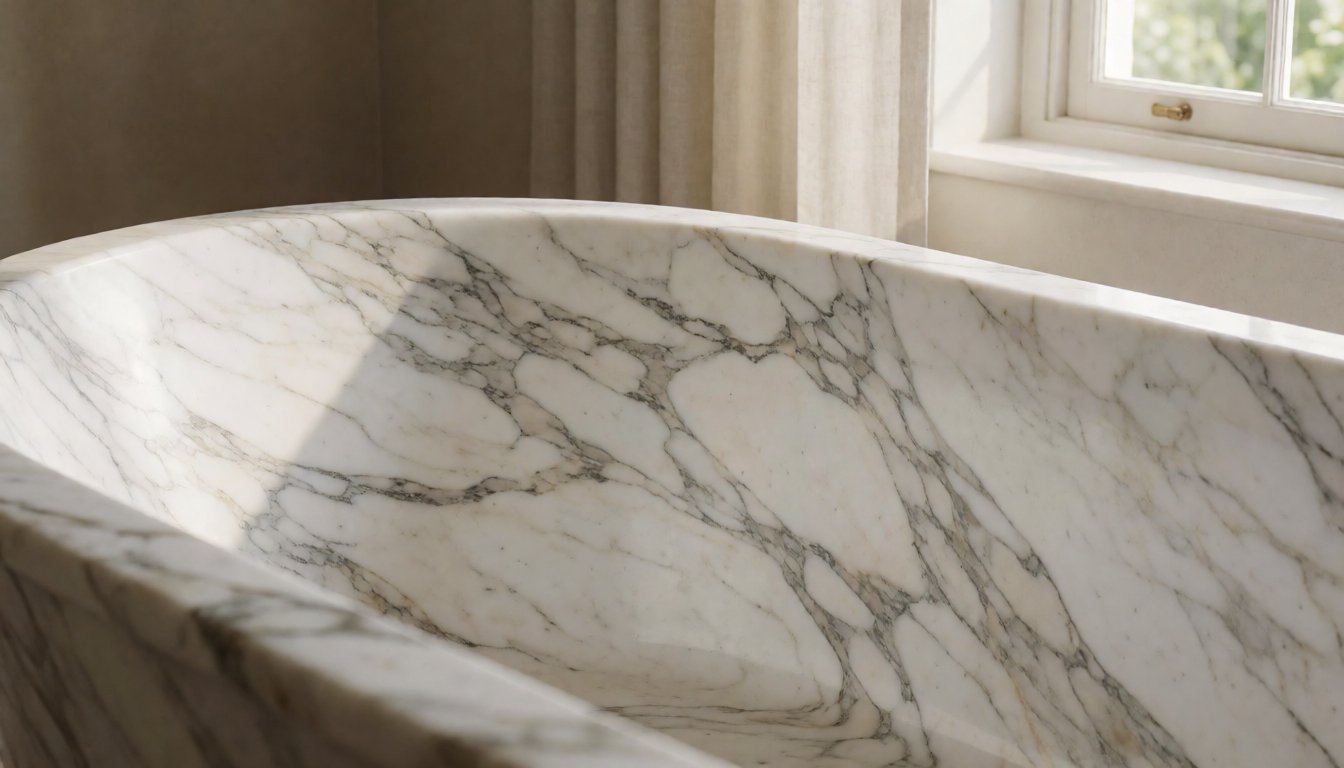
Choosing the right stone bathtub for your Shopify store or white-label brand requires more than just picking an aesthetic. As an importer sourcing from China, you need to understand the structural differences between materials, how specific shapes impact manufacturing costs, and exactly what drives the final price tag. A solid stone bathtub buying guide starts with the raw material. Natural stone offers unique veining but comes with porosity issues, while engineered stone provides consistency but lacks the “premium” story some luxury brands want. Your decision here dictates your quality control protocols and customer return rates.
Understanding Raw Materials: Marble vs. Quartzite vs. Engineered Stone
The most common confusion in this sector is between real marble, natural quartzite, and engineered resin composites. Real marble, such as Carrara or Calacatta, is porous. It absorbs water if not sealed perfectly, which leads to staining and mold growth—a major complaint from US/EU customers. Expect a high-quality sealant application for every unit; this adds roughly $15-$25 per piece to the production cost but is non-negotiable for longevity.
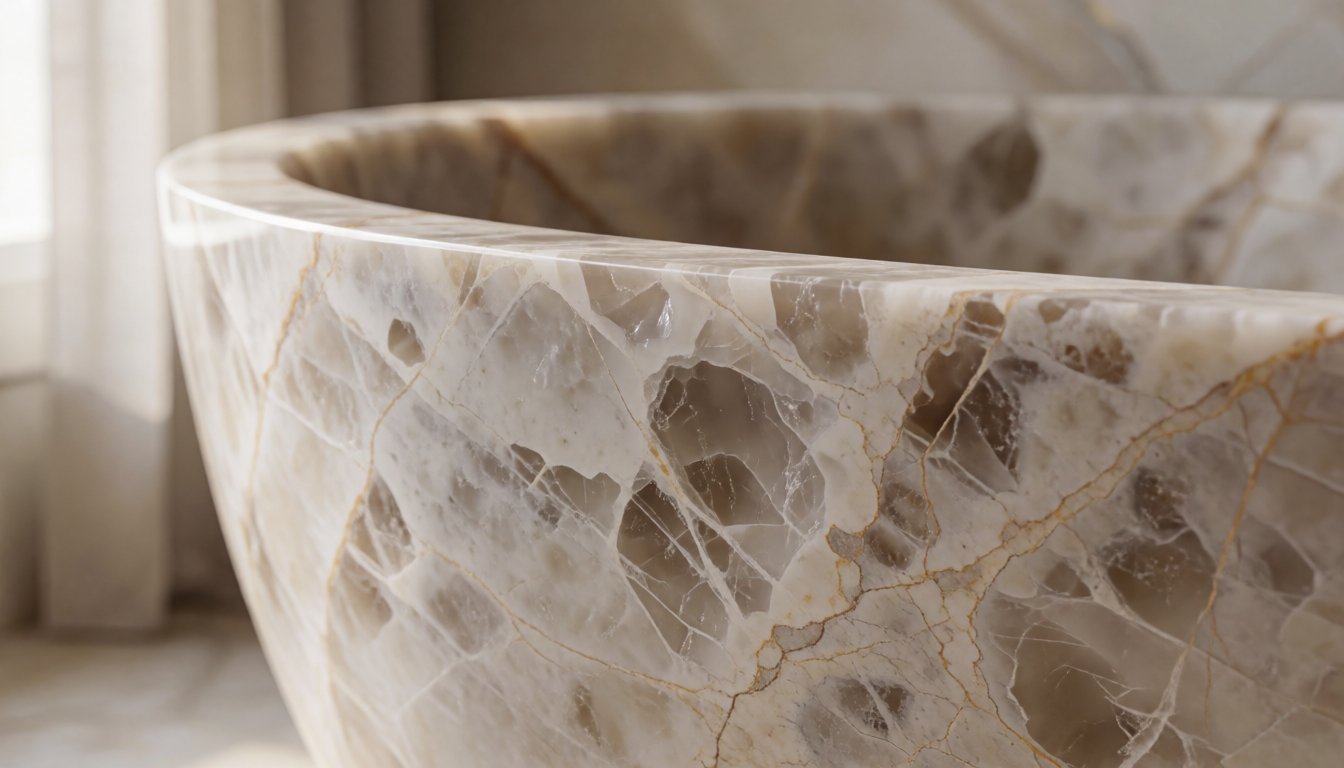
Quartzite is harder and less porous than marble. It withstands heat better, making it ideal for fireplaces or tubs near saunas. However, it is brittle during shipping and often more expensive than standard marble. Engineered stone blends natural aggregates with resins. It offers uniform color patterns and higher density, reducing breakage rates during logistics. For dropshippers prioritizing low return rates over exclusive veining, engineered stone is often the safer bet. When negotiating with a factory like Gladystone, ask for samples of each type to test water absorption rates before committing to a bulk order.
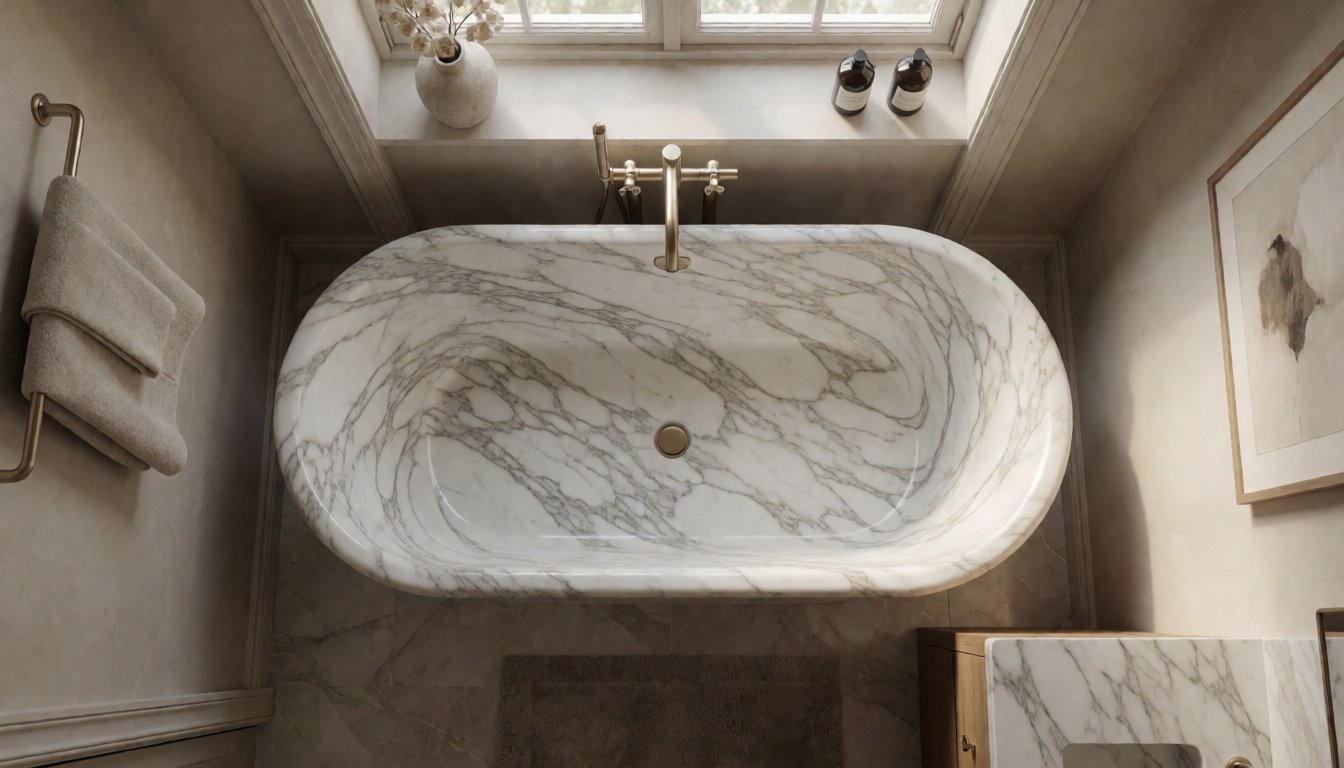
How Marble Tub Shapes Influence Cost and Fit
Shape determines not just the look but the mold complexity and material waste. Round or oval shapes are the cheapest to produce because they require single-piece molds with minimal flashing. A standard 120cm x 75cm oval marble tub typically weighs between 80kg and 100kg depending on thickness. These are best for small bathrooms where space is tight.
Rectangular shapes offer more design freedom but increase the risk of cracking during cooling if the slab isn’t thick enough. A rectangular tub measuring 160cm x 90cm can weigh up to 140kg. The longer the mold, the higher the chance of internal stress fractures. Corners in rectangular designs need precise reinforcement; otherwise, shipping damage becomes a financial liability.
L-shaped or freestanding clawfoot styles are niche products. They often require two-part molds or complex assembly lines. Expect lead times to extend by 10-15 days for these custom shapes compared to standard ovals. For your product catalog, clearly state the maximum installation depth and height restrictions associated with each shape to manage customer expectations regarding plumbing connections.
Critical Dimensions: Weight Limits and Shipping Logistics
Size is the primary driver of shipping costs and structural integrity. A 100cm x 50cm soaking tub might seem small, but if made from thick quartzite with a depth of 45cm, it can exceed 90kg. This weight exceeds standard pallet limits for many freight forwarders without special booking.
Standard industry sizing for stone bathtubs ranges from 120cm to 180cm in length. Anything over 180cm usually requires split shipping or reinforced containers, which increases the landed cost by 30-40%. Thickness is another key metric. Thin slabs (2cm) are prone to flexing and breaking under their own weight when empty. A robust tub for a luxury brand should be at least 3cm to 4cm thick. This extra material adds significant weight but prevents the “bending” sound that customers hate.
When calculating your landed cost, factor in the cubic volume of the stone. Dense quartzite has a higher specific gravity than marble, meaning a tub of identical dimensions will weigh more and cost more to ship. Always request a detailed packing list from your supplier that includes net weight, gross weight, and external carton dimensions. These figures must match the Commercial Invoice exactly to avoid customs delays at US or EU ports.
Lead Times: What Really Delays Your Order?
Lead times for stone bathtubs are rarely fixed; they depend on raw material availability and mold readiness. For standard models in stock, production might take 7-10 days once payment is received. However, this includes the sealing process and curing time for the resin or stone binders. Rushing this step compromises water resistance.
Custom orders with unique veining patterns or specific colors add 15-20 days to the timeline. The factory needs to source matching raw slabs from quarries in Italy or Turkey first. If your order requires a specific rare marble like Statuario Venato, stockouts are common. Build a buffer of at least two weeks into your inventory planning.
Shipping time from China varies by route but typically adds 20-35 days for ocean freight to the US East Coast. Air freight cuts this to 5-7 days but triples the unit cost. For dropshippers, a total lead time of 45-60 days is realistic for first-time orders involving custom packaging and labeling. Ask your supplier if they can pre-seal units before shipping to save time upon arrival at your warehouse.
Quality Control: What to Inspect Before Shipment
Visual inspection is not enough; you must verify structural integrity. Check the bottom of the tub for “cupping” or unevenness, which indicates poor slab cutting. Run a water test on the sealed surface. Pour water across the basin and watch for any seepage into the stone matrix within 24 hours. Staining occurs quickly if the sealant has pinholes.
Inspect the drain overflow assembly. This is a common failure point where cheap plastic fittings crack under heat or impact. Request that the factory use brass or high-grade ABS components for these parts. Check the finish of the rim and faucet holes. Rough edges here ruin the installation experience for your end customers.
Weight distribution matters too. Tap the stone with a metal object; it should sound resonant, not dull. A dull sound suggests internal cracks or air pockets that will lead to leaks later. For large orders, agree on a random inspection protocol (AQL) where every third unit is tested before release. Do not accept “visual only” QC; insist on water penetration tests and weight verification for every shipment.
Value Adders: Features That Justify Higher Retail Prices
Not all stone bathtubs are created equal. Certain features allow you to command higher retail prices without increasing the base manufacturing cost significantly. Heated floor integration is a major value adder. While the plumbing work adds labor, the tile or heating element can be embedded during production. This feature justifies a 20-30% price premium in the US market where energy efficiency is a selling point.
Built-in lighting niches or recessed shelves inside the tub are also high-value features. They require precise mold engineering but make the product stand out in interior design portfolios. Another value adder is the type of finish. A polished surface reflects light but shows fingerprints and water spots easily. A honed or leathered finish feels more tactile and hides minor imperfections better, appealing to buyers who want a low-maintenance luxury look.
Custom packaging options also increase perceived value. Standard cartons look generic. Investing in branded inserts, foam shapes that match the tub contour, and eco-friendly outer boxes can elevate your brand image. These changes often cost less than 5% of the unit price but significantly reduce damage claims. When negotiating with a manufacturer, ask for tiered pricing: bulk discounts on standard models versus slightly higher margins on value-added custom features.
FAQ
What is the typical MOQ for stone bathtubs if I want to start dropshipping?
For standard models in existing molds, factories typically accept orders starting at 10-20 units per piece. This allows you to test the market without heavy inventory risk. Custom designs usually require a minimum of 50-100 pieces because the factory needs to carve new molds and source specific raw stone reserves. Always negotiate a lower MOQ for your first trial order in exchange for accepting a slightly higher unit price or paying for mold fees separately.
How much does sealing affect the total cost of a marble tub?
Professional sealing typically adds $15 to $25 per piece to the production cost. This includes multiple coats of high-quality epoxy or polyurethane sealant and a curing period of 48 hours. Skipping this step saves money upfront but increases the likelihood of customer returns due to staining, which costs far more in logistics and refunds. Factor this into your landed cost calculations for accurate pricing.
Can I mix different stone types in one order?
Yes, but it affects shipping logistics. Mixing marble and quartzite in one container works fine since both are stone, but you must ensure the packaging is segregated to prevent scratching. However, mixing engineered stone with natural stone requires careful handling as their densities differ. Your supplier can usually manage this, but expect a slight delay in production scheduling as they switch between different material batches.
What is the average weight of a standard 120cm stone bathtub?
A standard 120cm x 75cm oval marble tub typically weighs between 80kg and 100kg depending on the slab thickness and specific stone density. Quartzite versions will be heavier, often reaching 110-120kg for the same dimensions. Shipping lines charge based on volumetric weight, so ensure your supplier provides accurate gross weight data to avoid unexpected surcharges at customs.
Quick Comparison
| Feature | Standard Oval (Marble) | Rectangular (Quartzite) | Engineered Stone (Oval) |
|---|---|---|---|
| Typical Weight | 80-100 kg | 110-140 kg | 75-90 kg |
| Lead Time | 25-35 days | 30-40 days | 20-30 days |
| Porosity Risk | High (Needs frequent sealing) | Low (Natural resistance) | Very Low (Resin bound) |
| Best For | Luxury branding, classic styles | Heat zones, fireplaces | Dropshipping, low return rates |