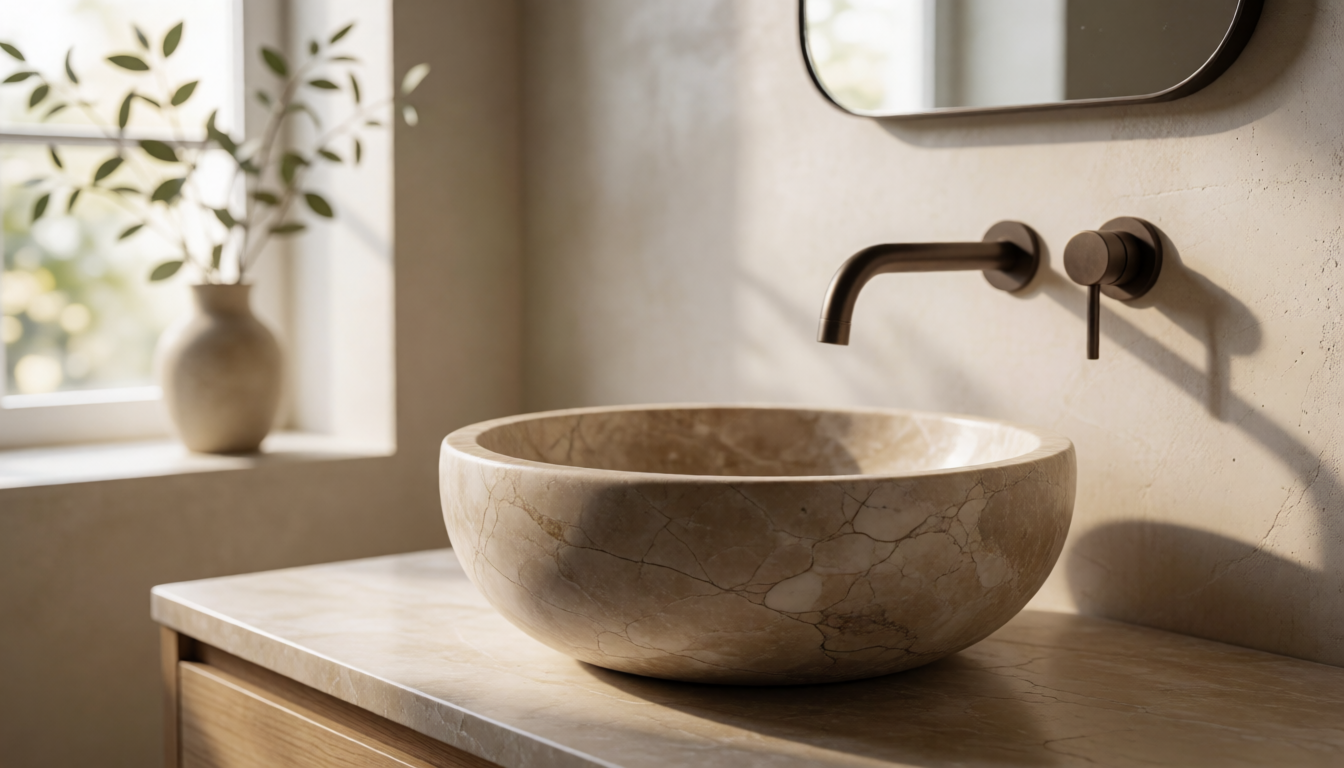
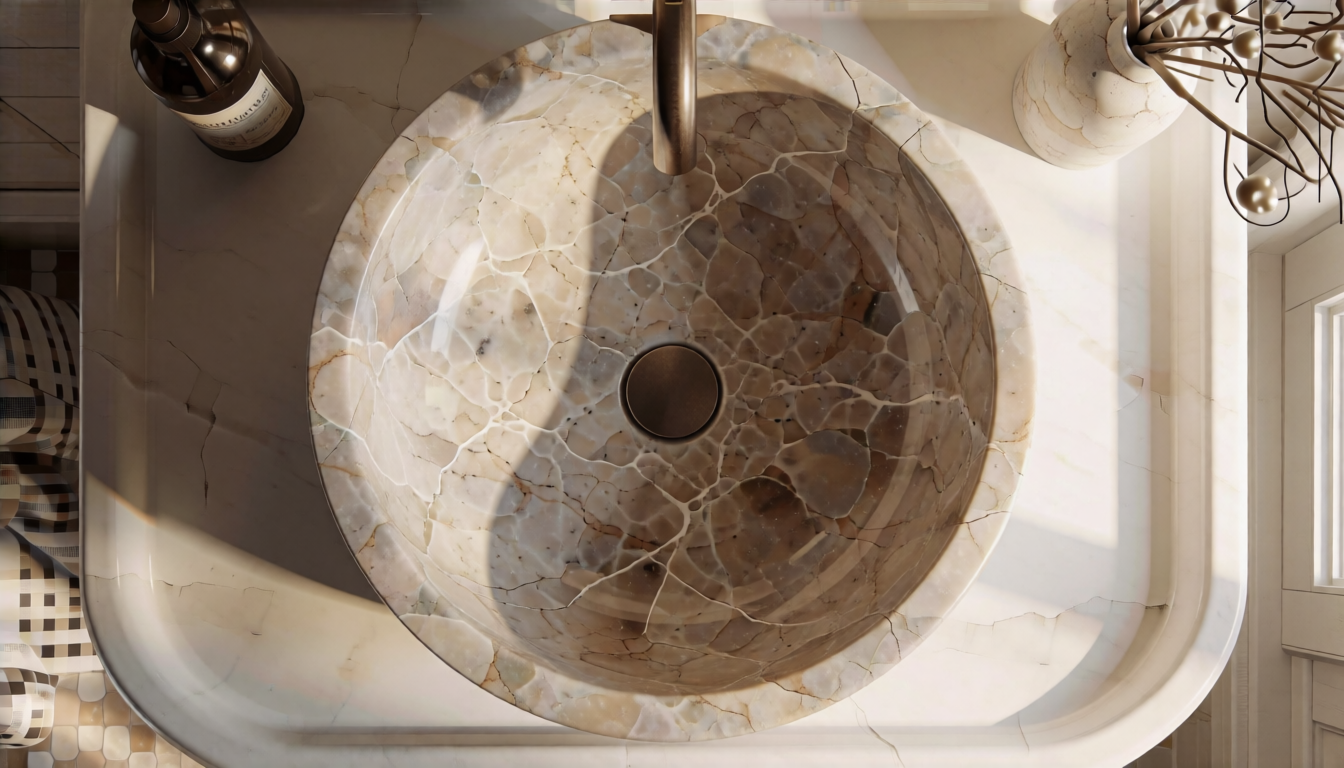
Sourcing stone bathroom fixtures requires a sharp eye for detail and a clear understanding of material physics. As a B2B buyer or importer looking to stock high-end sinks for your Shopify store or white-label brand, the marble vessel sink remains a top-tier product. Its visual appeal is undeniable, but profitability depends on managing costs, lead times, and quality control effectively. This guide breaks down exactly what you need to know when importing stone fixtures from China in 2026, focusing on practical metrics that impact your bottom line.
Understanding Material Specifications and Weight
The first step in sourcing is defining the physical parameters of the stone vessel sink you intend to carry. Marble is heavy, and this weight impacts shipping costs, packaging requirements, and installation logistics. Buyers must verify the exact dimensions and density before placing a bulk order.
A standard small-to-medium marble vessel sink typically measures between 35cm and 45cm in diameter. Larger statement pieces can reach up to 60cm but require reinforced packaging. Do not assume all marble sinks are created equal; calcite content varies by quarry, affecting density. A typical 40cm round marble bowl weighs roughly 12kg to 15kg. However, thicker rim designs or larger basins can push the weight to 20kg or more.
When calculating your landed cost, factor in the cubic meter charge for air freight or container space. Marble is non-compressible; you cannot stack heavy vessels loosely without risking breakage. Ask your supplier for specific density reports if you plan to ship via sea freight in a shared container. The weight per unit directly dictates how many units fit safely into one shipping pallet.
Lead Times and Production Capacity
Production timelines have stabilized slightly in 2026, but they remain longer than acrylic or solid surface alternatives. Expect a standard production lead time of 25 to 35 days for a standard marble sink bowl once the deposit is cleared and materials are secured. This window includes carving, polishing, sealing, and quality inspection.
If you need to rush an order, ask about “priority slots.” Some factories can reduce this to 15–20 days by skipping certain finishing steps or using expedited shipping for raw stone blocks, but this usually comes at a premium of 15% to 25%. Always confirm the factory’s current capacity. During peak seasons (typically late Q3 through Q4), lead times can extend by another two weeks.
For white-label brands requiring custom branding on packaging or specific logo engraving, add 5 to 7 days to the production timeline. These finishing touches happen after the stone is carved and polished. Ensure your supplier has a dedicated line for rush orders if you are managing multiple SKUs for different retailers.
Pricing Structures and MOQ Requirements
Pricing for natural stone varies wildly based on the quarry origin, grade of the stone, and finish quality. You will encounter prices ranging from $45 to $95 per unit for standard sizes, depending on thickness and polishing level. Premium grades like Statuario or Calacatta Gold can push the price closer to $120–$150 per piece due to veining rarity.
Minimum Order Quantities (MOQ) are critical for cash flow management. Most reputable factories set an MOQ of 50 to 100 pieces per design/color combination. Some larger manufacturers require a minimum of 200 pieces for custom colors or specific slab cuts. If you are a new importer, ask if they will accept mixed orders (e.g., 30 units of Design A and 70 units of Design B) to meet their total volume threshold.
Negotiating terms can help lower the cost per unit. Pay attention to whether the price includes the sealing process or packaging materials. A sealed stone product often costs $8–$12 more per unit than a raw-sealed one, but it reduces your return risk significantly. Always request a proforma invoice that breaks down the unit price, mold fees (if applicable), and tooling costs separately from material costs.
Quality Control and Defect Management
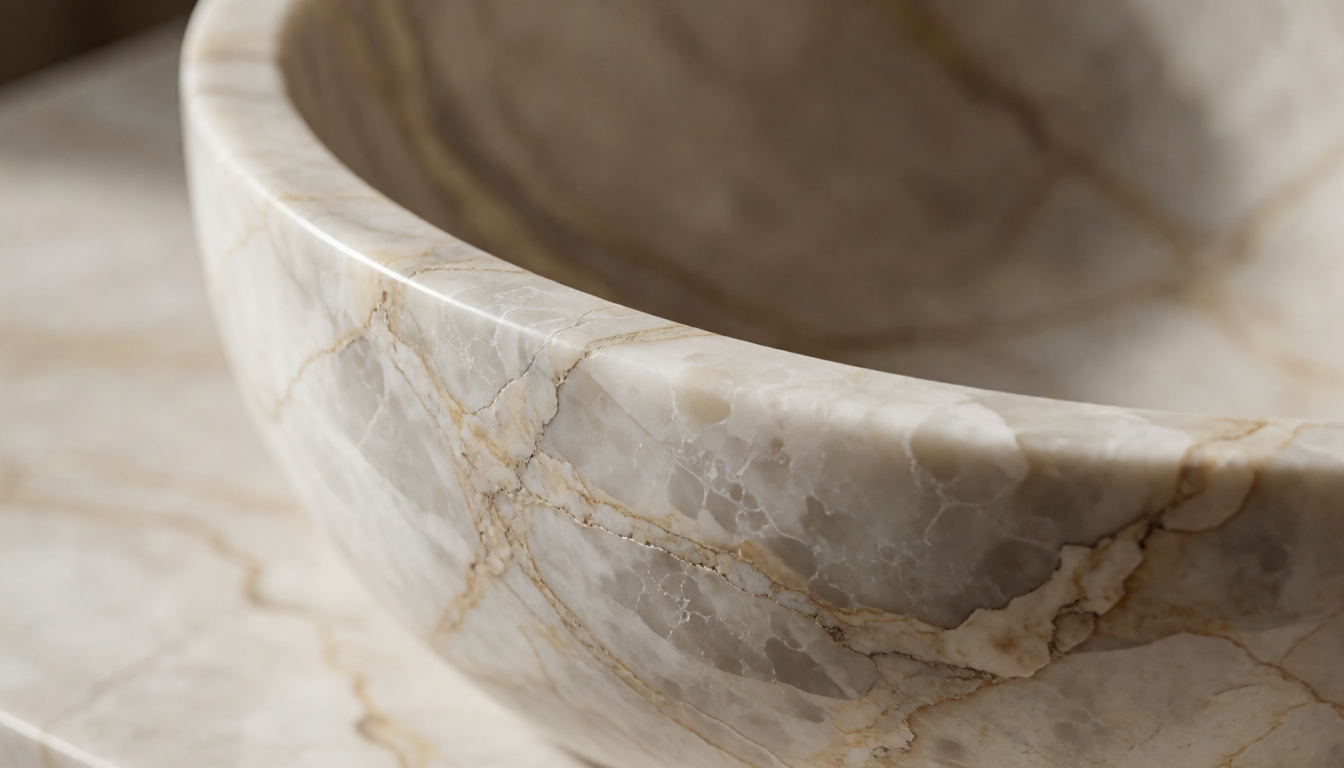
Quality control is the single most important factor when importing stone. Marble is natural; no two slabs look identical, but you can minimize defects like cracks, fissures, or heavy veining that ruin aesthetics. Before mass production, request high-resolution photos of the raw material blocks selected for your order.
Insist on a pre-shipment inspection protocol. Your supplier should send a video walkthrough showing the sink being packed. Look for specific checks: are there hairline cracks in the rim? Is the polishing uniform across the entire surface? Does the drainage hole align perfectly with the basin curve? A common defect is “spalling,” where the sealant peels off the edge, exposing porous stone.
For B2B buyers, clarify the acceptable defect rate upfront. Most factories allow a 3% to 5% tolerance for natural variations, but you should demand zero structural cracks. If a unit arrives with a major flaw, agree on the “return-to-factory” policy immediately. Will they replace the unit at their own cost, or will you pay for shipping back and forth? Define this in your contract before payment is due.
Customization Options for White-Label Brands
Customization is where margins can be expanded, but it requires strict adherence to specifications. You can request custom polishing grades (e.g., 1500 grit vs. 3000 grit), specific edge profiles (bullnose, ogee, or beveled), and custom hole drilling for faucets.
When discussing a marble vessel sink customization, ask about the feasibility of mixing colors from different quarries in a single order. For example, combining a deep grey background with gold veining might cost 20% more than a standard white marble mix because it requires matching slabs precisely. This is not always possible off the shelf.
Branding opportunities include engraving logos into the stone or printing them on the packaging box. Stone engraving adds $5–$10 per unit but creates a premium unboxing experience. Ensure the engraving depth does not compromise the structural integrity of the rim. Packaging customization usually requires a minimum order of 200 units to justify mold changes for custom boxes.
Shipping Logistics and Damage Prevention
Shipping heavy stone is expensive and risky. The cost of freight for a stone vessel sink can account for 30% to 45% of your final landed cost if not managed correctly. Air freight is fastest but most expensive; sea freight is cheaper but takes longer. For a 12kg unit, air freight might cost $15–$25 per piece depending on the route and fuel surcharges.
Packaging standards are non-negotiable. Suppliers must use corrugated double-walled boxes with internal foam inserts or bubble wrap specifically cut for the vessel shape. The sink should be wrapped individually before being stacked in a master carton. Avoid “loose stacking” where heavy units rest directly on lighter ones without separation.
Ask your supplier to include a moisture-proof layer (plastic wrapping) inside the box. Humidity during sea transit can cause water stains or mold growth on unsealed stone surfaces. Always verify that the packing list includes the weight and dimensions of each master carton. Calculate your total container load based on these metrics to avoid paying for wasted space or extra pallet charges upon arrival.
FAQ
What is the typical lead time for a custom marble sink order?
For a standard marble vessel sink without complex customizations, production takes roughly 25 to 35 days after deposit payment. If you require custom polishing, specific edge profiles, or engraved logos, expect an additional 5 to 10 days. Rush orders may be possible within 15–20 days but will incur a 15% price premium and are subject to factory capacity availability.
How many units can fit in one standard 20ft container?
A typical 20ft container can safely carry approximately 350 to 400 units of small-to-medium (35cm–45cm) stone vessel sinks, assuming they are packed in master cartons with protective foam. This number drops significantly for larger diameters (over 55cm) or if you are using fragile premium grades that require more individual padding. Always confirm the packing density with your supplier before finalizing the order quantity.
Can I mix different marble colors in one shipment?
Yes, but it depends on the factory’s slab availability. Mixing colors like Carrara and Statuario is common, but you must specify exact quantities per color to ensure balanced distribution. Be aware that mixing rare veined patterns may increase costs by 10–20% due to the need for precise slab selection. It is advisable to keep similar grades together to simplify quality control and reduce packaging complexity.
What is the acceptable defect rate for natural stone?
Industry standard allows a 3% to 5% tolerance for minor natural variations like slight color shifts or tiny surface pits that do not affect function. However, structural cracks, deep fissures, or sealant peeling should be zero. Define this clearly in your contract: if a unit arrives with a major defect, the supplier must replace it at their cost before you pay for return shipping.
How does the sealing process affect pricing?
A pre-sealed marble sink bowl typically costs $8–$12 more per unit than an unsealed raw product. While this increases your initial inventory cost, it reduces your risk of returns due to water staining or mold growth during transit. For B2B buyers, paying for factory-applied sealing is often worth the extra expense to protect your brand reputation and minimize customer service issues upon delivery to end-users.
Quick Comparison
| Feature | Standard Calcite Marble | Premium Veined Marble (e.g., Statuario) | Quartz Composite Vessel |
|---|---|---|---|
| Typical Price Range | $45 – $75 USD/unit | $80 – $130 USD/unit | $60 – $95 USD/unit |
| Standard Lead Time | 25–30 days | 30–40 days | 15–25 days |
| Weight (40cm round) | ~13 kg | ~14 kg | ~11 kg |
| Defect Risk | Medium (natural variations) | Low-Medium (fissure prone) | Very Low (engineered consistency) |