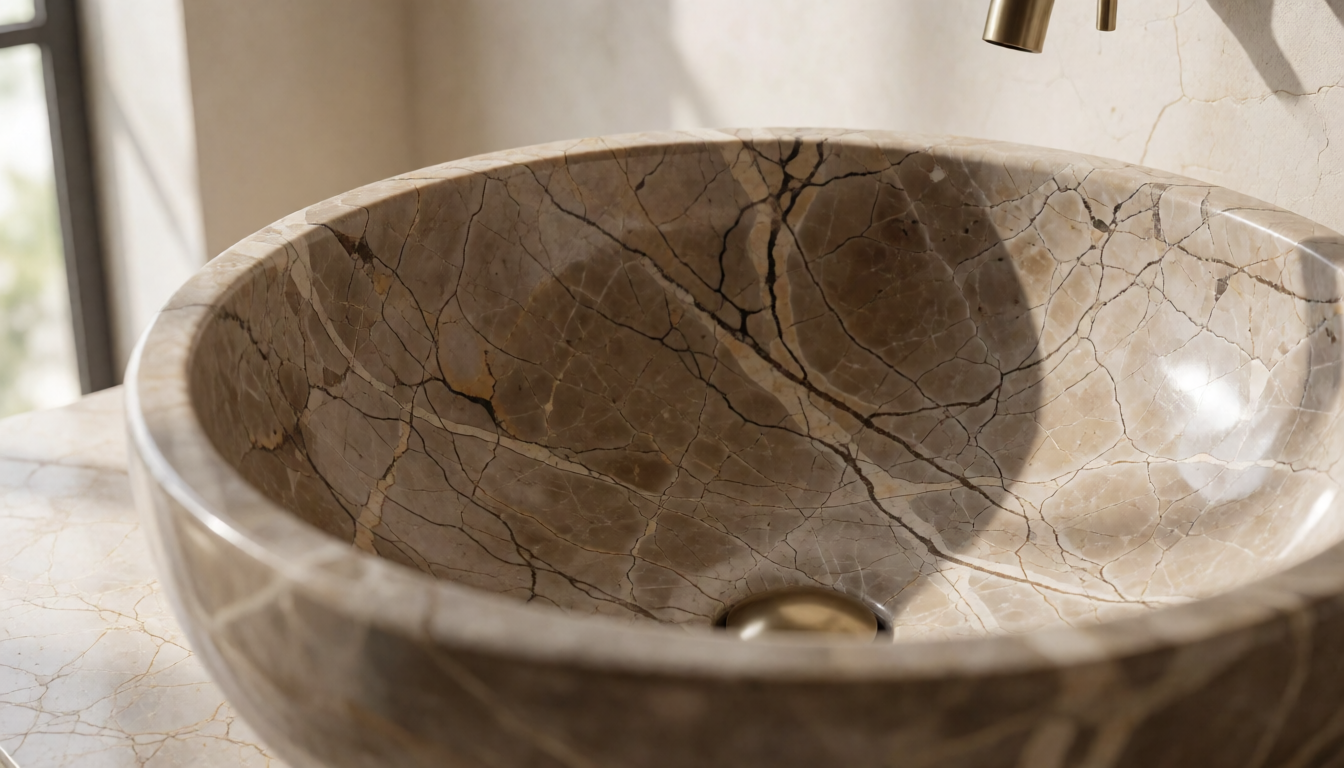
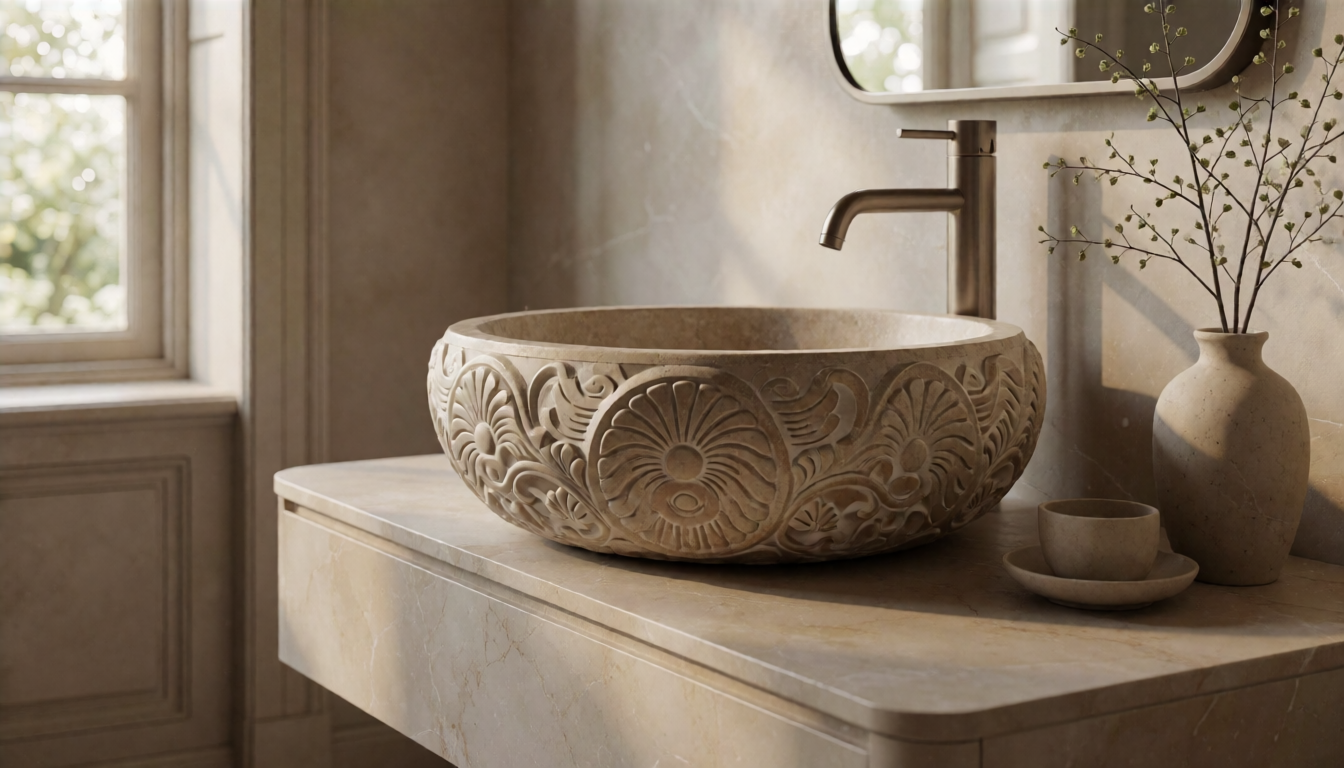
The marble vessel sink price fluctuates more than you might expect. Unlike standard bathroom fixtures where economies of scale stabilize costs over time, stone is a raw material subject to geological variance and mining logistics. For importers sourcing for the US or EU markets, understanding what moves the needle on the final marble vessel sink cost is critical for maintaining healthy margins in 2026. At Gladystone, we see many buyers underestimating how much the quarry location, slab yield, and finishing process dictate the bottom line. This article breaks down the real drivers of pricing so you can negotiate better terms or select the right stone for your specific niche.
Raw Material Variance and Quarry Logistics
The foundation of any stone vessel sink wholesale inquiry is the raw stone itself. Not all marble is created equal, and the price difference between a generic Carrara block and high-grade Italian statuario can be 300% or more. In 2026, the cost is heavily influenced by slab yield. A quarry might produce a massive block that yields only five usable slabs due to natural fissures. That lost material gets factored into the price of every remaining piece.
When calculating your budget, look at the weight. A standard round vessel sink typically ranges from 15kg to 25kg depending on wall thickness and basin depth. Larger formats, like a 60cm diameter vessel, can weigh over 40kg. This weight directly impacts shipping freight and insurance premiums. If you are importing from China to the US or EU, air freight is impossible for stone; sea freight requires careful stowage. High-value stone commands higher insurance rates.
Ask your supplier about their quarry source. Domestic quarries in China often offer better pricing stability than imported Italian or Turkish slabs, which face volatile exchange rates and complex customs duties. However, the aesthetic premium for exotic stones like Calacatta Gold or Nefeli remains high. The marble vessel sink price you pay is essentially a rental fee on that specific geological formation. You are paying for rarity. If you need consistent color for a white-label brand, standard commercial-grade Carrara or Statuario Mist offers the best value. Exotic variations with heavy veining will always carry a premium that cannot be negotiated away without sacrificing quality.
Fabrication Complexity and Finishing Techniques
Once the slab is selected, the manufacturing process determines the final marble vessel sink cost. Simple machining of a bowl shape is cheaper than complex carving. The depth of the basin matters. A shallow, decorative vessel (12-15cm deep) is faster to produce but feels lighter. A deep bowl (20-30cm deep) requires more material removal and longer polishing cycles.
Finishing techniques are another major cost driver. A high-gloss polish takes multiple passes on the grinding wheel followed by ceramic polishing. This creates a mirror finish that reflects light beautifully but increases labor time. However, many buyers in 2026 are opting for honed or leather-finished surfaces for vessel sinks. These finishes reduce the risk of visible scratches and hide minor imperfections in the stone. While the initial processing is slightly faster, the material yield might differ if a slab has natural pits.
Edge profiles also impact pricing. A simple bullnose edge is standard. But if your design calls for an ogee, scalloped, or waterfall edge, the CNC programming and hand-finishing time increase significantly. For white-label brands, offering a mix of standard polish and honed finishes allows you to cater to different price points without inflating your base stone vessel sink wholesale costs. Always specify whether you want a single-bowl design or if you need double-bowl functionality (which is rare for vessels but possible). The complexity of the shape dictates how long it sits in the polishing line.
Logistics, Shipping, and Lead Time Factors
The logistics chain adds a hidden layer to the marble vessel sink price. Stone is heavy and fragile. Shipping costs are calculated by volumetric weight, not just actual weight. A 20kg sink packed in a crate takes up significant cubic meter space on a container. If you order small quantities, the freight cost per unit skyrockets. This is why MOQs (Minimum Order Quantities) exist for stone manufacturers.
For US-based importers, shipping from China to East Coast ports usually costs between $800 and $1,500 per 20ft container depending on current fuel surcharges and port congestion. EU buyers face similar challenges with Rotterdam or Hamburg. The lead time in 2026 is roughly 25-35 days for production plus 30-45 days for sea freight. Rush orders are rarely possible because the stone needs to dry and settle after fabrication before packaging.
Packaging quality affects your risk of breakage claims. Gladystone uses reinforced corner protectors and foam inserts specifically designed for vessel sinks which have a high center of gravity. If a supplier offers lower packaging to save on weight, they will likely charge you later in shipping damage claims or lost goods. Factor a 1-2% contingency into your budget for potential breakage during transit. This is standard practice in the industry and should be discussed upfront with your agent. The marble vessel sink cost includes this logistical buffer if the supplier provides a comprehensive landed-cost quote.
Market Trends and Buyer Strategy for 2026
As we move through 2026, the market is shifting toward sustainability and transparency. Buyers are increasingly asking about the carbon footprint of their stone supply chain. Using locally quarried stone reduces shipping emissions but might increase material costs if Chinese logistics dominate the price structure. However, efficient logistics often result in lower overall costs when you account for currency fluctuations.
Another trend is the demand for “designer” stones that mimic expensive varieties at a fraction of the cost. We see this with engineered marble or mixed-granite blends that offer the look of stone without the fragility. For pure natural marble, the stone vessel sink wholesale market favors consistency. Buyers who can source large slabs (over 3 meters) get better pricing because fewer seams are needed in installation.
To secure the best deal, negotiate based on volume and payment terms. Paying upfront in USD is standard, but some suppliers offer slight discounts for LC (Letter of Credit) arrangements which reduce their financial risk. Always request a sample first. The price listed online is rarely the final cost for custom orders. Realistically, a standard 30cm round vessel sink might range from $180 to $250 FOB (Free On Board) for standard Carrara, while exotic varieties can push past $400-$600.
Ultimately, your strategy should balance aesthetic appeal with logistical reality. Don’t chase the lowest price per unit if it means compromising on slab quality or packaging. The marble vessel sink price is a reflection of the stone’s value, the craftsmanship involved, and the complexity of getting it to your door. By understanding these variables, you position yourself as an informed buyer who can command respect from suppliers and deliver consistent quality to your end customers.