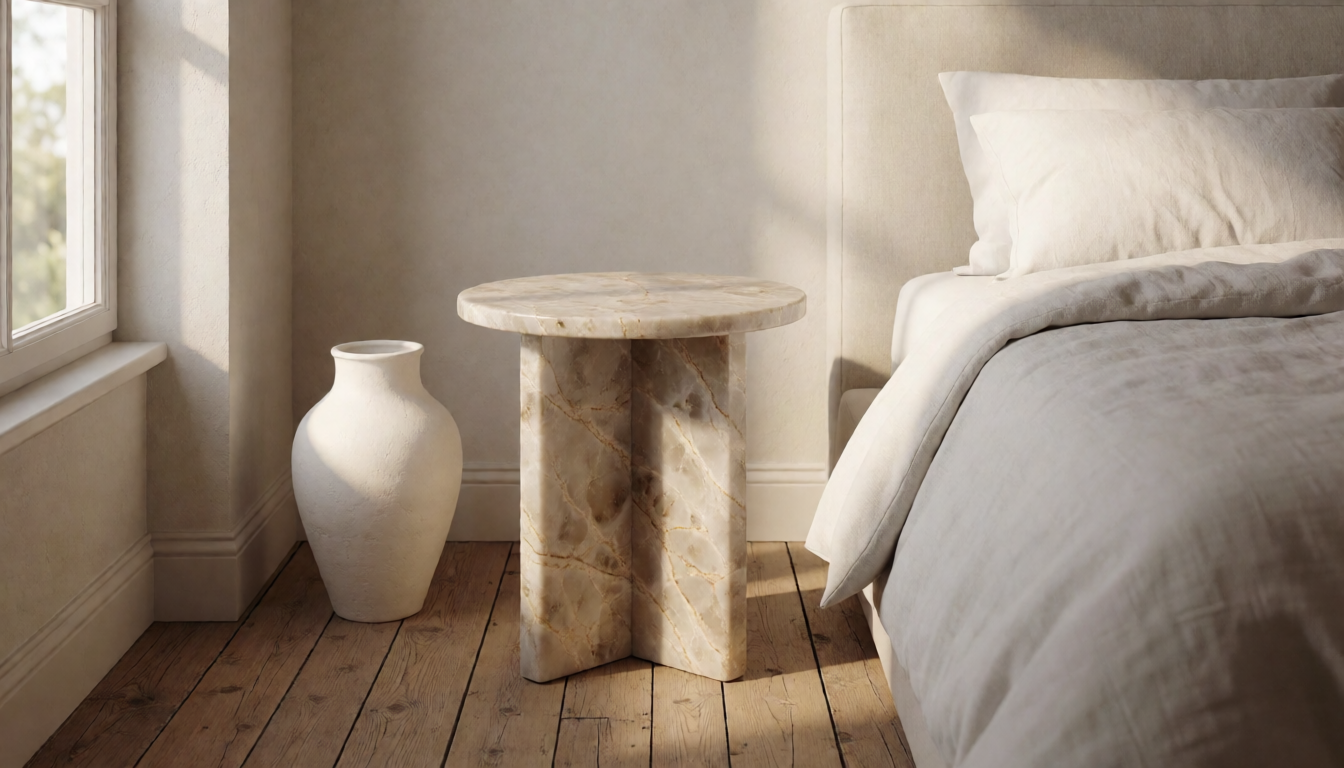
Importers looking to stock premium furniture for US and EU markets face a critical choice at the factory floor: resin composites or genuine geological materials. As a buyer evaluating options for your Shopify store or wholesale catalog, understanding the tangible differences between a natural stone side table and its synthetic counterpart is essential for long-term brand stability. While resin offers lower upfront costs, it introduces risks of warping, discoloration, and customer complaints that can erode profit margins quickly. Solid stone provides durability that justifies higher retail prices, ensuring repeat orders from designers and high-end retailers who value longevity over initial savings.
Structural Integrity and Longevity
When you order a stone vs resin table, the first thing to inspect is structural rigidity. Resin tables often rely on thick internal cores or hidden wooden frames to prevent sagging. A standard 60cm diameter round resin side table typically weighs between 4kg and 6kg, making it feel light under pressure. In contrast, a comparable natural stone side table made from granite or quartzite usually weighs between 15kg and 25kg. This density is not just about heft; it is about resistance to impact and thermal shock.
For dropshippers sourcing directly, the weight difference impacts shipping logistics significantly. Shipping one ton of resin furniture moves roughly twice as many units compared to stone by volume. However, the cost per unit for stone remains higher due to raw material extraction and processing. From a quality control perspective, resin is susceptible to UV degradation. If your customers leave these tables on patios or near large windows without protection, the surface will yellow and become brittle within 12 to 18 months. Solid granite does not fade in sunlight. It maintains its polish indefinitely with basic cleaning. This difference dictates your warranty terms. You can confidently offer a 5-year finish guarantee on stone products because the material itself cannot delaminate or warp under normal living conditions.
Surface Durability and Finish Consistency
The visual appeal of a marble side table is often its selling point, but the surface chemistry differs vastly between materials. Resin surfaces are essentially plasticized aggregates. They are prone to scratching from keys, pet claws, and dropped jewelry. More critically, they suffer from heat sensitivity. Placing a hot coffee cup directly on resin can leave a permanent white ring or scorch mark within seconds. Stone has inherent thermal mass that absorbs heat without damaging the surface structure.
Buyers must also consider porosity. Many natural stone side tables are sealed with penetrating impregnators to resist stains from wine or oil. While high-quality resins claim stain resistance, they often lack depth. If a customer spills red wine and it sits for an hour, resin may absorb the pigment into the matrix permanently if the UV layer is compromised. Stone requires maintenance but offers repairability. A scratch on granite can be polished out with diamond abrasives during your next manufacturing cycle. Resin scratches are cosmetic blemishes that cannot be removed without sanding down the entire piece, which alters its dimensions and finish quality.
When negotiating with a manufacturer like Gladystone, ask for samples of both materials to test scratch resistance with a steel ball point pen. Ask specifically about the resin formulation used if they claim “stone-like” durability. Most standard resins use acrylic or polyester binders that soften in direct sun. True geological stone uses no binders other than natural mineral cementation. This distinction affects how you present the product to your end customers. Transparency builds trust. If a buyer knows the table is real stone, they are less likely to dispute damage claims caused by normal household wear and tear.
Cost Analysis and Profit Margins
The immediate cost difference between sourcing a resin unit and a solid stone unit is substantial. A basic resin side table might retail for $150 to $200 USD at your store, with a landed cost of $30 to $45 USD depending on shipping terms. A comparable solid stone piece, such as a 45cm square granite table, often retails between $300 and $500 USD, with a landed cost ranging from $80 to $120 USD.
However, calculating true profit requires factoring in return rates and warranty claims. Resin furniture frequently returns due to cracking or discoloration within the first year. These reverse logistics costs can eat 20% to 30% of your gross margin on affected SKUs. Stone furniture returns are rare unless there is a shipping breakage issue, which is mitigated by proper crating and insurance. The higher unit cost of stone is offset by lower overhead related to customer service and replacements.
For wholesalers supplying interior designers, the price point allows for better positioning. Designers prefer materials that age well in high-traffic homes or luxury hotels. They are willing to pay a premium for a natural stone side table because it elevates the perceived value of their own design schemes. Resin tables are often viewed as disposable decor, limiting your ability to negotiate favorable terms with boutique furniture chains. When you present data on material longevity and repairability, you shift the conversation from unit price to total cost of ownership. This is a crucial metric for B2B buyers who manage inventory over years rather than months.
Sourcing Criteria for Importers
As an importer evaluating suppliers, focus on these specific metrics before placing a large order. First, verify the stone origin. Chinese quarries offer diverse varieties like black granite, brown leather grain, and white calcite. Ensure the supplier can provide consistent slab sizes. A standard slab size of 320cm x 185cm limits the maximum table diameter to roughly 150cm without joining. For side tables, you typically need smaller dimensions, which are easier to source from stock slabs.
Second, inspect the polishing process. Solid stone requires multiple stages of grinding and honing to achieve a mirror finish. If your supplier uses a low-quality polish, the table may look cloudy or dull after six months of exposure to humidity changes between China and Europe. Request photos of polished edges; they should show no chipping or waviness. Third, discuss packaging standards. Stone is heavy and brittle on impact. You need double-wall corrugated boxes with internal foam inserts that distribute shock loads. Resin tables can often be shipped in simpler packaging, but stone requires robust protection to prevent cracking during ocean transit.
Finally, confirm lead times. Cutting and polishing solid stone takes longer than molding resin. Expect a production cycle of 15 to 25 days for standard slab items. For custom cuts or rare stone varieties like emerald green granite, add another 10 to 14 days. Resin tables usually move faster, around 7 to 10 days. Understanding these timelines helps you manage your dropshipping workflow and avoid stockouts during peak seasons. By prioritizing genuine geological materials backed by a reliable factory process, you secure a brand reputation built on quality rather than cost-cutting compromises.