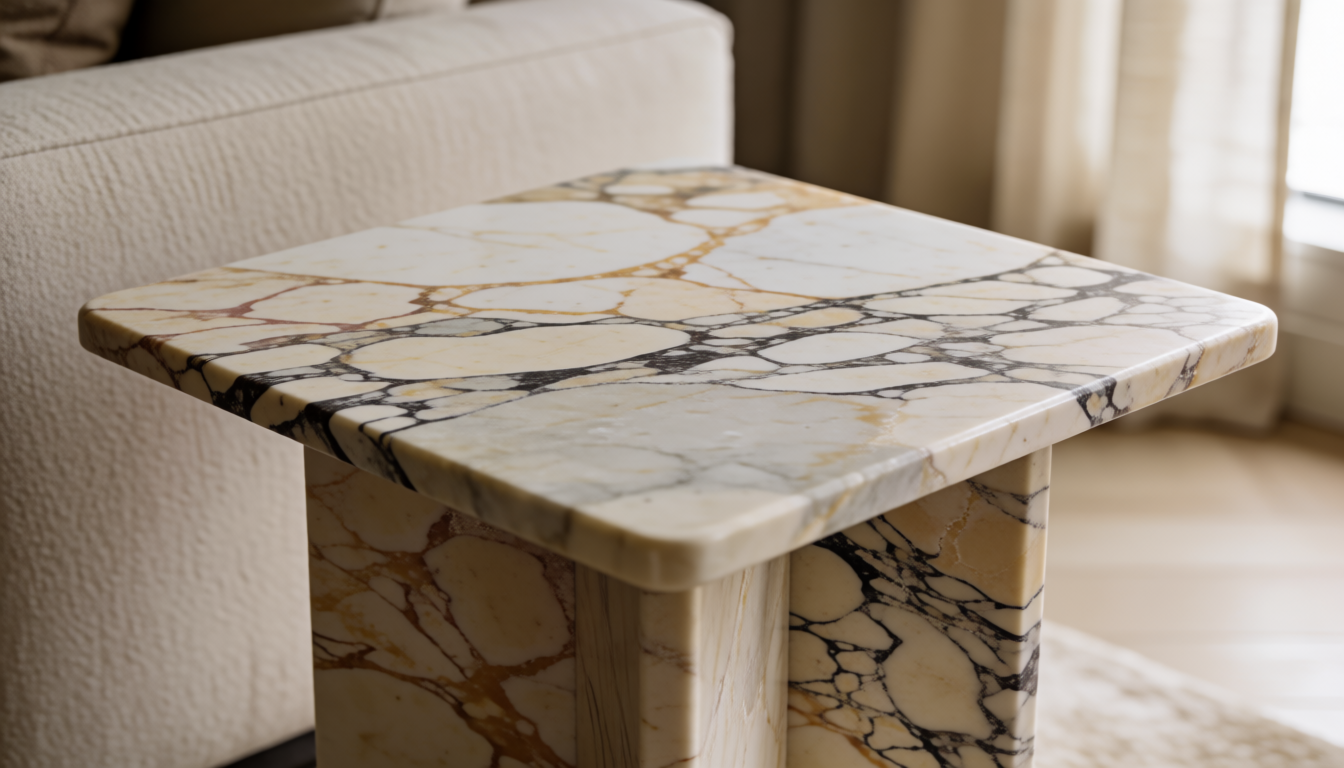
Importers and interior designers often seek furniture that instantly elevates a room without demanding complex installation or maintenance. A square marble side table fits this brief perfectly. It offers the durability of stone with a clean geometric silhouette. For buyers sourcing from China, understanding the specifics of this category is key to avoiding margin erosion and quality issues. At Gladystone, we manufacture these pieces for wholesalers, dropshippers, and white-label brands who need reliable supply chains. We focus on practical details: slab dimensions, edge finishing options, and realistic lead times that keep your inventory moving.
Sourcing Specifications and Slab Variability
The core challenge in sourcing a square stone side table is managing natural stone variability. Marble and quartzite slabs come from quarries with distinct veining patterns and color consistency. A buyer must understand that no two stones are identical, even within the same batch. This affects your marketing strategy; you cannot promise an exact match for every single unit sold.
When requesting samples, specify the slab thickness. For side tables, 18mm to 20mm is the standard thickness used by Gladystone. Thinner slabs (12mm) require heavy reinforcement underneath and are prone to cracking during shipping if not packed perfectly. Heavier slabs add significant weight per unit, which impacts freight costs. A typical 60x60cm square top with a 20mm thickness weighs roughly 45-50kg depending on the stone density.
Ask your supplier about slab reserves. Do they have enough stock to fulfill large orders without delays? If you order 1,000 pieces, will they be cut from one massive slab or multiple smaller ones? Multiple cuts increase waste and cost but ensure better color consistency. We recommend locking in a specific quarry reserve before production starts. This prevents the common issue of receiving tables with drastically different veining halfway through a container load.
Edge Finishing Options and Cost Implications
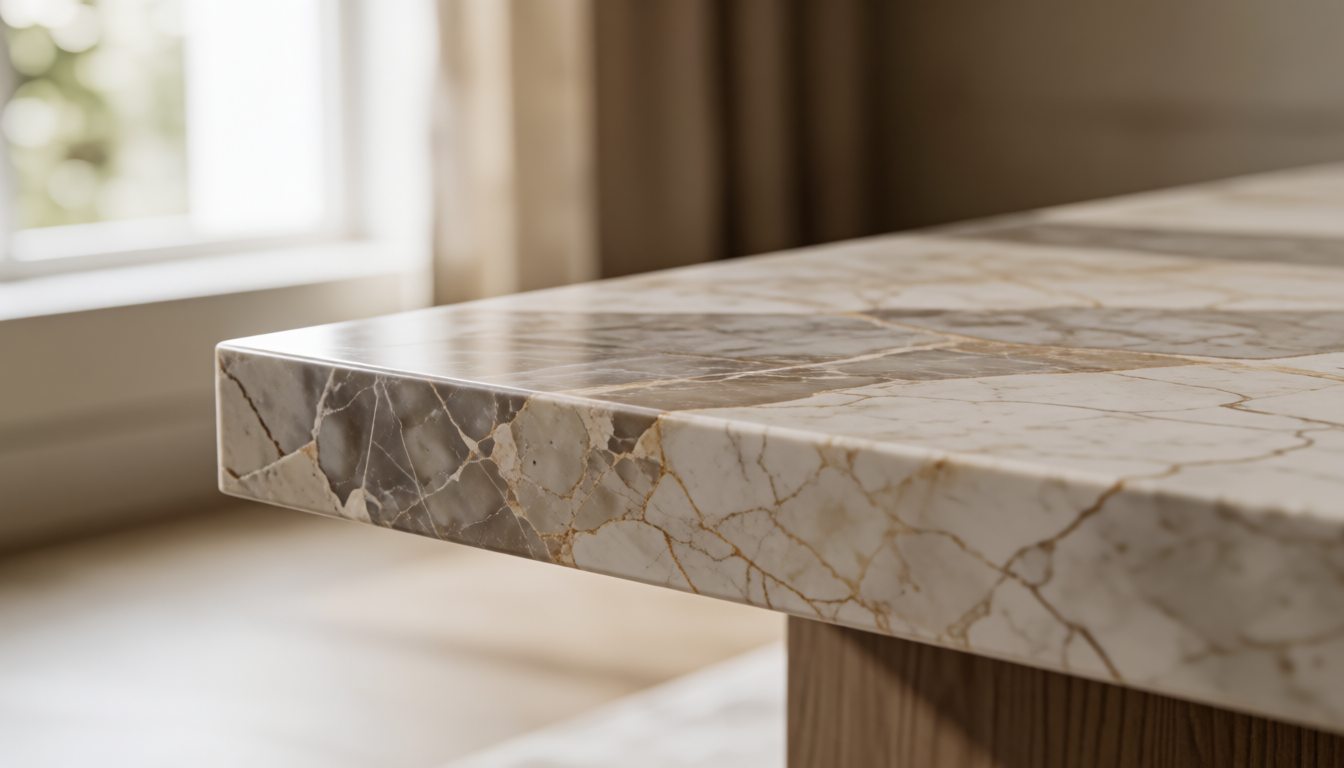
The edge profile is the second most critical factor after slab selection. It defines the visual weight of the piece and dictates the finishing cost. Buyers often overlook how much this detail impacts the final price. A simple polished edge is the cheapest option, but it looks dated in high-end retail. For a modern aesthetic, we suggest considering beveled edges or book-matched profiles.
Gladystone typically offers three standard finishes for stone furniture:
1. High-Polished: Mirror-like finish that highlights veining. Roughly $5-$8 per square meter extra.
2. Honed/Matte: Soft, non-reflective surface. Ideal for homes with pets or high traffic. Slightly cheaper than polished.
3. Leathered: Textured surface that feels like skin. Very popular in US and EU markets currently.
Ask specifically about the “mitered” edge vs. a simple 90-degree cut. A mitered edge creates a cleaner corner, essential for a true square look. However, it increases labor time by 20-30%. If you are price-sensitive, stick to standard polished edges and rely on your design team to sell the stone’s natural beauty rather than the edge profile.
Structural Integrity and Shipping Readiness
Structural integrity is often assumed but frequently overlooked until a customer complains about a wobbly table. Stone is heavy, but it can fracture if the internal support structure fails. For a square marble side table, the mechanism underneath matters just as much as the top surface.
Standard practice involves a steel frame or a solid wood base with a metal insert to distribute weight evenly. We use reinforced corner brackets for all our stone tables. These are hidden during assembly but prevent the slab from bowing under its own weight. When calculating your landed cost, factor in the weight of the packaging. Stone furniture requires double-wall corrugated boxes with foam inserts or wooden crates for ocean freight.
Lead times vary based on production queue and shipping route. A standard order for a marble table typically takes 25-35 days from deposit to delivery at US West Coast ports. Customizations like specific edge profiles or special stone colors can add 10-15 days. Always build a buffer of two weeks into your inventory planning. If a port strike occurs or customs clearance is delayed, having this buffer prevents stockouts.
Quality Control and Pre-Shipment Inspection
Before approving a mass production order, you must define clear quality control (QC) standards. What happens if a slab arrives with a hidden crack? Or if the polish isn’t consistent across 500 units? Gladystone performs internal QC before packing, but buyers should request pre-shipment photos or videos of random samples.
Key inspection points include:
* Crack Detection: Use backlighting to check for hairline cracks that might not be visible from above.
* Polish Consistency: Ensure the mirror shine is uniform across the entire surface.
* Edge Straightness: Measure diagonals; a square table must have equal diagonal lengths within 1-2mm tolerance.
* Grout/Sealant Lines: Check for excess adhesive or uneven sealing at the base connection points.
For white-label brands, packaging is your brand asset. We can print your logo on cartons and include custom care cards inside the box. However, ensure your design team approves the mockup first. Incorrect font sizes or low-resolution logos waste money on rejected containers. Always order a trial batch of 50-100 units before committing to a full container. This allows you to test market response and refine your specifications without risking massive capital outlay.