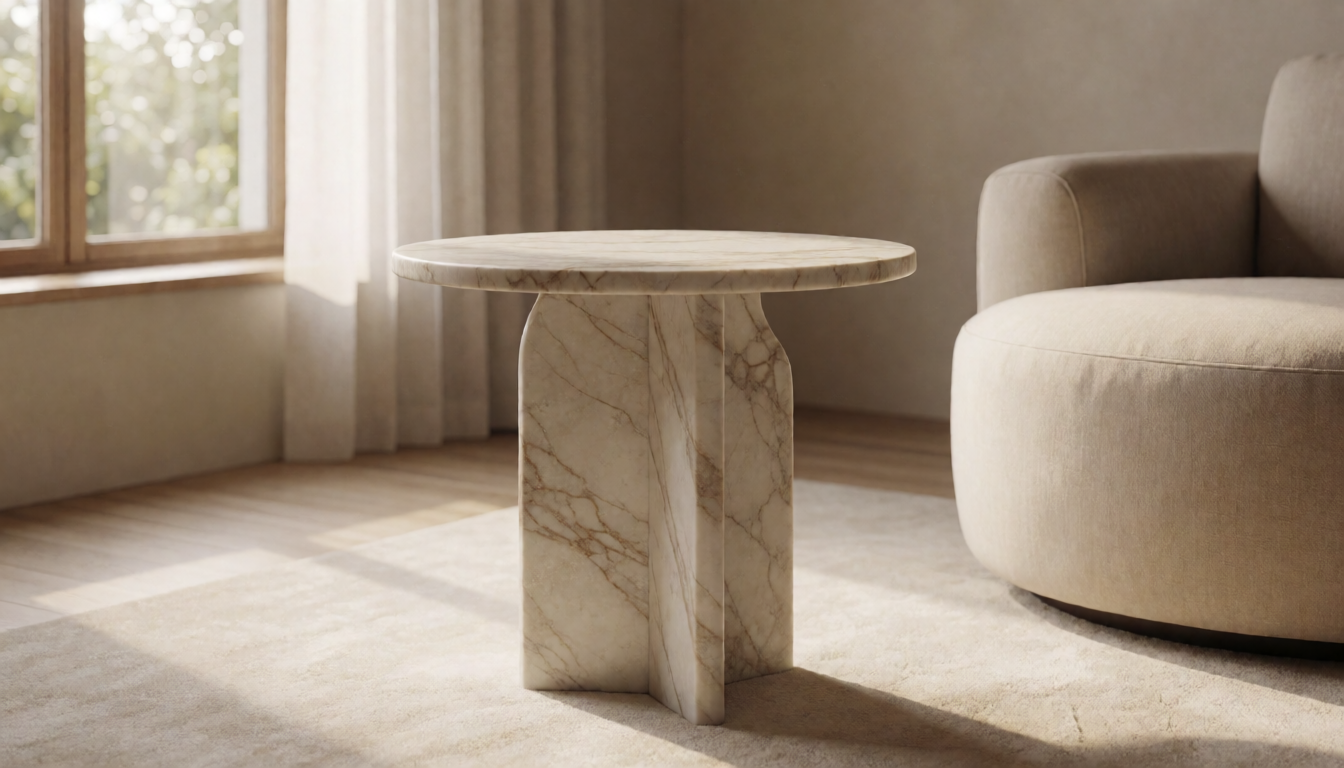
Round marble side tables offer a distinct advantage in modern interiors where floor space is at a premium. Unlike rectangular counterparts, the circular geometry eliminates sharp corners, creating a safer and more fluid visual flow for living rooms or bedrooms. For importers sourcing from China, these pieces represent a high-margin category because they combine raw material prestige with geometric versatility. A typical unit weighs between 25 to 35 kg depending on the thickness of the slab. This weight factor is critical when calculating shipping costs; thicker slabs (2cm) are lighter and cheaper to ship but may feel less substantial than 3cm variants. When evaluating a supplier like Gladystone, you must verify their ability to maintain consistent edge profiles across large production runs. Consistency in polishing and edge finishing is often the differentiator between a mid-range product and a premium dropship item.
Understanding Material Specifications and Weight Classifications
The market for round stone side tables is split primarily between Carrara marble, Calacatta gold, and quartzite. Importers must understand that “marble” is a marketing term; technically, these are metamorphic rocks with varying hardness. For dropshipping models where you cannot inspect the item before customer purchase, slab origin matters immensely. A table made from Italian imported slabs commands 40% to 60% higher retail prices than those using domestic Chinese quarries like Fangshan or Sichuan.
When negotiating with a factory, ask for specific weight data per unit. A standard round top with a 30cm bowl thickness usually weighs roughly 12 kg. Increasing the diameter to 60cm and maintaining the same depth increases weight significantly, often pushing the total mass past 35 kg. This jump in weight directly impacts freight charges from ports like Shanghai or Yantian to US West Coast hubs. If you are selling a round marble side table, your cost calculation must include a buffer for heavy cargo surcharges. Suppliers who offer hollow-core bases or lightweight composite stone options can help mitigate these logistics costs, though they sacrifice the “heavy feel” that customers expect from natural stone.
Critical Quality Checks for Natural Stone Surfaces
Visual inspection protocols are non-negotiable when sourcing marble tables for white-label brands. The most common issue in this sector is inconsistent veining density. A slab with uniform gray veins looks premium, while one with stark contrasts or large voids may be perceived as defective by US consumers unless the finish is exceptionally high. You must request sample booklets showing “good,” “average,” and “reject” categories before placing bulk orders.
Edge finishing is the second major quality checkpoint. A round table relies entirely on its perimeter to hide minor surface imperfections. Suppliers should offer a choice between polished, honed, or leathered edges. Polished edges reflect light and highlight any chipping, whereas a soft-rounded edge (bullnose) can mask slight irregularities in the slab cutting process. For B2B buyers, specifying a “soft touch” edge profile is often a smart move to ensure customer satisfaction without demanding perfect stone extraction.
Additionally, check for natural fissures that run parallel to the table’s rotation axis. These structural flaws are hidden from view but can cause cracks under load. Ask your supplier to X-ray or ultrasonically scan slabs before cutting them into circles. This inspection step adds a few hours to lead time but prevents costly returns later. Remember that natural stone is never identical; two tables from the same slab will have different patterns. Transparency about this variance builds trust with interior designers who expect unique pieces for their clients.
Logistics, Lead Times, and Shipping Cost Optimization
Lead times for stone furniture vary significantly based on raw material availability and cutting complexity. For a standard round marble side table, domestic Chinese production typically requires 15 to 20 days after order confirmation. If you specify exotic colors like blue-grey or pink granite, add another 7 to 14 days for quarry sourcing. Sea freight is the only viable option for heavy stone items; air freight becomes cost-prohibitive once weights exceed 30 kg per pallet.
To optimize shipping costs, consider how you pack the units. A 60cm round table fits efficiently into a standard 20ft container alongside other flat-pack furniture like vanities or dining tables. However, fragile edges require robust corner protection during transit. Ask the manufacturer to include foam inserts specifically designed for circular perimeters. Without these, vibration on a long ocean voyage can chip the polished edge of a round stone side table, resulting in high rejection rates upon arrival.
Customization options like gold leaf inlays or brushed brass hardware add value but extend production time by 5 to 10 days. For dropshippers targeting fast-fashion interior trends, standard finishes with minimal customization offer the best balance of speed and margin. Always negotiate Incoterms carefully; DDP (Delivered Duty Paid) terms are ideal for US/EU buyers, meaning the factory handles export paperwork and freight forwarding, though this usually adds 8% to 12% to the total landed cost.
Strategies for Sourcing High-Margin Stone Accessories
Sourcing a round marble side table successfully requires more than just finding low-cost stone. The real profit lies in value-added services like custom hardware mounting and anti-slip base integration. Many high-end retailers now prefer stone tables with hidden magnetic or adjustable metal bases that allow the top to be removed for cleaning or replacement. These engineering upgrades require precise collaboration between your design team and the factory’s CNC department.
When communicating with suppliers, provide clear CAD drawings detailing hole positions for mounting brackets. Standardized hole patterns reduce machining errors and waste. Furthermore, offer to co-brand packaging materials if you plan to sell under your own Shopify store name. A branded box that explains how to care for natural stone can justify a higher retail markup of 200% to 300% over wholesale costs.
Finally, maintain a relationship with at least three different factories to mitigate supply chain risks. Stone quarries are subject to geological changes and export restrictions. By diversifying your supplier base across provinces like Guangdong for processing and Fujian for quarrying, you ensure continuity even if one region faces logistical delays. Focus on partners who prioritize quality control over raw speed; a delayed shipment is better than a damaged product that destroys your brand reputation.