Importers sourcing stone vanities for the US or EU market know one thing: the vessel sink is the hero of the bathroom countertop. Among natural stone options, white marble dominates the conversation, yet two names consistently pull the highest volume orders: Carrara and Calacatta. As a buyer evaluating stock for your dropshipping store or wholesale catalog, understanding why these specific varieties outperform others requires looking beyond aesthetics to grain structure, vein patterns, and production realities. This piece breaks down the mechanics behind the sales leadership of the white marble vessel sink category and what you need to verify with a supplier like Gladystone before placing a bulk order.
Grain Structure Defines Durability and Cost
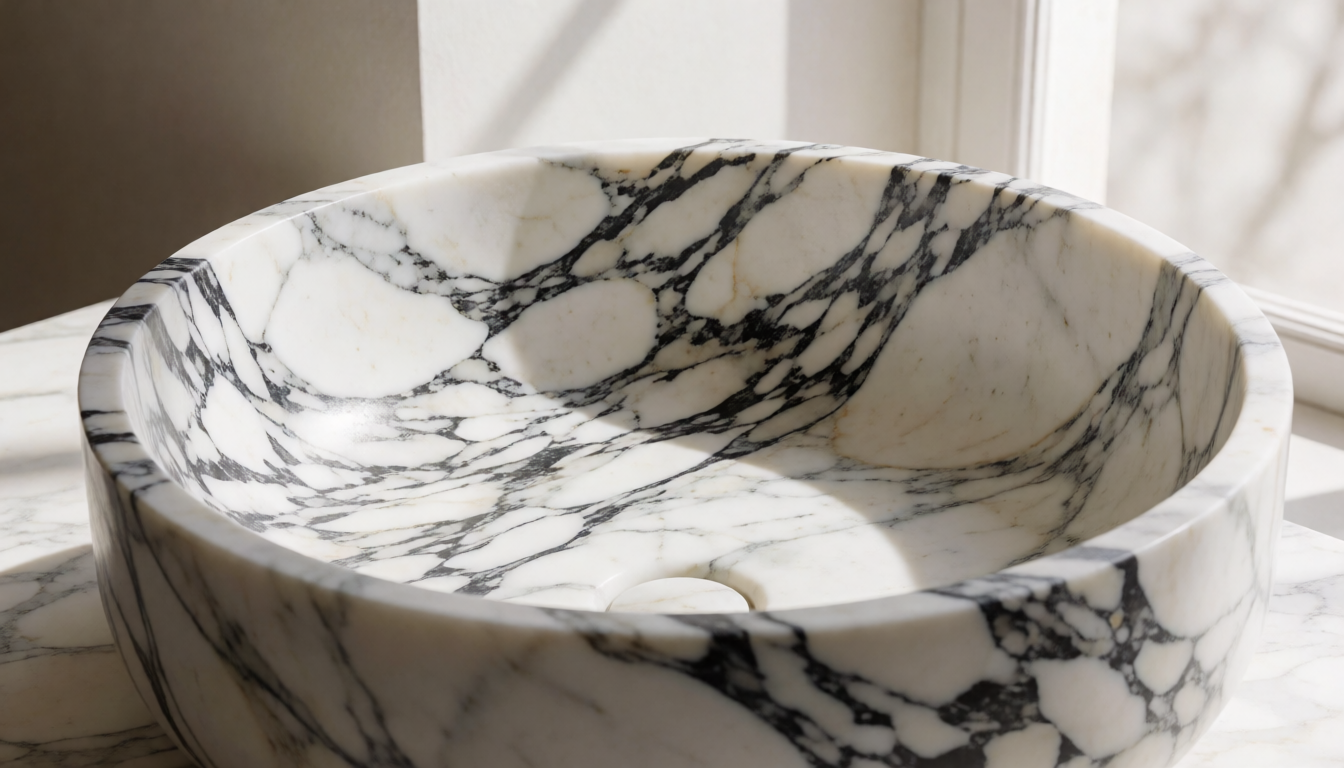
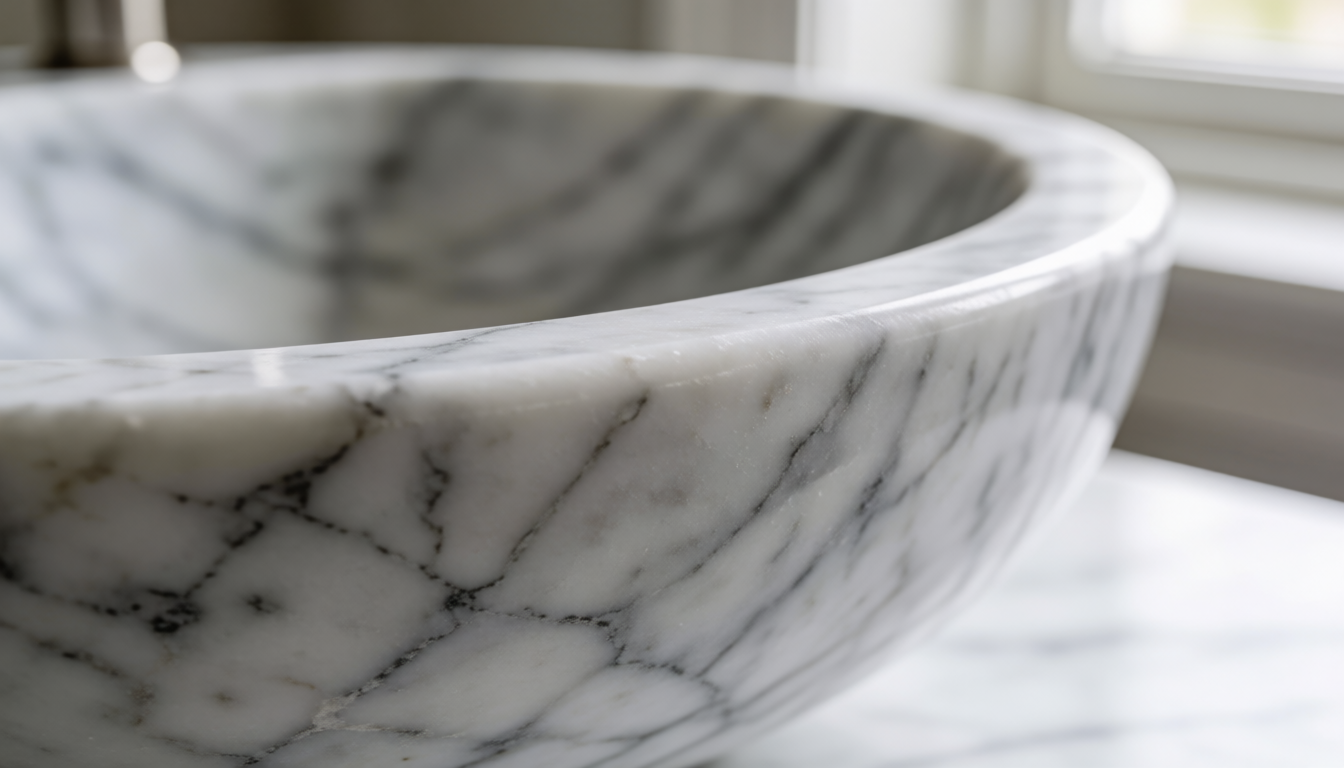
The primary reason these two varieties lead sales comes down to grain consistency. Carrara marble is defined by a creamy white base with gray, soft veining. Calacatta features a stark white background with bold, high-contrast veins that often branch into the stone. For an importer, this visual distinction dictates pricing tiers and target demographics.
Carrara is generally more affordable because its grain structure is uniform and dense. The factory yield on Carrara slabs is higher; fewer pieces get rejected for heavy spotting or cracks compared to Calacatta. When you order a carrara marble vessel sink, you are typically buying a product with lower unit costs, making it ideal for high-volume dropshipping models where price sensitivity among end consumers is high.
Calacatta commands a premium because the stone is rarer and harder to quarry cleanly. The veins can be unpredictable, meaning a single slab might yield one perfect sink or several pieces with unusable cracks. This scarcity drives up the raw material cost. If you are targeting luxury interior design projects in California or New York, Calacatta is the necessary choice. However, for general retail distribution, the margin on Carrara often provides a safer buffer against shipping losses and breakage during transit. Always ask your supplier for a breakdown of “first-class” versus “second-class” slabs before finalizing a calacatta marble sink order, as these categories can vary significantly in price per kilogram.
Production Yield and Lead Time Realities
When calculating your landed cost, you must factor in production yield. This is where the “importer perspective” becomes critical. A white marble vessel sink is carved from a slab. If the stone has micro-fractures or color inconsistencies, that section of the slab becomes scrap. With Calacatta, the rejection rate during carving can be as high as 30% to 40%. Carrara is more forgiving, often allowing for an 85% yield.
This difference directly impacts your lead time and MOQ (Minimum Order Quantity). If you order a batch of Calacatta sinks expecting a specific delivery date, the factory needs to account for potential delays in quarry extraction or slab polishing. Suppliers with access to multiple quarries can mitigate this risk better than single-source operations.
For dropshippers, speed is currency. A Carrara order might have a standard lead time of 15 to 20 days from deposit to shipment. A Calacatta order requiring specific vein matching could extend that window by another 7 to 10 days. You must ask the supplier: “What is your current inventory availability for these specific slab grades?” Do not rely on promised dates without verifying current stock levels. The factory needs to reserve slabs specifically for your order to avoid mixing in lower-grade stone that might compromise your brand’s reputation for quality.
Shipping Logistics and Damage Mitigation
The logistics of shipping heavy natural stone are a major cost driver. A standard vessel sink typically weighs between 15 kg and 30 kg (33 to 66 lbs), depending on the basin depth and wall thickness. When palletizing these items, you are dealing with fragile goods that can crack if not packed correctly.
Carrara’s slightly higher density and uniform grain make it marginally less prone to impact cracking during ocean freight compared to Calacatta, which is often more brittle due to its unique crystalline structure. However, the real issue is vibration and stacking. If a container is overfilled or shifted by rough seas, the sinks can shatter upon arrival.
Ask your supplier about their packaging specifications. High-quality export packing involves individual foam inserts for every sink, reinforced cardboard corners, and heavy-duty strapping on the pallets. For a 20-foot container filled with roughly 40 to 50 units of vessel sinks, you need to budget for significant insurance costs if the supplier does not provide robust packaging guarantees. Remember that damaged goods returning from the US or EU will eat into your profit margins faster than lower-quality stone would. Verify that the factory has a clear protocol for replacing broken units immediately upon notification of damage.
Customization Options and MOQ Flexibility
One of the biggest advantages of working with a dedicated manufacturer like Gladystone is the ability to customize vessel sinks without breaking the bank on custom tooling. While Carrara and Calacatta are standard, you can still influence the final product through finish options and shape modifications.
Most buyers look for a specific depth for their vessel sink, ranging from 10 cm to 14 cm (approx. 4 to 5.5 inches). Deeper sinks hide plumbing better but add weight and cost. Shallow sinks fit under standard vanity tops more easily but are harder to clean. The factory can adjust the CNC programming to match these requirements.
When discussing MOQs, be realistic. A standard order for a white marble vessel sink might start at 50 to 100 units depending on the stone grade. For Calacatta, the MOQ could be higher due to the need for specific slab matching. Some suppliers allow mixed orders where you combine different shapes or finishes (e.g., honed vs. polished) to diversify your inventory without hitting a massive threshold. Always negotiate a “trial run” quantity before committing to a full container load. This approach minimizes risk for new importers entering the market.
Final Considerations for Sourcing Success
Sourcing stone vessel sinks is not just about picking the pretty picture. It is about understanding the geological differences between Carrara and Calacatta, managing production yields, and securing reliable logistics. The carrara marble vessel sink offers volume and value, while the calacatta marble sink delivers luxury and exclusivity. Both categories lead sales because they meet distinct segments of the North American and European markets effectively.
Before finalizing your contract, review the supplier’s quality control reports. Ask for photos of the raw slabs before cutting to ensure you are getting what was promised. Check their shipping history for damage rates. A transparent factory will share these metrics willingly. By focusing on these practical details, you can build a supply chain that supports consistent sales and minimizes operational headaches. The right stone choice combined with a reliable partner ensures your customers receive a product they love, keeping your business profitable in the long run.