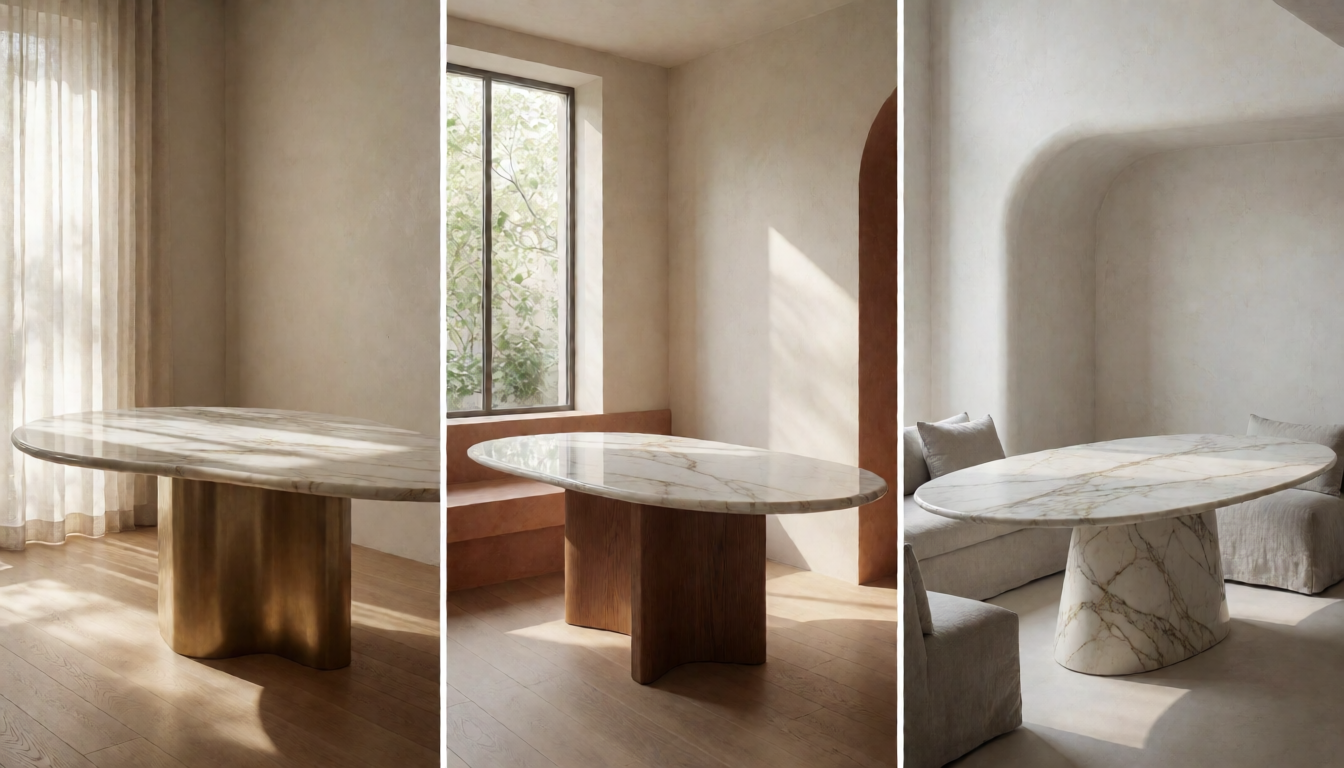
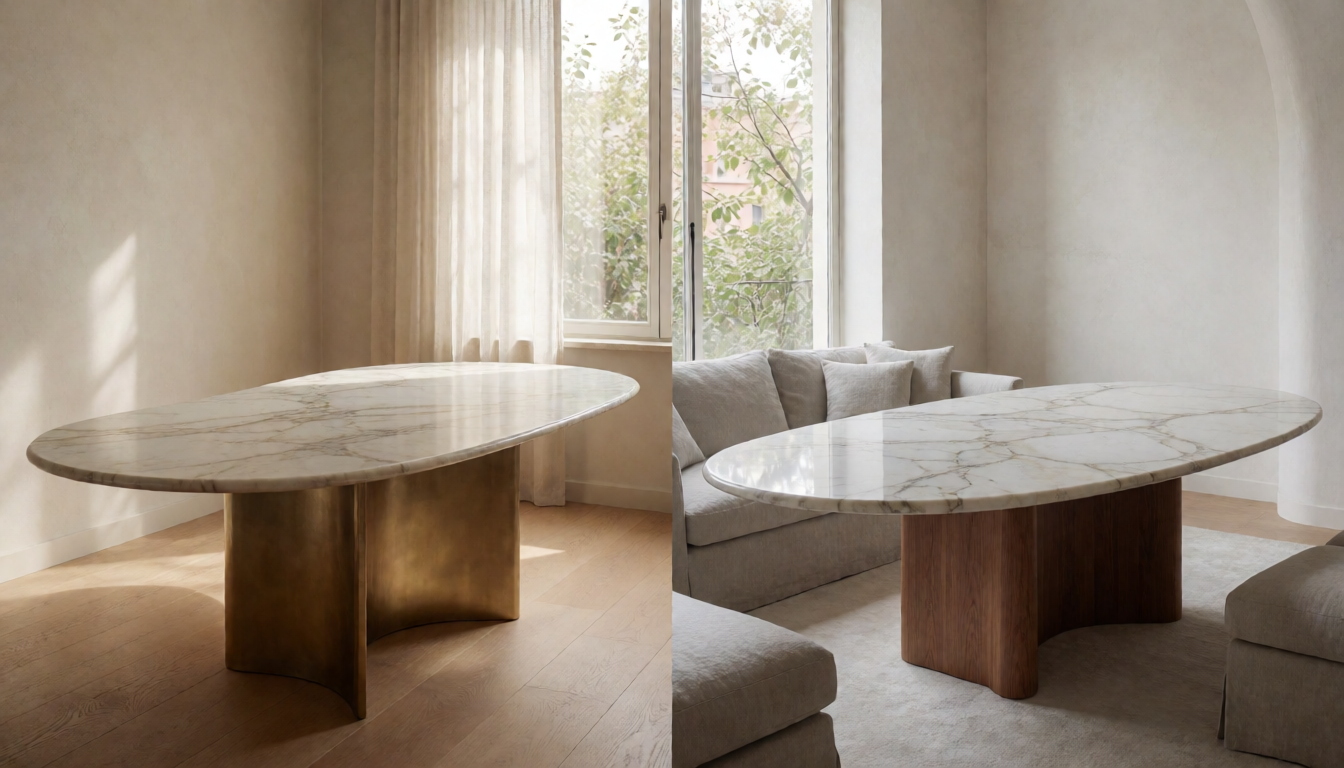
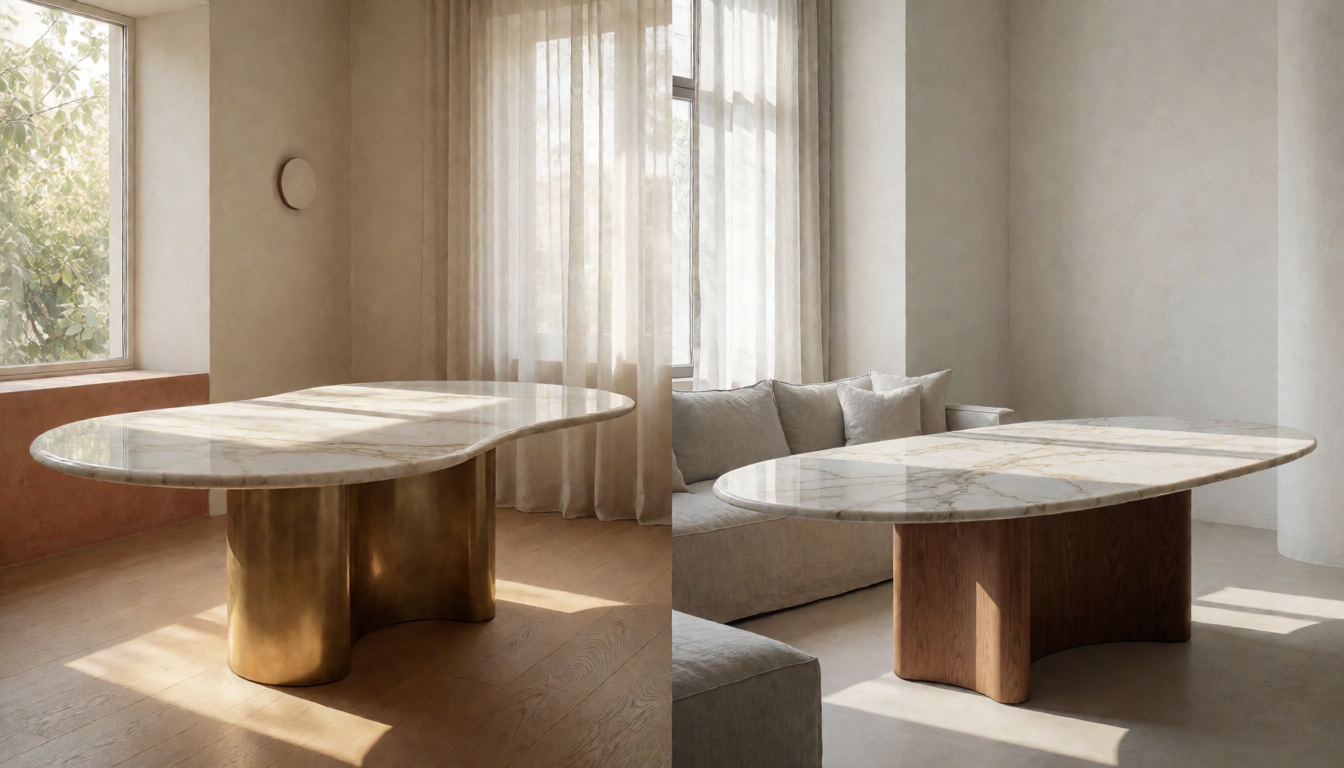
The dining table has always been the heart of the home—but in 2026, it’s also becoming a sculptural statement. The era of the standard rectangular marble-top table is giving way to organic shapes, sustainable sourcing, and mixed-material designs that reflect a more thoughtful approach to luxury.
Organic Shapes: Breaking the Rectangle
Round, oval, and freeform marble dining tables are surging in popularity. These shapes soften interior spaces and encourage more intimate dining experiences. For wholesalers and furniture designers, the message is clear: stock curves. Oval marble tables, in particular, work beautifully in both compact urban dining rooms and grand open-plan spaces. The natural veining of the stone becomes a focal point, especially when bookmatched across a large surface.
Sustainability in Stone Furniture
Buyers in 2026 actively ask about the origin of their stone. Sustainable stone furniture—made from reclaimed marble offcuts or sourced from quarries with responsible water-management practices—commands a premium. Designers specifying marble tables for hospitality or high-end residential projects should be prepared to provide provenance documentation. Transparency is becoming as important as aesthetics.
Mixed Materials: Wood, Metal & Stone
The most compelling marble dining tables in 2026 pair natural stone with warm wood bases or brushed brass legs. This mixing of textures—cool stone against warm timber or sleek metal—creates visual depth and prevents the stone from feeling too heavy. Matte (honed) marble finishes are especially popular in these compositions, offering a softer, more livable luxury.
At Glady Stone, we supply premium marble slabs and finished marble dining tables to furniture wholesalers and designers worldwide. Our sustainable stone collection includes reclaimed marble options and FSC-certified wood base pairings. Contact our wholesale team to discuss custom marble table top fabrication.
Explore our marble dining table collection at Glady Stone.
Beyond mere functionality, these organic forms invite a deeper interaction with materiality. When selecting freeform or oval slabs for large-scale projects, consider how the natural veining dictates the silhouette of your table top. Unlike rigid rectangles that enforce symmetry, irregular shapes allow every guest to sit equidistant from unique stone patterns, ensuring no two seating arrangements feel identical. For wholesalers integrating these into catalogs, offering a selection of ‘one-of-a-kind’ profiles creates an exclusive market appeal. This approach transforms standard dining furniture into bespoke art pieces where the boundary between architecture and interior design blurs seamlessly.
The intersection of aesthetics and ecology defines the modern stone landscape in 2026. Sourcing reclaimed marble offcuts not only reduces landfill waste but also captures history embedded within ancient quarry walls that might otherwise be discarded. This narrative adds significant value for hospitality designers seeking to market eco-conscious venues without compromising on luxury finishes. Furthermore, responsible water-management practices at partner quarries ensure minimal environmental footprint during extraction. Consumers today are willing to pay a premium for transparency; therefore, providing detailed provenance documentation alongside your finished products is no longer optional but essential. This shift demands that supply chains prioritize ethical logistics and carbon-neutral shipping methods.
Innovative fabrication techniques now allow stone artisans to manipulate marble into complex curves previously reserved for sculpture studios. Advanced CNC routing enables the creation of seamless transitions between wood bases and polished stone surfaces, eliminating awkward joints while maximizing structural integrity. For high-end residential projects, this hybrid approach offers a tactile experience where cool, smooth calacatta contrasts warmly against brushed brass or reclaimed oak legs. Designers must also consider lighting interactions; organic shapes diffuse light differently than flat planes, casting dynamic shadows that change throughout the day. By integrating these mixed-material compositions into your portfolio, you address both the visual softness required for relaxation zones and the durability expected in commercial dining environments.
Frequently Asked Questions
How does reclaimed marble compare to new quarry stone?
Reclaimed marble offers unique patina and character with existing veining patterns that cannot be replicated. It reduces environmental impact by utilizing waste materials, though availability varies. Both options provide superior durability for dining surfaces.
What maintenance is required for honed versus polished organic tables?
Honed finishes are more forgiving of scratches and ideal for high-traffic commercial spaces requiring matte aesthetics. Polished surfaces demand regular cleaning to maintain shine but offer higher light reflection, enhancing the visual depth of natural stone veining.
Can organic shapes fit into small urban dining rooms?
Yes, oval or kidney-shaped tables maximize corner space better than rectangular units. Their rounded edges improve safety in compact layouts while allowing flexible seating arrangements that accommodate varying numbers of guests comfortably.
Stone Comparison
| Stone/Product | Best For | Key Feature | Care Level |
| Calacatta Gold (Polished) | Luxury Hospitality | High-contrast veining, reflective surface | Medium-High |
| Reclaimed Carrara (Honed) | Eco-Conscious Residential | Patina development, reduced waste footprint | Low-Medium |
| Brushed Brass + Wood Base Hybrid | Modern Commercial Dining | Mixed textures, thermal comfort underfoot | Medium-Low |