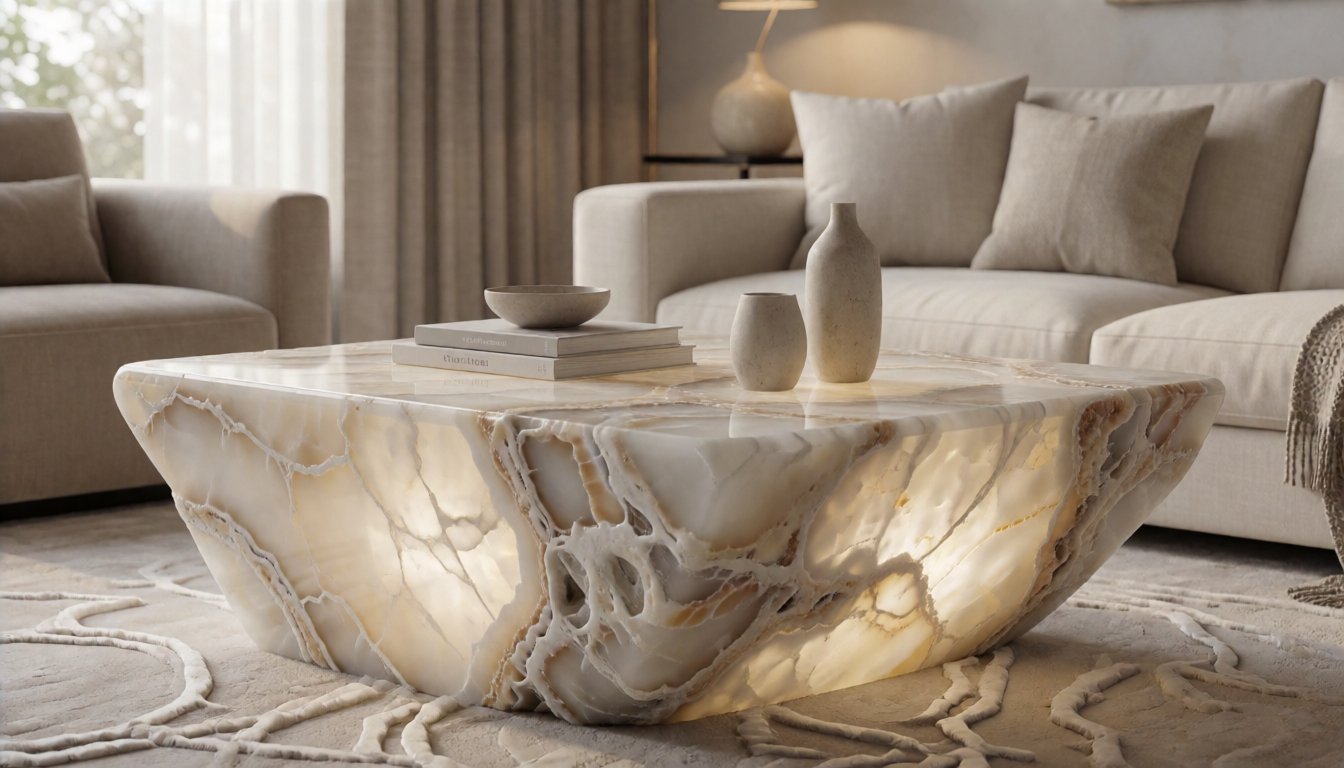
When sourcing high-end furniture for US or EU markets, few materials command as much attention—or skepticism—as onyx. Buyers often ask if a translucent stone table is truly worth its premium price tag compared to standard marble or quartz alternatives. The short answer depends entirely on your specific business model and target customer. For the average homeowner seeking durability under heavy daily use, glass-topped tables might suffice. However, for interior designers working with luxury clients who value unique aesthetics over pure utility, an onyx coffee table wholesale inventory can be a high-margin differentiator that justifies its cost per square foot. Understanding the technical nuances of this material is essential before committing capital to stock these items.
Material Reality: Weight, Fragility, and Installation Costs
The primary concern for any importer sourcing stone furniture is structural integrity. Unlike granite or marble, which are dense and resistant to scratches, natural onyx is a form of calcite that reacts strongly with acids like lemon juice or wine. While this reaction creates a desirable visual effect known as “etching,” it requires specific care instructions that must be transparently communicated to end consumers.
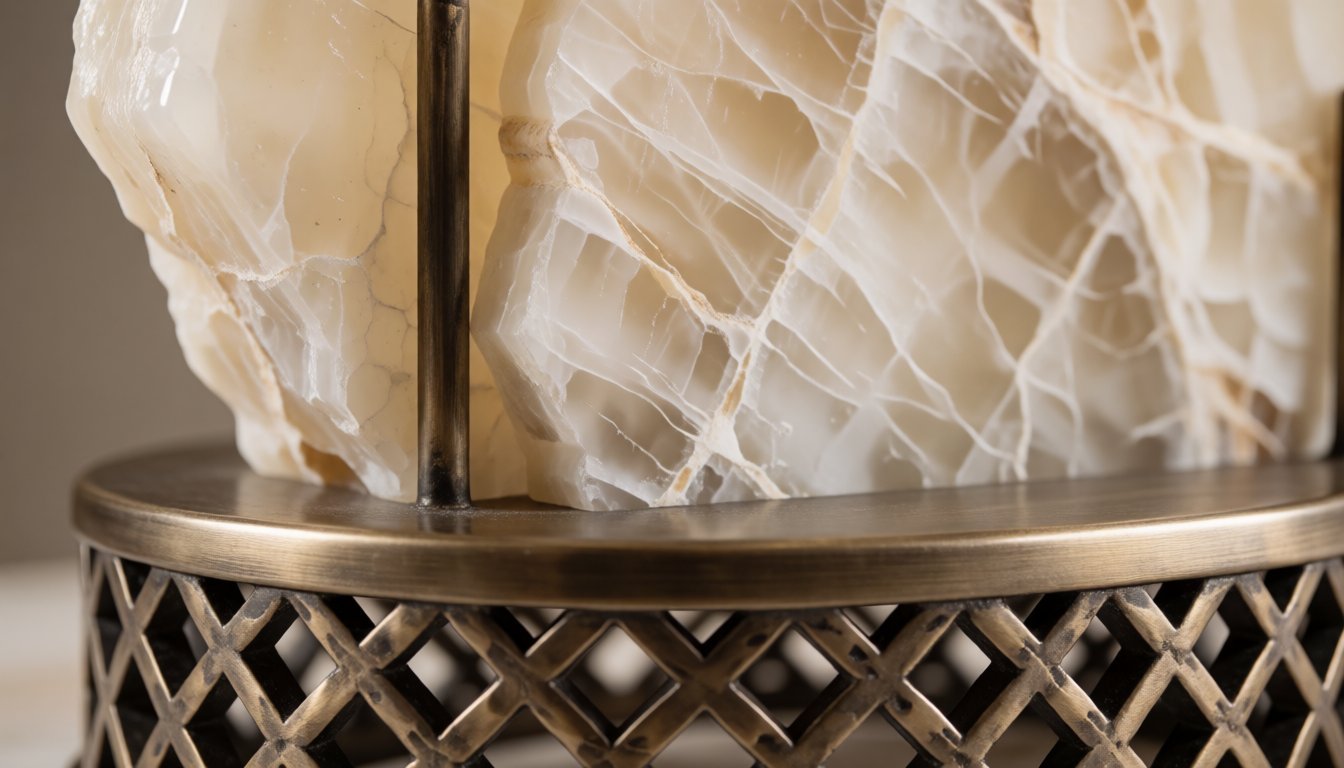
From a logistics perspective, the weight profile differs significantly from solid stone slabs. A typical translucent stone table base made of onyx usually weighs between 45 and 60 kg depending on slab thickness (often ranging from 12mm to 20mm). However, these tables are rarely sold as single massive blocks; they utilize a hollow or lattice design where the light passes through thin sections while structural support comes from metal frames. This construction reduces shipping weight by roughly 30% compared to solid slabs but introduces complexity in manufacturing tolerances.

You must ask your supplier about their specific finishing protocols. Does the factory apply protective coatings? How do they handle edge polishing on such a soft material? If you ship directly via dropshipping models, these factors dictate whether returns due to micro-scratches will eat into your margins. Lead times for custom designs involving complex latticework often extend by 15–20 days beyond standard slab cutting because the stone must be stabilized under tension during polishing.
Pricing Breakdown: Where Does The Margin Lie?
Determining an onyx table price that remains profitable requires dissecting three distinct cost layers: raw material, fabrication labor, and finishing treatments. Raw onyx slabs are geologically unstable; they contain natural fissures that require skilled artisans to navigate during cutting. This scarcity drives the base slab cost significantly higher than marble.
In our experience with similar luxury stone projects in China, a standard 120×60 cm square unit of polished onyx typically costs between $85 and $140 per piece at factory level, depending on clarity and color depth (such as blue moonstone or brown honey variations). When you add the cost of mounting this into an iron frame—often powder-coated black steel—and applying anti-static wax treatments for UV stability, your landed cost in a US port could easily reach $200 to $350 per unit.
For onyx coffee table wholesale orders exceeding 10 pieces, factories often offer tiered pricing that can drop the base material rate by roughly 8–12%. However, do not expect significant volume discounts on labor or logistics for small batches. The real margin opportunity lies in value-add services. If you source a white-label partner who handles custom laser engraving of family crests or specific geometric patterns onto the stone lattice before final polishing, you increase perceived value by 30% without necessarily increasing material costs. Always request an FOB (Free on Board) quote that explicitly separates slab costs from assembly fees to identify where your supplier might be overcharging for standard operations versus genuine custom work.
Quality Control: Inspecting Slabs Before Shipment
Visual inspection is non-negotiable when dealing with translucent stone tables. Since natural variations are the product’s selling point, buyers must establish clear acceptance criteria before approving a container load. You should require high-resolution photos or video walkthroughs of each slab prior to cutting and assembly. Look specifically for “ghosting”—faint shadows within the stone that affect translucency—and ensure these do not fall outside your aesthetic guidelines.
Crucially, verify how the factory handles natural cracks. In standard marble sourcing, a visible hairline crack might be acceptable if hidden by inlay work. With onyx, however, structural integrity is paramount because of its softer nature. Ask for proof of stress-testing or witness certificates from independent labs confirming that your chosen lattice design can support dynamic loads without flexing. A table base that bends under the weight of a bookshelf risks cracking the delicate stone panels mounted above it during shipping vibrations.
Request samples first before placing bulk orders. Testing these samples in real-world lighting conditions—both natural daylight and LED showroom lights—is vital to understand how different onyx colors interact with artificial UV sources used for back-lighting effects. Some buyers find that blue-toned onyx looks stunning under blacklight but appears muddy under warm incandescent bulbs, which is a critical detail if your dropshipping partners sell via Instagram or TikTok where lighting varies wildly across devices.
Strategic Sourcing: Balancing Exclusivity and Inventory Risk
Deciding to stock an onyx coffee table wholesale line requires balancing the allure of exclusivity against inventory risk. Natural onyx production in quarries like those in Mexico or Turkey is slow; once a slab is cut, it cannot be re-melted or corrected easily. This means lead times for restocking new designs can stretch to 45–60 days if you are waiting for fresh quarry cuts and stabilization periods.
For wholesalers aiming for rapid turnover, consider hybrid inventory strategies where base frames are mass-produced in standard finishes while stone panels are sourced as semi-finished blanks that require only final polishing at your local hub or partner facility upon order confirmation. This approach reduces upfront capital expenditure by roughly 40%. Alternatively, focus on pre-polished “ready-to-mount” slabs from trusted suppliers who hold finished inventory for common sizes like 120×60 cm or rectangular shapes up to 80cm wide.
Ultimately, the decision rests on your brand positioning. If you target luxury real estate developers looking for statement pieces in open-concept living rooms, the premium price of translucent stone tables will be easily absorbed by clients willing to pay $3,500+ per unit. For mass-market dropshippers targeting budget-conscious consumers under 12mm thick glass tops might offer better scalability despite lower perceived luxury status.