When you are sourcing natural stone furniture for your Shopify store or white-label brand, the biggest risk lies in visual discrepancies. A slab that looks perfect on a supplier’s website might have hidden veins, cracks, or thickness variations once it arrives at your warehouse. This is why understanding stone prototyping is critical before placing bulk orders. At Gladystone, we treat the transition from digital design to physical carving as a controlled engineering process rather than an artistic gamble. For US and EU importers, skipping this step often leads to high return rates or delayed shipments due to rejected units. Here is how professional CNC marble carving works on our production line and what you need to know before your next order.
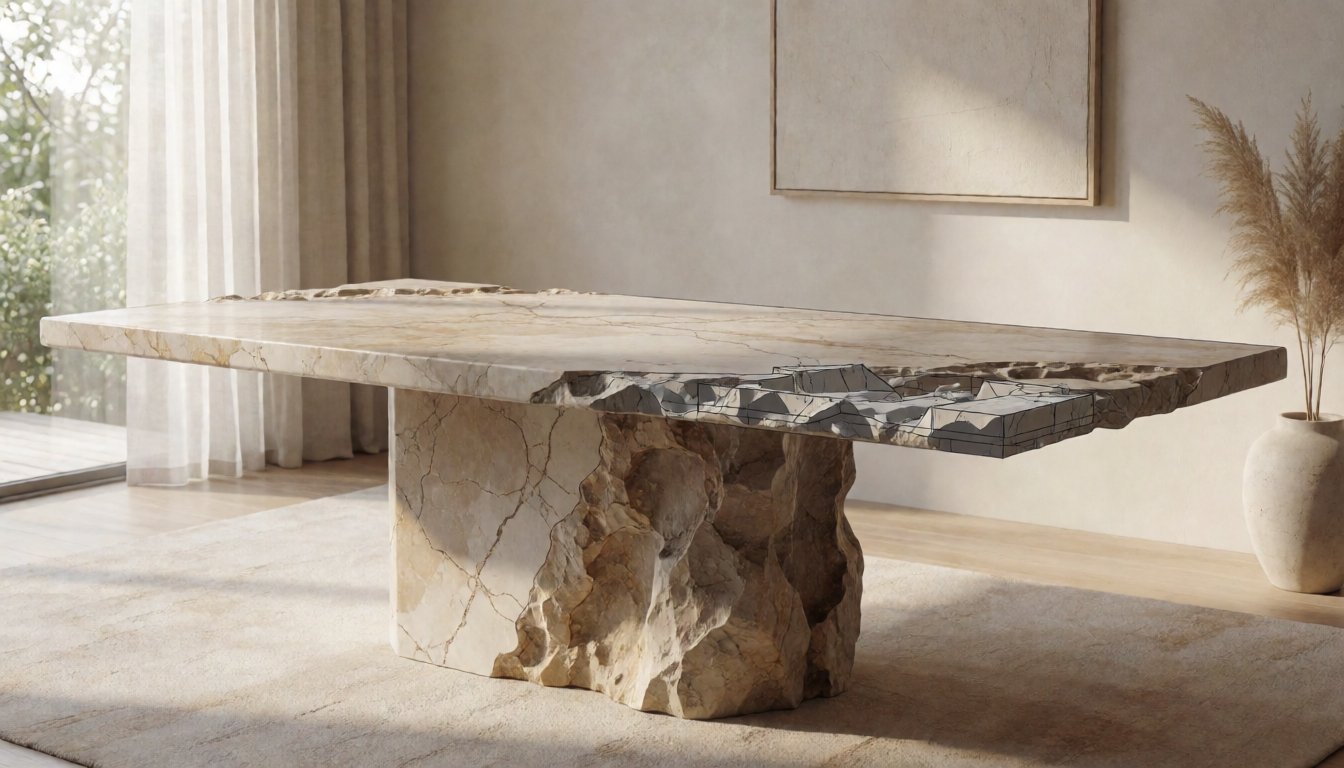
Defining the Digital Blueprint: Creating a Stone 3D Model
The process begins long before stone touches a machine bed. Every custom sink, vanity top, or fireplace surround starts with a precise digital representation known as a stone 3D model. This is not just a pretty picture; it is an engineering file containing exact dimensions, thickness tolerances, and edge profiles. When you request a quote from us for a bespoke item like a waterfall dining table or a thick slab bathtub, we generate these models to visualize how the specific stone veining interacts with your design intent.
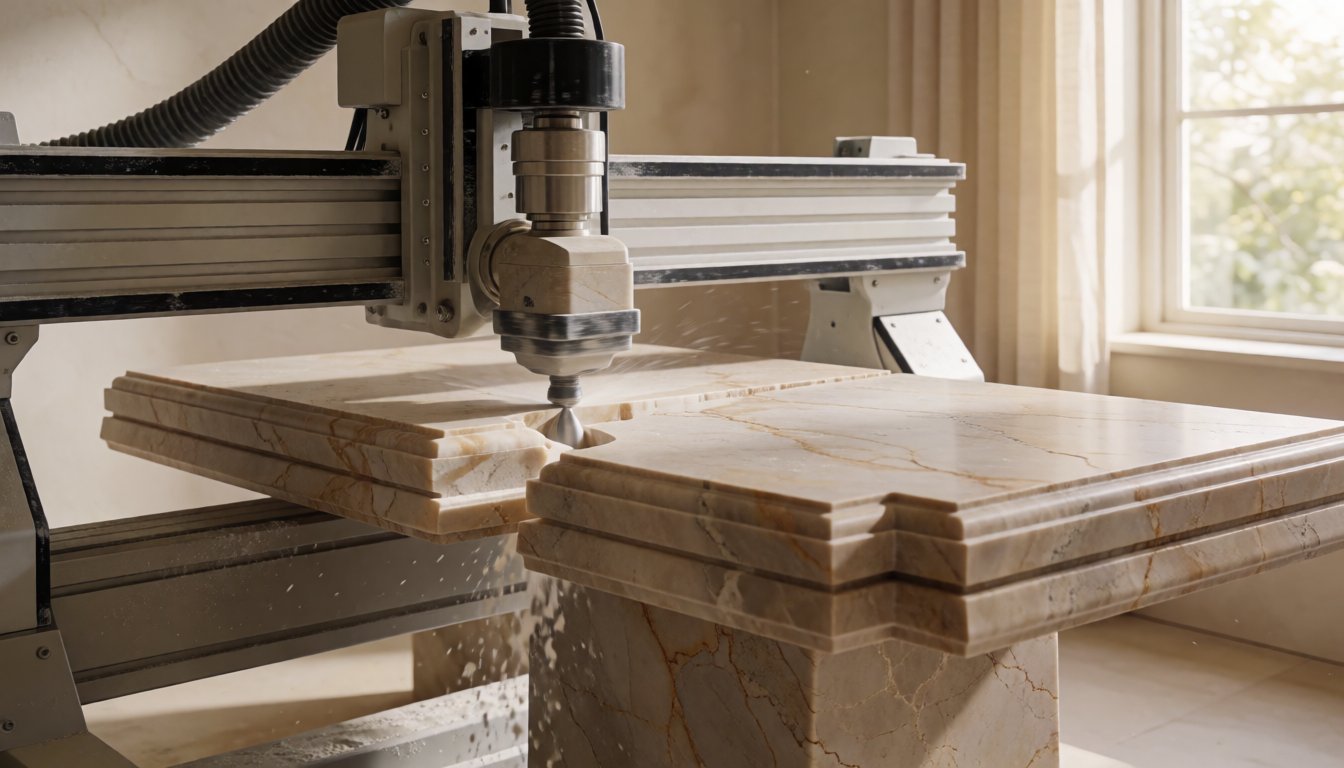
For standard projects involving granite or quartzite slabs that are 2cm to 3cm thick, our team creates CAD files that map out every cut line and hole location for faucet mounting. If you require a custom edge profile—such as a bullnose, ogee, or eased bevel—the model calculates the additional material removal needed from your specific slab book inventory. This digital step ensures we do not waste expensive stone blocks on impossible geometries. It also allows us to simulate how light hits different polish levels (from high gloss to leathered textures) before you commit funding.
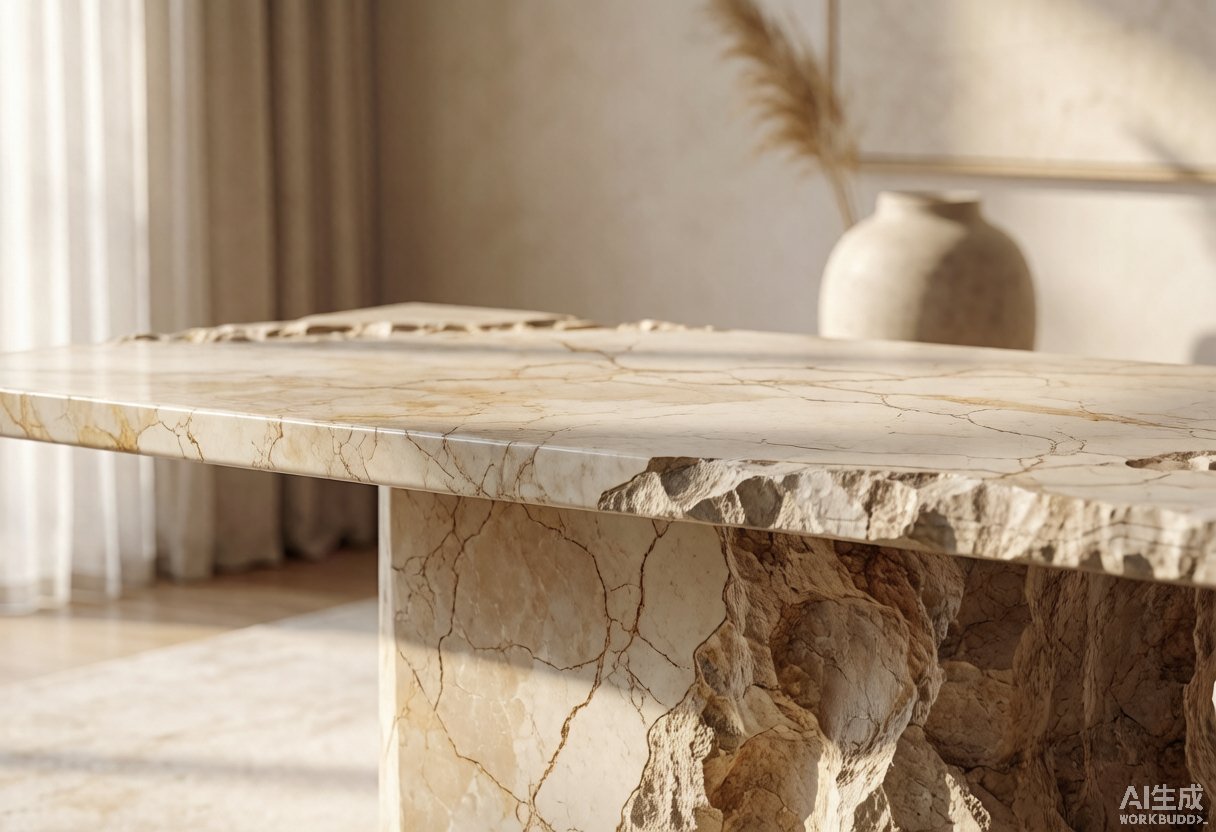
Importers often ask if they can upload their own designs for prototyping. Yes, but the file format matters. We require STEP or IGES files that include surface normal data. Simple JPEGs are insufficient because we need depth information to program our CNC routers correctly. If your design involves complex inlays of mother-of-pearl or resin within a marble basin, these layers must be defined in the 3D model so the machine knows which part to carve first and how deep to cut without breaking through the bottom.
The Carving Process: Precision with Natural Material
Once the stone 3D model is approved, it moves directly into our CNC programming queue. Unlike traditional hand carving or rough waterjet cutting followed by sanding, modern CNC marble carving uses computer-controlled routers to remove material layer by layer based on your specific digital instructions. This method minimizes human error and ensures that the final product matches the prototype within millimeter tolerances.
For a standard bathroom vanity top measuring roughly 90cm x 45cm with an integrated sink, our CNC machines can carve out the basin in about two days depending on stone hardness. Granite requires more passes than softer marble because it wears down diamond-coated bits faster. During this phase, dust extraction systems keep the workspace clean to prevent debris from clogging the cutting heads or scratching adjacent polished surfaces. The machine follows a path that accounts for grain direction whenever possible to reduce cracking risks in brittle stones like travertine or onyx.
We do not simply cut shapes; we engineer stress relief into every piece. Large bathtubs weighing between 150kg and 300kg undergo specific routing sequences that prevent warping during the polishing stage. If your design calls for a double-basin sink with separate faucet holes, the CNC program coordinates two distinct tool paths to ensure symmetry without over-cutting one side relative to the other. This level of precision is why our clients rarely receive items needing significant rework after delivery.
Prototyping vs. Mass Production: Managing Expectations and Costs
Many buyers confuse a prototype with a finished product ready for immediate sale. It is vital to distinguish between the two stages regarding lead times and pricing. A stone prototyping run typically takes 3 to 5 days longer than mass production because we use slower speeds, higher resolution bit depths, and more frequent inspection stops. The goal of the prototype is accuracy and validation, not speed or volume optimization.
Cost structures differ significantly between these phases. Prototyping often carries a premium per unit compared to bulk orders where material waste is amortized across thousands of pieces. For example, prototyping a single custom fireplace surround might cost roughly $400–$600 in machine time and labor if done as a standalone test run. However, if you order 50 units with identical specifications later, the unit price drops substantially because we can optimize bit usage and reduce setup times.
When discussing pricing for your first batch of custom furniture, ask specifically about “first-article inspection” fees versus standard production quotes. Some suppliers hide prototype costs inside a high MOQ minimum charge without being transparent. At Gladystone, we separate these line items so you understand exactly what you are paying for engineering validation versus raw material and assembly. If the prototype reveals that your chosen stone slab has internal stress points near a planned cutout, we can pivot to an alternative block from our inventory before cutting begins on full production runs.
Quality Control: What Inspectors Check Before Shipping
Before any unit leaves our factory floor for shipment to the US or EU, it undergoes rigorous quality checks that go beyond simple visual inspection. Our team verifies critical dimensions against your approved stone 3D model, checking tolerances of +/- 1mm on linear measurements and ensuring flatness across large surfaces like dining tables up to 240cm long. They also inspect edge consistency, polish depth, and the absence of micro-cracks caused by thermal stress during carving or polishing.
For items involving plumbing cutouts in sinks or vanities, we test water tightness using pressure tests on the drilled holes before sealing them permanently. We check drainage flow rates to ensure no debris gets trapped inside the basin walls due to poor routing angles. Weight verification is also part of this process; a bathtub must meet specific load-bearing standards for shipping containers without shifting during transit. If an item fails these checks, we replace it immediately rather than marking it as defective and sending you replacements later.
Understanding this workflow helps you communicate better with your suppliers when issues arise. Instead of blaming “quality,” you can reference specific stage failures in the prototyping or production line. This shift from vague complaints to technical feedback strengthens your relationship with manufacturers like Gladystone, leading to faster resolutions for future orders. Always request photos and videos of these checks before authorizing payment on large shipments.