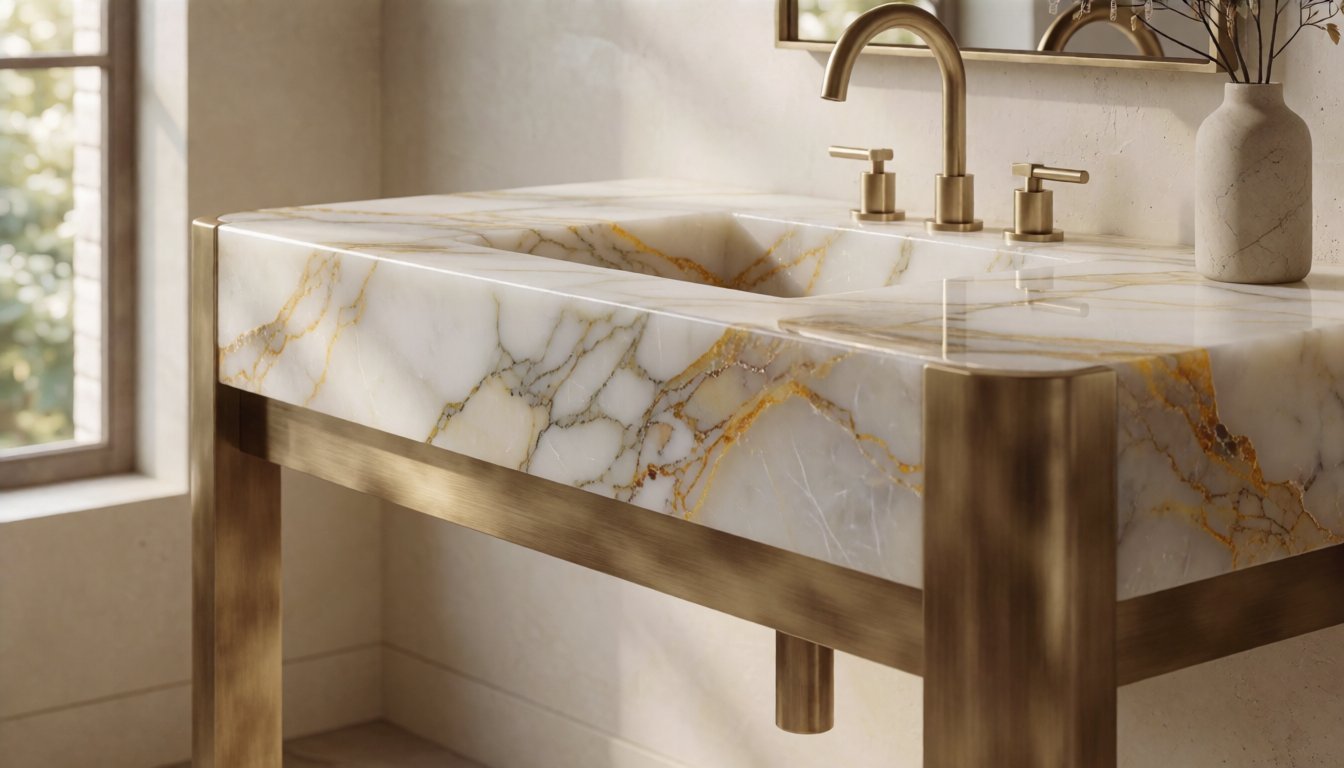
Combining natural stone with metals like brass or warm wood tones creates high-end pieces that command premium prices in Western markets. For buyers sourcing from China, these mixed material stone furniture items offer a distinct advantage over standard all-stone designs: they appeal to luxury interior designers looking for texture contrast without the full cost of an Italian marble slab and solid bronze casting. At Gladystone, we specialize in executing complex layering techniques where polished Calacatta gold veins meet brushed brass legs or rustic oak tops on granite sinks. This guide breaks down what you need to know about sourcing marble brass wood combinations for your US or EU dropshipping business, focusing on realistic lead times, quality checks, and cost drivers that affect your final landed price.
Construction Methods and Structural Integrity
The biggest risk in customizing stone with other materials is structural failure during shipping. A marble basin supported by thin wooden legs might look elegant but could crack if the wood swells from humidity or if the box shifts on a truck. When ordering stone furniture customization, you must specify how the components join before production begins.
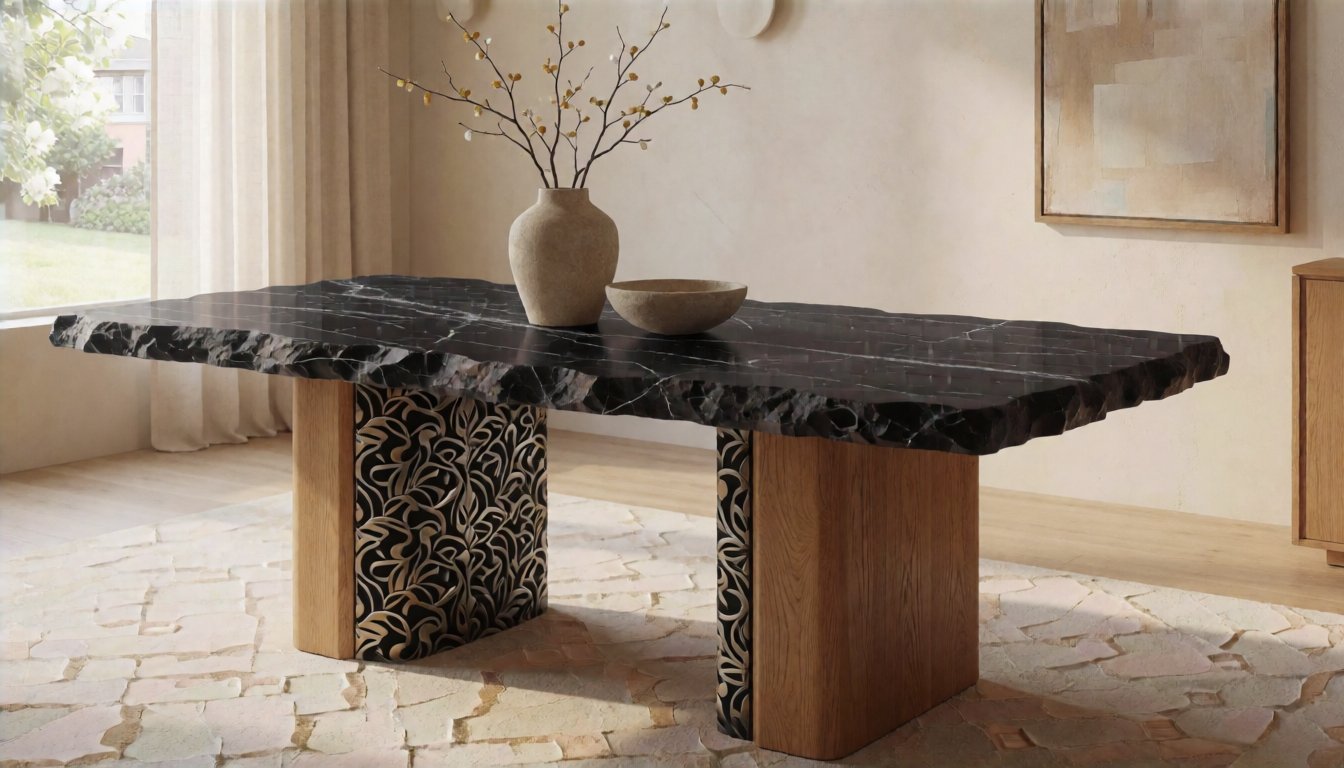
For sinks and vanities, we typically use stainless steel hidden brackets to mount stone bowls onto brass frames, rather than relying solely on glue or simple screws. This ensures the unit survives ocean freight vibrations intact. For dining tables where a marble top meets wood legs, ask us to drill into the underside of the slab for mechanical fasteners that are concealed by decorative metal inserts.
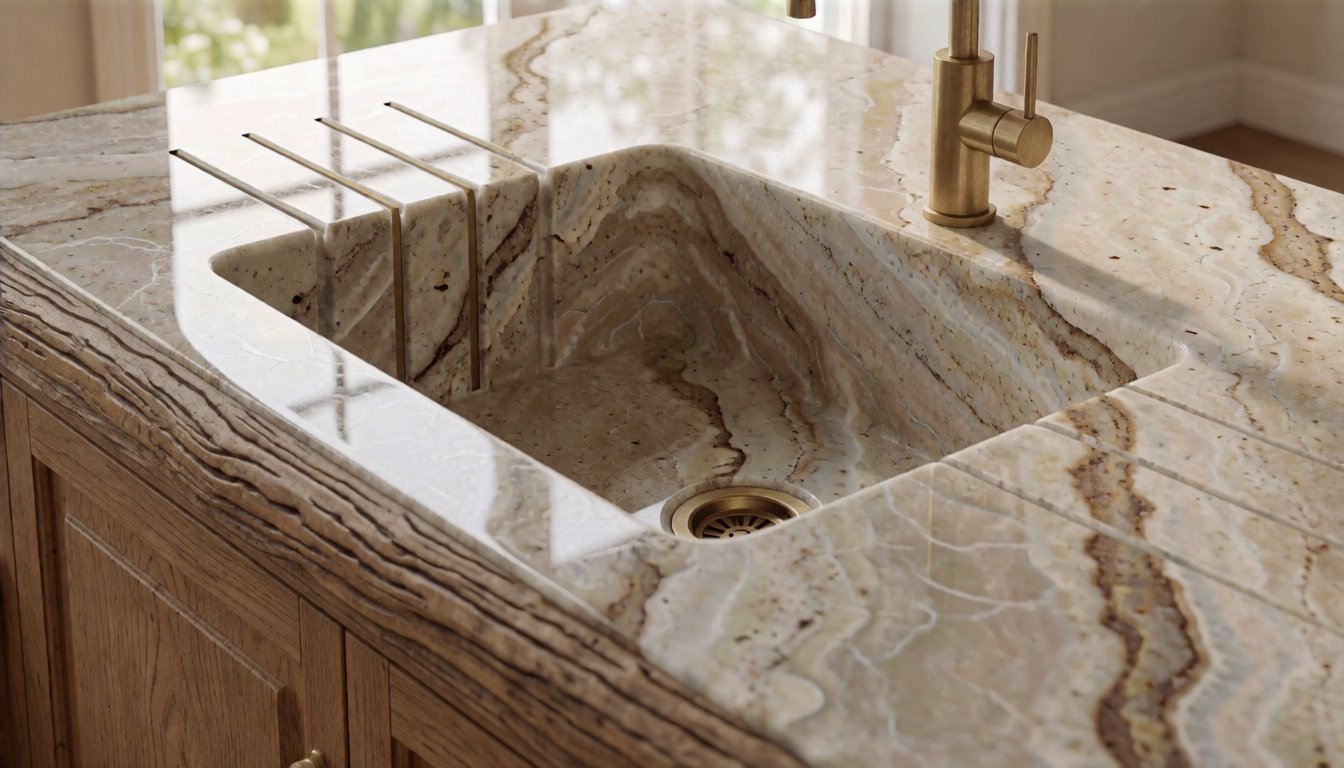
Do not assume all “custom” requests work structurally. A 120cm wide granite table with exposed brass inlays requires precise laser cutting and polishing on both materials so they sit flush within millimeters. If you request a heavy black marble slab (approx. 35-40mm thick) mounted directly onto lightweight pine, the weight differential will likely cause warping over time. We generally recommend engineering-grade hardwoods like oak or walnut for structural supports under stone heavier than 28kg per square meter. Always provide technical drawings if you have specific joinery requirements; otherwise, our design team uses standard reinforcement methods based on your requested load-bearing capacity.
Realistic Cost Breakdown and Pricing Factors
Buyers often underestimate the cost of adding materials beyond raw stone. The base price for a slab is only one part of the equation. When mixing metals or wood, you are paying for additional labor hours, specialized hardware, and sometimes pre-finished components imported separately to match your specifications exactly.
A standard 60cm x 45cm bathroom vanity sink in Carrara marble typically costs roughly $180-$220 USD at the factory gate before shipping. Adding a brass frame with gold plating can increase this by another $35-$50 depending on whether you want PVD coating for durability or raw brushed finish. If you specify solid wood sides, add approximately $40 per linear foot based on species density and finishing complexity.
Shipping costs also vary wildly here. A box filled only with stone is dense but heavy; adding hollow metal legs reduces weight slightly but increases volume in the container space. For dropshippers calculating margins, remember that complex assemblies often incur higher freight charges due to dimensional weight calculations by carriers like DHL or FedEx. Expect lead times of 18-24 days for simple two-tone jobs (stone + wood), whereas intricate marble brass combinations involving custom cast bronze hardware may take 30-45 days if we need to source the metal casting from a secondary vendor in our industrial park first.
Always request a proforma invoice that itemizes material costs separately from labor and finishing fees. This transparency helps you negotiate better rates for larger orders where you can commit to full container loads (FCL) of mixed-material units rather than less-than-container-load (LCL) shipments which attract significant consolidation fees in China ports like Shanghai or Ningbo.
Quality Control Checklist for Mixed Materials
When inspecting samples before placing a bulk order, focus on the interface points where different materials meet. This is usually where defects hide most frequently. Run your finger along the seam between the marble edge and the brass trim; it should feel perfectly flush with no gaps wider than 0.5mm. Any visible gap larger than this suggests poor fitting or thermal expansion mismatch that will widen as temperatures change in the buyer’s home environment.
Check for corrosion resistance on all metal components immediately upon delivery of samples. Even if you specify “antique brass,” ensure there is a protective lacquer layer underneath to prevent oxidation during sea transport, which lasts 30-45 days minimum. If your supplier skips this step, the air moisture in containers can turn copper alloys green within weeks, ruining your brand reputation upon arrival at US West Coast ports like Los Angeles or Long Beach.
For wood elements attached to stone, verify that no water has seeped into the joint line during our testing cycle. Water trapped between a granite sink and an oak side panel causes mold growth inside the sealed box if not properly drained or coated with waterproof sealant on all exposed edges of the wood before assembly. Ask us to apply epoxy resin fills in any natural stone fissures that might touch metal hardware, as moisture wicking into these cracks is a primary cause of delamination in mixed-material pieces.
Minimum Order Quantities and Design Flexibility
Gladystone works flexibly with dropshippers who may not have the capital for full container loads immediately. Our standard MOQ for mixed material stone furniture starts at just 2-3 units per SKU, though unit prices will reflect this low volume nature—roughly 15%-20% higher than bulk factory pricing. If you plan to sell a specific design like our “Oxford” dining table with walnut bases and white marble tops in quantities over 50 pieces, we can negotiate down your price per piece significantly while still maintaining quality standards.
We accept custom designs provided the dimensions fit within standard shipping crate limits (typically under 2 meters length for air freight compatibility). For example, a fireplace mantel made of slate with copper detailing usually cannot exceed 180cm in width unless you arrange oversized cargo handling fees upfront. We recommend ordering pilot batches of your most popular configurations first to test market demand before committing to large production runs that lock up cash flow for months.
Our team can source complementary items like soap dispensers or candle holders made from the same brass finish as your main table legs, creating a cohesive product line without needing separate suppliers in China. This vertical integration keeps lead times consistent and reduces communication overhead when resolving issues with color matching between stone veining patterns and metal tones. Contact us to discuss how we can tailor these complex assemblies specifically for your target demographic’s taste profiles regarding rustic vs. modern aesthetics.