Branding Your Stone Products: Logo Carving, Inlay and Etching Options
When you source stone furniture for dropshipping or white-labeling in Europe or North America, your biggest competitive advantage is often the brand identity on the final product. A sink with a visible logo commands higher retail prices than an unmarked counterpart. However, adding branding to natural stone isn’t as simple as printing it onto fabric. You need methods that survive shipping cracks and daily scrubbing while looking premium enough for high-end interiors at Gladystone, we evaluate every request based on material hardness, surface finish, and production workflow costs. This guide breaks down the technical realities of stone product branding, helping you understand which option fits your budget and quality standards without overpaying for unnecessary complexity.
H2: Marble Logo Carving vs. Granite Inlay – Material Matters
The most critical factor before choosing a branding method is the stone type. You cannot treat all rocks equally. Soft stones like Carrara marble or Calacatta require delicate handling, while granites and quartzites are much harder but can still fracture if mishandled during deep carving attempts.
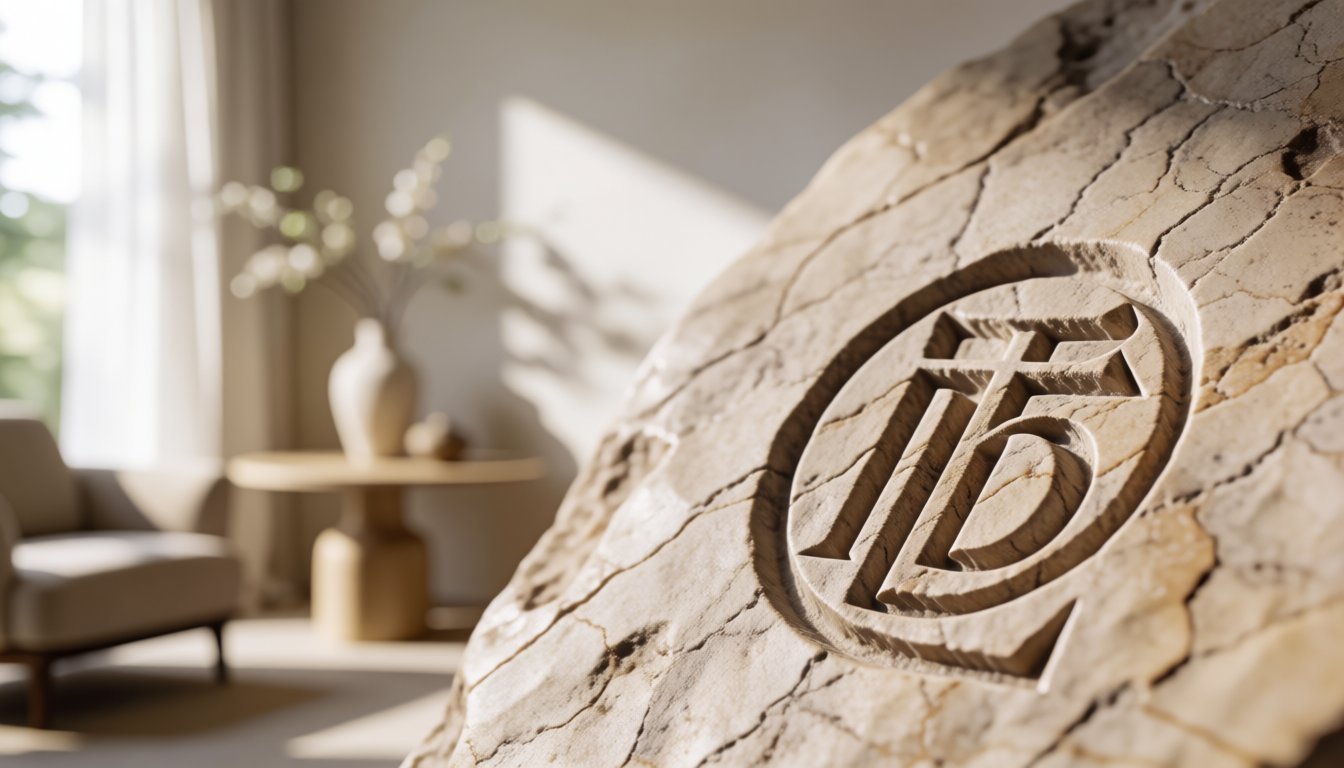
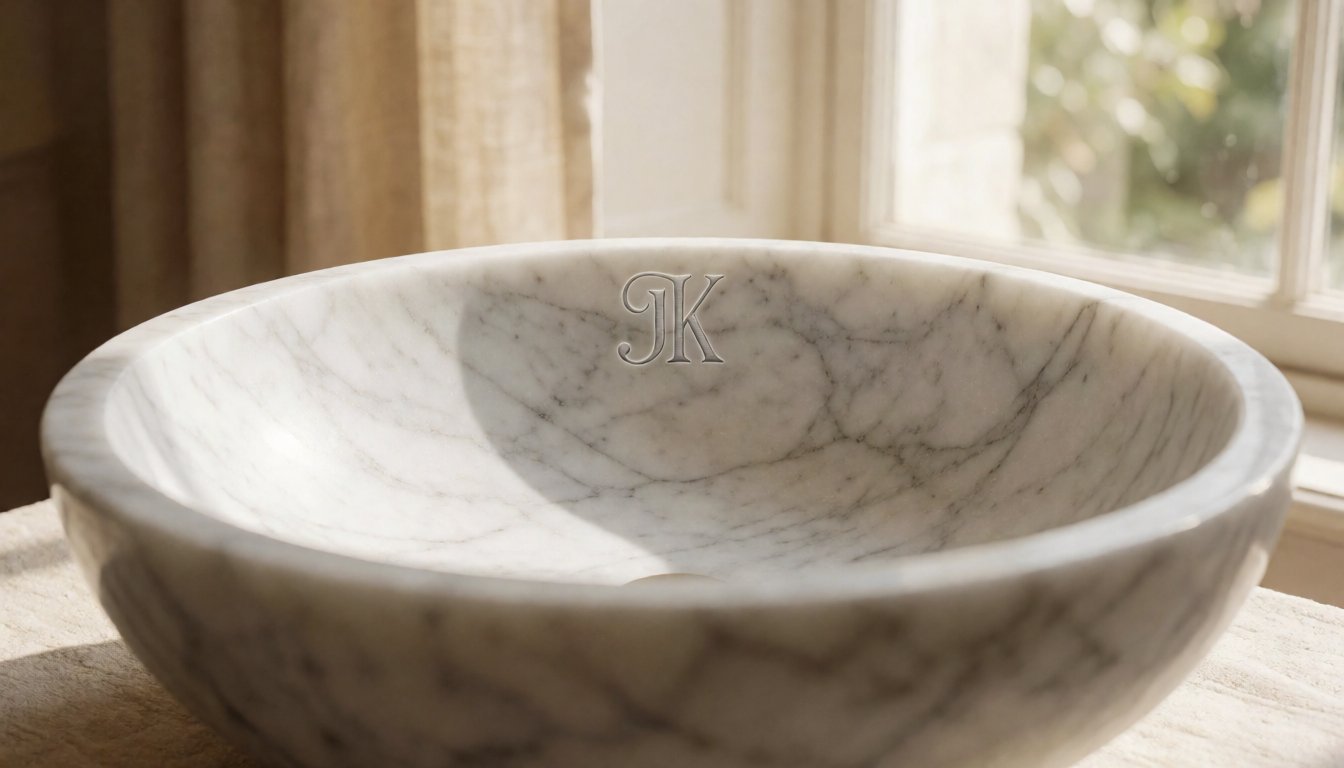
For marble logo carving, we typically limit depth to 2–4 mm on basin sinks and up to 10 mm for thick countertop slabs. Carving deeper risks creating stress points that could lead to cracking after installation or shipping. For a standard white marble vessel sink (approx. 65 cm wide, 3 kg), laser carving is often the safest route for logos under 2 inches in height. It removes just enough material to create contrast without weakening the structure.
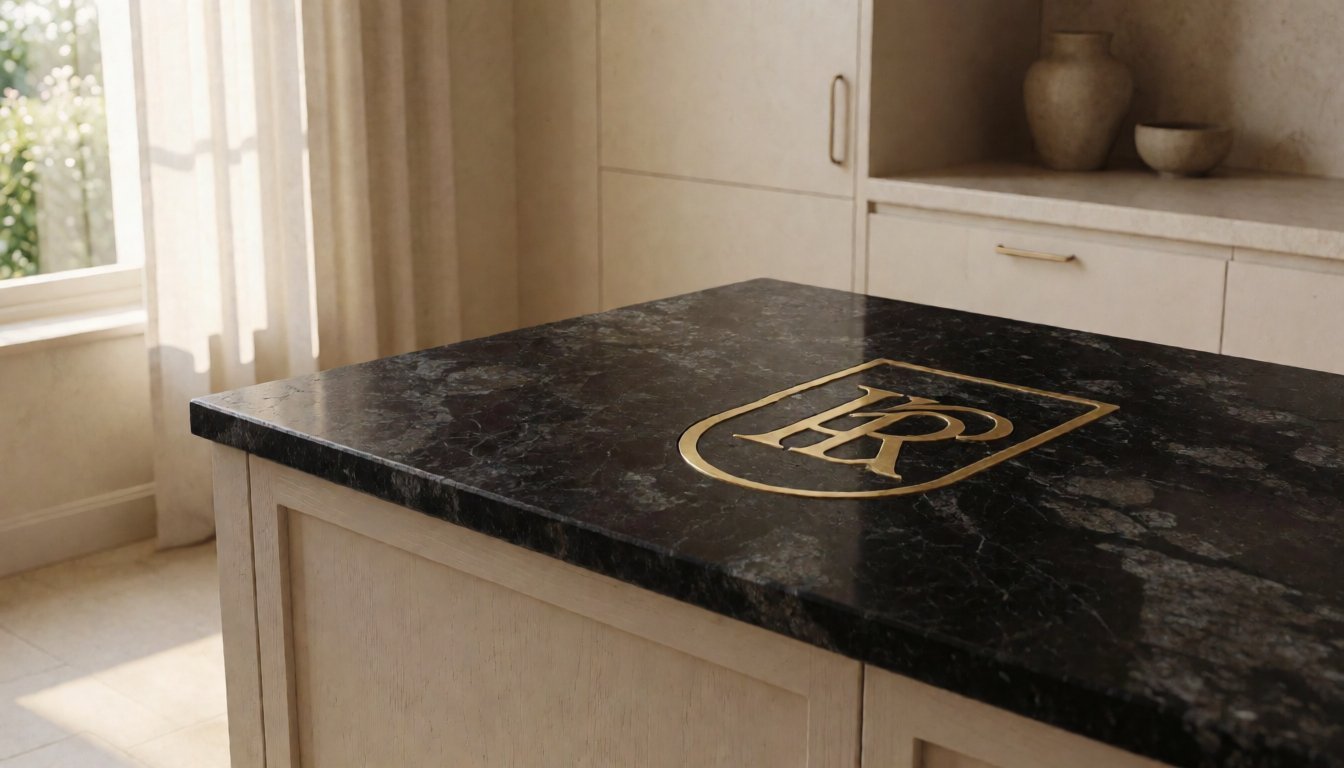
Granite presents different challenges due to its density and speckled pattern. Deep engraving can turn a dark granite into an ugly black void if not filled correctly. Instead, many importers prefer granite inlay for this stone type. We cut precise grooves (usually 3 mm deep) around the logo shape and insert resin or brass strips that match your brand color perfectly. This method hides the rough edges of the carving underneath. It adds roughly $15–$25 to the unit cost but looks more durable than a simple scratch mark on dark stone. Always ask for samples if you plan to use this technique, as poor alignment can ruin an otherwise perfect slab.
H3: The Durability Reality Check
Branding methods must survive commercial cleaning and residential abuse. A laser-etched logo on polished marble is permanent but sensitive to acidic cleaners that might dull the surrounding area slightly over time. Inlay works well because the inserted material acts as a shield against direct acid contact with the stone grain itself.
For fireplaces or heavy dining tables, we often recommend mechanical carving followed by filling. This creates depth without relying solely on heat marks which can sometimes fade under intense UV exposure outdoors (if applicable). Always clarify with your specific supplier whether they use fiber lasers or CO2 lasers; fiber is generally faster for thin lines but less effective on very thick granite slabs over 3 cm in thickness.
H2: Stone Etching and Laser Marking – The Subtle Approach
If you want a subtle brand mark that doesn’t disrupt the natural beauty of the stone, stone etching logo application via laser marking is your best bet. This process uses high-intensity lasers to discolor the surface layer rather than removing significant mass.
On white marble or limestone, this creates a greyish contrast perfect for monogramming initials or small brand symbols (e.g., 1 cm height). The cost impact here is minimal—often included in standard order prices if you provide vector files correctly. However, there are limits to resolution; fine text smaller than 2mm high often looks blurry due to the grain structure of natural stone.
For darker stones like Black Galaxy granite or soapstone, laser etching creates a lighter grey mark that stands out clearly against the dark background without needing additional filler materials. This is ideal for minimalist brands who want understated elegance. We typically charge extra only if you require high-resolution images instead of simple text outlines; detailed photos often result in muddy marks on porous stone unless we pre-treat the surface first.
Always ensure your design files are vector-based (SVG or AI format) before sending them to production teams at factories like Gladystone. Raster images will pixelate badly when scaled up for large vanities or firebacks. A poorly formatted file can result in wasted material and rejected orders, increasing your total landed cost significantly.
H2: Cost Factors and MOQ Considerations
Understanding the economics of branding is essential for maintaining healthy margins as a dropshipper or wholesaler. The base price of a sink or table usually absorbs minor branding costs up to a certain threshold. Beyond that, unit prices rise linearly with complexity.
A simple 1-inch text logo on a standard undermount sink (approx. 45 x 38 cm) might add $2–$5 per piece depending on the factory’s current load. Adding intricate graphics or multi-color inlays can push this to $10–$20 extra per unit. These figures are typical for orders exceeding our Minimum Order Quantity of 50 pieces per design style. For smaller batches under 30 units, expect premiums that could double the branding surcharge due to setup time and manual labor allocation.
Lead times also vary based on the method chosen. Laser marking adds almost no delay since it happens during CNC cutting or polishing stages. Inlay requires extra assembly steps where workers manually place resin strips before final sealing; this can add 3–5 days to production if done by hand rather than machine-assisted insertion. Factor these delays into your inventory planning, especially during peak seasons when shipping containers fill up quickly from multiple buyers competing for capacity in China.
H2: Quality Control and Supplier Communication
When placing an order with a manufacturer like Gladystone, never assume the branding will look exactly as expected without physical verification. Request digital mockups first to check how your logo scales against the stone grain pattern. Natural veering can make a centered logo appear off-center visually even if geometrically perfect; designers must adjust placement manually based on slab photography rather than relying solely on CAD software measurements.
Ask specifically about edge finishing around carved logos. Deep carvings often leave sharp edges that feel uncomfortable to touch or catch fingernails during installation requests from your clients. We apply rounded corner treatments post-carving when possible, though this adds a small cost premium of roughly $0.50 per piece depending on the machine configuration available at our facility in Foshan.
Finally, verify if the branding method interferes with sealing requirements for porous stones like travertine or sandstone. Some etched areas may require specific sealants to prevent staining around the marked zone during shipping storage periods lasting several weeks before final sale. Clear communication about these nuances ensures your branded products arrive in perfect condition ready for immediate dropshipping fulfillment without unexpected rejections from end customers demanding pristine finishes on every detail including logos and engravings.