Why Marble Maintenance Matters More in 2026
As natural stone becomes the material of choice for luxury bathrooms, kitchens, and living spaces, proper marble maintenance has never been more critical. A neglected marble countertop or floor doesn’t just lose its luster—it can suffer permanent etching, staining, and structural damage that devalues the entire installation.

Whether you’re a stone wholesaler educating clients, a fabricator providing aftercare guidance, or a homeowner protecting a significant investment, this guide covers everything you need to know about marble and natural stone care in 2026.
Understanding Marble: Why It Requires Special Care
Marble is a calcium carbonate-based stone, which makes it more porous and chemically sensitive than granite or quartzite. It can be etched by acidic substances (lemon juice, wine, vinegar, tomato sauce) and stained by oils, dyes, and pigmented liquids.
The good news? With proper sealing and routine care, marble can retain its beauty for generations. Many historic buildings feature marble installations that have lasted centuries—proof that proper maintenance works.
Daily Marble Cleaning Protocol
Establishing a daily cleaning routine is the single most effective way to preserve marble surfaces:
- Use pH-Neutral Cleaners Only: Avoid vinegar, lemon-based cleaners, or abrasive scrubbing powders. Use a cleaner specifically formulated for natural stone (pH 7-9). In 2026, there are excellent eco-friendly stone cleaners that clean effectively without damaging stone.
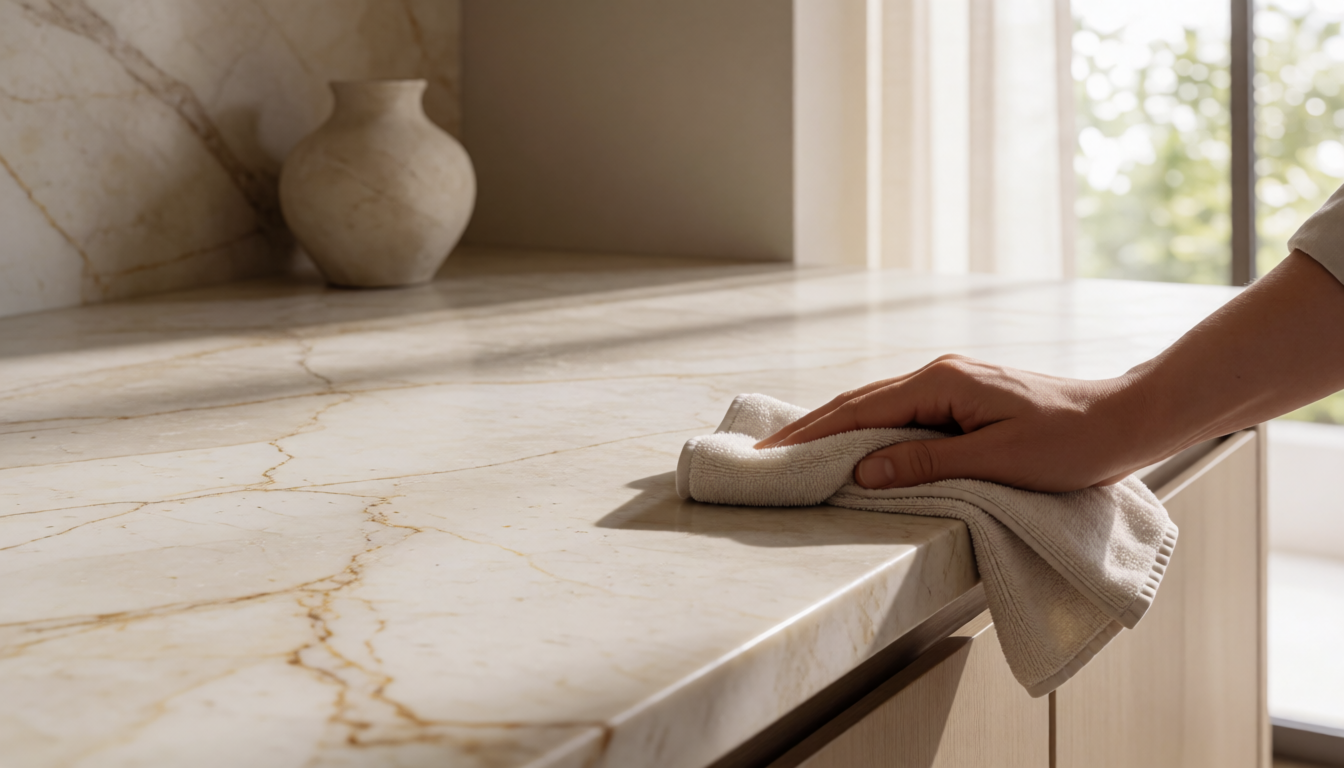
- Wipe Spills Immediately: Marble’s porosity means liquids can penetrate quickly. Blot (don’t wipe) spills to prevent spreading. Keep a stash of microfiber cloths handy in kitchens and bathrooms.
- Use Soft Microfiber Cloths: Avoid scrub brushes or abrasive pads that can scratch the polished surface. Microfiber lifts dirt without scratching.
- Dry After Cleaning: Hard water spots can form if marble is left to air-dry. Buff with a dry microfiber cloth for a streak-free finish.
The Sealing Schedule: How Often Is Enough?
Sealing is the first line of defense against stains. In 2026, the consensus among stone care professionals is:
- Kitchen Countertops: Seal every 6-12 months, depending on usage and stone porosity. Heavy cooking families may need to seal every 6 months; occasional cooks can stretch to 12 months.
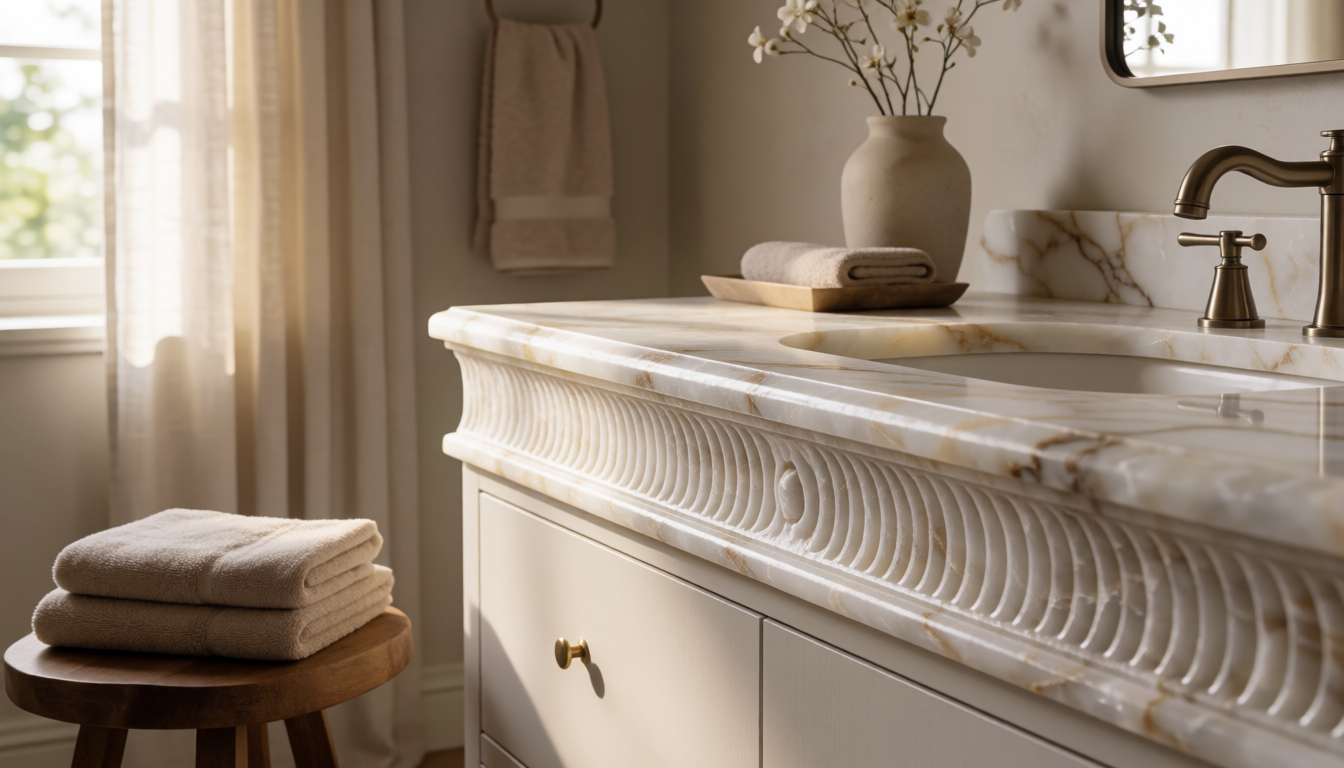
- Bathroom Vanities: Seal every 12-18 months (lower exposure to acidic substances).
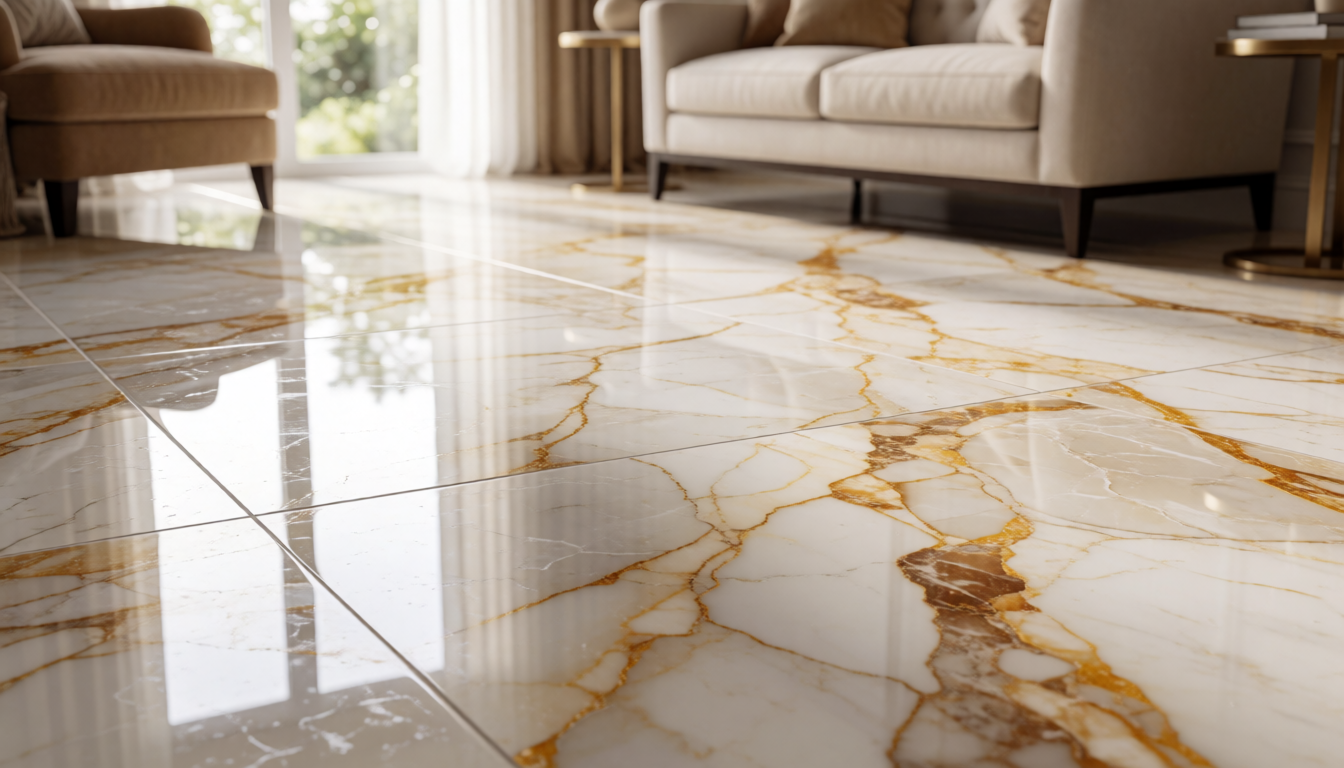
- Flooring: Seal every 12 months in high-traffic areas; every 18-24 months in low-traffic spaces.
- Outdoor Stone: Seal every 6 months due to weather exposure (rain, UV, temperature fluctuations).
The Water Test: Not sure if it’s time to reseal? Place a few drops of water on the stone. If the water darkens the stone after 10 minutes, it’s time to reseal. If the water beads up, the seal is still effective.
Stain Removal: A Step-by-Step Guide
Despite best efforts, stains happen. Here’s how to remove the most common types:
Oil-Based Stains (cooking oil, grease, makeup)
Create a poultice by mixing baking soda with water (or acetone for stubborn stains) to a peanut butter consistency. Apply to the stain, cover with plastic wrap (tape the edges), and let sit for 24-48 hours. The poultice will draw the oil out of the stone. Remove, rinse thoroughly, and repeat if necessary.
Organic Stains (coffee, tea, wine, fruit juice)
These require a bleach-based poultice. Mix 12% hydrogen peroxide with a small amount of ammonia, apply as a poultice, and let sit for 24 hours. Caution: Test in an inconspicuous area first—peroxide can lighten some marbles. For wine stains, a poultice made from specialized stone stain remover (available from stone care suppliers) is often more effective than household remedies.
Etching (dull spots from acidic substances)
Etching is not a stain—it’s surface damage caused by acid reacting with the calcium carbonate in marble. Light etching can be removed with marble polishing powder and a buffing pad. Deep etching may require honing and re-polishing by a professional stone restoration specialist.
Prevention tip: Use coasters for all drinks (even water—some bottled waters are acidic enough to etch marble). Place trivets under hot cookware, and use cutting boards for food prep.
Professional Maintenance Services: A Revenue Opportunity
For stone wholesalers and fabricators: Offering maintenance services (deep cleaning, re-sealing, polishing, chip repair) is a high-margin revenue stream that also builds long-term client relationships. Consider bundling a “first-year care package” with every stone purchase—including a pH-neutral cleaner, a bottle of impreganator sealer, and a complimentary 6-month checkup.
For designers: Include a stone care guide in your client handover package. Clients who understand how to care for their marble installations are happier, more likely to refer you, and less likely to blame you for etching or staining issues.
2026 Innovations in Stone Care
The stone care industry is evolving. In 2026, look for:
- Nano-sealers: Advanced penetrating sealers that last 2-3 years rather than 6-12 months
- Self-cleaning stone coatings: Photocatalytic coatings that break down organic dirt when exposed to UV light
- Smart sensors: Moisture sensors that alert homeowners when it’s time to reseal
Conclusion
Marble maintenance in 2026 is about prevention, not just reaction. By establishing proper cleaning protocols, adhering to a regular sealing schedule, and knowing how to address stains promptly, you can ensure that natural stone installations remain stunning for decades.
Looking for premium, properly sealed natural stone? Source from Glady Stone—we provide expertly finished marble, granite, and limestone, along with comprehensive care guidance for architects, designers, and wholesalers. Because beautiful stone deserves expert care.