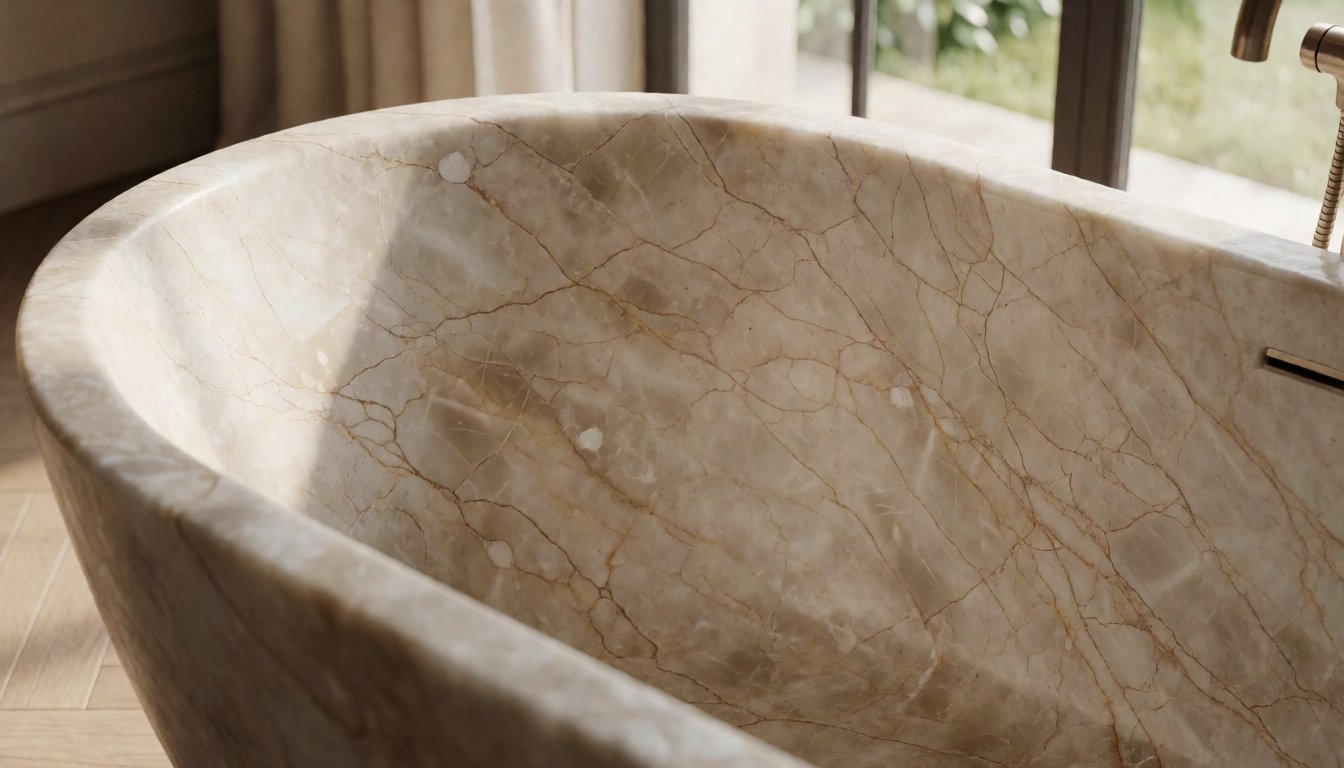
Moving heavy natural stone from a factory in China to your warehouse or retail location across the ocean requires more than just booking cargo space. The physical properties of marble and granite dictate every step of the journey, from how items are packed at Gladystone’s facility to how they land on your dock. Mistakes here lead to cracked slabs, shattered sinks, and massive financial losses before a customer even sees the product. This guide breaks down the practical realities of shipping stone furniture, focusing on what you need to verify with suppliers like us to ensure goods arrive intact. We will cover packing standards, freight methods, insurance requirements, and how specific dimensions impact your total landed cost.
Understanding the Physical Risks
Natural stone is porous and brittle compared to wood or metal. Once a slab of marble cracks during transit, it cannot be glued back together; it must be discarded as scrap. For granite dining tables or vanities with thick legs, the risk shifts slightly but remains high due to vibration over long distances. The primary enemy in marble export logistics is not just impact from falling objects, but continuous vibration and shifting within a shipping container that turns small micro-cracks into major fractures upon arrival at your destination port.
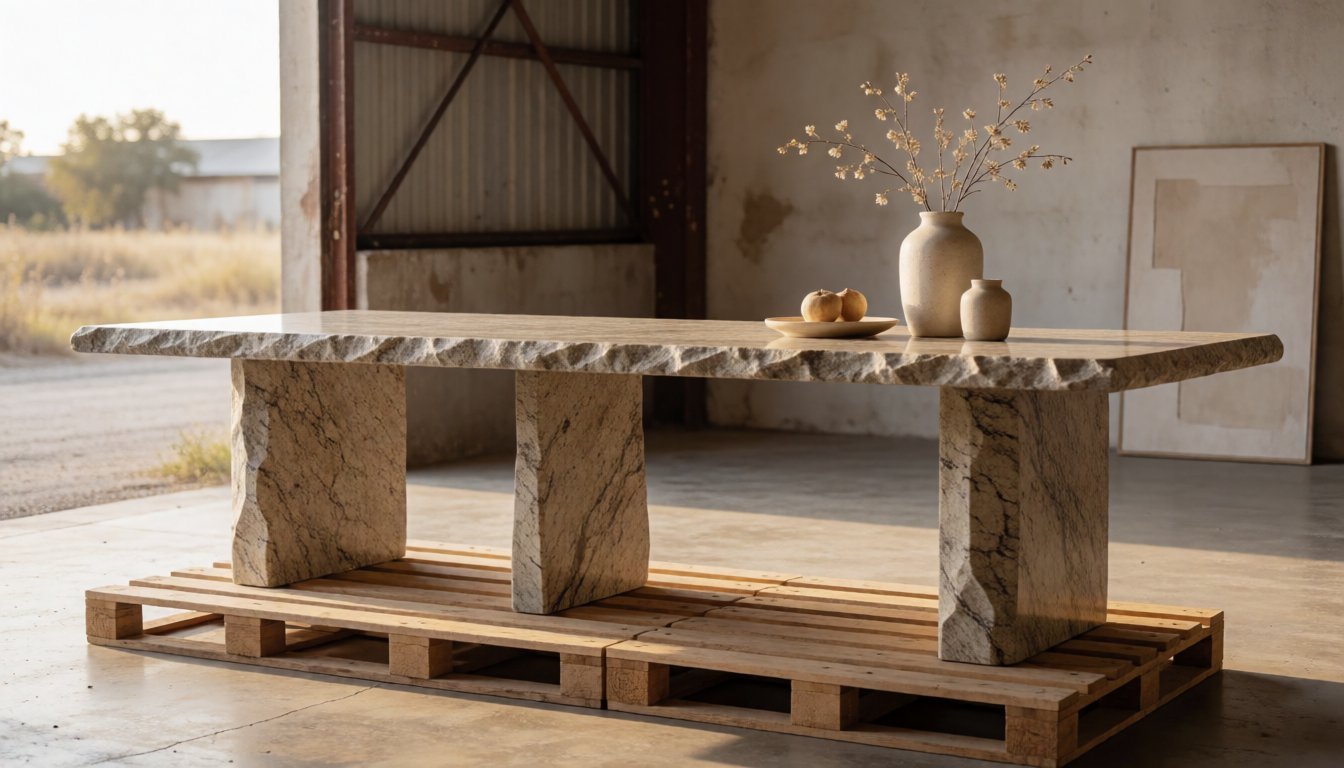
You must understand that standard wooden crates used for regular furniture are often insufficient for stone. At Gladystone, we typically reinforce heavy items like freestanding bathtubs with internal steel bracing to prevent crushing under their own weight during stacking or handling errors by stevedores. The density of the material means a single large vanity can weigh over 150kg (330 lbs), creating immense pressure on pallets and forklift forks if not secured correctly.
Container Loading Strategies
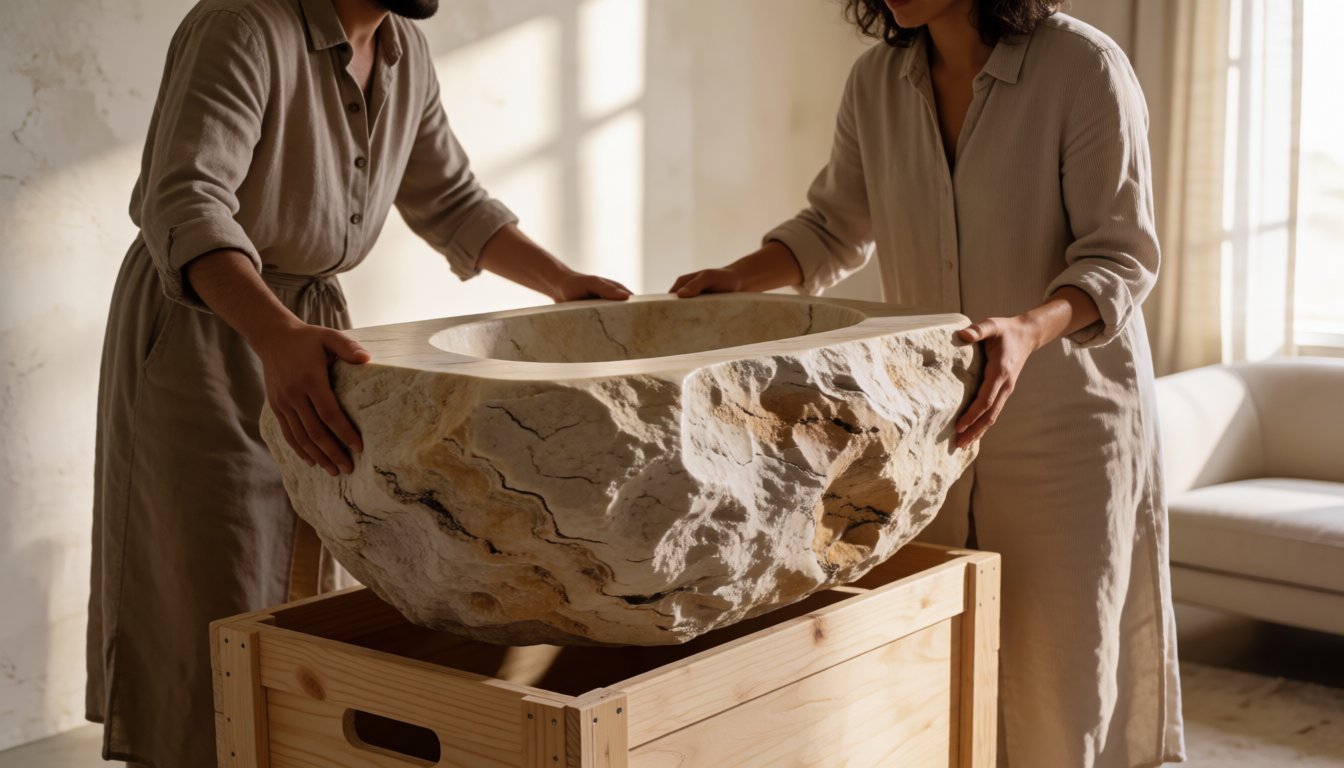
How you load the container determines your safety margin against damage. For stone furniture sea freight, Full Container Load (FCL) shipments offer better control than Less Than Container Load (LCL). In FCL, you pack the entire space yourself or with a trusted forwarder, ensuring stone items are never surrounded by loose cargo that could shift and strike them during rough seas. LCL involves sharing container space with other shippers’ goods, increasing the risk of damage from strangers’ pallets falling on your marble table tops.
When packing an FCL shipment at our factory in China, we aim for a “tight fit” without overstuffing. Stone items are usually placed on their strongest axis—often standing vertically or lying flat depending on thickness—but never stacked directly on top of each other unless separated by heavy-duty plywood and cushioned foam. A typical 40-foot High Cube container can hold roughly 12 to 15 large dining tables, but this number drops significantly if the items include tall fireplaces or deep vanities that limit vertical stacking height.
Packing Materials and Standards
The packaging material you choose is a direct cost variable in your budgeting. We typically use double-layered plywood for skids rather than simple plastic crates which offer no structural rigidity against compression. Inside, we apply at least 2cm (0.8 inches) of high-density foam or custom-cut EPS to the edges and corners of sinks and tables where they are most vulnerable during corner-to-corner impacts.
For export-bound bathtubs, a common failure point is the drain assembly and overflow hole. We wrap these openings with protective tape and fill them partially with absorbent material if necessary, though water-resistant barriers are critical since stone absorbs moisture over time once sealed poorly. The exterior of every crate must be clearly marked “Fragile – Stone” in English and Chinese characters to alert handlers at both the loading port in China and your receiving dock abroad. Do not accept shipments where the outer plywood is thin or lacks reinforced corner posts; these weak points fail under heavy handling, exposing the stone underneath before it even hits a pallet jack.
Freight Methods: Sea vs. Air
For most B2B buyers importing bulk inventory, sea freight remains the only viable economic option for large items like fireplaces and oversized dining sets. Ocean shipping costs are relatively stable but take time; standard transit from Chinese ports to Los Angeles or Rotterdam typically ranges between 25 to 35 days depending on vessel schedules. Air freight exists primarily for high-value decor pieces where speed outweighs cost, such as a limited run of gold-veined marble side tables intended for an immediate showroom launch in New York.
Even with air freight, the weight penalty is severe because fuel surcharges apply per kilogram. A 200kg granite table flown via cargo might incur double or triple the shipping fee compared to sea freight. You must calculate your Total Landed Cost carefully: if you are shipping stone furniture, adding insurance and expedited ground transport at the destination can negate any savings from faster air rates unless delivery speed is a critical contract requirement for that specific client order.
Insurance and Claims Processes
Insurance claims for damaged goods often take months to resolve, especially when dealing with international maritime carriers who frequently deny liability citing “Act of God” or inherent vice arguments regarding porous materials like stone. To protect your capital, you must secure All-Risk cargo insurance specifically tailored for heavy machinery and fragile construction materials from a reputable provider in the US or EU before goods leave China.
Many buyers mistakenly rely solely on the carrier’s basic coverage, which often has low per-item limits (e.g., $100–$500) that barely cover the cost of replacing a single large vanity. A comprehensive policy should cover at least 110% of your invoice value to account for restocking fees and lost profit margins on delayed orders. When filing a claim, documentation is king. You need an independent surveyor’s report confirming damage occurred during transit, not pre-existing before loading. Always photograph the goods upon arrival while they are still in the container or at the dock, noting any dents or cracks with timestamped photos immediately sent to your insurance adjuster.
Supplier Communication and Inspection
When working directly with a manufacturer like Gladystone, clear communication regarding logistics is as important as product design. Before production begins on bulk orders of sinks or tables, ask specific questions about how they handle export packing upgrades for international buyers versus domestic Chinese distribution standards. Domestic packs often lack the extra bracing required for long-haul ocean voyages.
Request to see photos or videos of your specific order being loaded into the container at our factory in Qiaoxi or nearby industrial zones. Verify that the pallets are shrink-wrapped securely and stacked evenly without void spaces filled with loose stone debris from other jobs. If you operate a dropshipping model, insist on direct shipping instructions to be sent directly by the forwarder rather than through an intermediary warehouse which might mishandle heavy loads. For white-label brands requiring custom branding or packaging inserts, confirm these do not compromise the structural integrity of the crate walls before approving final artwork files for printing.
FAQ
What is the typical lead time for shipping stone furniture from China to the US?
Lead times vary significantly based on freight mode and port congestion but generally range between 30 and 45 days including production, inland transport in China, ocean transit, customs clearance, and final delivery. Sea freight containers typically sail every few weeks depending on the carrier schedule (such as Maersk or COSCO), so booking slots several months ahead is often necessary for large volume orders to secure space on a suitable vessel without paying peak-season premiums.
How much does it cost to insure stone furniture shipments?
Cargo insurance rates typically range from 0.3% to 1.5% of the total invoice value, depending on the coverage level (e.g., All-Risk vs. Free From Perils) and the insurer’s risk assessment for heavy freight. For a shipment valued at $50,000, expect annual premiums or per-trip quotes around $200 to $750; however, this cost is negligible compared to the potential loss from damaged goods that exceed your inventory investment many times over in terms of replacement costs and customer refunds.
Can I mix stone furniture with other materials in one container?
Generally, it is not recommended to pack fragile natural stone directly against metal or heavy wood items without significant separation due to vibration risks during transit; however, mixing different types of finished goods can work if they are packed on separate pallets within the same container and secured individually. Avoid placing hollow ceramic sinks near solid granite slabs as shifting cargo could cause impact damage between uneven surfaces unless there is a dedicated air gap or heavy dunnage separating them completely inside the crate structure.
What documentation do I need for customs clearance?
Essential documents include a commercial invoice detailing HS codes (often 6802.10 or similar depending on specific stone type), packing list showing gross/net weight and dimensions, bill of lading as title document, certificate of origin proving non-dumping status if applicable to your target market, and sometimes phytosanitary certificates for treated wood packaging materials used in crates which must comply with ISPM-15 standards to avoid fines or delays upon arrival at US/EU ports.
Quick Comparison
| Feature | Standard Domestic Packing (China Only) | Export-Reinforced Pallets (Recommended) | Custom Crated Units (High Risk Items) |
|---|---|---|---|
| Material | Thin plywood + foam insert | Double-layer reinforced plywood + steel braces | Solid wood crate with internal bracing |
| Weight Capacity | Up to 100kg per unit safe limit | Safe up to 250-300kg stacked units | Designed for >400kg heavy items like tubs |
| Suitable For | Small decor, local delivery within China | Dining tables, sinks, standard vanities | Bathtubs, large fireplaces, custom sets |
| Est. Cost Impact | Baseline price (included in FOB) | +5% to 10% increase on unit cost | +15% to 20% increase; higher freight density |