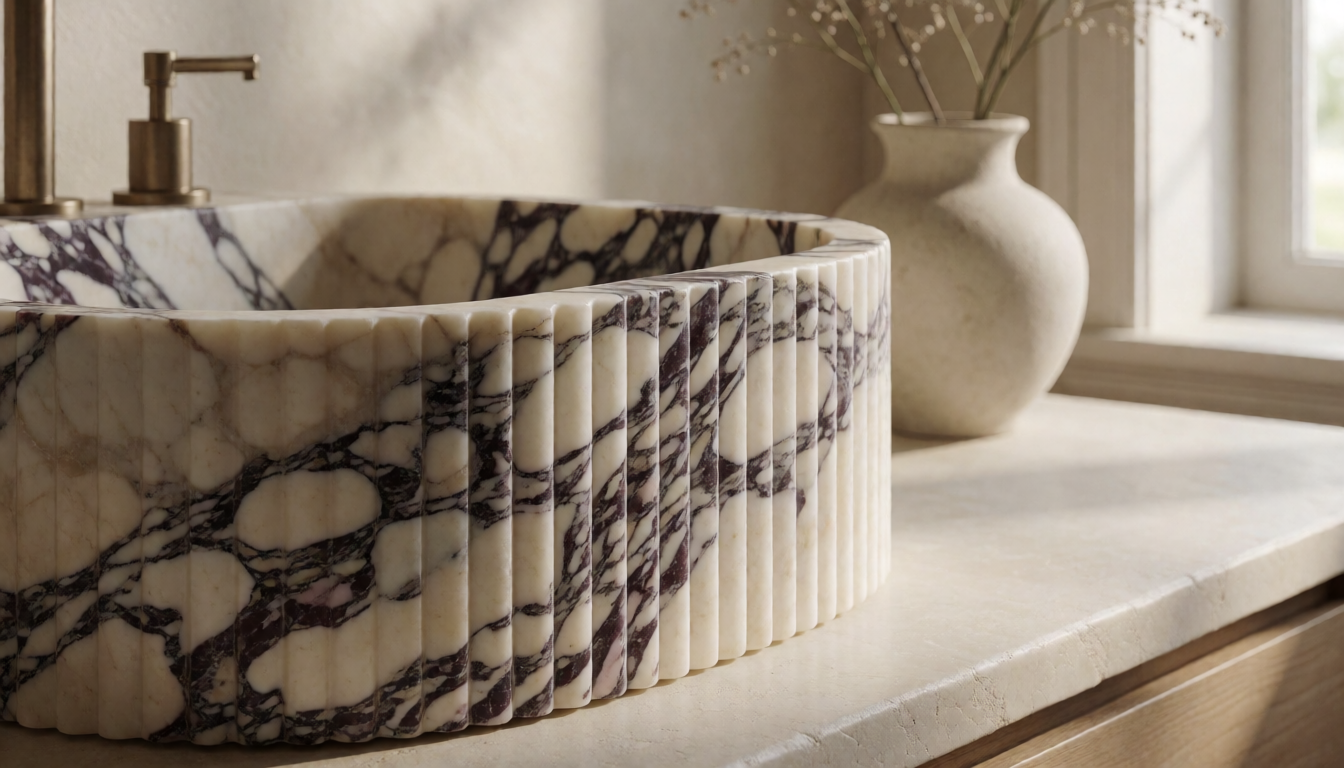
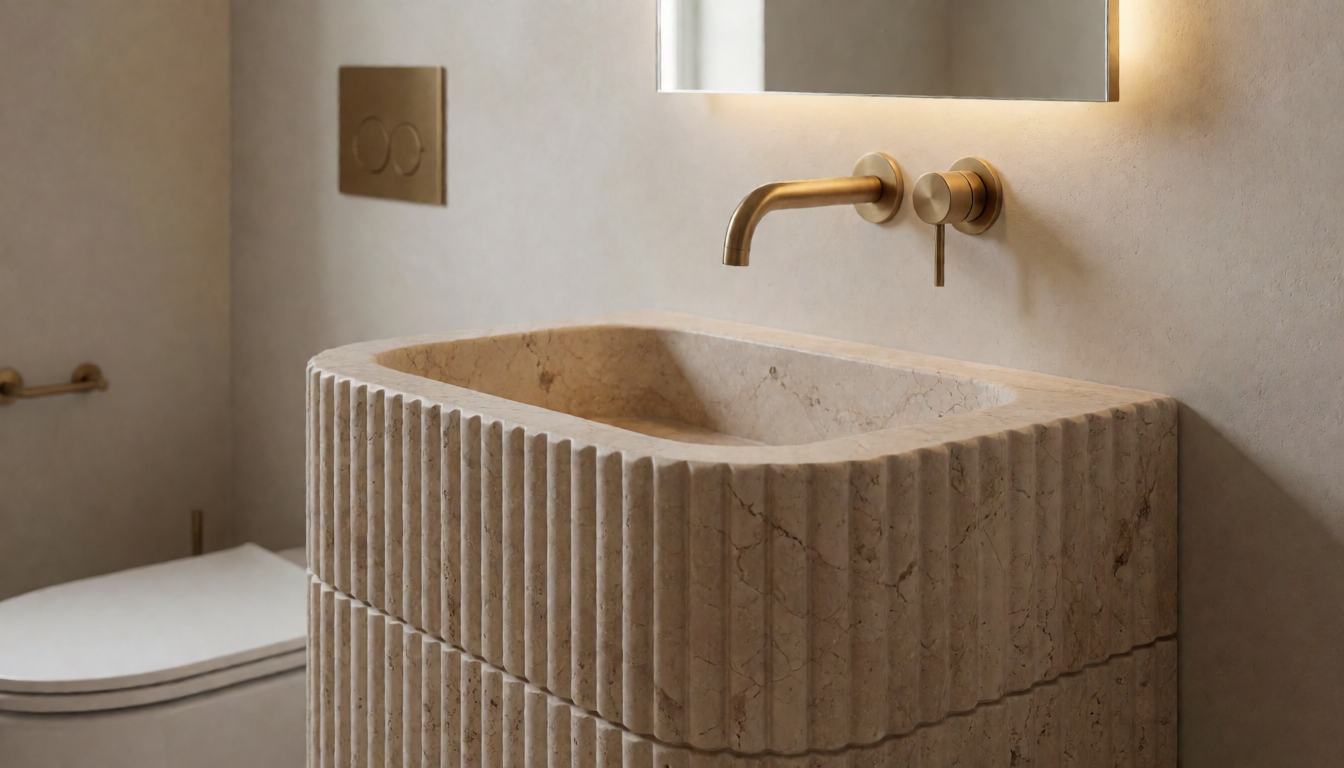
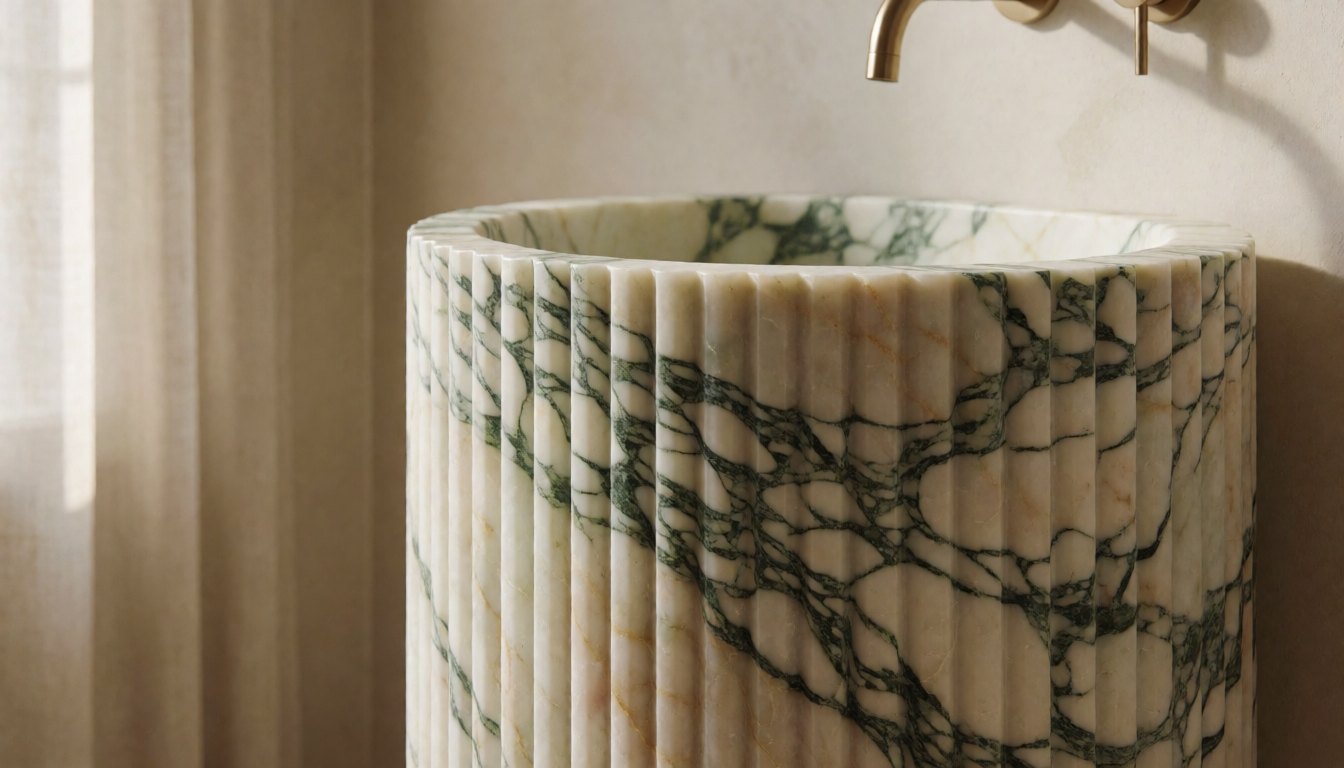
A fluted stone sink is a hand-carved basin with vertical grooves cut into a solid block of marble or travertine. In 2026 it has become the signature fixture of luxury bathrooms, combining tactile craftsmanship with sculptural drama that machine-made sinks cannot replicate.
What Is a Fluted Stone Sink?
A fluted stone sink is a basin whose exterior carries a series of vertical ridges—echoing classical columns—carved by hand into a single block of natural stone. Unlike assembled or pressed sinks, each fluted piece is cut from one quarried block, so no two share identical veining. Designers value it not as a fixture but as the architectural anchor of the room: the piece around which walls, lighting, and hardware are composed. Calacatta Viola, Lilac Marble and green-veined stones are favored in 2026 because their dramatic movement reads beautifully against the rhythm of the flutes.
Why Are Fluted Basins Trending in 2026?
- Visible craftsmanship: A fluted sink cannot be machine-made; every groove is carved by hand, and the irregularity is precisely what gives it value.
- Warm minimalism: After years of cold, clinical bathrooms, homeowners want tactile, sensory stone that feels lived-in rather than sterile.
- Bespoke demand: Custom-dimensioned, made-to-order basins now differentiate a “truly exceptional” bathroom from a merely expensive one.
- Metal dialogue: Unlacquered brass and aged bronze pair with veined marble to create material warmth no polished chrome can match.
Fluted stone sinks signal a wider rejection of disposable interiors in 2026. According to luxury market observers, the most expensive hotel bathrooms now contain fewer objects, not more—and the single hand-carved basin carries the room. Carving flutes from a solid marble block takes a master fabricator roughly 6–10 hours per sink, which is why output stays limited and each piece reads as a commission rather than a commodity. For architects specifying projects, the fluted exterior solves a real problem: it adds visual depth and tactile interest to a small powder room while demonstrating craft that clients can see and feel. When paired with backlit mirrors and brushed-brass taps, the sink becomes a quiet statement of permanence—exactly the “legacy installation” mindset buyers now seek over fast-fashion renovation.
How to Specify a Hand-Carved Stone Sink
- Choose the stone: Select Calacatta Viola or travertine based on the room’s warm or cool palette.
- Confirm the block: Request digital slab mapping so veining flows across the basin and any matching vanity.
- Plan the hardware: Specify unlacquered brass or aged bronze to draw out amber undertones in the stone.
Fluted vs. Other Stone Basins: Which Should You Specify?
| Basin Type | Finish | Best For | Price Tier |
|---|---|---|---|
| Fluted marble | Hand-carved ridges | Sculptural statement | Premium |
| Polished vessel | Mirror gloss | Minimalist schemes | Mid |
| Travertine bowl | Matte, pitted | Warm Mediterranean | Mid |
| Pedestal sink | Solid monolith | Small / vertical spaces | Premium |
Frequently Asked Questions
Do fluted stone sinks stain more than smooth ones?
No. Stain resistance depends on the sealant, not the surface profile. A penetrating sealer applied every 12–18 months protects fluted grooves just as well as a flat top.
Are fluted sinks harder to clean?
Slightly. Use a soft brush with pH-neutral stone cleaner; avoid acidic sprays that etch the calcium carbonate between grooves.
Can I get a fluted sink in a custom size?
Yes. Most ateliers cut to specification from a single block, which is how designers match the basin to a bespoke vanity.
Glady Stone: Hand-Carved Stone Basins for 2026
Glady Stone supplies architects and wholesalers with solid-block marble and travertine basins—including fluted and pedestal profiles—cut to custom dimensions with digital slab matching.
Explore the Glady Stone natural stone basin collection for bespoke 2026 bathroom specifications.