When you are sourcing stone furniture for your dropshipping business or white-label brand, one of the first things that catches your eye is the massive price gap between suppliers. You might see a marble dining table listed at $150 on one platform and another identical-looking piece costing $800 elsewhere. As an importer looking to build a profitable catalog, understanding what drives these numbers is critical for negotiating better terms with manufacturers like Gladystone. The cost isn’t just about the stone; it is a complex equation involving quarry location, slab size, finishing techniques, logistics, and supply chain risk management.
Quarry Origin and Veining Rarity
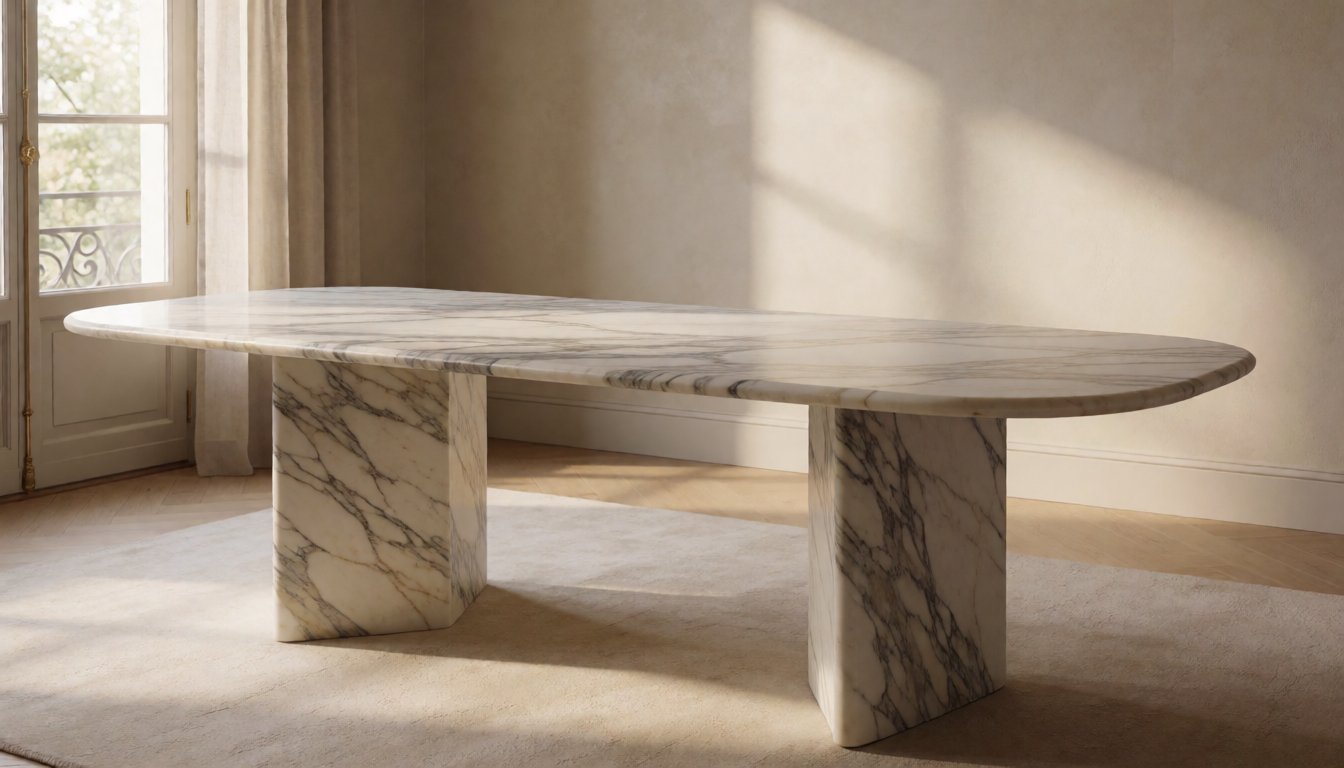
The single biggest driver of stone table pricing comes from where the marble was quarried and what specific piece you are buying. Italian Carrara or Statuario marble commands higher prices than domestic Chinese or Indian stone because of its global reputation for consistency and aesthetic appeal. However, even within a single quarry location like Italy’s Tuscany region, variations occur based on veining patterns.
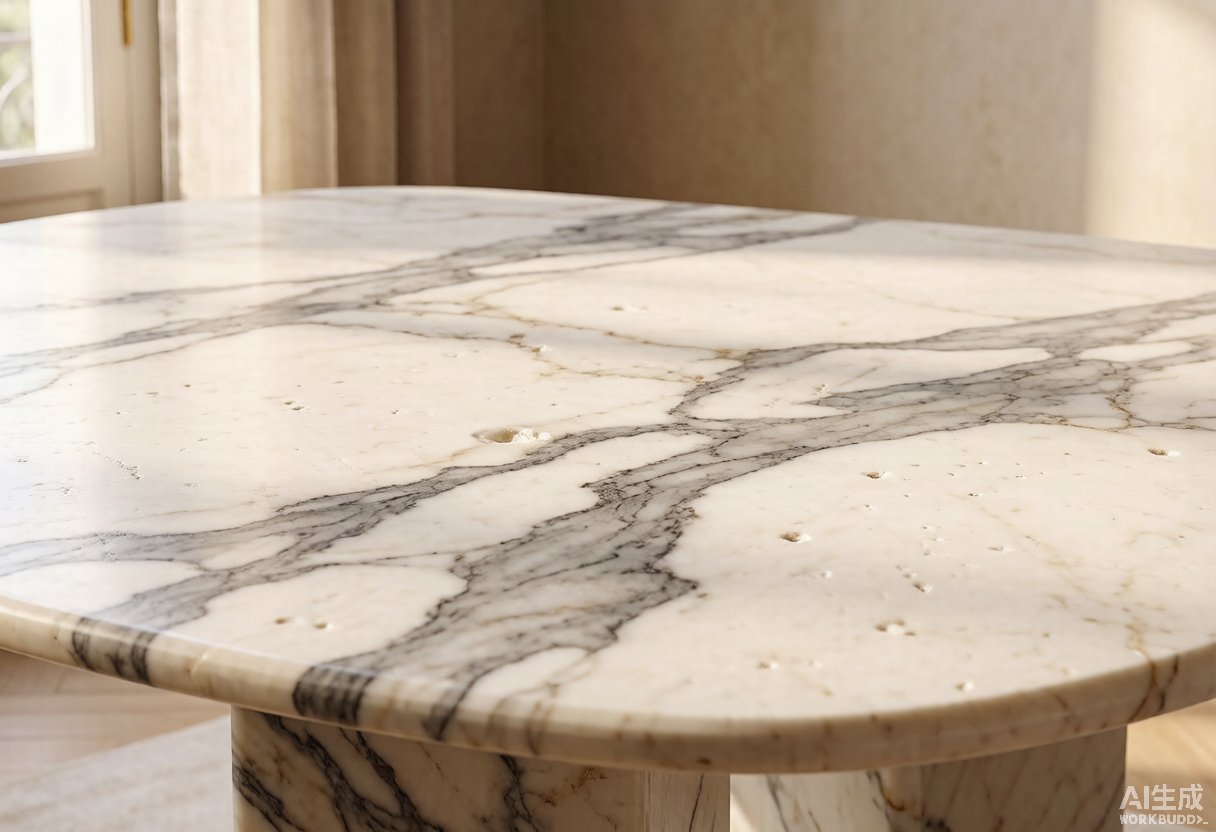
A slab with bold, dramatic veins is often classified as “premium” grade due to high demand in luxury interior design projects globally. Conversely, slabs with minor natural pits or inconsistent coloring are downgraded but sold at significantly lower rates. When a supplier offers you a marble dining table price range that includes items from $300 up to $2,500 per unit, they are likely mixing different quarry origins and grade classifications without explicitly stating them upfront. As an importer, always request the specific quarry name (e.g., “Carrara Gold” or “Volta”) rather than accepting generic terms like “Italian Marble.”
Slab Dimensions and Structural Engineering
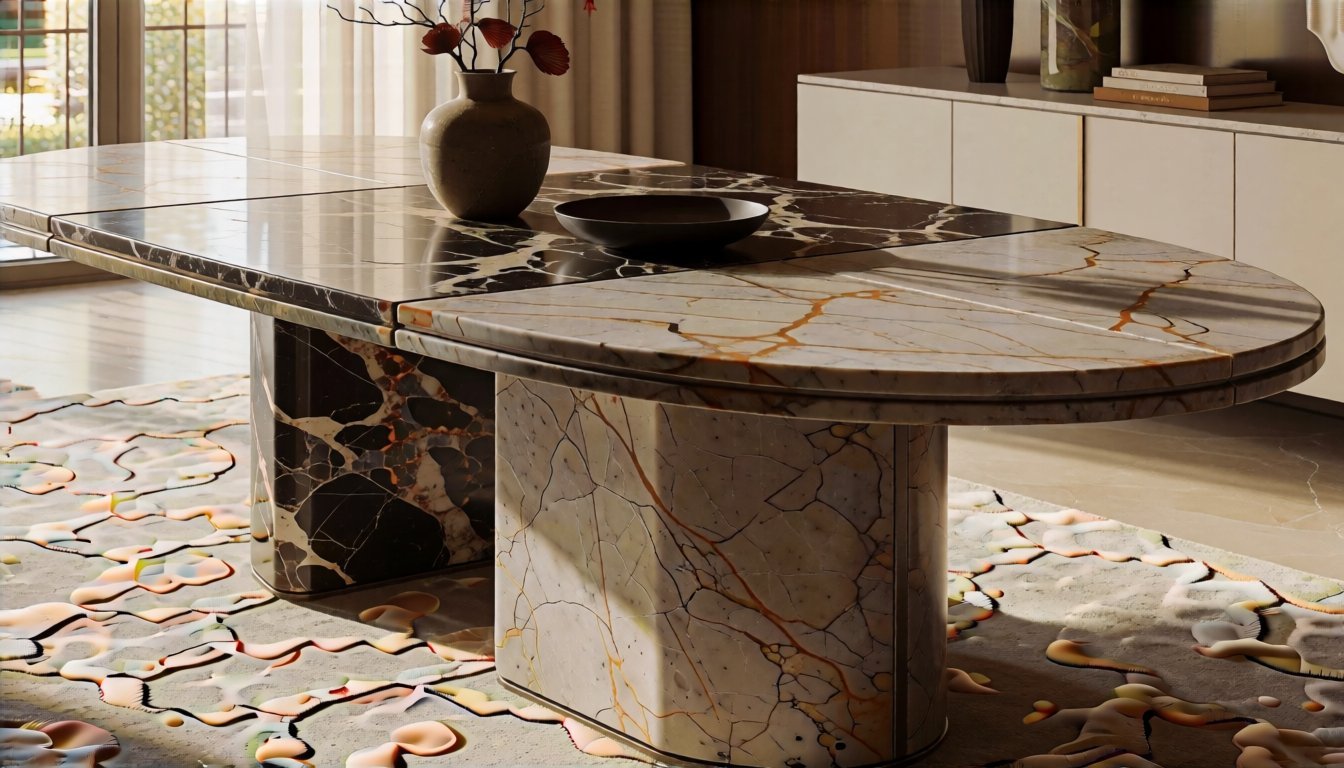
The physical dimensions of the table directly impact material costs more than you might expect. A standard 60x120cm slab can yield a simple rectangular top, but larger tables require multiple slabs or very large single pieces that are harder to extract from quarries. For example, an oval dining table with a length of 240cm often requires splitting two separate slabs and joining them seamlessly in the factory. This adds labor time and increases the risk of structural failure during transport if not engineered correctly.
Weight is another hidden cost factor. A thick slab (3-5 cm) filled underneath to create a solid base weighs roughly 120kg for a medium-sized table, while an empty-core design with thin legs might weigh only 40kg. While you prefer the solid feel of heavy stone, shipping costs spike exponentially as weight increases. If your logistics partner charges per kilogram, saving on material thickness can save thousands in freight fees over time. Always ask suppliers if they offer hollow-core or lightweight composite options for large dimensions to optimize why marble table expensive calculations based on your specific cargo constraints.
Finishing Techniques and Edge Profiles
The finishing process distinguishes a mass-produced item from a luxury piece, yet it is frequently overlooked in initial cost assessments. A polished finish requires multiple rounds of diamond grit polishing followed by sealing against water stains—a standard procedure that adds labor but ensures durability for high-end clients like interior designers.
Compare this to an “honed” or leathered surface, which costs less to produce because it skips the final glossing steps and creates a matte texture naturally resistant to scratches. The edge profile also dictates pricing complexity. A simple bullnose edge is fast to machine on automated CNC lines costing roughly $50 per unit in labor charges. In contrast, a custom ogee or waterfall edge requires skilled artisans to hand-finish each curve after the initial cut, potentially doubling the finishing cost. When evaluating marble dining table price range data from different vendors, look for transparency regarding these finish specifications; vague descriptions often hide inflated markups on simple items sold as “premium.”
Logistics and Supply Chain Risk
Finally, you must factor in the risk premium embedded into low-price offers. Importing stone is notoriously difficult due to fragility during sea freight. A supplier offering a rock-bottom price might be using older packaging methods that result in 15-20% breakage rates upon arrival at your warehouse or fulfillment center. That hidden cost eventually eats into your margins unless you negotiate it back down through volume commitments.
Reputable manufacturers like Gladystone typically offer competitive stone table pricing by optimizing their packing protocols with reinforced corner guards and custom crates that minimize damage claims. They balance the unit price slightly higher than a discount broker but ensure an 85-90% success rate on delivery, which improves your overall ROI in dropshipping scenarios where customer returns are costly. Ask potential suppliers for their historical breakage rates or request photos of packed units before placing bulk orders.
Strategic Sourcing Questions
To navigate these variables effectively, approach every supplier with specific questions that reveal the true cost structure:
* “Which exact quarry does this slab come from?” (Look for Italian, Turkish, or Chinese origins).
* “What is the thickness of the top and what are the internal dimensions if hollow-core?”
* “How many pieces per container do you guarantee without damage at current freight rates?”
By asking these questions, you move beyond generic listings and establish a partnership based on transparency. Understanding that why marble table expensive involves more than just raw material costs allows you to select suppliers who offer genuine value rather than just the lowest headline price. This knowledge empowers your import business to build a catalog of durable, attractive furniture that meets the expectations of US and EU buyers without sacrificing profit margins.