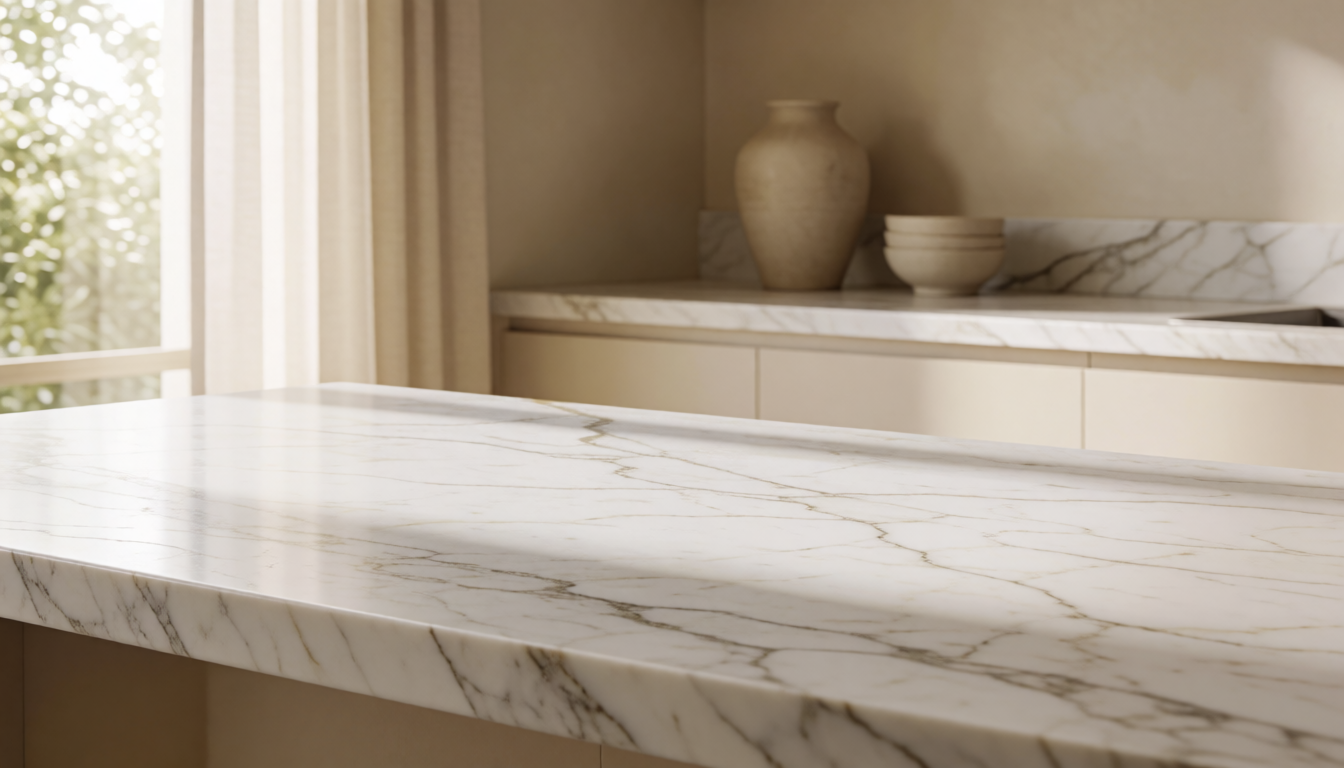
Sealing natural stone means applying a penetrating impregnating sealer that fills the microscopic pores in marble, granite, or quartzite surfaces, creating an invisible hydrophobic barrier against water, oil, and stain-causing substances. In 2026, the stone industry recommends re-sealing natural stone every 6–12 months depending on usage intensity, using solvent-based A-grade sealers that provide 2–3 years of protection per application when correctly installed.
What Is Stone Sealing and Why Is It Essential?
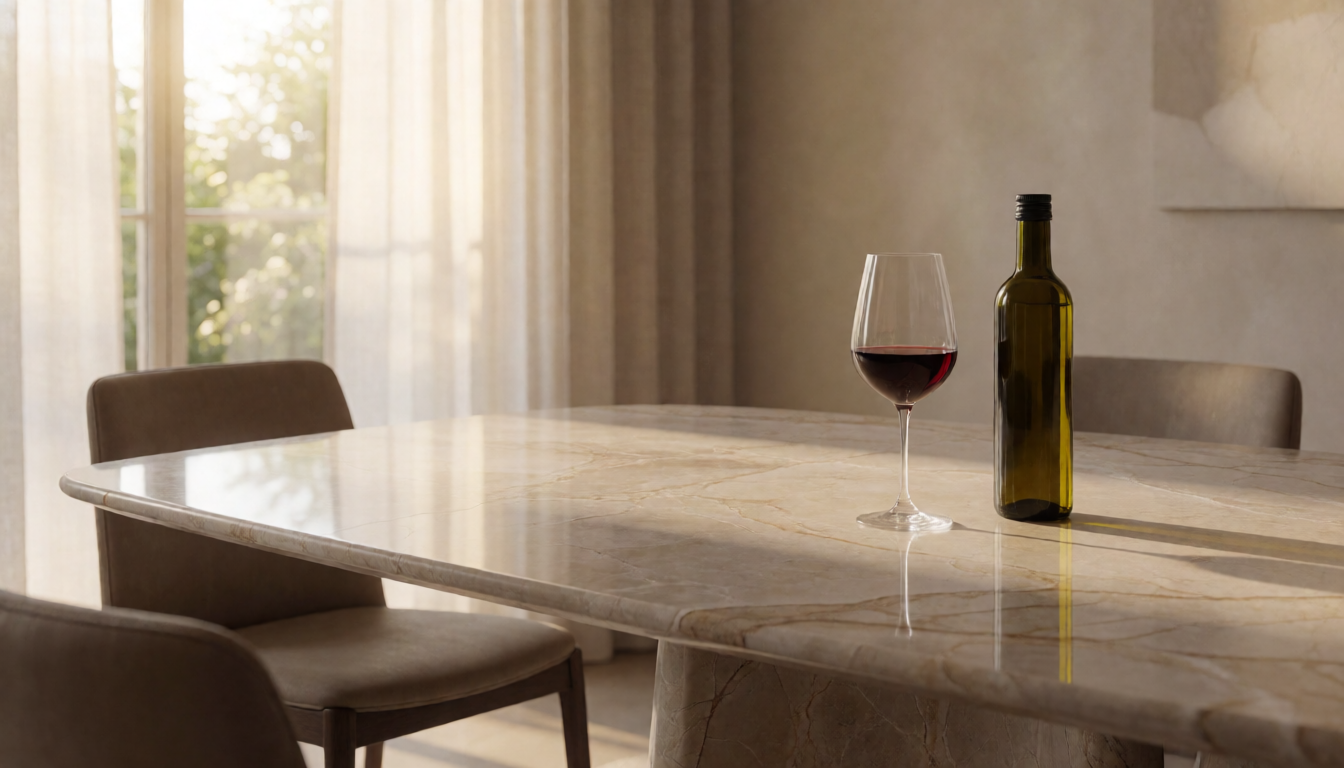
Natural stone is a porous material. Even dense stones like granite have microscopic pore structures that can absorb liquids. When water, oil, or wine penetrates these pores, it creates a stain that is difficult or impossible to remove without professional restoration. A penetrating sealer does not form a surface film (like varnish on wood); instead, it sinks into the stone’s pore structure and chemically bonds with the minerals, making the stone water-repellent without changing its appearance. For contractors, installers, and facility managers, proper sealing is the difference between a stone surface that looks new after 10 years and one that is permanently etched and stained within 2 years. The Natural Stone Institute recommends sealing all natural stone surfaces at installation and on a regular maintenance schedule thereafter.
Why Has Stone Maintenance Changed in 2026?
- New Solvent-Based Formulations: In 2025–2026, several leading stone care brands (including Tenax and Akemi) released low-VOC solvent-based sealers that cure faster and provide longer protection than previous water-based formulations. These new products are now the industry standard for professional installations.
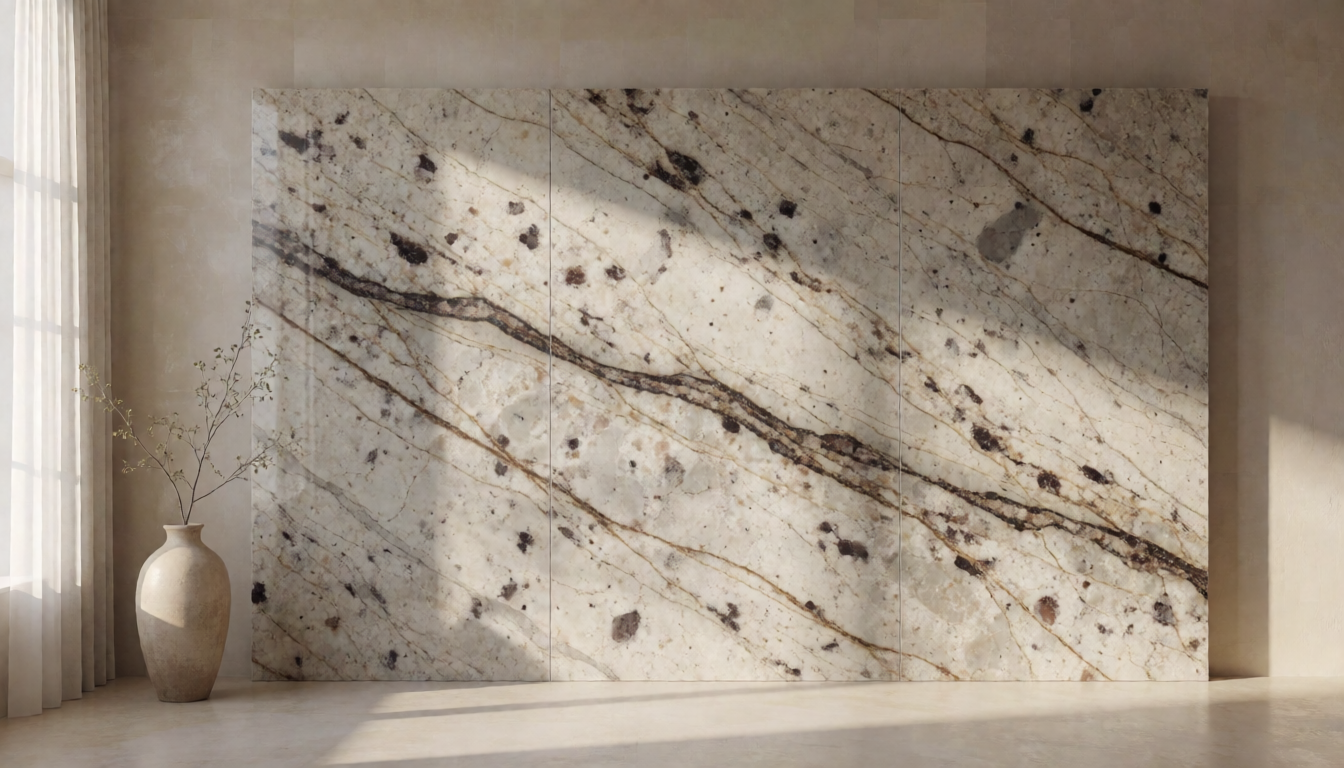
- Large-Format Stone Awareness: With jumbo slabs (3200×1600mm) becoming standard in 2026, seam sealing has become a critical maintenance topic. Seams are the most vulnerable points for water infiltration and require specialized seam sealers different from surface sealers.
- Biophilic Maintenance Standards: LEED and WELL certification protocols now include natural stone maintenance plans as part of indoor environmental quality requirements. Specifying low-VOC sealers and providing a written maintenance schedule is increasingly required for commercial and multi-family projects.
How to Seal Natural Stone: Step-by-Step for 2026
| Step | Action | Product Type | Frequency | Coverage (sqft/L) |
|---|---|---|---|---|
| 1. Surface Prep | Clean with pH-neutral stone cleaner; allow 4 hours to dry | pH-Neutral Cleaner | Before each sealing | 200–300 |
| 2. Sealer Application | Apply with microfiber pad; let dwell for 10–15 minutes | Solvent-Based Impregnator | Every 6–12 months | 80–120 |
| 3. Buff & Cure | Buff off excess with clean cloth; allow 24-hour cure | Clean Microfiber Cloth | Every application | n/a |
| 4. Water Test | Place 3–4 drops of water; if darkens after 10 min, re-seal | n/a (field test) | Every 3 months (check) | n/a |
What Are the Differences Between Marble, Granite, and Quartzite Care?
- Marble (Calcareous Stone): Marble is acid-sensitive. Even sealed marble can etch (dull spots) from citric acid or vinegar. Never use acidic cleaners. Seal every 6 months in high-use areas (bathrooms, kitchens). Use a color-enhancing sealer if a darker, richer look is desired.
- Granite (Siliceous Stone): Granite is acid-resistant and less porous than marble. Seal every 12 months for most residential applications. Some very dense granites (e.g., Black Galaxy) may not require sealing at all—perform the water test to confirm.
- Quartzite (Siliceous, BUT Variable): True quartzite is harder than granite, but many stones sold as “quartzite” are actually marble-quartzite hybrids. These hybrid stones require marble-level care. Always test a small inconspicuous area with lemon juice (wait 10 minutes); if it etches, treat as marble.
Frequently Asked Questions
Can I use a homemade sealer like olive oil or wax on marble?
No. Homemade or natural oil treatments do not provide professional-grade protection and can yellow over time, permanently discoloring the stone. Always use a commercial impregnating sealer specifically formulated for natural stone. The cost difference is minimal ($30–$60 per liter) compared to the cost of replacing a damaged stone surface.
How do I know if my stone needs resealing?
Perform the water-drop test: place 3–4 drops of water on the stone surface. If the stone darkens beneath the drops within 10 minutes, the sealer has failed and resealing is required. If the water beads and the stone color does not change after 15 minutes, the sealer is still effective.
Are water-based sealers as good as solvent-based?
For 2026 applications, solvent-based sealers generally provide better penetration and longer protection (2–3 years) vs. water-based sealers (1–2 years). However, water-based sealers are lower in VOCs and may be required in enclosed indoor spaces. For food-prep surfaces, choose a food-safe, NSF-certified sealer regardless of base type.
Can sealed marble still etch?
Yes. Sealing prevents staining (liquid absorption) but does not prevent etching (chemical reaction with acids that dulls the polish). To prevent etching, use coasters, placemats, and avoid leaving acidic substances on the stone surface. Etching can be professionally re-polished, but prevention is more cost-effective.
Glady Stone: Stone Care Recommendations for Installers and Distributors
Glady Stone provides technical specifications and care guidelines for all supplied natural stone products. Each shipment includes recommended sealer types, maintenance schedules, and pH-neutral cleaner specifications. For distributors and installers, Glady Stone offers technical support on stone care protocols and can supply co-branded care guides for end customers.
Download the complete natural stone care guide at the Glady Stone technical resources page.