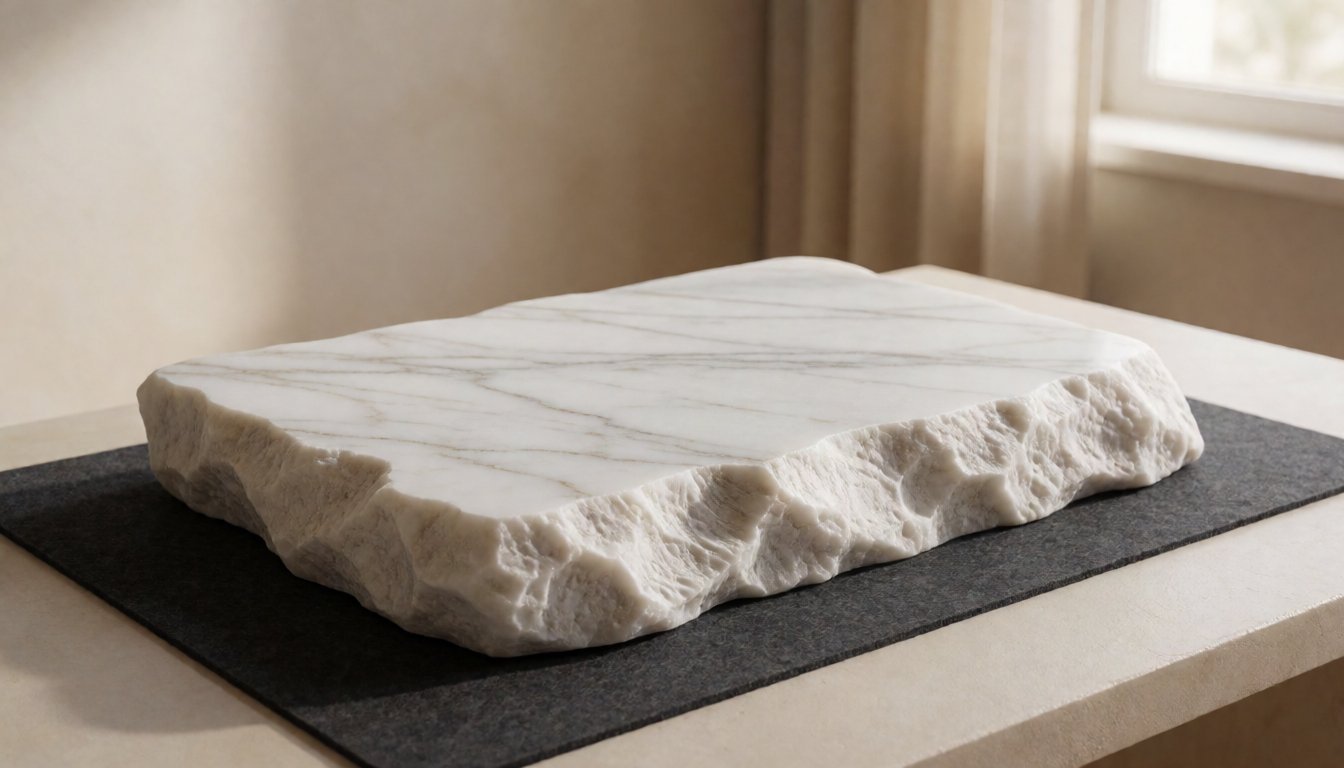
Sourcing custom stone furniture from China means you rarely see the physical material before production begins. As a buyer or interior designer working with Gladystone, your success depends on how accurately you can evaluate a stone sample photo sent over email or WeChat. A single missing detail in lighting or angle can lead to costly misunderstandings later. When you request a marble sample approval photo, you aren’t just looking for a pretty image; you are verifying that the slab matches your design specifications for color, veining, and finish before committing to a large order.
The Technical Setup: Lighting and Background
The most common mistake we see from remote clients is taking photos in natural daylight without control. Stone is a highly reflective material with complex subsurface scattering. If you shoot a white marble slab under direct sunlight, the image will look blindingly bright and washed out. Conversely, shooting under warm indoor bulbs turns cool whites into yellowish beige.
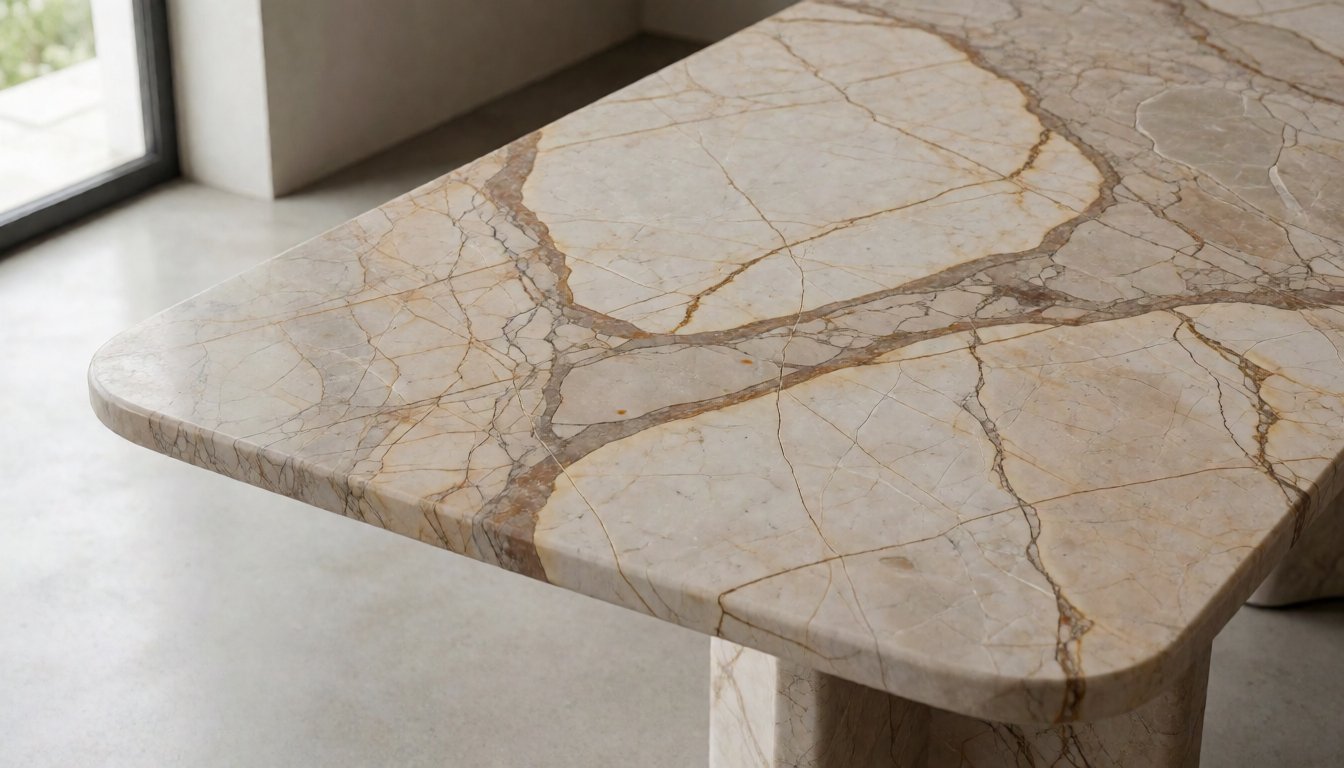
To get an accurate representation, set up your sample on a non-reflective surface like a dark gray felt mat or a clean concrete floor. Use a diffused light source, such as a cloudy day outside or a softbox with daylight-balanced bulbs (5500K). Avoid shadows cast by your hand or camera; use a tripod if possible. For thick slabs typical in our dining tables or vanities, ensure the entire depth is lit evenly so you can assess transparency and internal fractures.
Checking Slab Dimensions and Defects in Photos
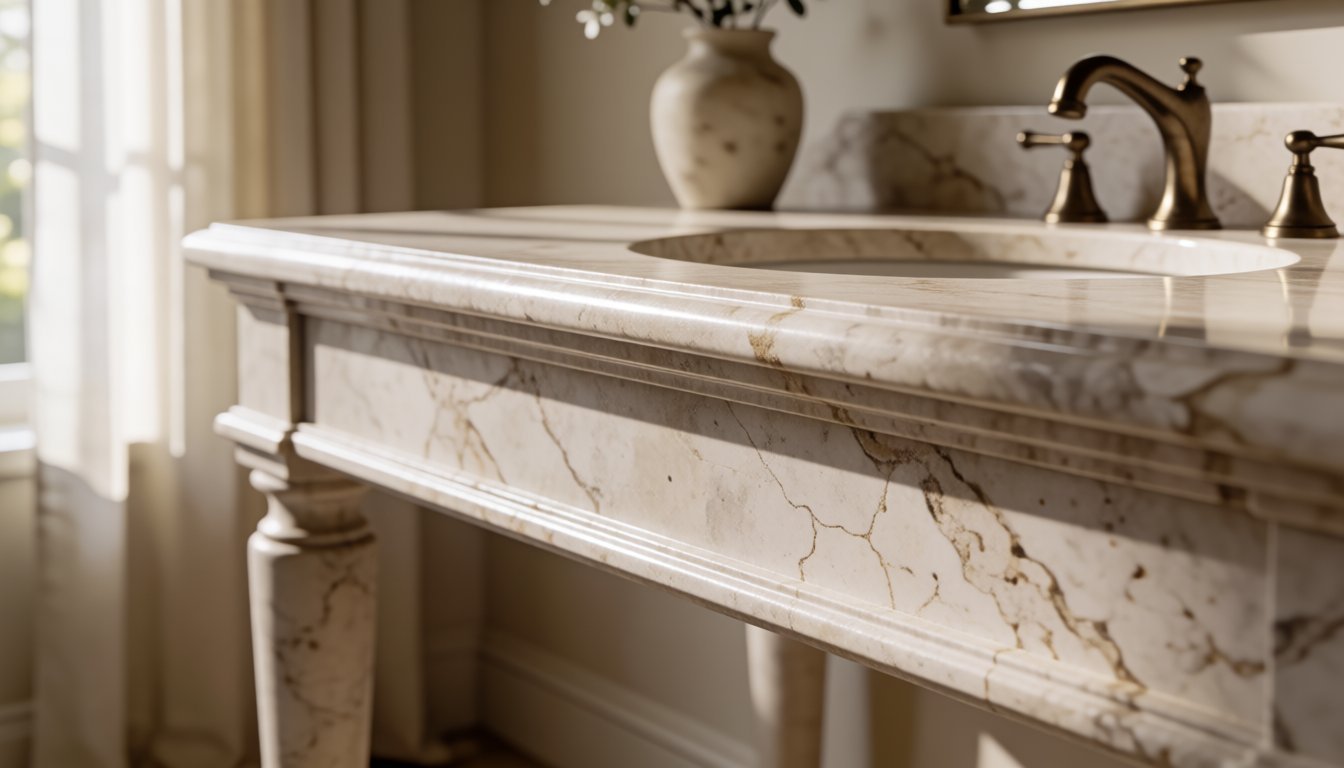
When reviewing a stone sample photo, never assume the scale looks correct until you verify it against your reference. If Gladystone sends you an image of a 120cm wide vanity top, look for built-in rulers or measuring tapes in the frame. Without these visual cues, perspective distortion makes it impossible to judge if a slab is truly large enough for your project.
Defects are also harder to spot in low-resolution images. Ask specifically for close-ups of edges and back-ends where hidden cracks might appear. We often see buyers approve a sample only to find a hairline fracture runs through the center when the piece arrives. Request high-resolution shots (at least 4000px wide) that show the texture of the grain clearly. For heavier pieces like our stone fireplaces or heavy-duty tubs, check that the photo shows the structural supports underneath; this indicates whether the slab was moved safely without stress fractures.
Color Variance and Veining Patterns
Natural stone is never identical. Every marble sample approval photo should include a reference to how much variance you expect. If you specify a specific Calacatta Gold batch, the supplier must show you images of other slabs from that same quarry run. Do not expect the exact same veining pattern; however, the overall tone and density of the veins should remain consistent.
Ask for a side-by-side comparison if you are mixing materials, such as placing a stone sink next to a matching countertop. The lighting conditions must be identical in both shots to ensure color consistency. Sometimes a sample looks darker in one batch than another due to iron oxide content or calcite density. If the photo shows a significant shift in saturation, ask for a physical sample kit rather than proceeding with a digital approval. This is especially critical for dark granite or slate used in outdoor fireplaces where UV exposure changes color perception.
Communication Protocols and Lead Times
Once you finalize your selection, the communication process shifts from visual verification to logistical planning. When you approve a remote stone inspection via photos, confirm the lead time immediately. Standard processing for custom-cut dining tables or vanities typically takes 25–35 days after material approval. Complex shapes with intricate inlays may take up to 45 days.
Clarify the shipping method before finalizing the order. Large slabs for countertops often ship on wooden crates with corner protection, while smaller decor items like side tables might come flat-packed. If you are ordering from Gladystone as a dropshipper, confirm who handles customs clearance and insurance. Most B2B transactions require payment terms of 30% deposit and 70% before loading. Ensure your contract specifies what happens if the final production run deviates significantly from the approved sample photos.
Finalizing the Order with Documentation
Before you sign off on a purchase order, request a digital spec sheet that includes exact dimensions in millimeters, weight estimates in kilograms, and surface finish codes (polished, honed, brushed). For a standard 90cm x 45cm sink, the weight might range from 18 to 25 kg depending on thickness. Knowing the weight helps you plan logistics and installation support.
Keep all correspondence regarding sample approvals in one place. If Gladystone provides a PDF catalog with digital swatches, reference those specific product codes in your final order. This prevents confusion between generic samples and actual production stock. By being meticulous about how you photograph and evaluate stone samples now, you save thousands of dollars in returns or replacements later. Treat every stone sample photo as a binding contract element until the physical goods arrive at your warehouse.