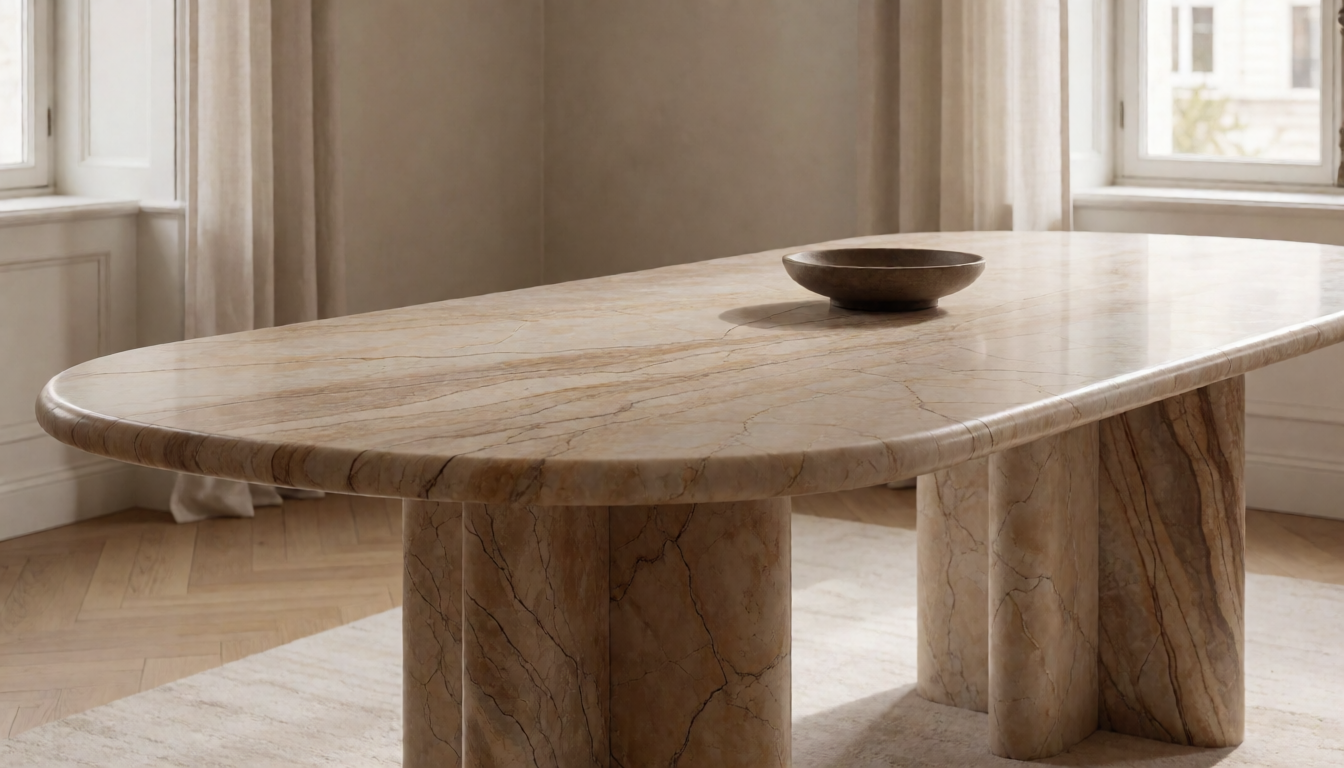
A marble dining table is sustainable in 2026 when it uses reclaimed offcuts, low-carbon quarrying, and local fabrication. Natural stone is itself inert and lasts decades, so the key is sourcing—reclaimed and regionally cut marble cuts transport emissions by up to 40%.
What Makes a Marble Dining Table Sustainable?
Sustainability in stone furniture is decided long before the table reaches a showroom. The first lever is the material source: reclaimed marble cut from fabrication offcuts avoids new quarrying entirely, while regionally quarried stone slashes the shipping emissions that dominate a slab’s carbon footprint. The second lever is longevity—natural marble is inert, non-toxic, and can serve for generations, unlike veneered or composite furniture that is landfilled after a few years; a single marble table used for 30 years easily outperforms three replaced engineered pieces. The third lever is finishing and fabrication: water-recycling cutting, solar-powered workshops, and local craftsmen reduce impact further. Accio’s 2026 furniture report highlights that buyers now ask specifically for provenance and reclaimed content, and wholesalers who document a table’s chain of custody command premium pricing. The takeaway for 2026: a sustainable marble table is less about the stone itself and more about where it came from and how far it traveled.
Why Is Sustainable Stone Furniture Trending in 2026?
- Circular design: Reclaimed offcut tabletops turn workshop waste into luxury centerpieces.
- Carbon awareness: Buyers compare transport miles; locally cut stone wins specifications.
- Investment mindset: A durable marble table is marketed as a lifetime, not seasonal, purchase.
Natural Marble vs. Reclaimed vs. Engineered Quartz
| Option | Carbon Footprint | Durability | End-of-Life |
|---|---|---|---|
| Reclaimed marble | Lowest | Decades | Recyclable |
| Virgin marble | Medium | Decades | Recyclable |
| Engineered quartz | Medium-high | 10–20 yrs | Limited |
How to Buy an Ethical Marble Dining Table
- Ask for provenance: Request the quarry region and whether offcuts were reclaimed.
- Check finishing: Prefer partners using water-recycling and low-VOC sealers.
- Plan for life: Buy a size and shape that fits your space for decades, not a trend.
Frequently Asked Questions
Is natural marble more sustainable than engineered quartz?
Often yes over a 20-year horizon. Marble is a single natural material that lasts generations, while quartz is resin-bound and harder to recycle at end of life.
Do reclaimed marble tables look flawed?
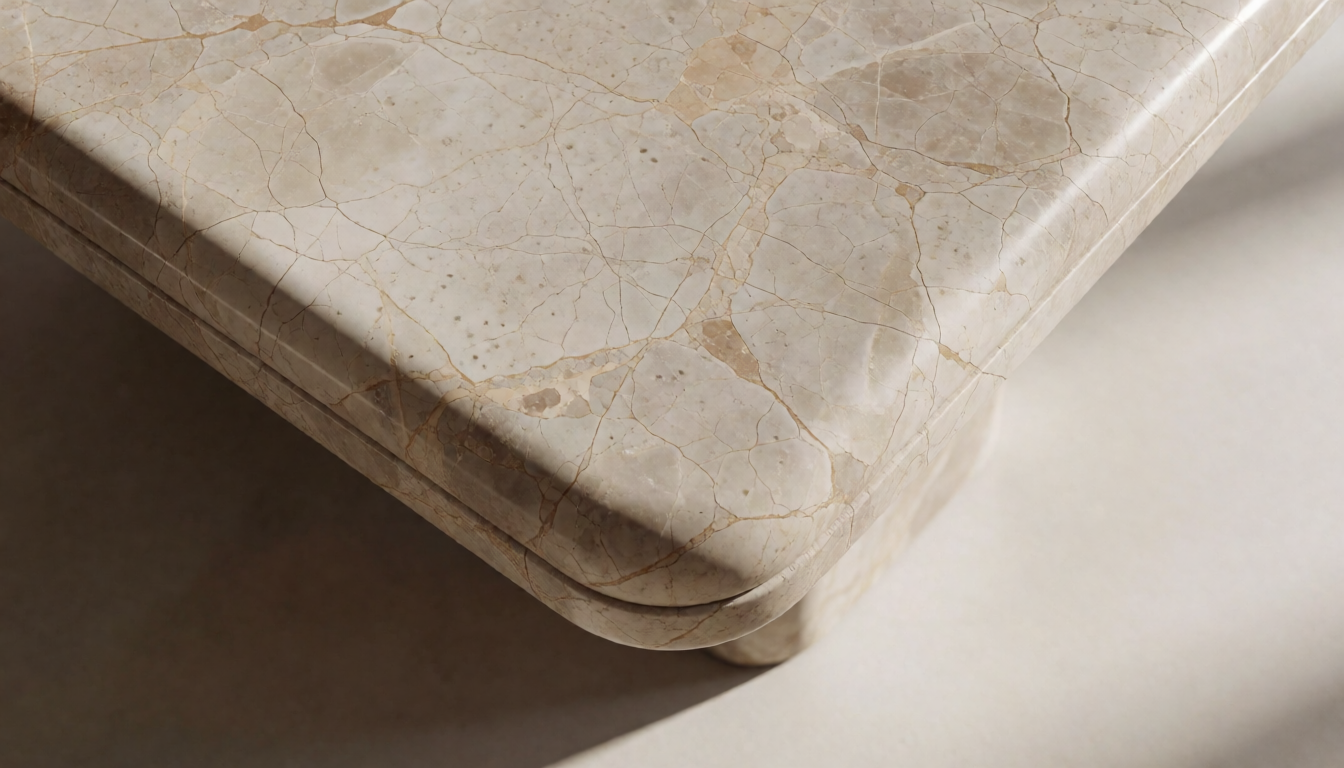
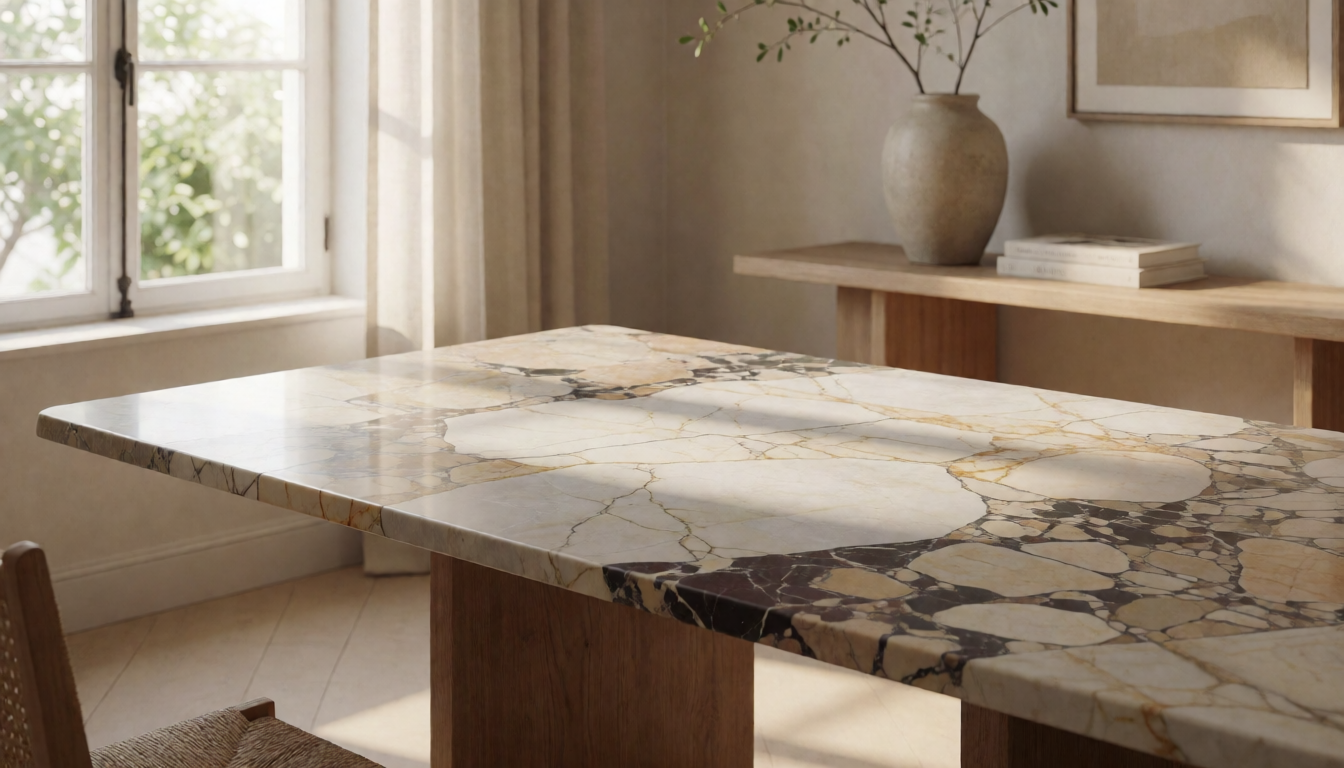
No. Offcut marble is the same premium stone; the veining is simply unique. Many designers prize the one-of-a-kind character of reclaimed slabs.
How long does a marble dining table last?
With basic care, decades—often a lifetime. Marble does not degrade like wood veneer or chipboard under moisture.
Can marble furniture be recycled?
Yes. At end of life, marble can be crushed for aggregate or re-cut into smaller pieces, unlike most composite tops.
Glady Stone: Sustainable Stone Furniture
Glady Stone offers marble dining tables built from reclaimed offcuts and regionally sourced stone, fabricated with water-recycling methods and shipped ready for architectural and wholesale specification.
Discover the Glady Stone marble dining table collection for sustainable, ethically sourced stone furniture in 2026.