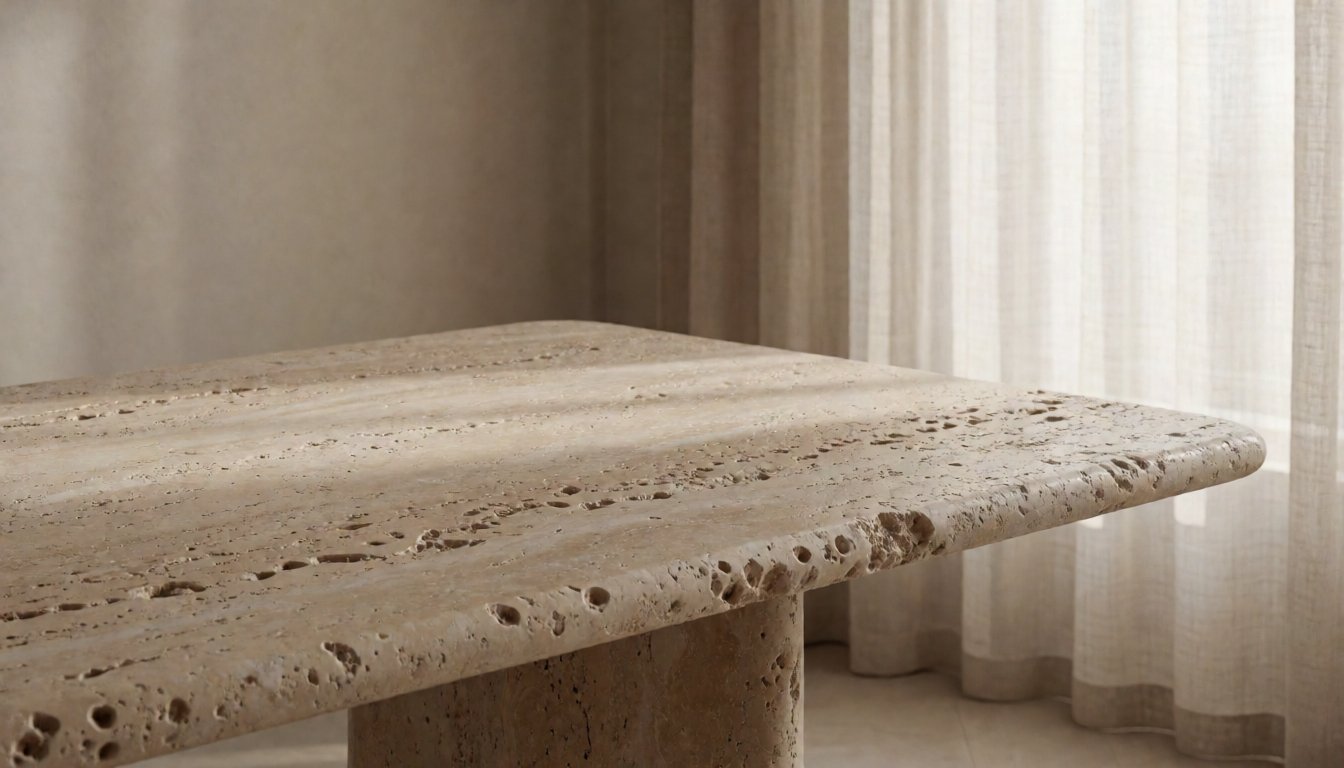
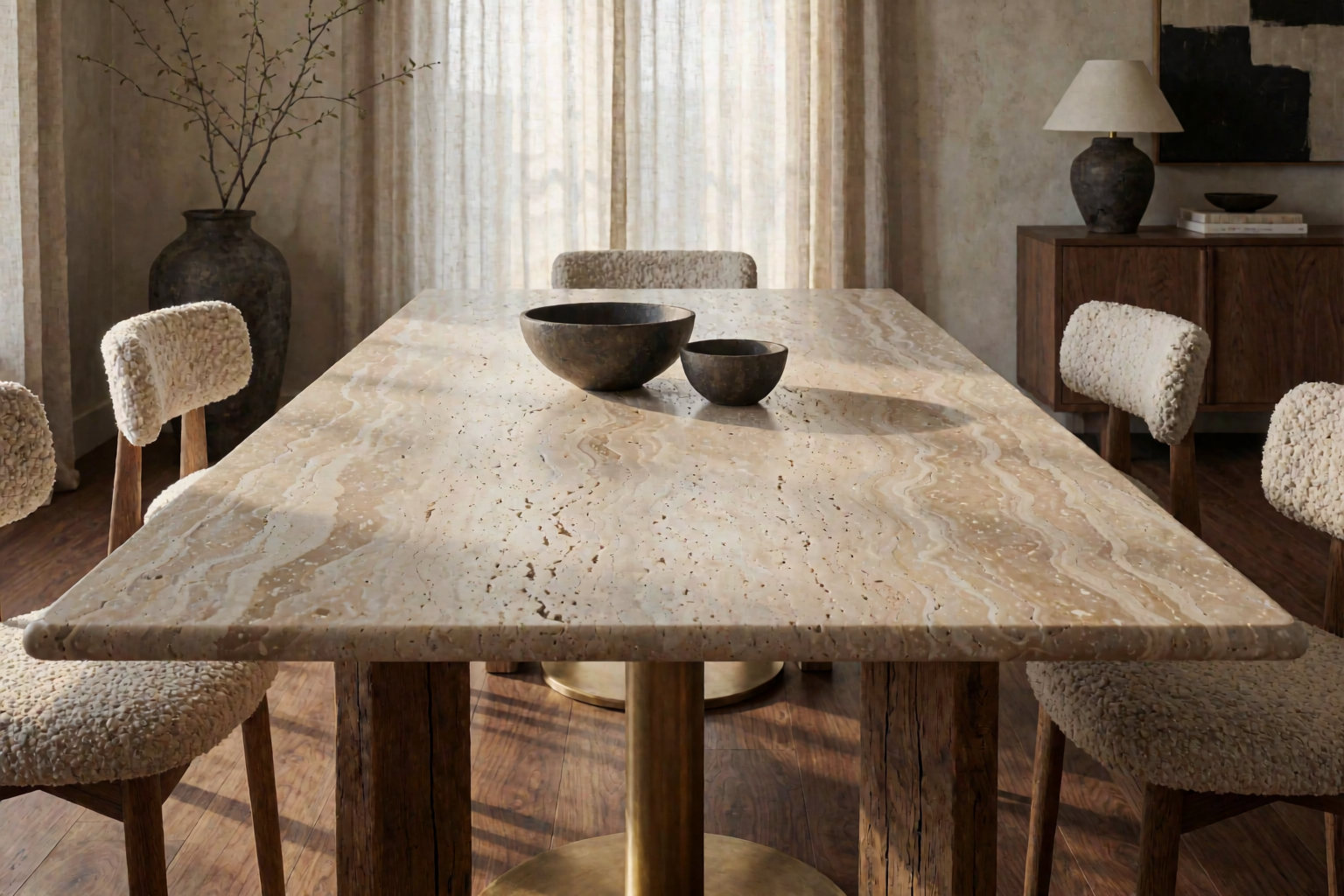
A travertine dining table is a tabletop crafted from travertine, a warm, porous limestone with soft beige tones and a naturally textured surface. In 2026, designers favor travertine over glossy white marble because its organic, wabi-sabi character brings grounded warmth and quiet luxury to dining rooms without feeling cold or clinical.
What Is Travertine?
Travertine is a form of limestone deposited by mineral springs, giving it a distinctive pitted, layered surface that polished marble lacks. In furniture it appears most often as tabletops — dining, coffee, and console — where its weight and solidity feel permanent and tactile. Two finishes dominate: polished, which highlights veining and is easier to wipe, and honed, a matte finish that reads warmer and hides marks. Because the stone is inherently porous, quality pieces are treated with a nano-sealant so spills bead on the surface rather than soaking in.
Why Is Travertine Furniture Trending in 2026?
- Organic over perfect: The natural holes and pits signal “earthy and expensive,” aligning with the wabi-sabi aesthetic.
- Warm palette: Beige, cream, and walnut tones pair with 2026’s wood-and-linen interiors better than cold white stone.
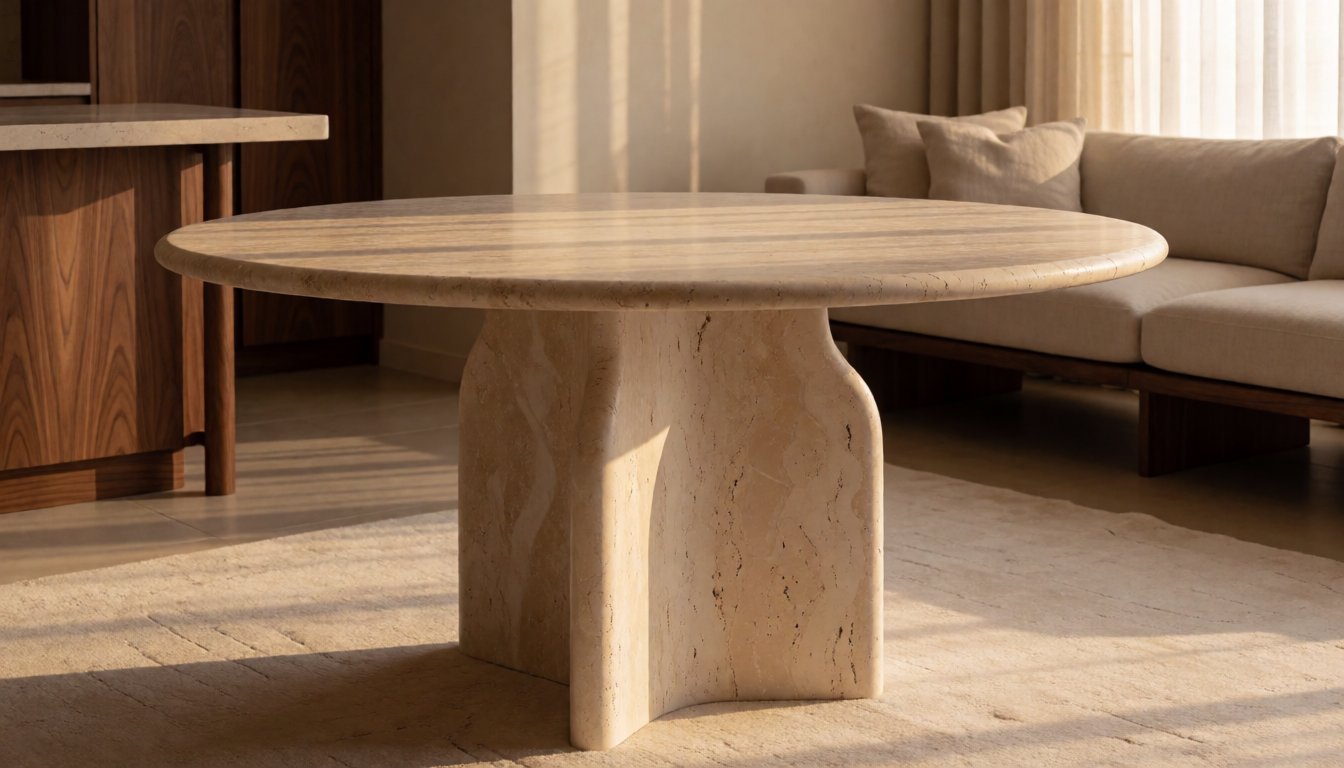
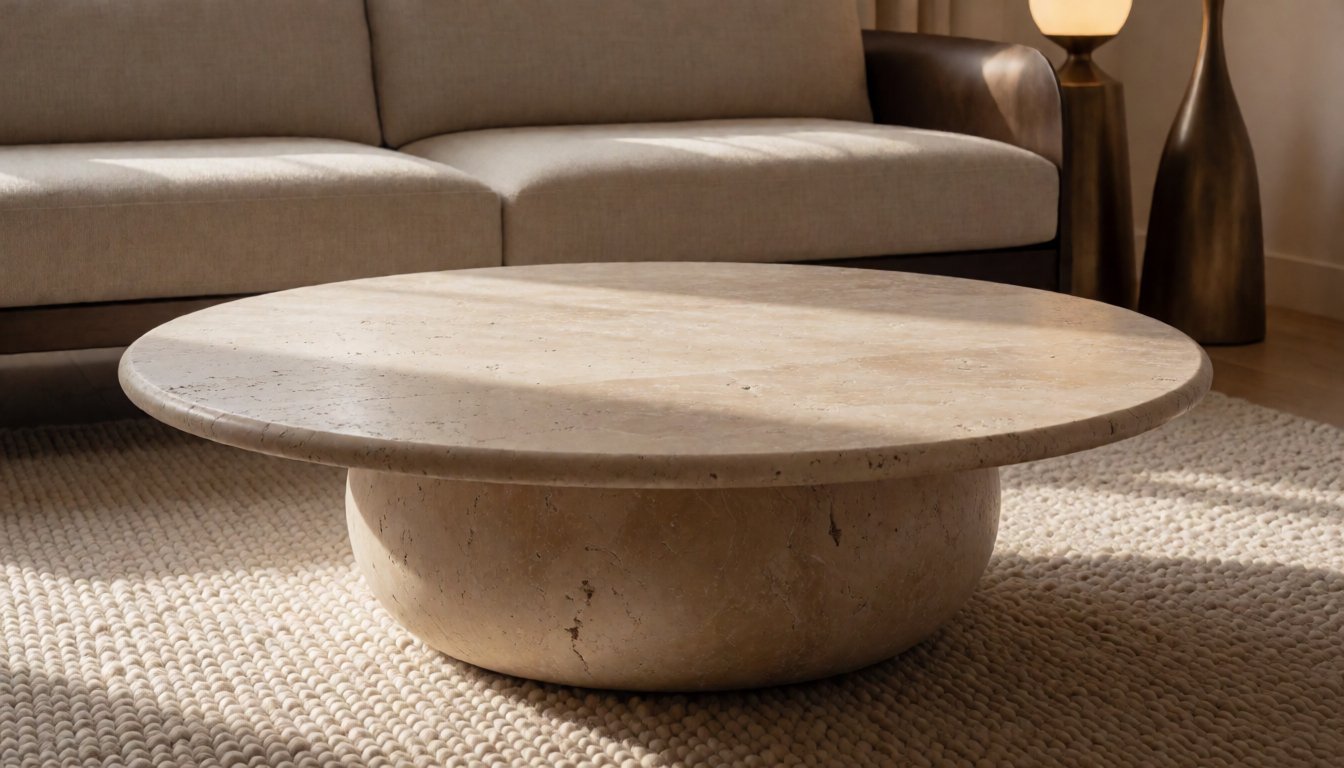
- Soft shapes: Round and oval travertine tables improve spatial flow and suit open-plan, sculptural dining rooms.
- Sculptural bases: Pedestal and waterfall-edge forms showcase the stone’s workability as a centerpiece.
| Stone | Tone | Porosity | Seal Interval |
|---|---|---|---|
| Travertine | Warm beige / cream | High | 12–18 months |
| White Marble | Cool white / grey | Medium | 6–12 months |
| Onyx | Amber / dramatic | Medium | 12–24 months |
The shift from glossy white marble to travertine is one of 2026’s clearest furniture moves. One Delhi atelier reported a 300% surge in travertine table requests year over year, while a designer survey found travertine among the top picks for over 76% of professionals specifying stone tabletops. The appeal is texture: unfilled travertine reads like ancient Roman architecture, while filled-and-honed versions keep the look with easier cleaning. Every table is treated with a transparent nano-sealant so red wine or coffee beads up instead of staining — delivering the raw, organic surface with modern protection. Paired with bouclé, oak, or blackened steel, a travertine dining table anchors the room as a quiet-luxury statement that glossy stone simply cannot match.
How to Care for a Travertine Dining Table in 2026?
- Seal annually: Apply a penetrating stone sealer every 12–18 months; wipe spills immediately to prevent staining.
- Clean gently: Use pH-neutral cleaners only — acidic sprays etch the calcium-carbonate surface permanently.
- Protect the top: Use felt pads under objects and trivets for warm dishes to preserve the honed finish.
- Style with texture: Pair with linen, oak, or brushed brass to echo the stone’s organic warmth.
Frequently Asked Questions
Does travertine stain easily?
Raw travertine is porous, but a nano-sealant makes spills bead on the surface; prompt wiping and annual sealing prevent stains.
Is travertine cheaper than marble?
Typically mid-to-high range — less than premium marble yet offering comparable luxury appeal and longer-lived style.
Can travertine tables go outdoors?
Only in covered areas with twice-yearly sealing; freeze-thaw cycles damage the porous stone if fully exposed.
Glady Stone: Travertine & Stone Tables for Wholesalers
Glady Stone supplies travertine and marble dining tables with sculptural pedestal and waterfall-edge bases, finished for honed, organic luxury and export-ready consistency.
Browse the Glady Stone stone furniture collection for 2026 travertine table specifications and wholesale pricing.