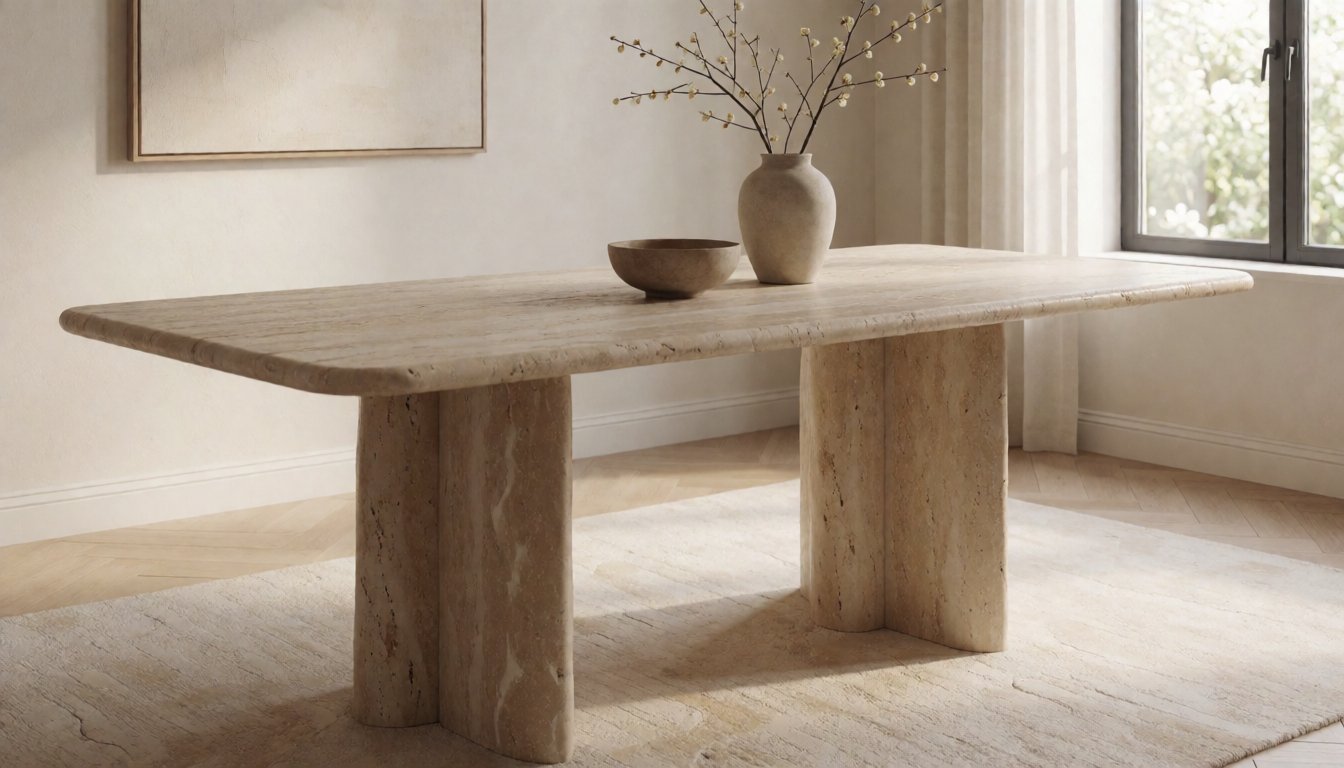
Choosing between travertine and marble for your furniture line isn’t just an aesthetic decision; it is a direct calculation of margins and market positioning. For dropshippers, wholesalers, or brands looking to white-label natural stone tables in the US or EU, understanding the specific drivers behind the travertine dining table price versus marble dining table wholesale costs is essential for profitable sourcing. Both materials come from quarries that have been open for centuries, but their geological differences create distinct cost structures that impact your bottom line immediately.
Geological Reality Defines Base Material Cost
The primary factor separating these two categories lies in the stone itself and how much it survives extraction. Travertine is a form of limestone deposited by mineral springs. It forms as porous rock with holes or pits, often requiring filler to create a smooth surface for furniture legs. This filling process adds labor but also stabilizes the slab weight compared to raw marble.
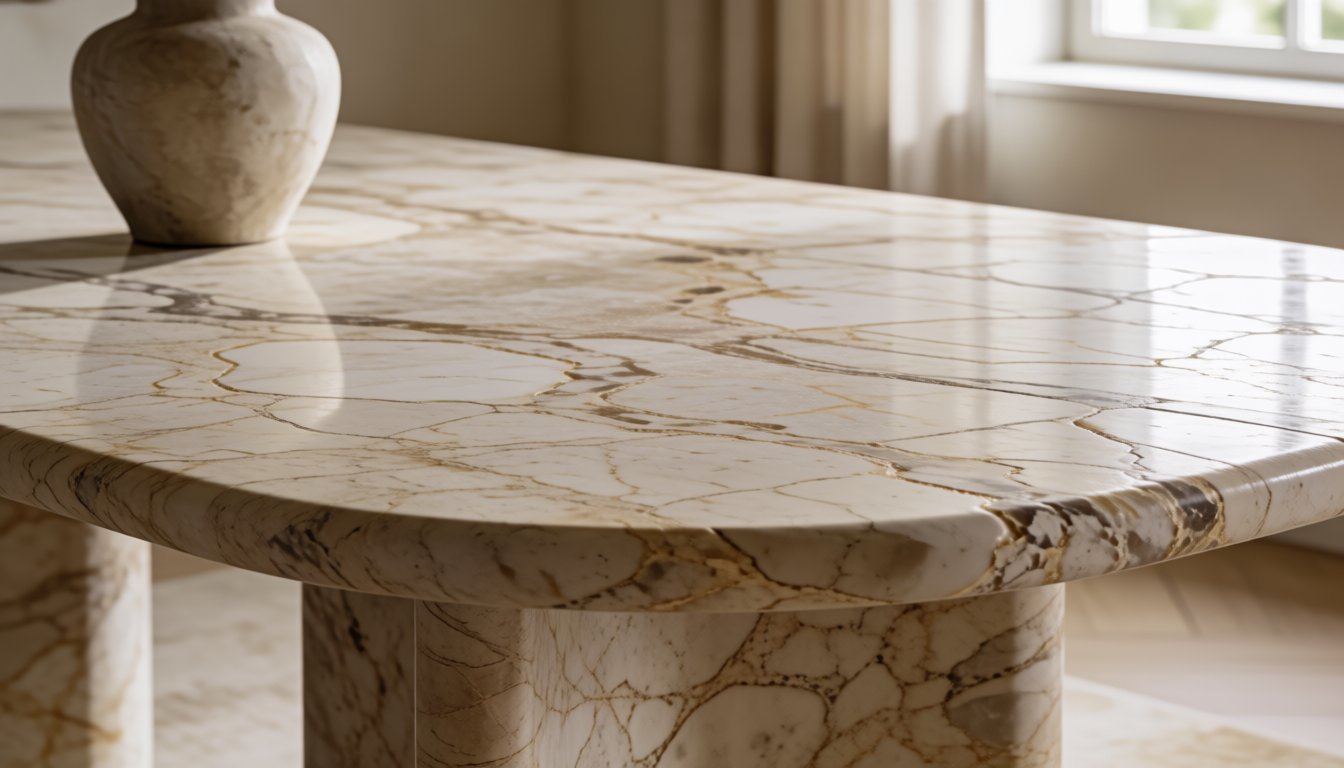
Marble, conversely, is metamorphic and generally denser. While beautiful, it is softer than granite yet more brittle regarding impact resistance during shipping. A standard 60x120cm (approx. 24″x48″) slab typically weighs around 35kg for travertine and roughly 45-50kg for marble of similar dimensions due to density differences. This weight difference directly impacts your freight costs per unit when calculating landed price in the US or EU.
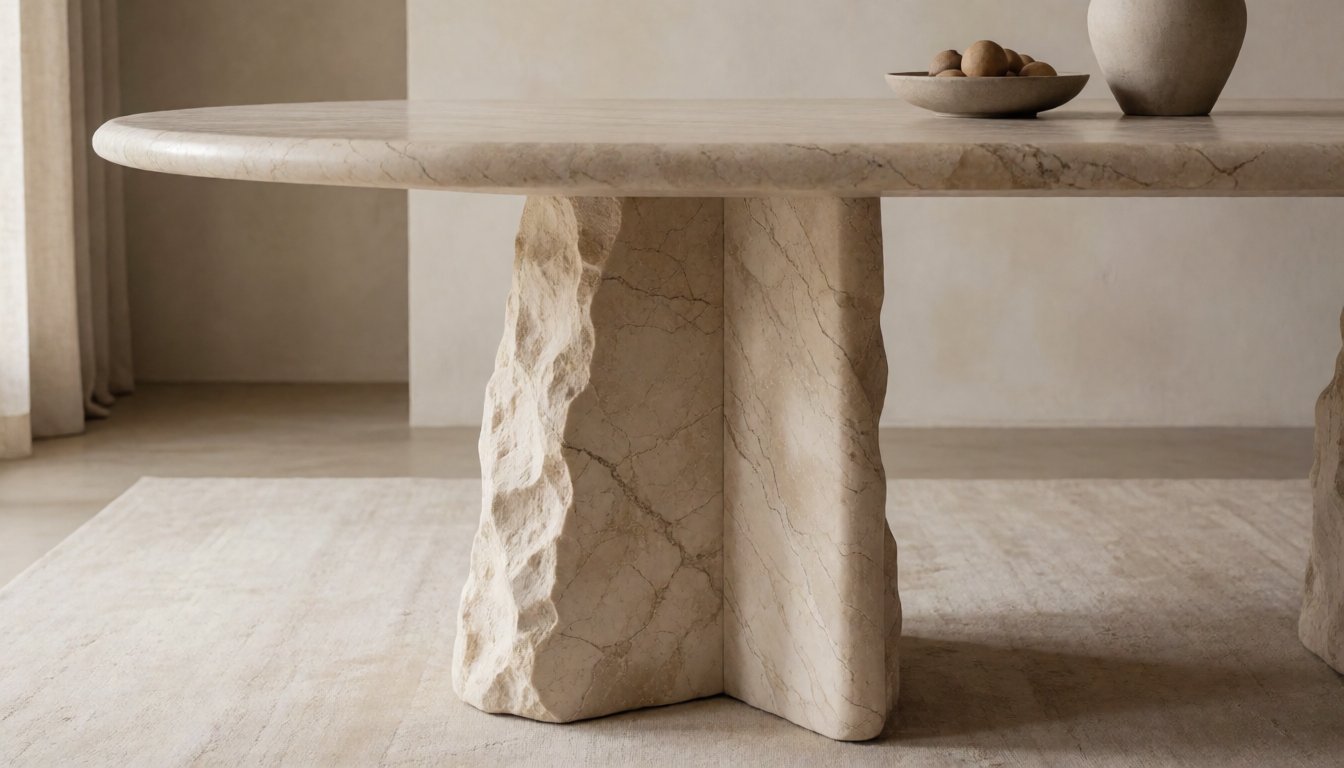
Furthermore, quarry yield plays a massive role. Travertine quarries often have higher rejection rates because the stone contains natural voids that must be filled with epoxy resins before polishing. If you are sourcing marble dining table wholesale from Italian or Turkish quarries, the material is usually more uniform but commands a premium for its status as a luxury export good. Travertine offers better value if your target demographic appreciates texture over perfect smoothness, allowing you to negotiate tighter margins without sacrificing perceived quality.
Fabrication Complexity and Labor Margins
Once the stone arrives at the factory, fabrication complexity alters the stone table cost significantly more than raw material variance alone would suggest. This is where a B2B buyer must look closely at their contract specifications with Gladystone or any other manufacturer.
Edge profiles are the first variable to consider. A simple bullnose edge on a travertine slab requires standard polishing and filling, taking roughly 1-2 days of processing time for a single unit depending on batch size. However, adding complex cuts like ogee, waterfall, or double-bullnose edges increases labor hours and epoxy usage. Waterfall tables, which extend the stone from edge to leg without hiding it under wood, require precise cutting and additional sealing against water damage during transport.
Marble is notoriously difficult to cut and shape due to its crystal structure. A mistake in a marble slab often results in total waste because cracks can propagate easily once tensioned. Travertine, while porous, behaves slightly differently; however, if the resin filler color does not match perfectly after curing (which takes 24-48 hours), you cannot resell that piece as premium stone without discoloration risks.
Ask your supplier about their defect rate policies. In natural stone furniture manufacturing, a “defect” might be acceptable in travertine if the hole pattern is consistent and filled with neutral resin, but it would be rejected immediately on white marble. This flexibility lowers the effective cost per good unit for travertine lines compared to high-end marble collections where yield loss eats into margins faster than expected.
Sealing, Finishing, and Shipping Hazards
The finishing stage introduces hidden costs that buyers often underestimate when comparing travertine dining table price quotes against marble alternatives. Travertine is naturally porous and requires a robust sealing process before any furniture leg or tabletop assembly occurs. If the sealant fails during transit due to humidity changes common in ocean freight, water spots will appear instantly on the surface of your inventory once it hits the US warehouse floor.
Marble also needs sealing but reacts differently to acids (like lemon juice or wine) which can etch the stone rather than just stain it. This chemical sensitivity is a liability you must factor into your risk assessment for marble dining table wholesale. If a retailer sells these tables without proper customer care instructions, returns will be high due to “staining” issues that are actually acid burns on the marble surface.
Packaging requirements differ based on stone type and finish. Polished travertine with filled holes can sometimes accept standard bubble wrap if handled carefully, but raw or brushed finishes need rigid cardboard boxes with foam inserts to prevent scratching from dust particles trapped in the pores. Marble tables almost always require double-boxing for international shipping to protect against micro-fractures that turn into visible cracks upon arrival.
Lead times also vary based on these finishing needs. A standard polished travertine table usually has a lead time of 15-20 days from deposit payment, assuming stock slabs are available locally in the factory warehouse. Bespoke marble pieces with custom veining patterns might require pulling specific inventory or waiting for new quarry blocks to be cut, extending production cycles to 30-45 days. Always verify if your supplier holds finished goods inventory of standard sizes (e.g., 180x90cm tops) versus made-to-order configurations before locking in a long-term contract.
Strategic Sourcing Questions for Your Brand
When negotiating with Gladystone or other manufacturers, focus on data points that protect your margin rather than just the sticker price per unit. Ask specifically about the filler material used for travertine holes. High-quality UV-stable epoxy is essential; cheap fillers yellow over time under showroom lighting, ruining the perceived value of a travertine dining table. Request samples with both filled and unfilled sections to test how your specific sales team handles customer inquiries regarding maintenance.
For marble lines, verify the origin of the stone blocks. Italian Carrara or Calacatta often carry higher price points than Turkish Statuario due to export logistics and brand heritage attached to “Italian Marble.” However, a well-sourced Turkish block can offer similar aesthetics at 20-30% lower cost if your buyers do not specifically demand “Made in Italy” labeling.
Calculate the total landed cost including freight insurance, which is higher for heavier marble shipments due to their density and risk of breakage during container loading. A cheaper unit price that results in a 5kg difference per table adds up significantly when shipping hundreds of units across the Pacific or Atlantic Ocean. Ensure your supplier provides clear documentation on weight dimensions so your logistics partners can quote accurate freight rates from the start.