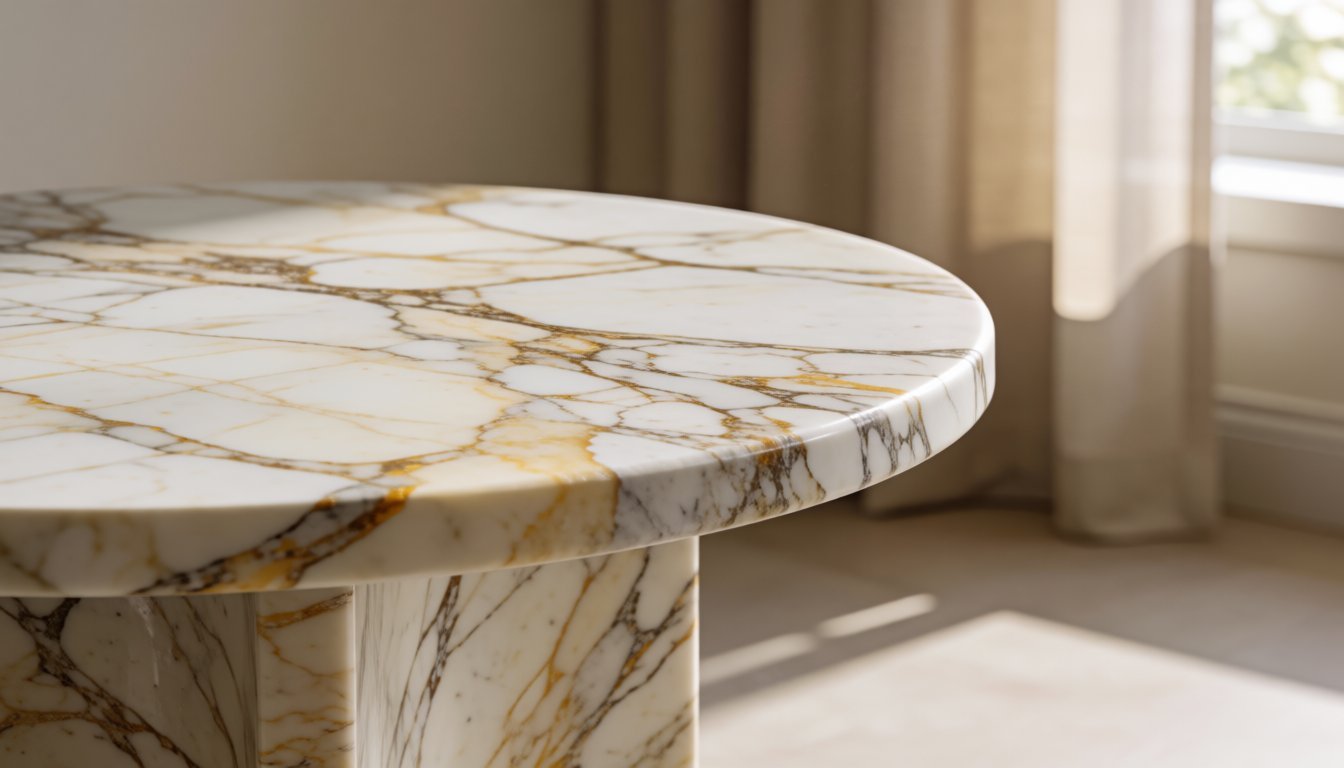
Importing natural stone furniture requires more than just finding a pretty image online. As an importer or brand owner looking for a marble side table OEM partner, you need a process that guarantees structural integrity and design consistency. Gladystone operates as a fully integrated factory with quarries, fabrication lines, and finishing workshops in China. This setup allows us to control costs from raw material extraction to final packaging without the markup of middlemen. Whether you are fulfilling orders for US retailers or stocking shelves in EU warehouses, understanding our six-step workflow helps you manage lead times effectively and negotiate realistic MOQs (Minimum Order Quantities).
1. Initial Consultation and Design Feasibility
The first step is defining your product specifications. A stone table custom order starts with a clear drawing or reference photo. We do not guess; we measure. For standard marble side tables, typical dimensions range from 45cm to 60cm in width and 48cm to 52cm in height. The thickness usually sits between 1.2cm for thin-slab cuts and up to 3cm for heavy-duty solid blocks.
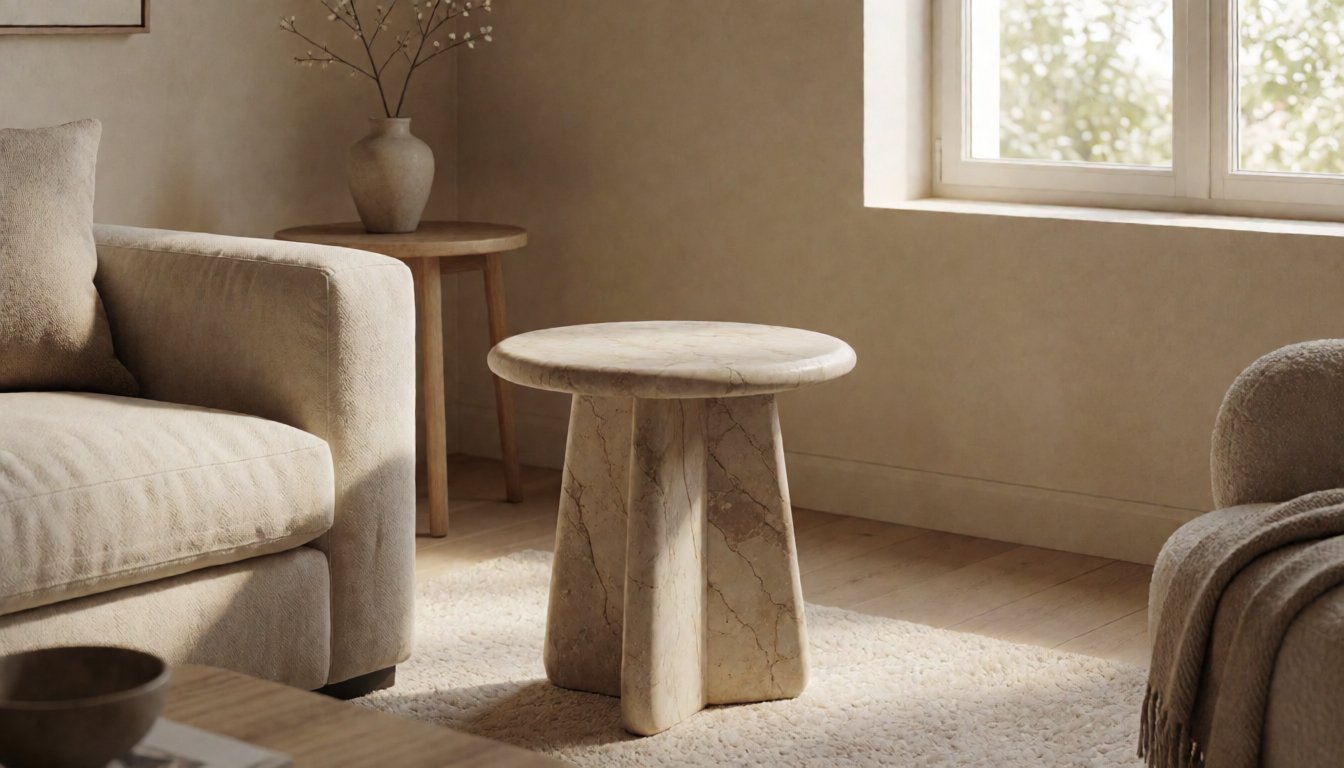
You must specify the stone type immediately. Carrara marble is common, but Calacatta Gold or Statuario require specific quarry blocks due to their veining patterns. We can source these from our partner quarries in Italy or domestic Chinese mines like Foshan’s white and grey varieties. If you need a custom shape—such as an oval top with rounded edges—the mold cost will apply. Standard shapes usually have no extra tooling fee, while complex cuts might require a CAD model approval before we cut the stone.
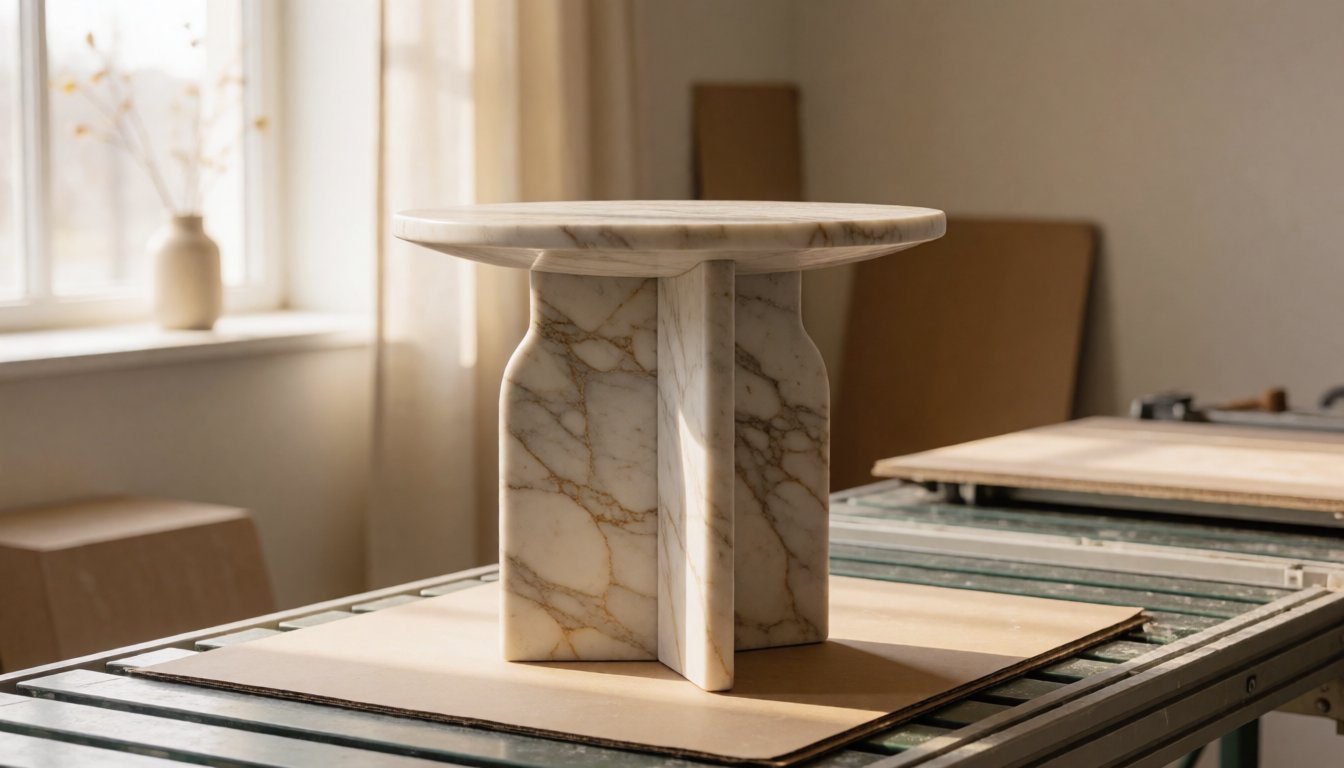
Ask us about the slab weight. A 60x45cm table top typically weighs between 30kg and 45kg depending on density. Your logistics partner will need this data to calculate shipping volume accurately. During this phase, confirm your color tolerance preferences. Natural stone has grain variation; we cannot promise an exact match for every piece if you are buying single slabs without a specific vein selection fee.
2. Sample Approval and Mold Validation
Once the specs are locked, we move to prototyping. For OEM stone furniture, the sample phase is critical but often misunderstood by buyers who expect bulk pricing on samples. We typically charge for material cost plus labor for the first unit. This allows you to inspect the cut quality, edge finish (polished vs. honed), and surface texture without risking your main production batch.
If a custom mold is required—for instance, if you want a unique base shape or integrated USB charging ports hidden in the side panel—the sample includes that tooling cost. Expect this initial lead time to be roughly 7 to 10 days for simple cuts and up to three weeks for complex molded items once approved designs are sent to our engineering team.
We will send photos of the raw block before cutting so you can see potential natural flaws like cracks or heavy spotting. This transparency prevents disputes later when bulk production begins. If your sample passes, we sign a “Sample-to-Bulk” agreement that locks in unit prices and specifies how many defects are acceptable per 100 pieces (usually capped at 2-3% for stone).
3. Material Sourcing and Block Allocation
In this stage, our quarry managers allocate specific blocks to your production line. Since you ordered a marble side table OEM run, we prioritize the best portions of the slab for visible surfaces like tabletops, reserving lower-quality sections for backsplashes or hidden structural elements if agreed upon.
Material costs fluctuate based on global energy prices and quarry output. We typically hold stock of common sizes to speed up turnaround but will need lead time quotes (usually 15–20 days) for specific exotic stones like Nero Marquina or Emperador Dark imported from specialized quarries. Ask us about the current inventory status of your requested color before confirming bulk dates; availability can change weekly due to new quarry shipments arriving in our warehouse.
We will provide a detailed breakdown of material usage, showing exactly how many square meters of stone are needed for one batch versus waste generated during cutting optimization (nesting). Efficient nesting reduces scrap rates and lowers your final cost per unit by up to 15% compared to inefficient layouts.
4. Fabrication Edge Finishing
The fabrication phase happens in our CNC machining center followed by manual polishing stations. For stone table custom order projects, edge profiles are where most aesthetic differences appear between suppliers. We offer bevel edges (approximate thickness reduction of 3mm), bullnose (rounded corner), or ogee curves depending on your design file.
During cutting and shaping, we monitor for micro-fractures caused by vibration in the machinery. Any piece showing significant stress lines gets scrapped immediately rather than shipped out to damage your brand reputation. This step takes roughly 48 hours once materials arrive from the quarry stockpile or import terminal. Quality control technicians inspect each edge under bright lights before moving pieces to sealing stations.
Ask about our polishing grit progression (usually starting at coarse diamond pads down to fine resin compounds). A high-gloss finish requires multiple passes over several days, while a matte honed look is faster but demands different tooling settings. Confirm your preference early because changing finishes mid-production stops the line and adds delay costs.
5. Quality Control and Packaging Standards
Before loading containers, every finished unit undergoes final inspection for weight balance, surface scratches, and sealant uniformity. We apply a breathable protective film (not plastic wrap that traps moisture) to prevent yellowing during sea freight. For export orders, we use double-wall corrugated boxes reinforced with corner protectors rated against 1-meter drops per ISTA standards.
Packaging dimensions directly impact your shipping costs; our team optimizes carton sizes to minimize air gaps inside containers. Typical packaging weight for a side table ranges from 60kg including box and foam inserts, requiring specific palletization patterns (4 units per layer) that fit standard ISO container layouts efficiently. If you ship via DHL or FedEx samples first, we provide tracking numbers within 2 hours of dispatch to keep your dropshipping clients informed instantly.
6. Bulk Production Scheduling
The final step is locking in the production schedule based on approved samples and material availability. We typically have a standard lead time of 15–30 days from deposit receipt for bulk orders under 5,000 units depending on stone type complexity. Larger runs may extend to 45–60 days if waiting for specific imported blocks or complex mold setups.
Our factory can handle mixed-order batches where you combine different colors and sizes in one container to optimize space utilization, though this requires careful labeling inside boxes so retailers don’t mix inventory upon arrival. Always finalize payment terms (usually TT deposit with balance before shipment) clearly before the production order goes live. This protects both parties legally against delays or quality deviations during fabrication cycles.