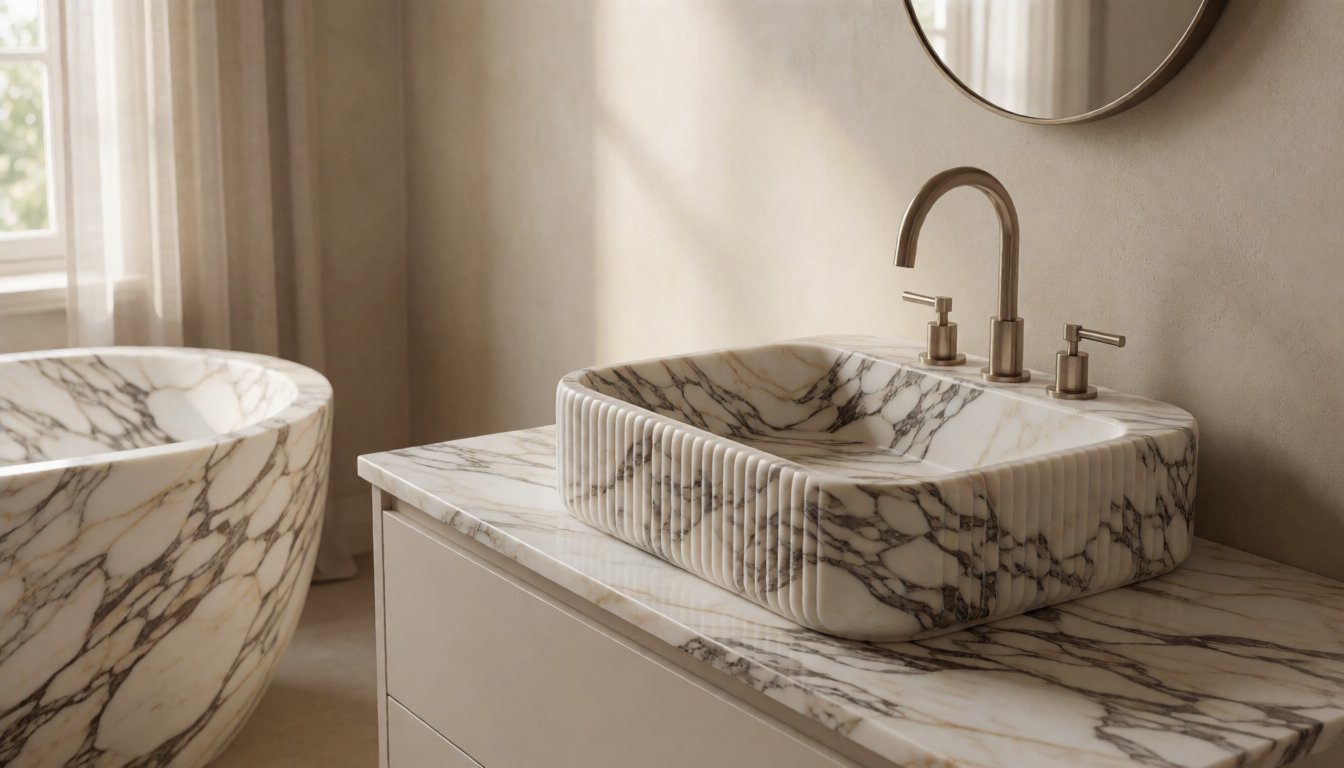
Importers looking to build a cohesive brand for home goods often face a fragmented supply chain where sinks come from one factory but bathtubs arrive weeks later with incompatible finishes. This disconnect kills margin and frustrates customers who expect a “stone bathroom package” or marble bathroom set that looks perfect together. At Gladystone, we specialize in sourcing matching stone components—sinks, vanities, tubs, and decor—that share the same material origin, veining patterns, and finish quality. For US and EU dropshippers and wholesalers, securing these coordinated items is the single biggest factor in turning a generic store into a premium destination for natural-stone furniture.
Why Matching Stone Matters More Than You Think
When you sell a stone bathroom matching set, consistency builds trust. A customer pays a premium for Carrara marble or quartzite expecting specific undertones and veining depth. If the vanity top is high-polish white while the freestanding tub has a matte, slightly warmer tone from a different quarry batch, the product looks mismatched upon arrival. Buyers must check that all components in your package originate from similar geological sources within China’s major stone clusters. This ensures that the natural variations you see are part of one design story rather than errors caused by mixing suppliers.
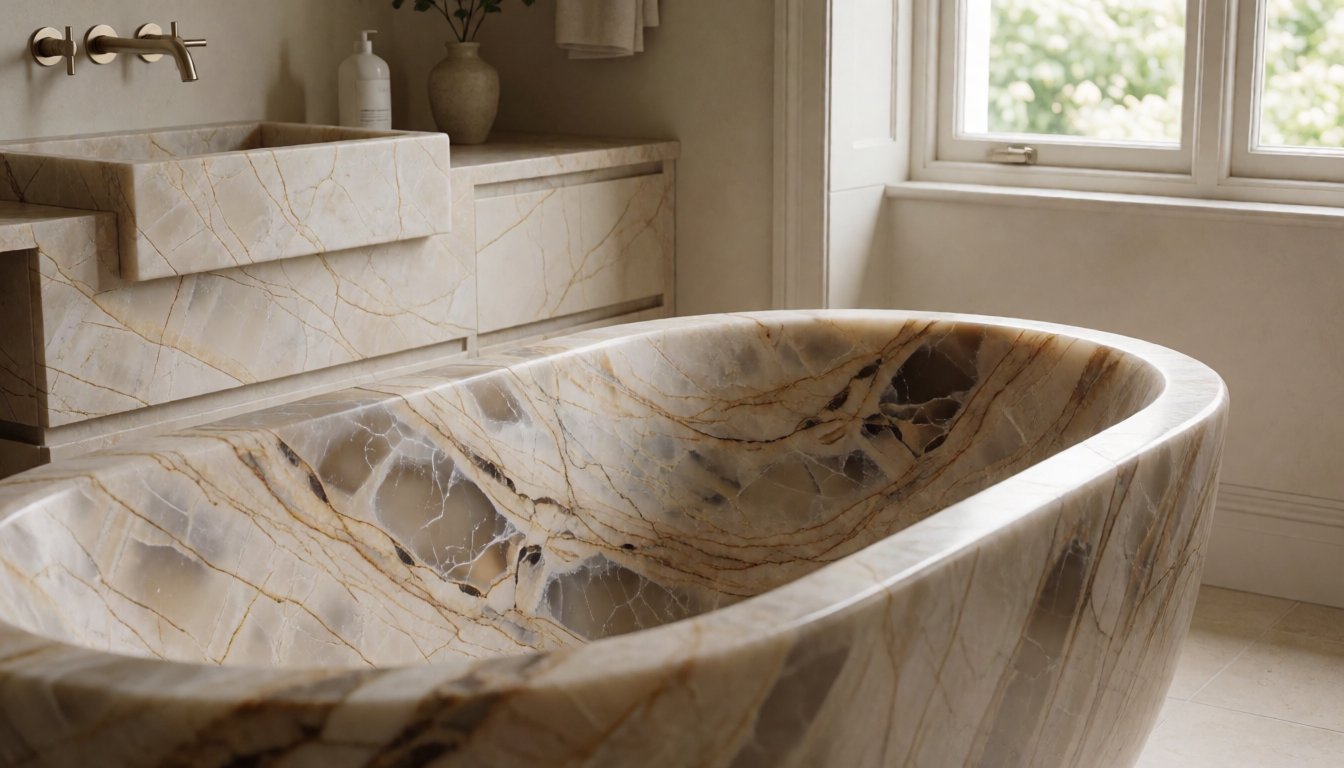
Realistically, achieving this requires working with a factory like Gladystone that controls multiple production lines. We do not simply buy raw blocks and outsource machining; we coordinate the cutting plans for sinks and basins to match specific slab reserves used for tubs. This internal coordination saves you from having to hunt down three different suppliers who cannot guarantee color consistency between their products.
Typical Dimensions, Weights, and Lead Times You Can Expect
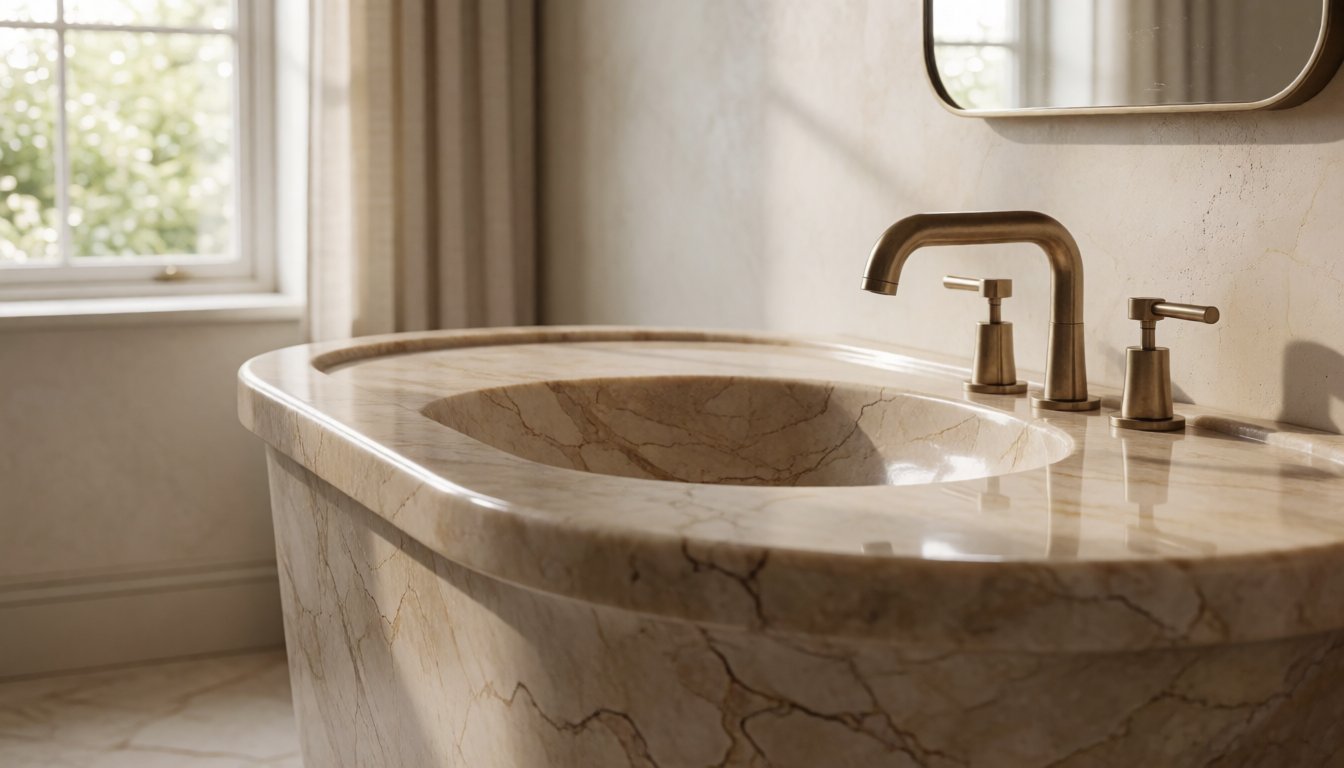
To plan your inventory effectively, you need concrete data on the physical logistics of these heavy items. A standard undermount marble sink typically ranges from 60cm to 75cm in width for a bathroom vanity setup. These units weigh roughly 25kg to 40kg depending on thickness and base shape. For dropshipping scenarios where freight costs are your biggest variable, knowing that a single 80cm x 180cm stone bathtub can exceed 60kg is critical. Shipping three such items from China often requires consolidating them into one LCL (Less than Container Load) shipment rather than multiple air or expedited sea shipments to keep unit economics viable.
Lead times for custom-cut matching sets usually run between 35 and 45 days once deposits are cleared. This timeline accounts for quarry selection, slab cutting, CNC machining, polishing, packaging with foam protection, and inland transport to the port in Guangzhou or Shenzhen. If you need a “stone bathroom package” delivered faster than this standard window, expect costs to increase by roughly 20% due to rush air freight premiums. Always factor these weeks into your production schedule; stone does not ship overnight.
How Finishes and Sealing Affect Your Cost Structure
The finish applied to the surface of your marble bathroom set dictates both durability and price. Polished surfaces reflect light but show water spots more easily, requiring customers to maintain them regularly with specific sealants. Honed finishes offer a softer aesthetic that hides minor scratches better but may feel slicker when wet. For high-end buyers who want low-maintenance luxury, consider specifying factory-applied impregnation seals or nano-coatings on your quartzite orders. These treatments can add roughly $15 to $20 per piece depending on the quantity ordered.
When negotiating with manufacturers like Gladystone, ask explicitly about their sealing protocols for each slab batch. Some quarries provide blocks that are naturally dense and require less frequent resealing compared to softer limestone varieties. You must verify if the sealant used is compatible with your target market’s regulatory standards in Europe or California (like PROP 65 compliance). Mixing sealed and unsealed products within a single “matching” package creates liability issues for retailers who sell against strict consumer safety laws.
MOQs, Pricing Ranges, and Payment Terms for Importers
Minimum Order Quantities (MOQ) are often the first hurdle for new dropshippers trying to test the market with stone furniture. Standard factories usually demand an MOQ of 10–20 pieces per item type before accepting smaller orders at standard rates. However, established partners can offer flexible tiers: roughly $350–$450 USD per unit for sinks and vanities if you order a full matching set containing two units each (e.g., one sink top + basin combo). Prices drop significantly as volume increases; bulk orders of 100+ pieces in the same quarry batch might reduce costs by another 10% to 25%.
Pricing varies wildly based on stone rarity. Carrara marble remains relatively affordable, often trading between $8 and $14 per kilogram for raw material cost before processing fees are added. Rare veins like Calacatta Gold or deep blue quartzite can push material costs above $3/kg alone. When asking a supplier for quotes, request breakdowns that separate stone weight from labor and logistics. Transparent pricing structures help you calculate true landed costs including ocean freight insurance, which is essential when selling expensive items where damaged goods cannot be easily returned to the factory.
Quality Control Checks Before Shipment Arrive
Before signing off on an order or releasing payment for a partial production run, request high-resolution photos of specific slab numbers selected from inventory. Do not rely solely on generic catalog images; ask to see the actual blocks cut and polished against your own design samples if possible. Check that edges are square (within 1mm tolerance) and that drilling holes in sinks align perfectly with plumbing standards for US or EU markets.
Inspection should also cover packaging integrity. Stone items must be wrapped individually in protective foam, then stacked on wooden pallets secured with stretch wrap and corner guards. Ask your supplier if they include moisture barriers inside the crate to prevent mold growth during long sea voyages from China ports to American West Coast terminals. A damaged arrival due to poor packing voids warranties and damages reputation faster than any other issue.
Building a Cohesive Brand Around Natural Stone Collections
Your brand’s positioning depends on whether you market practical durability or artistic luxury. If targeting designers who spec for high-end remodels, emphasize the unique veining patterns that make every “stone bathroom matching” set exclusive. For mass-market dropshippers focusing on value pricing, highlight ease of installation and universal dimensions compatible with standard vanity cabinets (e.g., 24-inch widths).
At Gladystone, we help partners curate collections where sinks, tubs, vanities, and fireplaces share a unified aesthetic language without sacrificing individual product functionality. By controlling the entire supply chain from quarry to container loading, we eliminate the guesswork of mixing suppliers who cannot guarantee color matches across different product lines. This integrated approach allows you to offer complete room solutions that competitors struggle to replicate because they rely on disparate vendors for each component category.
FAQ
What is a realistic lead time for ordering a full matching stone bathroom package?
A standard production cycle including quarry selection, cutting, machining, sealing, and port clearance typically takes 40 days from deposit receipt to vessel departure. Add roughly 25–35 days for ocean freight depending on the destination port (Los Angeles or Hamburg are common). Total elapsed time usually lands between 65 and 80 days unless you pay premium air freight fees which can cut transit to under a week but add significant cost per unit.
How do I ensure the marble in my sink matches the bathtub visually?
Specify that all items must be sourced from identical slab batches or quarries within your order contract. Request photos of specific block numbers selected for cutting prior to machining begins. Avoid mixing different quarry origins even if they claim similar names like “Carrara,” as veining density and background gray tones vary significantly between mines in Italy, China, and Turkey.
Are there hidden costs I should ask suppliers about regarding stone furniture?
Beyond the unit price, inquire about tooling fees for custom sink shapes (approx $50–$150 per design), export documentation charges ($200–$400 flat fee), and inland trucking from factory to port. Also confirm if packaging materials like wooden crates are included or billed separately at roughly $30 per crate depending on size and reinforcement needs for fragile items during shipping.
Can I get smaller quantities than the standard MOQ without paying full price?
Some factories will accept orders of 5–10 pieces but often increase unit prices by 20% to cover setup costs or allocate lower-priority production slots. Alternatively, ask if they can combine your order with other clients’ projects who share compatible slab inventory; this might allow you to reduce MOQ while maintaining standard pricing margins on the combined volume.
What certifications should I verify before importing stone bathtubs and vanities?
Ensure products meet local safety standards such as California’s Proposition 65 for chemical restrictions, CE marking if targeting EU markets, and ISO9001 quality management certification from the manufacturer factory audit. Verify that any sealants or coatings used are non-toxic and comply with environmental regulations in your primary sales regions to avoid customs delays or product recalls later down the line