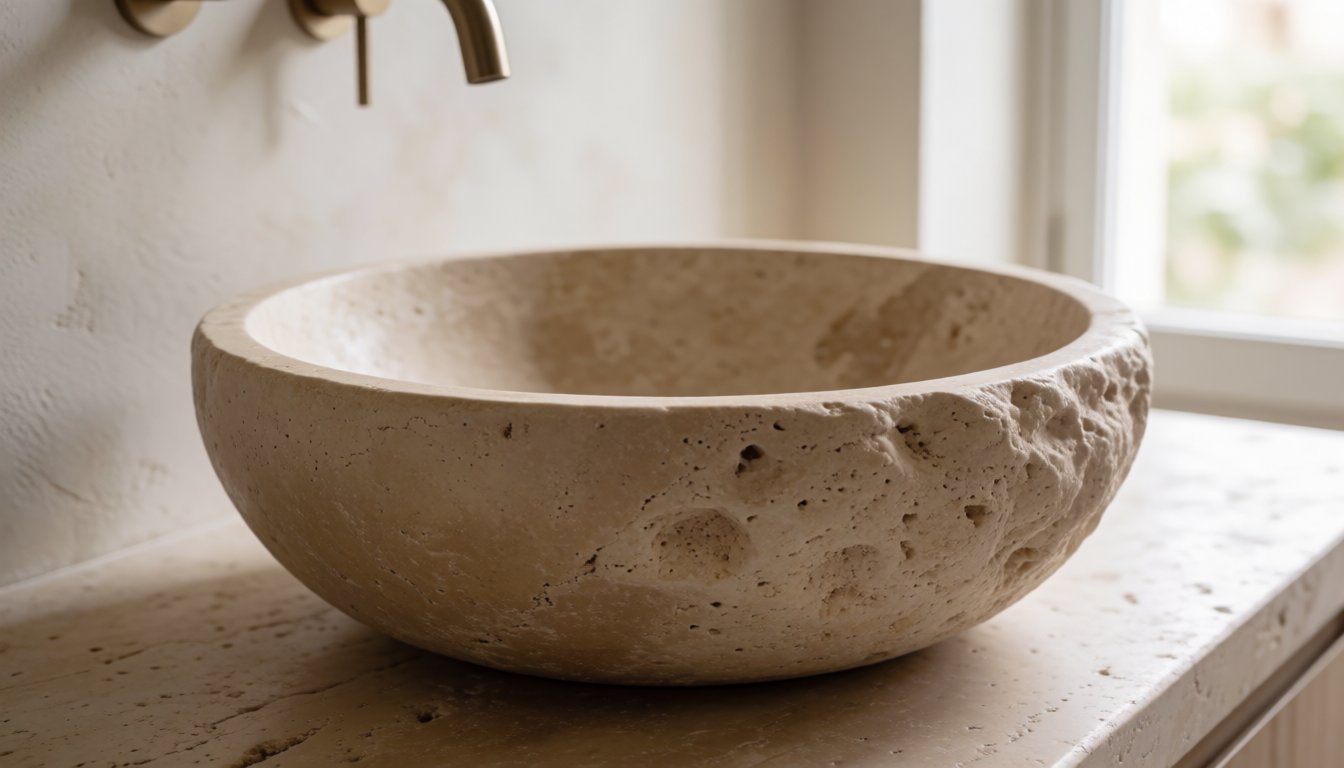
Sourcing stone fixtures for your US or EU market requires more than just finding attractive designs; it demands an understanding of material behavior to prevent costly returns and customer complaints. As a B2B buyer importing natural stone, you know that travertine is one of the most popular yet temperamental materials in bathroom vanities. Unlike quartz composites or granite, this porous limestone reacts aggressively to moisture if not treated correctly before installation. The specific challenge lies in distinguishing between honed and raw finishes. While a polished surface offers some resistance due to its dense layer, a raw stone sink exposes the natural pore structure of the travertine directly to water splashes and daily cleaning routines. This article breaks down exactly why raw finish care differs significantly from other textures and what you need to communicate to your end customers or interior design partners to manage expectations effectively.
The Porosity Problem with Raw Finishes
The primary distinction between a honed, polished, or leathered travertine basin is the depth of its surface sealing during fabrication. A travertine sink care routine must start by understanding that raw finishes have minimal surface density. When you ship these units to North America or Europe, your logistics team might see them as standard slabs cut into basins. However, for the end user, a raw finish acts like an open sponge compared to a polished counterpart which has been heat-treated and ground down to close most micro-fractures.
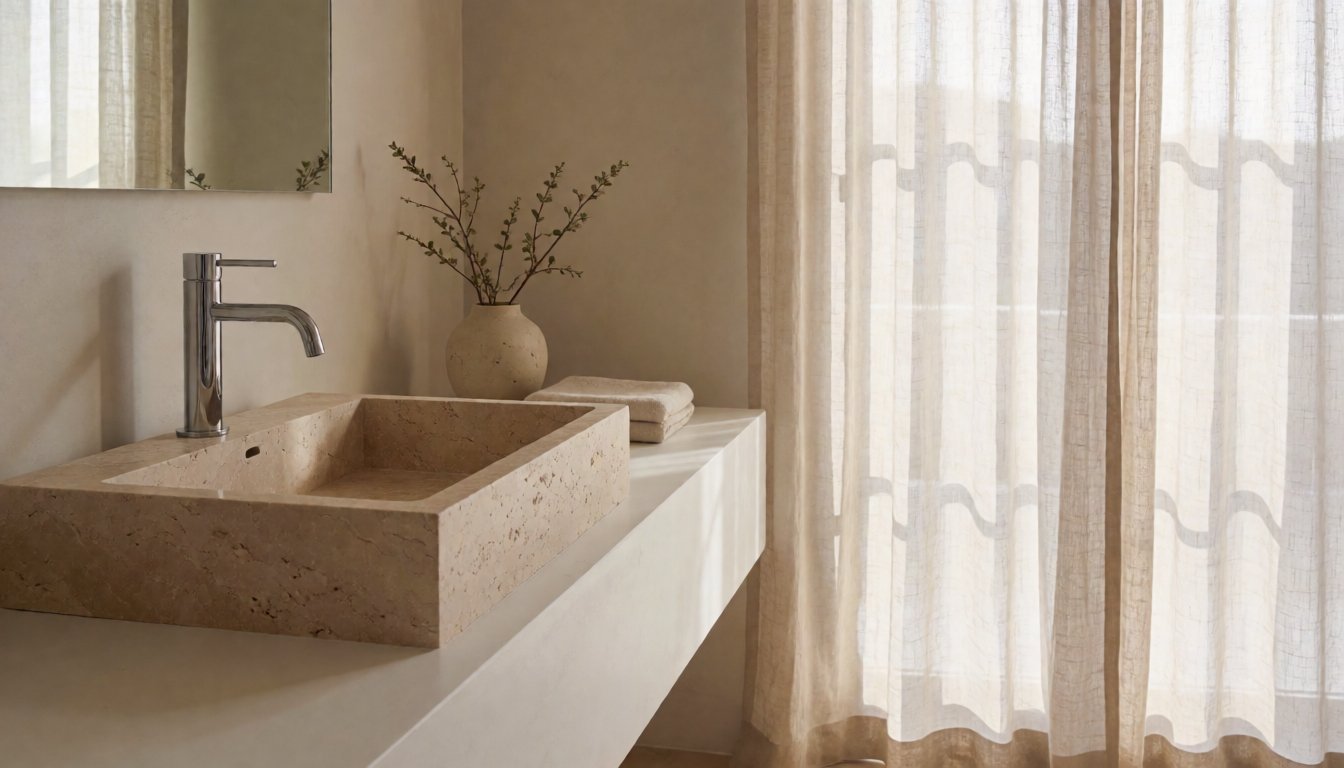
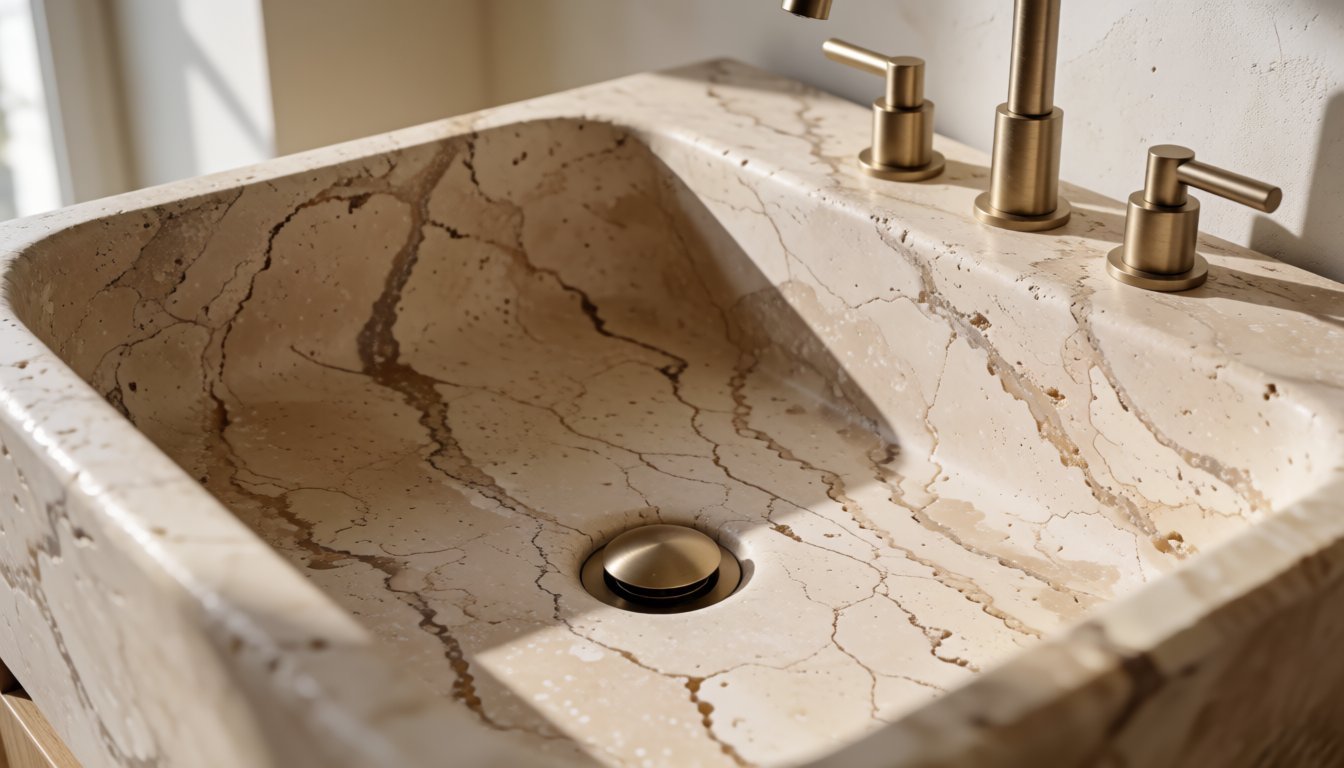
Water absorption rates on raw travertine can be significantly higher than denser stones. If water sits in these pores without immediate wiping or sealing, mineral deposits from tap water quickly turn into visible white spots known as etching or efflorescence. This is not just a cosmetic issue; prolonged moisture retention weakens the stone matrix around deep veins and drill holes for faucets. When an importer fails to specify “raw finish” clearly in their product descriptions, distributors often assume standard waterproofing applies. It does not. The lack of a protective glaze means that travertine basin sealing is absolutely mandatory before the first water drop hits it.
Why Sealing Is Non-Negotiable for Raw Stone
You cannot sell or install raw travertine basins without emphasizing immediate and ongoing sealing protocols. For your white-label brands, this translates into a specific pre-installation checklist that must be followed by local fabricators. A properly sealed raw stone sink will repel water effectively, but the sealant wears down over time due to acidic cleaners or abrasive scrubbing pads used in typical household cleaning regimens.
Standard acrylic-based sealers are often insufficient for raw limestone; you typically need penetrating epoxy or high-quality impregnating sealants designed specifically for porous stones. Without this chemical barrier, even mild soap scum can bond permanently into the pores once dried. This leads to staining that becomes difficult or impossible to remove without risking damage to the stone’s texture.
When advising your partners on raw stone sink maintenance, emphasize frequency over product brand initially. A raw finish generally requires resealing every 6 to 12 months depending on usage intensity and local water hardness levels. In areas with hard water, this cycle shortens drastically because mineral buildup accelerates the degradation of any existing sealant layer. If you source high-volume orders from our factory in China, we can pre-seal basins during production, but buyers must understand that consumer reapplication is still a long-term requirement to maintain warranty standards and aesthetic appeal.
Daily Maintenance Protocols for Importers
Beyond the initial installation phase, your customers need clear guidelines on daily cleaning methods unique to raw travertine. Standard bathroom cleaners containing acids like vinegar or lemon juice will etch raw surfaces instantly, creating dull spots that cannot be buffed out. Similarly, alkaline-heavy cleaners can degrade sealants faster than necessary if not rinsed thoroughly.
A practical maintenance schedule for a travertine sink care routine should look like this:
1. Rinse with warm water immediately after use to prevent soap scum accumulation.
2. Use a soft microfiber cloth or non-abrasive sponge dampened with pH-neutral stone cleaner.
3. Dry the basin surface thoroughly within minutes of cleaning to minimize standing water time in pores.
For wholesalers distributing these items, consider including small sample cards or QR codes linking to video tutorials demonstrating proper wiping techniques on raw finishes. Visual evidence helps designers and contractors explain why a customer might need professional resealing after only six months if they use harsh scouring pads. Raw travertine is beautiful precisely because of its natural texture, but that same texture invites dirt into the grain unless managed strictly.
Communicating Material Specs to Avoid Returns
One of the biggest pitfalls in importing stone fixtures is miscommunication regarding finish types and their respective maintenance needs. When you list a product as “travertine basin,” buyers often assume it has standard durability comparable to granite or quartz countertops. They do not realize they are purchasing a porous material that requires active management. This misconception leads to high return rates when customers report staining within weeks of installation.
To mitigate this, your technical data sheets must explicitly state the finish type (e.g., “Raw,” “Honed,” or “Polished”) and its specific water absorption characteristics. If you offer a raw finish option at $80-$120 per unit depending on size and thickness, clearly label that it comes with a factory-applied base coat but requires consumer diligence in resealing. For larger formats like double-bowl sinks (approx. 60cm width), the surface area for water accumulation is greater, necessitating more frequent attention than single-bowl units.
By being transparent about travertine basin sealing requirements up front, you build trust with distributors and interior designers who appreciate honest specifications over marketing fluff. This approach reduces warranty claims by educating your channel partners on the reality of natural stone versus engineered alternatives. Ultimately, selling raw travertine means selling a premium aesthetic that demands respect for its material nature. Proper education turns potential complaints into satisfied customers who value their unique, high-end fixtures and are willing to invest in the necessary care routines to keep them looking pristine.