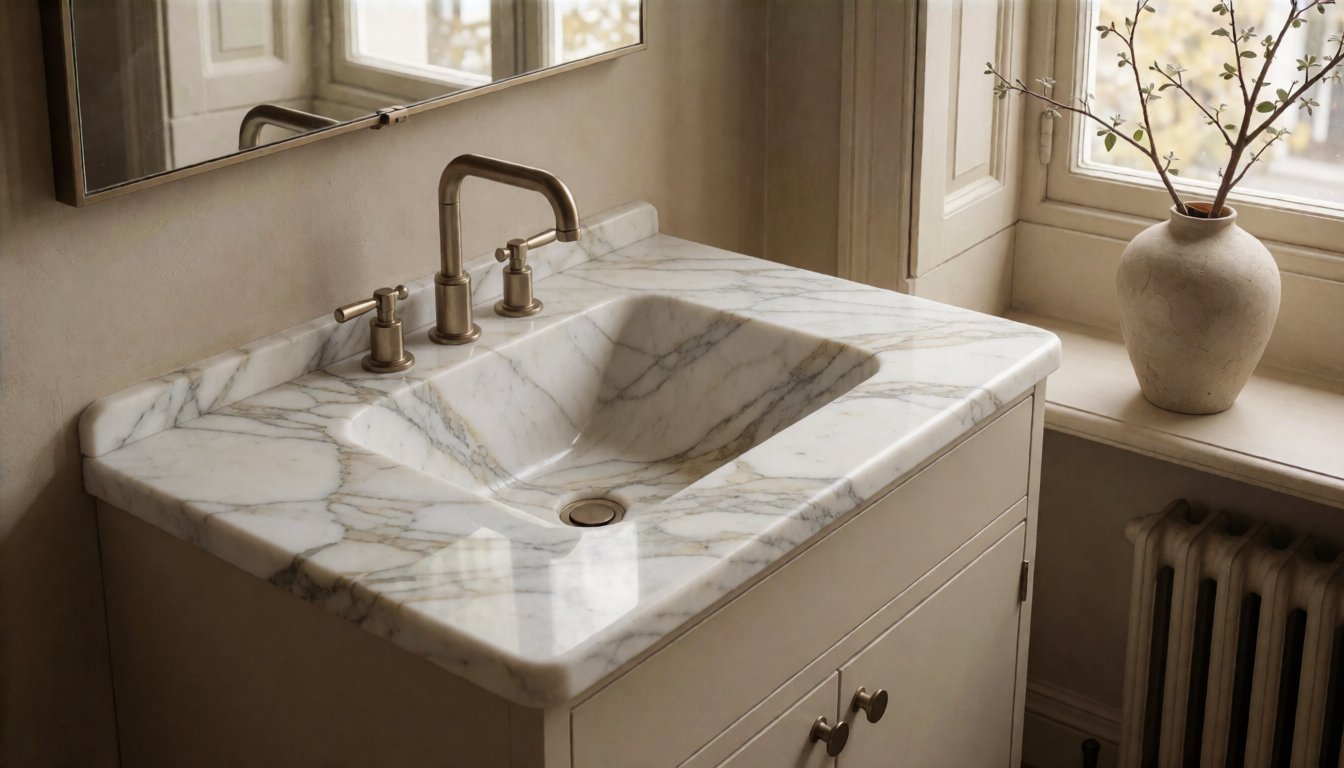
Marble sinks are premium fixtures that demand more than just standard cleaning routines. As a B2B importer sourcing stone furniture for US and EU markets, you know that the difference between a five-star installation and a returned order often lies in the client’s ability to maintain the surface. Marble is porous; without proper care, water spots turn into etches, and oils leave permanent stains. For your end consumers, understanding the seal marble sink schedule is essential for long-term satisfaction. This guide breaks down the technical reality of stone sink maintenance so you can set accurate expectations and avoid costly warranty claims.
Understanding Porosity and Initial Sealing
Before addressing frequency, you must understand why sealing happens. Marble is a calcite-based metamorphic rock with natural voids. If these voids are open, liquids penetrate instantly upon contact. The sealant creates a hydrophobic barrier on the surface, preventing absorption. However, this protection degrades over time as daily use wears it down.
When a marble sink arrives at your warehouse, it is typically factory-sealed with a 10–20 mil thick coating. This initial layer is robust but not indefinite. Most suppliers, including Gladystone, apply a high-quality penetrating sealer that offers an initial lifespan of roughly 6 to 12 months under normal residential conditions. Commercial kitchens or high-traffic households may see this duration drop to 3–4 months due to aggressive cleaning agents and constant exposure to heat and grease.

The cost implication here is significant. A failed seal job results in staining that requires professional honing, a service that can exceed $500 per sink. Educating your clients on the initial sealing window prevents shock when their first stain appears after 8 months of use. It is not a defect; it is the natural lifecycle of an unsealed stone surface.
The Standard Sealing Frequency Schedule
For typical residential applications in North America and Europe, the industry standard for marble sealing frequency falls within a specific range. Most homeowners should re-seal their marble sink every 12 to 18 months. This timeline assumes regular cleaning with pH-neutral soap and avoidance of harsh chemicals like bleach or lemon juice, which eat away at the sealer faster than physical wear does.
However, the schedule shifts based on usage intensity.
* Light Residential Use: Every 18–24 months. Bathrooms with low traffic and limited cooking prep nearby fit here.
* Standard Household Use: Every 12 months. This covers average kitchens where food prep occurs daily and water splashes happen frequently.
* Commercial or High-Traffic Use: Every 6–9 months. Restaurants, hotels, and busy households need more frequent attention.
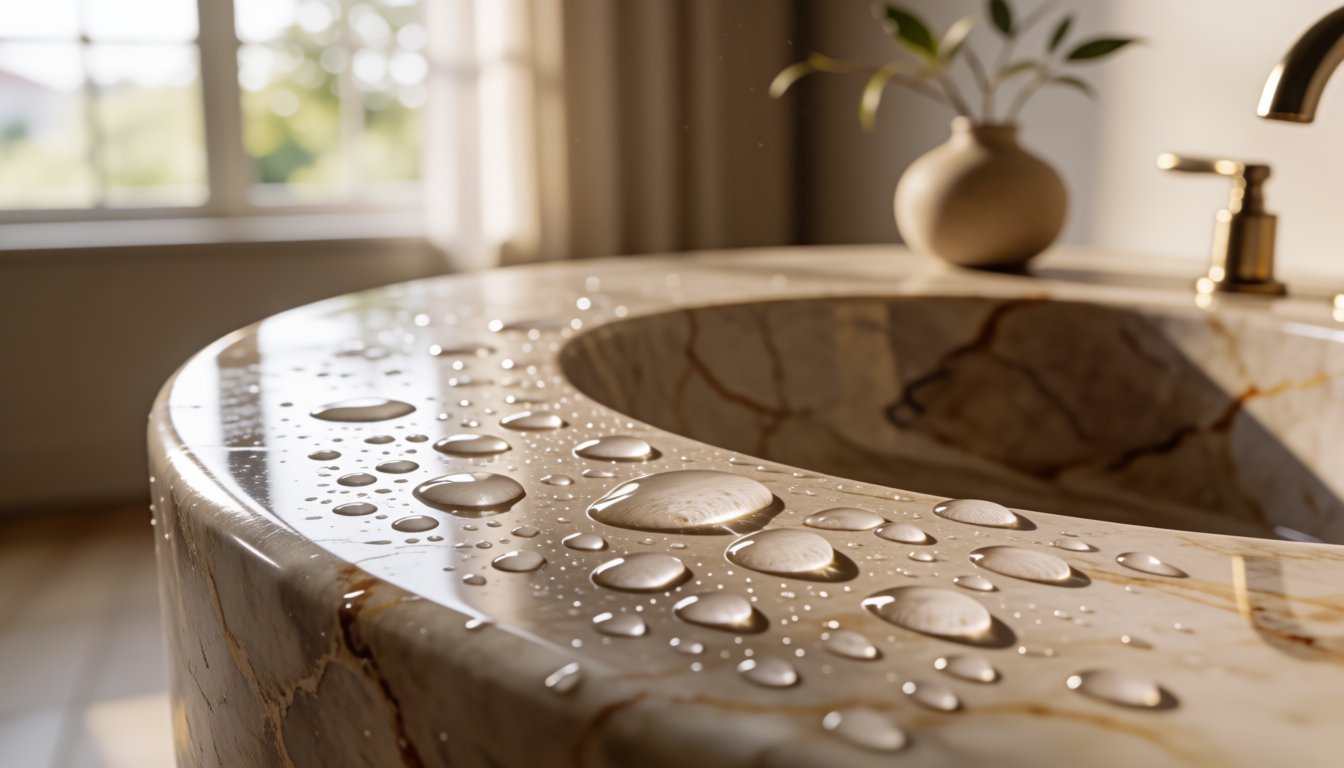
To maximize the lifespan of the sealer, clients should perform a simple water bead test every six months. If water droplets spread out flat rather than beading up into tight spheres, it is time to re-apply the sealant. This proactive check saves money by catching wear before major staining occurs. For Gladystone orders with larger quantities, we can supply bulk sealing kits or recommend specific professional-grade products that offer longer durability, often extending the interval to 24 months for premium formulations.
Factors That Accelerate Sealer Degradation
Not all stains are equal, and not all environments treat stone the same way. Several variables drastically reduce the time between required sealings. As an importer, you must highlight these factors to your buyers so they can manage their clients’ expectations effectively.
Chemical Exposure: Acidic substances are the enemy of marble sealers. Vinegar, wine, tomato sauce, and citrus juices react with the calcite, causing etching that bypasses the sealer entirely. If a client uses acidic cleaners weekly, the sealer lifespan drops by 40–50%. Recommend pH-neutral stone care products immediately.
Cleaning Method: Abrasive scouring pads or steel wool physically remove the sealer layer. Even soft sponges with harsh detergents can degrade the seal over time. Ultrasonic cleaners are generally safe but require specific protocols; improper use can strip the protective film in as little as a few weeks.
Location and Environment: A bathroom sink exposed to high humidity might see slightly different wear patterns than a kitchen sink exposed to heat from a stove or dishwasher. Heat accelerates the breakdown of some sealant polymers. In very hot climates, or kitchens with open flames nearby, consider recommending a re-seal every 9 months regardless of the visual test results.
Type of Sealant: The frequency depends heavily on the product used. Wax-based sealers offer short-term protection (3–6 months) and require frequent buffing. Penetrating epoxy or fluoropolymer sealers last longer (12–24 months) but have a higher initial cost. When sourcing from Gladystone, specify the type of sealer applied during manufacturing to ensure your buyers know what baseline they are working with.
Best Practices for Long-Term Stone Sink Maintenance
Proper maintenance extends far beyond the re-sealing schedule. Daily habits play a massive role in preserving the finish and minimizing the frequency of deep sealing jobs. Always instruct clients to blot spills immediately rather than wiping them, which spreads acidic liquids across the surface. Standing water left overnight guarantees staining, even on sealed stone.
Regular cleaning with warm water and a mild dish soap is sufficient. Avoid “multi-surface” cleaners containing ammonia or acids found in many grocery stores. For stubborn stains, use a poultice made of baking soda and hydrogen peroxide rather than abrasive powders. If a stain penetrates the sealer, spot-sealing that specific area can restore protection without needing a full re-application of the entire sink surface.
When placing an order for Gladystone marble sinks, specify if you need samples of your preferred cleaning regimen or sealant types to test with your local distributors. This ensures that your supply chain aligns with the maintenance habits of your target market. Clear communication about these parameters reduces returns and builds trust between the importer and the end-user.