Ordering stone from China often feels like walking a tightrope. You want to test a new material without committing to a container full of unsellable inventory, but traditional manufacturers demand thousands of pounds or massive MOQs. For interior designers, boutique dropshippers, and US/EU wholesalers, the answer lies in small batch repeatability. This is not just about cutting costs; it is about validating market fit with manageable risk. At Gladystone, we understand that a single slab of Calacatta Gold might look perfect in your showroom sample but could be a dead weight if you can’t move it. We have structured our production lines to handle specific stone minimum run requests while maintaining the quality standards expected by high-end retailers.
Why Traditional MOQs Kill Small Businesses
The conventional wisdom in the natural stone industry suggests that volume equals value. Large slabs are cut into standard sizes (usually 305cm x 152cm or 120″ x 60″) and shipped in full 40ft containers. This model works well for big-box retailers moving thousands of square meters, but it creates an insurmountable barrier for smaller players.
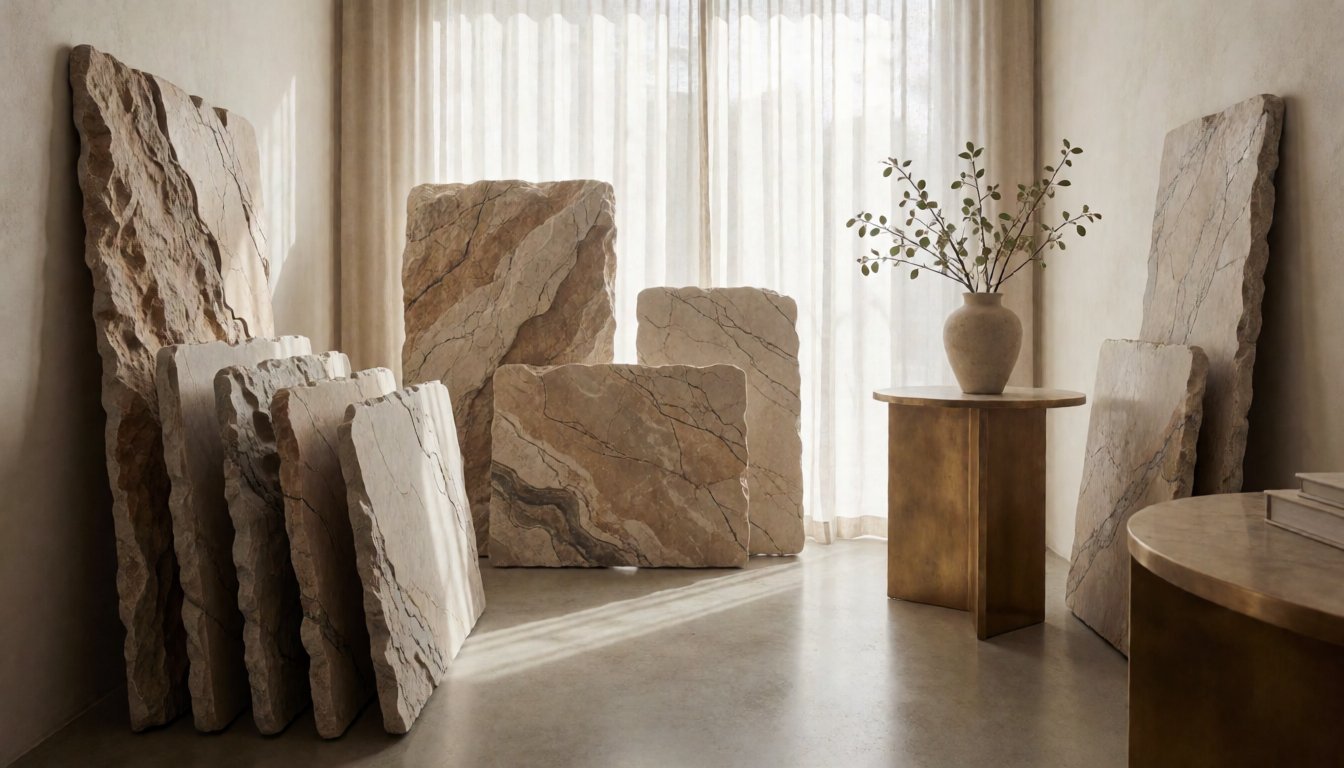
Consider the math: A standard 30mm thick slab weighs roughly 80kg per square meter. A single large slab can weigh between 250kg and 400kg depending on the density of the stone. If a supplier requires a container load, you are looking at an investment of $40,000 to $120,000 USD just for the raw material value before shipping. For a dropshipper testing a niche color or pattern, this capital is often unavailable. Furthermore, natural stone is inherently unpredictable; no two slabs are exactly alike. Buying a full container locks you into accepting stones with cracks, veining inconsistencies, or discoloration that may not match your current inventory needs.
When a client asks for a marble reorder MOQ of just five pieces to restock a popular vanity top, a factory accustomed to bulk orders will say no. They cannot justify the line setup time and cutting labor for such a small quantity. This forces buyers into two bad options: overstocking inventory or abandoning promising products entirely. The solution requires a shift in how production is planned, moving away from rigid bulk schedules toward flexible, on-demand manufacturing blocks.
How We Structure Small Batch Production
At Gladystone, we have adapted our factory floor to accommodate these constraints without sacrificing quality. We do not simply cut smaller quantities; we reorganize the workflow to make them efficient. Our approach focuses on grouping orders by material type and finish rather than forcing every order into a massive mixed container.
For instance, if you need a run of 10 pieces of white marble for bathroom vanities, we can isolate that production block. The typical lead time for these smaller runs is roughly 25 to 35 days from deposit to ex-warehouse in China. This includes the time required for quarrying, cutting, polishing, and packaging. We achieve this by utilizing dedicated cutting teams that specialize in smaller format pieces, such as sink basins or dining tables, rather than only focusing on large slab surfaces.
We also optimize packaging for small batches. Instead of crating 200 slabs per container, we consolidate specific orders into partial containers or use air freight for the highest value, smallest quantity items if the budget allows. This reduces your storage costs in the US or EU. By accepting a stone minimum run as low as 3 to 5 finished pieces depending on the complexity of the design, we allow you to introduce new collections slowly. You can sell one piece at a time, and once the demand hits a certain threshold, we trigger the next production batch automatically.
Managing Costs Without Compromising Quality
A common fear among buyers is that small runs mean high costs per unit. While the absolute cost of raw material does not change based on quantity, the effective cost to you does if you calculate it incorrectly. The challenge is balancing the premium for low volume with the need for repeatable quality.
Our pricing structure typically involves a base price per square meter or per finished piece that scales down slightly as volume increases. For a small run of 5 dining tables, the unit price will be higher than buying a full container load by roughly 10% to 20%. This premium covers the administrative overhead and the specific line setup required for your order. However, this is often cheaper than the total loss incurred by overstocking inventory that sits on a warehouse shelf for six months.
To keep costs predictable, we recommend locking in the base material price for a quarter or half-year in exchange for a slightly higher deposit. This protects you against raw stone price fluctuations at the quarry. When discussing small batch repeatability, transparency is key. Ask your supplier exactly what portion of the final cost is allocated to labor versus material. In China, labor costs have risen significantly in recent years. A supplier who charges $80 per square meter for cutting and finishing might be struggling, whereas one charging $60 with high automation offers better value even on small runs.
We also inspect every piece before it leaves the factory. Small batches often get overlooked because they are not “container standard,” but at Gladystone, we treat a run of 10 sinks with the same rigor as a container full of bathtubs. We check for surface scratches, edge straightness, and color consistency against your approved digital swatch. If a piece fails inspection, it is repaired or replaced before packaging. This ensures that when you receive your small order, every item meets the high standards required by US and EU customers who have zero tolerance for defects.
Strategies for Maintaining Repeatable Orders
The ultimate goal of working with a factory like Gladystone is to build a relationship where you can reorder confidently without renegotiating terms every time. Small batch repeatability becomes a strength when you plan your inventory cycles correctly.
Start by identifying your “hero products.” These are the items that sell consistently, such as a specific gray granite countertop or a black soapstone vanity. Once these are established, negotiate a standing agreement where we keep a small reserve of raw material for these specific cuts. This allows us to fulfill marble reorder MOQ requests much faster because the stone is already pre-selected and prepared in the quarry yard.
Communication is the other pillar of success. Provide clear drawings with exact dimensions. For example, specify a sink basin that is 60cm wide x 45cm deep x 35cm high, rather than asking for a “standard size.” Standard sizes vary by region; what is standard in Italy might differ in the US. Clear specs reduce waste and prevent costly rework. When you place a small order, include a request for photos or short videos of the slabs before cutting. Seeing the raw stone helps manage expectations regarding natural variations in veining or color depth.
Finally, treat your factory partner as an extension of your team. Share your sales data from the US or EU. If a new design is trending on Instagram or Pinterest, tell us immediately. We can adjust our production schedule to prioritize that item for your next stone minimum run. This agility allows you to stay ahead of trends rather than reacting to them after they have peaked. By building trust and clear processes, small batches become a reliable revenue stream rather than a logistical headache.