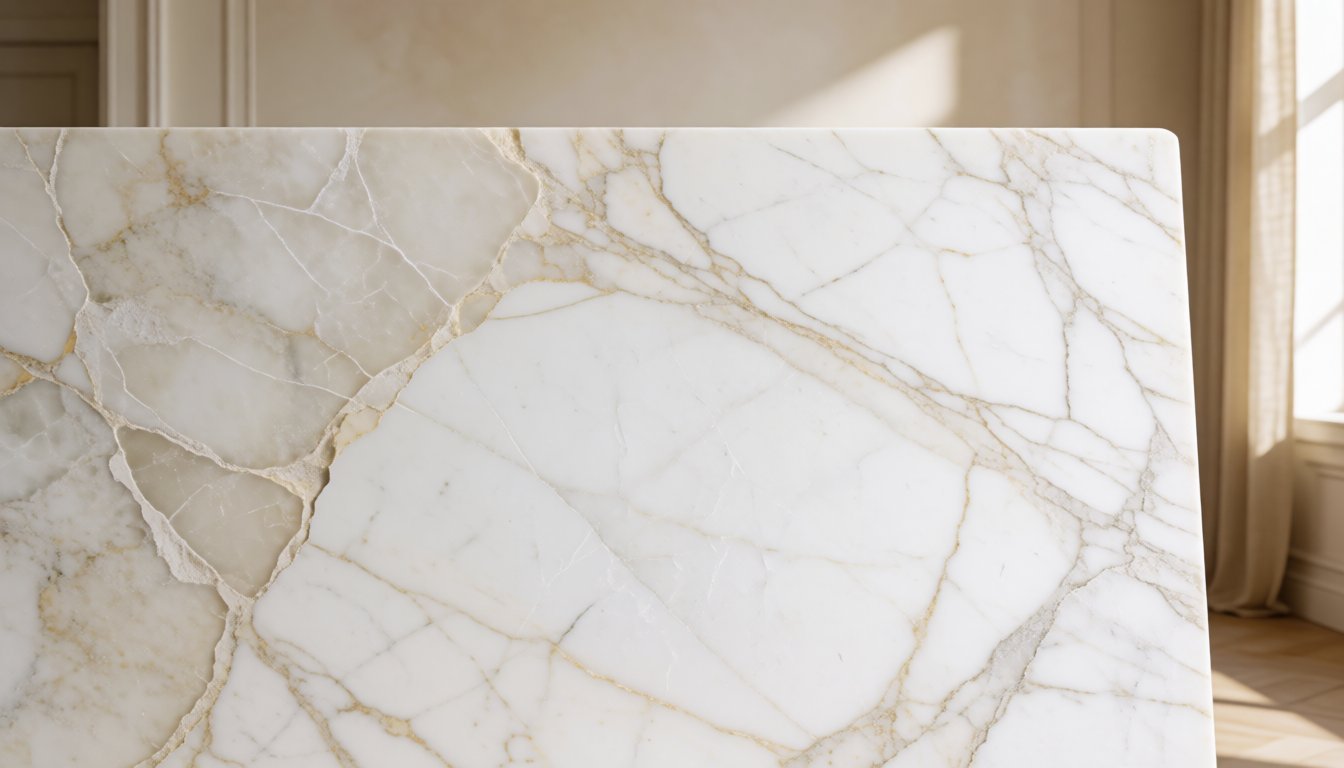
Natural stone furniture never comes from a factory floor in the way mass-produced goods do. You might expect a marble dining table or a granite sink to be an exact replica of its neighbor on the shelf, but that is not how geology works. At Gladystone, we see this every day when we load containers for US and EU dropshippers. A batch of slabs extracted from a single quarry face will show subtle variations in veining, background tone, and grain density. Understanding why stone color matching fails to produce perfect clones is the first step in managing expectations. If you order ten white marble tables, the tenth one may feel warmer or cooler than the first due to natural mineral shifts deep within the rock. This guide breaks down what affects your production consistency, how to handle marble batch consistency, and how to verify slab quality before shipment.
The Reality of Quarry Variability
When you request a specific hue, you are asking for a visual range, not a single pixel value. Even within one block cut from the same vein, light refraction changes as the stone is polished. A slab measuring 305 cm in length might show darker veins near the top edge and lighter tones near the bottom due to natural sediment layers. This happens regardless of whether you are sourcing granite, quartzite, or marble.
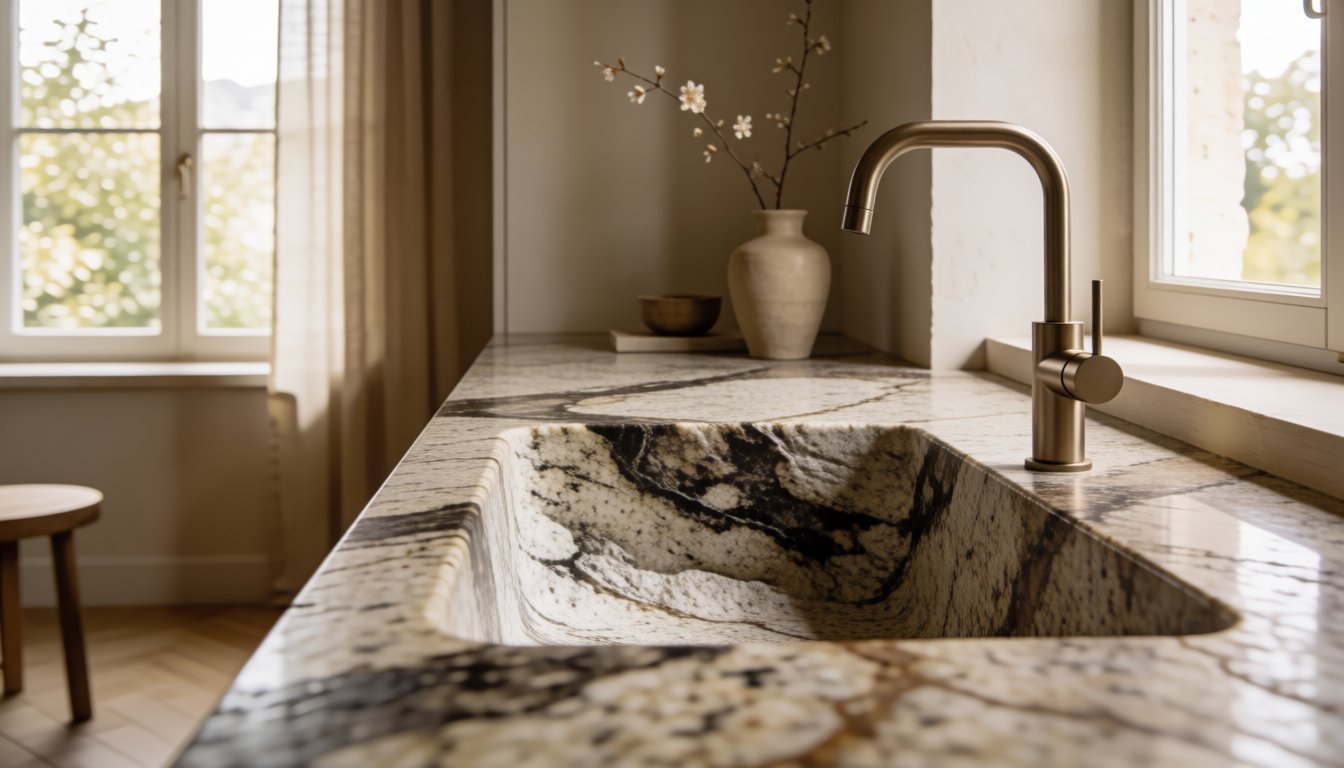
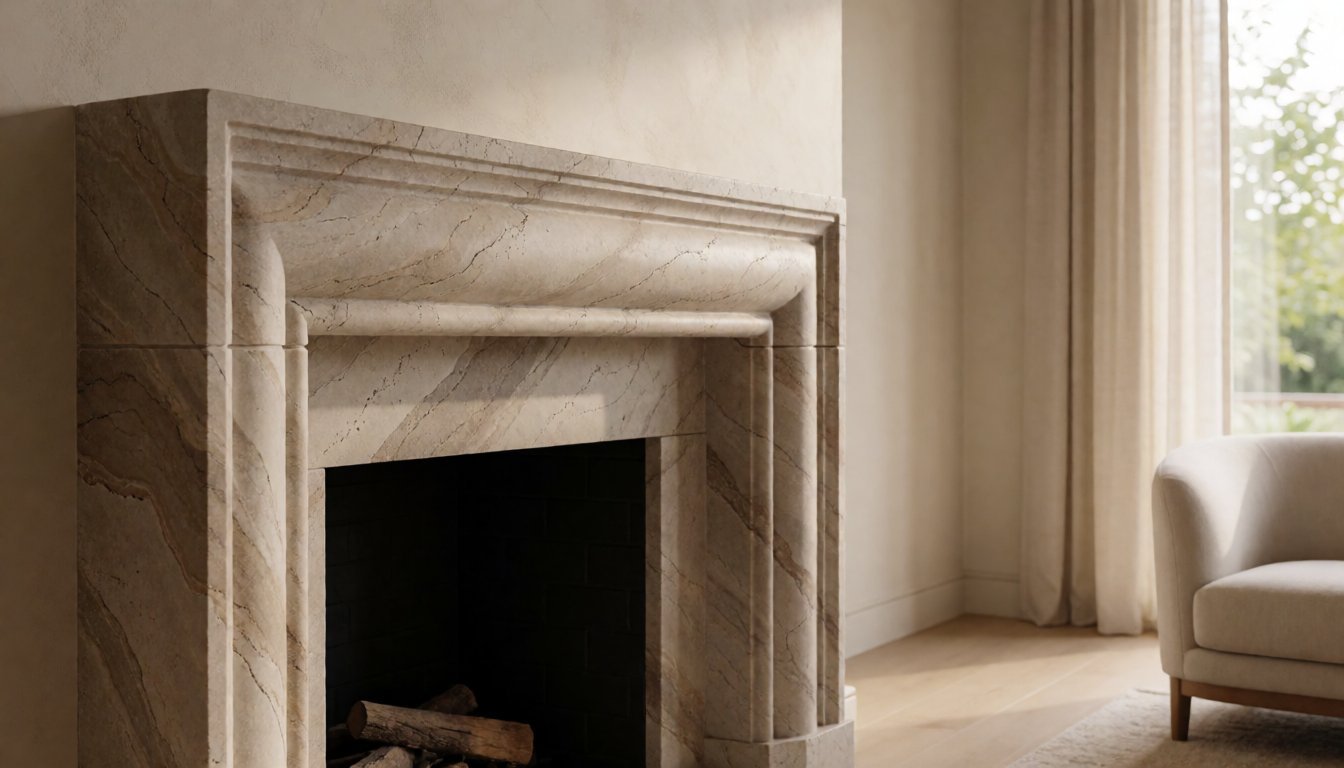
For a white marble vanity unit with a basin integrated into a 120 cm wide countertop, the background color can shift from creamy off-white to pure bright white across just two meters. The same is true for fireplaces or side tables. If your design relies on a seamless look between two adjacent slabs, you must account for these natural gradients. We typically see a variation of 15% to 20% in visual tone within a standard quarry lot. Buyers who expect absolute uniformity often face delays because the factory cannot force nature to stop bleeding color naturally through the stone.
The Challenges of Slab Matching
The process of slab matching is where most importers encounter friction with suppliers. When you send an order for 50 dining tables, the factory needs to pull slabs from specific boxes in their warehouse. However, those boxes are stacked based on arrival date and type, not necessarily by perfect color gradient.
To achieve a smooth transition between two adjacent tabletops, you need to specify your matching tolerance upfront. If you do not provide clear photos of your reference samples, the factory might pull slabs that look similar from 5 meters away but reveal stark differences up close. For example, a dark grey granite slab with fine speckling might have a neighbor in the same box that looks almost black under warehouse lighting.
We advise buyers to request digital scans of every slab before cutting. These images allow your design team to plan layouts that hide minor discrepancies rather than highlighting them. Without this step, you risk receiving a batch where Table 1 and Table 2 clash visually in a showroom setting. The cost of reworking these mismatches usually falls back on the buyer if not caught during the pre-shipment review.
Managing Marble Batch Consistency
Consistency becomes even more critical when dealing with large orders for wholesale or white-label brands. Imagine an order for 100 bathroom vanities destined for a major US retailer. If the first 20 units arrive with cool blue undertones and the next 80 have warm beige undertones, your inventory management will suffer. This is a common issue with marble batch consistency because quarry output fluctuates based on mining conditions.
A single truckload from our factory usually contains slabs cut from blocks mined within a few weeks of each other. However, if the mine shifts to a different section of the cavern, the stone properties change immediately. We typically group slabs by color family, but we cannot guarantee that every piece matches perfectly. For expensive materials like Calacatta or Statuario marble, where veining patterns are the selling point, this is normal. The value lies in the uniqueness of the pattern, not the robotic replication of a previous piece.
To mitigate this, we recommend ordering slightly more units than needed to create a buffer stock for sorting. You can then select the best-matching pieces for your flagship displays and use the others for secondary lines or custom projects. This strategy reduces waste and ensures that your retail floor always looks cohesive. Always communicate your specific tolerance levels in your RFQ (Request for Quotation). Some designers accept a 10% variance, while luxury brands demand near-perfect alignment. We can only deliver what you explicitly ask for in your purchase order.
Practical Steps for Importers and Designers
If you are importing stone furniture to the US or EU, here is what you must check before placing an order. First, request high-resolution photos of actual slabs, not just stock images from websites. Second, define your color tolerance clearly in writing. Third, ask about the specific quarry block numbers for each slab in your container. This information helps you track which pieces came from which face of the rock.
For a typical order of 10 dining tables made from 305 cm slabs weighing roughly 45 kg each, lead times range from 25 to 35 days depending on current quarry extraction rates. During this period, the factory sorts and cuts your materials. If you need a specific matching set, insist on a “pick and pack” service where they reserve specific slabs for your job number. Do not assume that all white marble is interchangeable.
Finally, factor in the cost of mismatches into your pricing model. Natural stone is a premium material with inherent variability. By understanding these constraints, you can price your products competitively while maintaining quality standards. At Gladystone, we prioritize honest communication about stone behavior so you can make informed decisions that protect your brand reputation and your bottom line.