Marble tolerates moderate warmth but sudden extreme heat causes thermal shock, cracking, and discoloration. In 2026, fabricators recommend trivets, heat mats, and proper sealing as the standard defense for every marble countertop, table, and vanity.
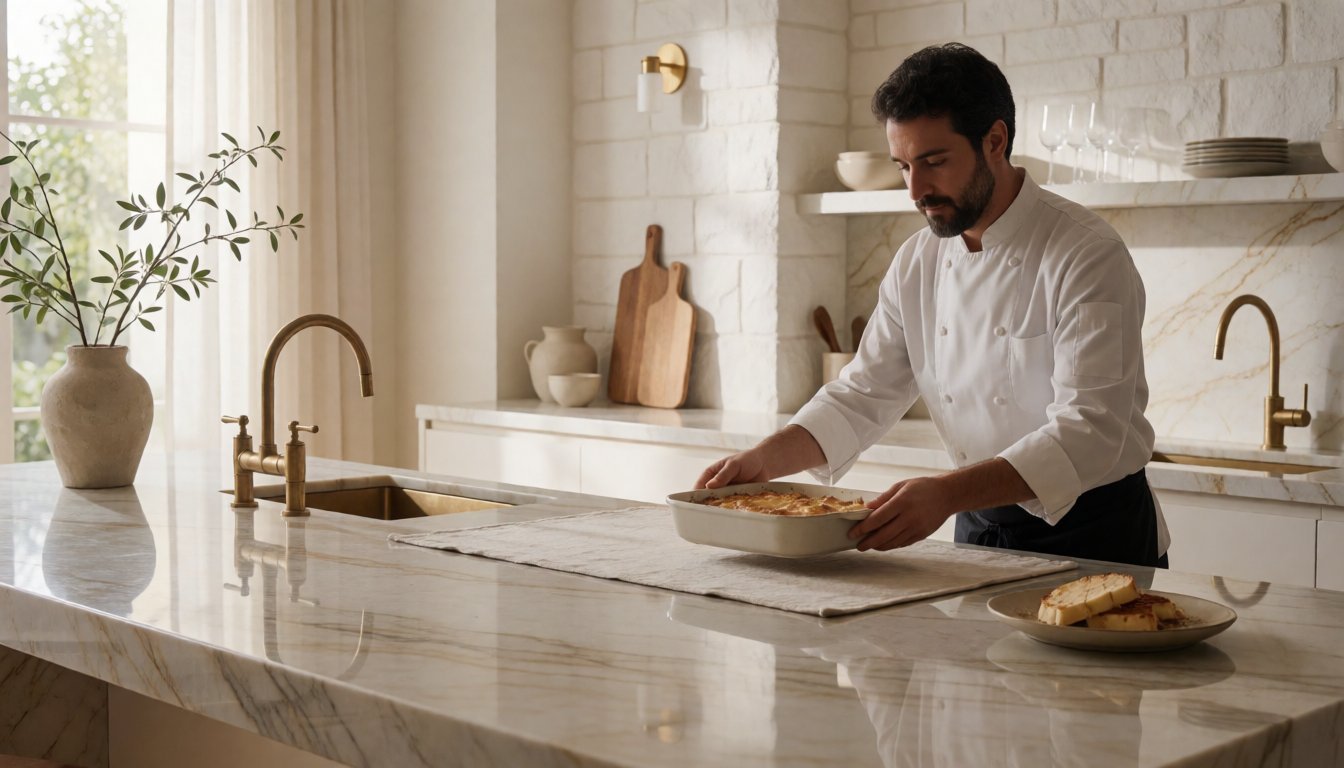
Why Is Heat a Problem for Marble?
Marble is calcium carbonate, a stone that conducts temperature and expands under heat. A hot pot placed directly on a cool slab creates a sharp local temperature swing, thermal shock, that can craze the surface or cause faint fractures near the edge. Discoloration also occurs when heat drives moisture out of the stone unevenly. Sealing slows liquid absorption but does nothing against heat, so physical barriers remain the only reliable protection.
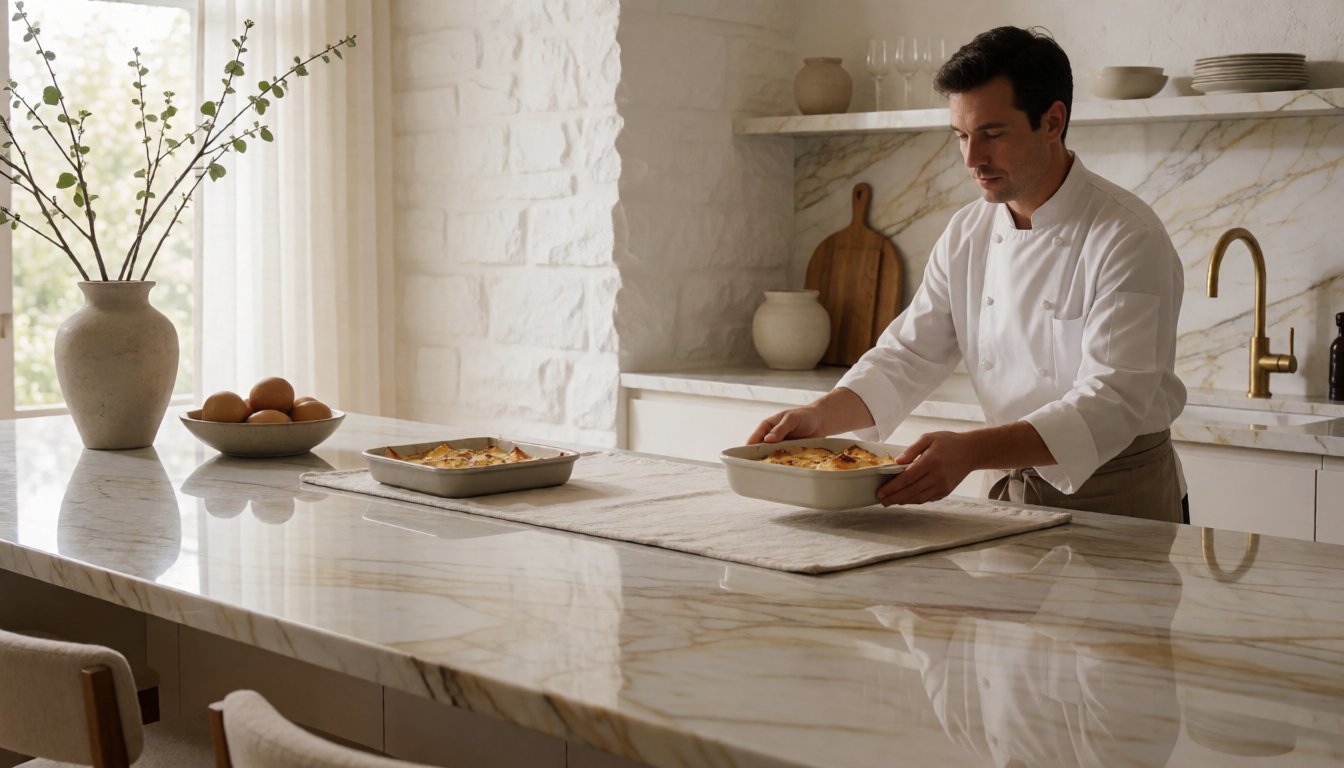
What Does 2026 Best Practice Recommend?
- Always use trivets: Set hot pots, pans, and baking dishes on trivets or hot pads, never directly on stone.
- Apply heat mats: In kitchens, a discreet silicone or linen mat protects the most-used zone.
- Reseal on schedule: A water-bead test every 6 to 12 months confirms the barrier is intact.
How Heat Damage Differs from Etching
Heat damage and etching are often confused but are different failures. Etching is a chemical reaction: acids such as lemon, wine, or vinegar react with calcium carbonate and leave dull spots that no sealer prevents. Thermal shock is physical: extreme temperature change stresses the slab and can crack it. A honed finish hides light etching better than polish, which is why about 90 percent of countertops sold for daily use in 2026 are honed. Knowing the distinction tells you whether to reach for a trivet or a pH-neutral cleaner, and prevents the most common marble mistakes before they start.
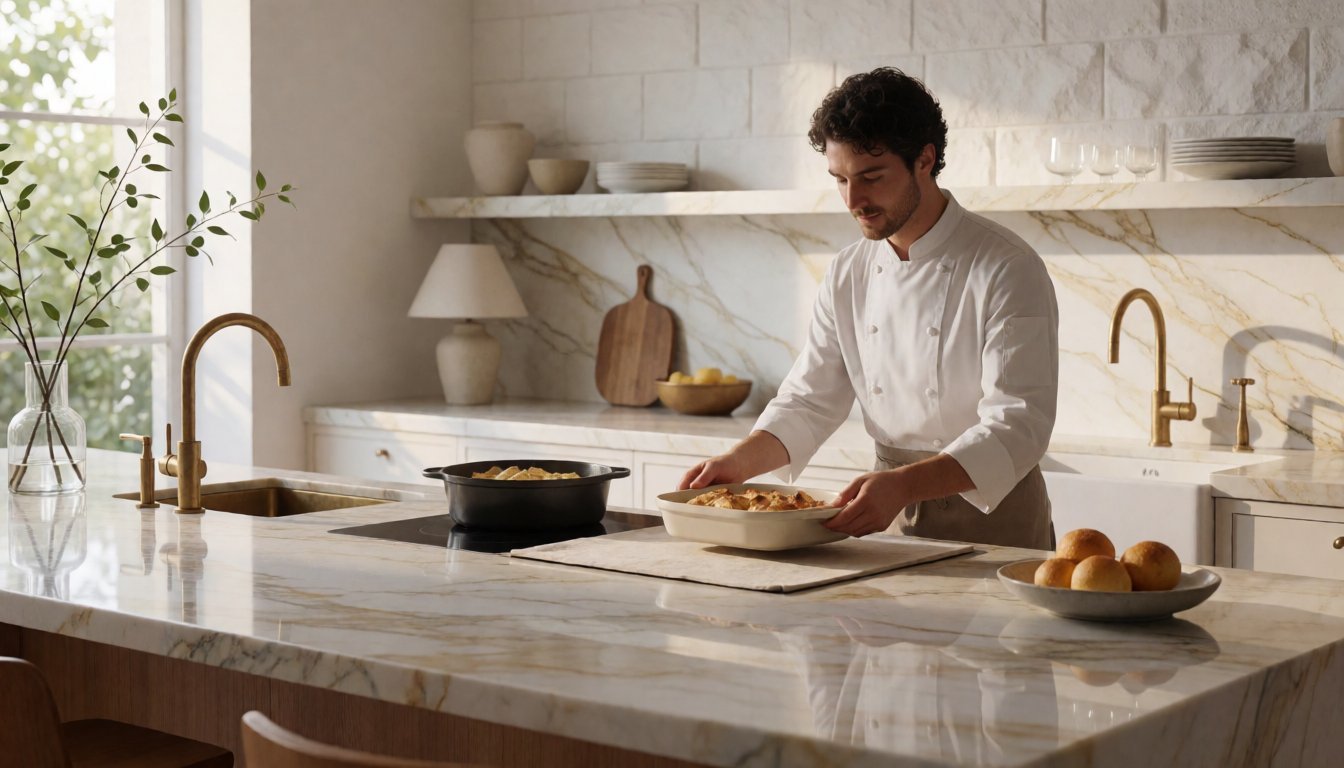
Heat Defense Methods Compared
| Method | Protects Against | Effort | Best Use |
|---|---|---|---|
| Trivet / hot pad | Heat, thermal shock | Low | Kitchen daily |
| Heat mat | Heat, rings | Low | Island zone |
| Impregnating sealer | Stains only | Medium | All surfaces |
| Honed finish | Visible etching | One-time | Busy counters |
Frequently Asked Questions
Can marble really crack from a hot pan?
Yes, thermal shock is possible with sudden extreme heat; trivets eliminate the risk entirely.
Does sealing stop heat damage?
No. Sealer blocks stains, not temperature. Physical barriers are required for heat.
Is honed or polished better near heat?
Heat affects both equally, but honed hides etching better, so it is preferred for working kitchens in 2026.
How often should I reseal?
Do the water-bead test every few months; reseal when water stops beading, typically every 6 to 12 months.
Glady Stone: Care for Natural Stone
Glady Stone advises wholesalers and installers to pair every marble delivery with trivet guidance and a resealing schedule for long-term client satisfaction.
Read the Glady Stone natural stone care guidance for spec-ready maintenance notes.