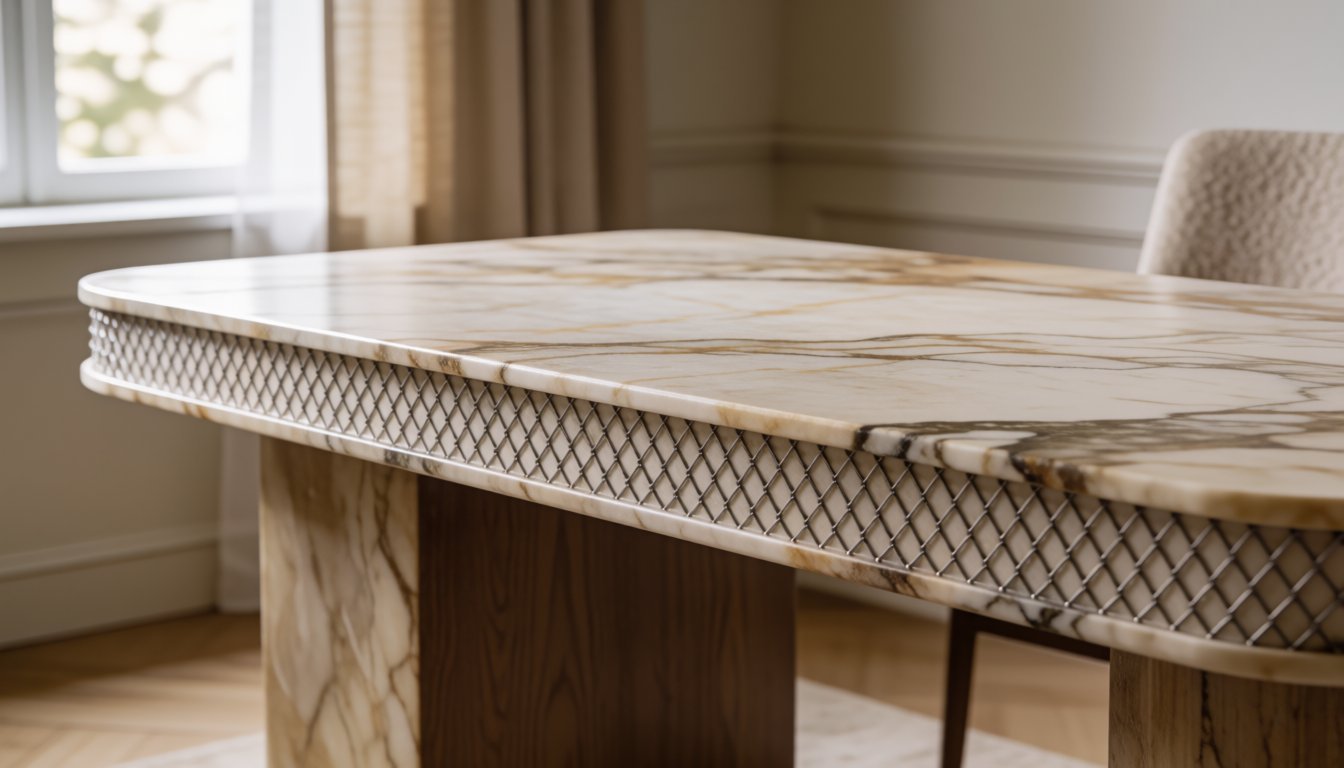
Retailers often struggle to balance aesthetic appeal with durability. A stone counter that looks stunning on Instagram might crack under daily shop traffic. For B2B buyers sourcing from China, the goal is simple: find retail stone furniture that withstands high footfall while maintaining a premium look. This guide breaks down what to check before placing an order for display tables and consultation desks.
Structural Integrity for High-Traffic Areas
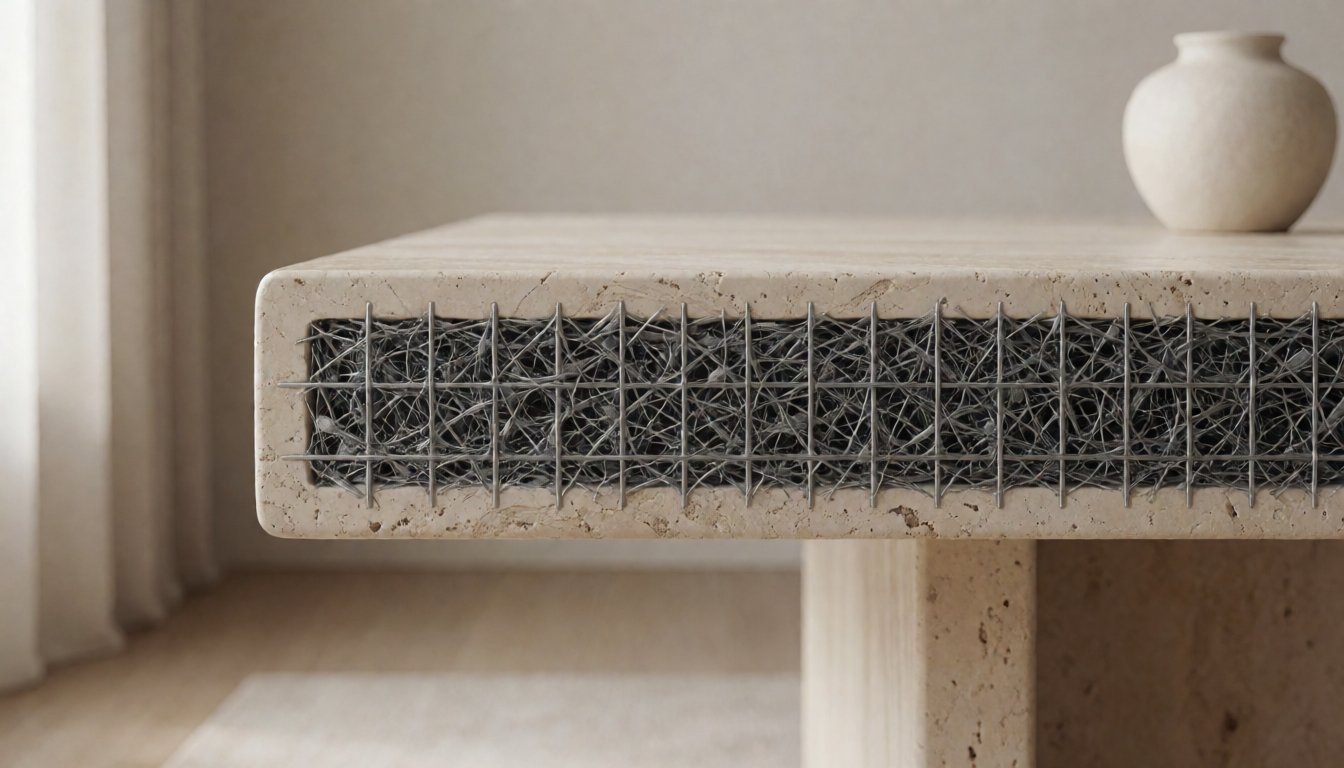
Most retail failures stem from weak internal reinforcement, not the slab quality itself. A standard quartzite or marble stone display table needs specific support to handle constant pressure from legs and customer elbows. Ask your supplier about the steel mesh embedded within the stone. Standard practice involves a 304 stainless steel fiber grid (roughly 15-20mm spacing) bonded into the resin mix during casting.
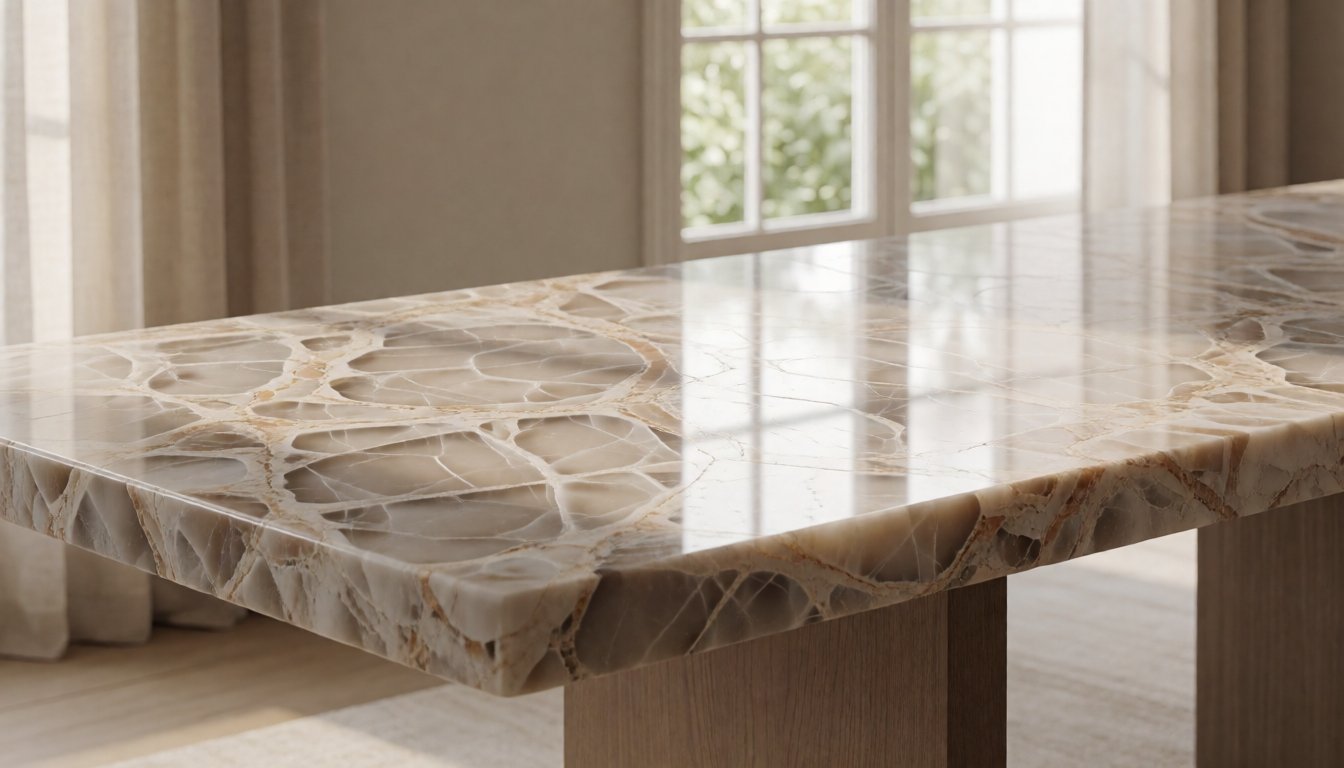
For a typical 180cm x 90cm dining-style display table, request a core thickness of at least 25mm if using natural stone like marble or travertine. Thinner slabs (2cm) require heavy-duty laminates underneath to prevent warping. If the retailer plans to use these as consultation desks where clients lean on them, specify reinforced edges. A good quality marble consult desk will have a steel rod running through the center of the slab before resin injection. This internal skeleton adds rigidity without adding significant weight.
Weight is another critical factor for logistics and installation. A solid 25mm thick quartzite table top roughly 180cm wide can weigh between 60kg to 80kg depending on density. Ensure your supplier provides exact weight per piece. This data helps you calculate shipping costs and determine if local installers need heavy-duty equipment. If the total shipment exceeds 2 tons, standard trucks may struggle with loading dock ramps.
Surface Finishes That Hide Wear and Tear
Retail environments are unforgiving. Coffee spills, dropped phones, and accidental scratches happen daily. The finish you choose dictates the maintenance burden for the store owner. Polished stone offers high gloss but shows fingerprints and water spots instantly on white or light-colored marbles like Calacatta Gold. For a consultation desk where privacy screens matter, a honed or leathered finish is often smarter.
A honed matte surface scatters light, making imperfections less visible while providing a warm, organic feel suitable for luxury boutiques. However, if the client wants that classic “jewelry box” shine, specify a high-polish treatment (800-3000 grit) with a sealant application. Sealants do not stop scratches entirely but prevent oil and acid from staining porous stones like limestone or onyx.
When discussing retail stone furniture, ask for samples of both polished and honed versions side-by-side. Show them how the same slab reacts to different lighting conditions. In some cases, a satin finish offers the best compromise: it reflects enough light to look clean but masks minor scuffs from shopping carts or rolling chairs. For fireplaces used as room dividers in retail spaces, consider a textured brushed finish that hides soot and dust better than a mirror polish.
Cost Drivers and Lead Time Realities
Price varies wildly based on stone type, thickness, and origin. Roughly speaking, imported Italian marble slabs cost 3-5 times more than domestic Chinese granite or engineered quartzite. A simple square coffee table made of standard commercial-grade granite might run $120-$180 per unit for a wholesaler order of 50 pieces. In contrast, exotic onyx or rare blue marble can push the price to $600+ per piece before shipping.
Engineered stone offers a middle ground with consistent color and no natural fissures. These typically cost 20-30% less than natural equivalents but carry similar lead times. Always clarify what is included in the quoted price. Does it cover polishing, edge profiling (e.g., bullnose, ogee), sealing, and packaging? Hidden costs for sandblasting or custom engraving can add $15-$25 per square meter.
Lead times are often underestimated by importers. Standard inventory items usually ship within 7-10 days after payment. Custom slabs with specific edge details or rare stone cuts take 20-35 days from deposit to completion. Factor in ocean freight time (15-30 days) and customs clearance delays. If a retailer needs stock for a black Friday campaign, ordering custom stone 45 days out is risky. Stock up on common colors like Carrara White or Black Galaxy first, then order custom designs for seasonal collections later.
Customization Options Without Breaking the Bank
Don’t assume every buyer wants a plain slab. Retailers love customization that feels unique but doesn’t require massive price jumps. Edge profiles are the most cost-effective way to differentiate products. A standard 90-degree square edge adds $5-$8 per linear meter. An ogee or waterfall edge might add $12-$18 per meter but significantly boosts perceived value.
Thickness customization is another lever. Moving from a standard 2cm thickness to 3cm for a console table increases material usage by roughly 50% but allows for fewer laminations, saving labor time. For stone display tables used in jewelry stores, consider mounting the stone on a hidden steel bracket rather than traditional legs. This design looks like floating stone and reduces the total weight, making installation easier for small teams.
Color matching is tricky with natural stone. Two slabs from the same quarry can vary by 15-20% in veining density. Always request physical samples before committing to a full production run. Digital swatches rarely capture the depth of natural veins or the translucency of onyx under candlelight. If using engineered stone, you have more control over exact color matches (RAL codes), which is crucial for brands with strict visual identity guidelines.
Final Checklist for Buyers
Before sending a PO to Gladystone or any supplier, verify these points:
* Reinforcement: Confirm steel mesh density and core thickness.
* Finish: Agree on polish/honed/satin and sealant type.
* Weights: Get exact kg per piece for logistics planning.
* Lead Time: Align production schedule with retailer sales calendar.
* Samples: Order physical samples of top 3 choices before bulk buy.
By focusing on structural specs and realistic timelines, you can stock retail spaces that look expensive but last years. Quality stone furniture sells not just the product, but the confidence that the store is built to endure.