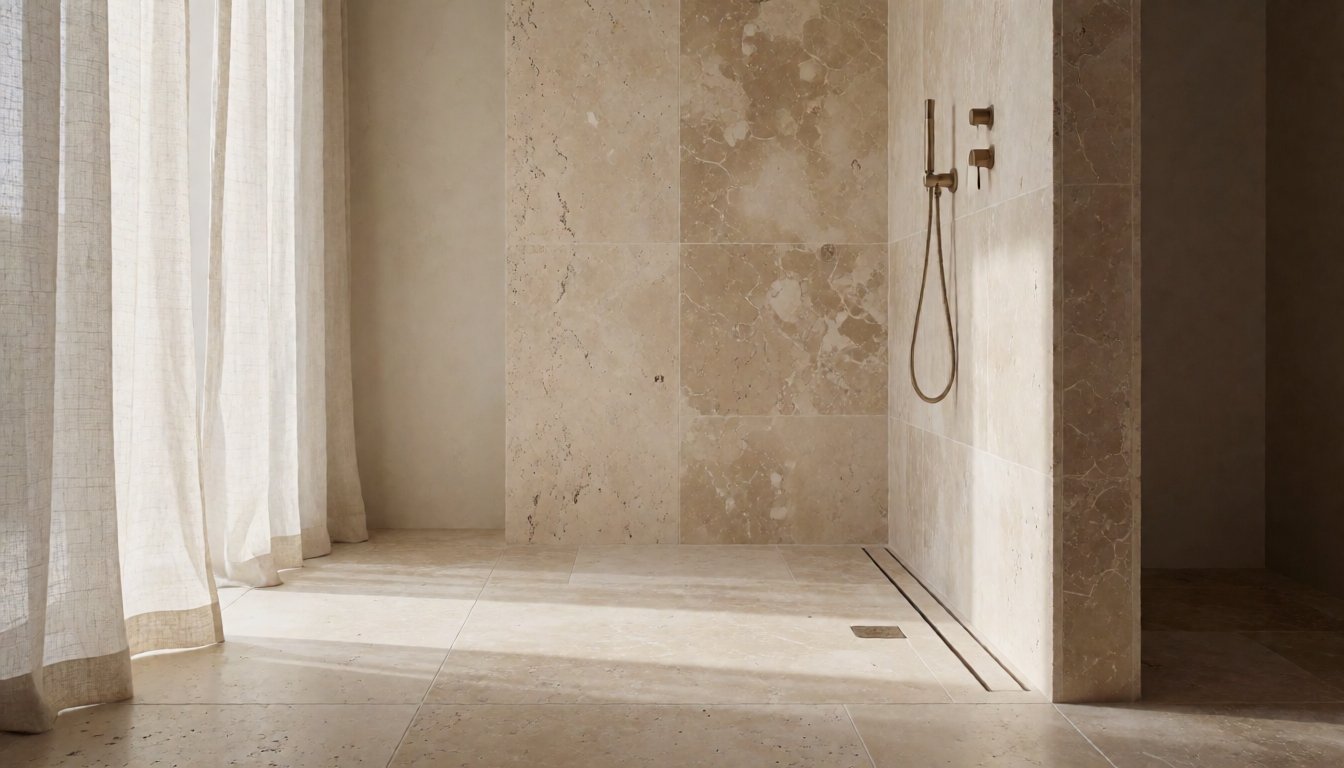
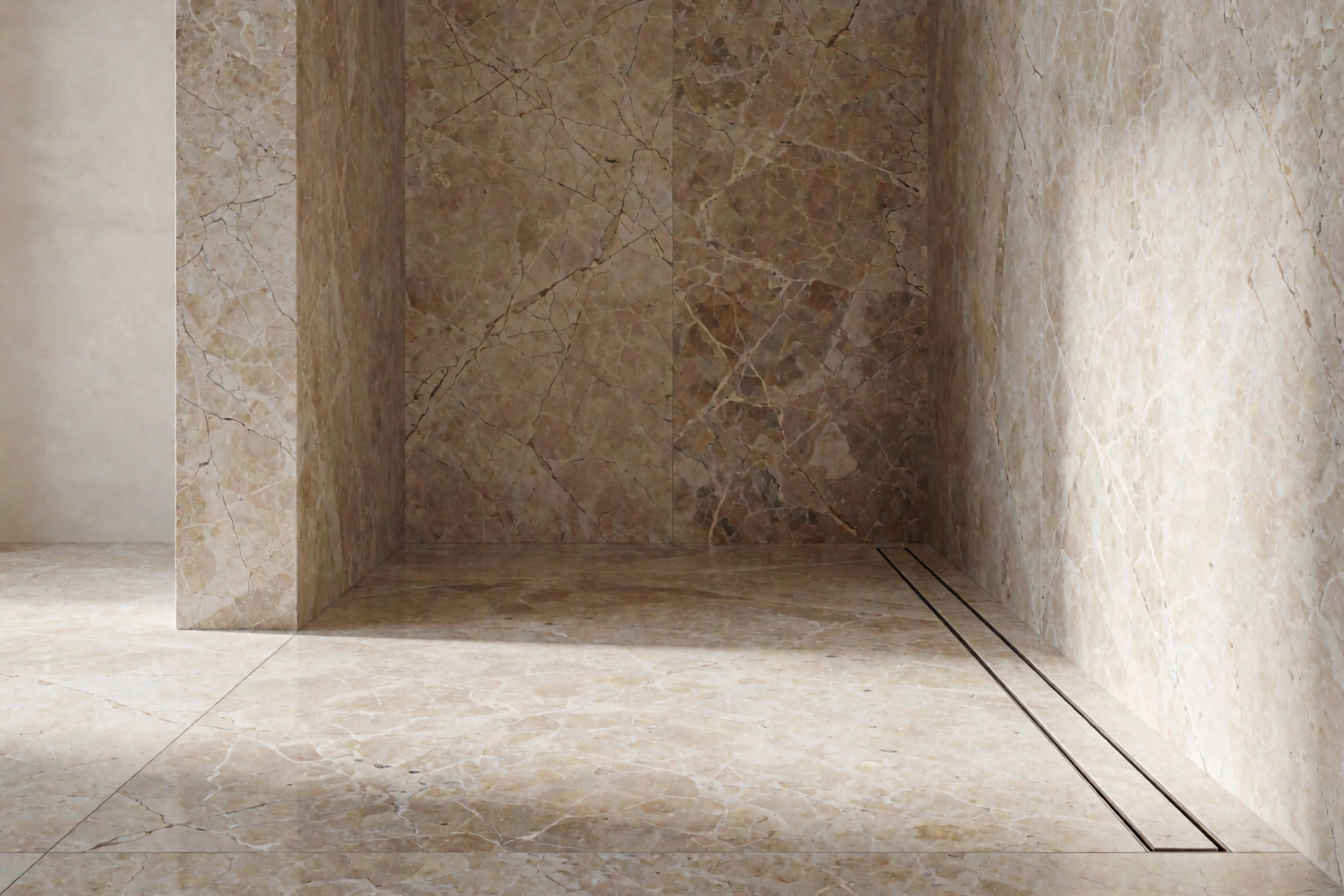
A stone wet room is a fully tanked bathroom where the shower has no curb or tray—floor-to-ceiling natural stone flows seamlessly into an open, drain-level wet zone. In 2026 it is the leading spa-bathroom format, prized for accessibility and visual calm.
What Is a Stone Wet Room?
A wet room removes the visual and physical barrier between shower and bathroom. The entire floor is gently sloped to a linear drain, and the same large-format stone continues up the walls and into the shower zone. The result is a single, envelope-like material environment that minimizes grout lines and visual noise. For wholesalers, the winning spec is one consistent slab—often honed travertine, limestone, or Bianco Dolomite—used floor-to-ceiling so the room reads as carved from a single block.
Why Are Curbless Stone Showers Trending in 2026?
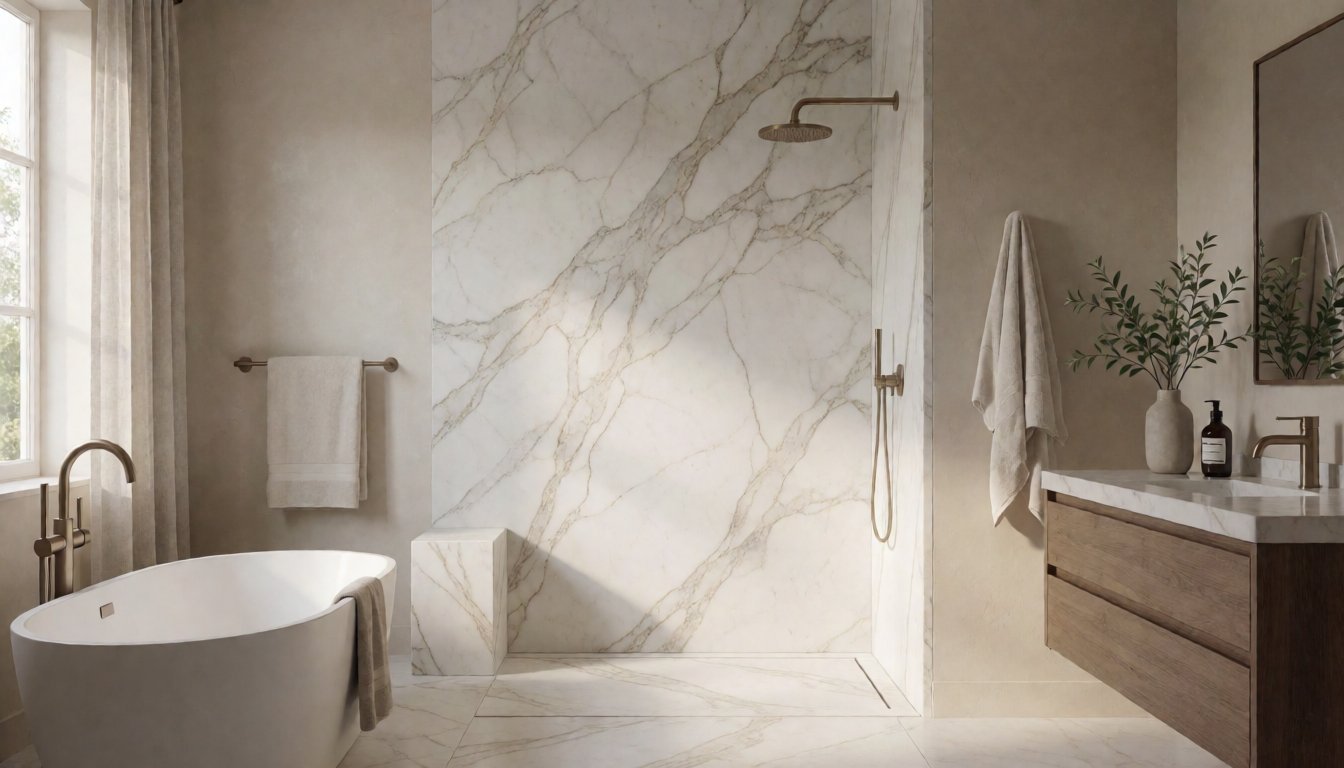
- Accessibility: Curbless entries suit aging-in-place and wheelchair access, a top request in 2026 luxury renovations.
- Spa translation: 77% of designers report clients now copy hotel and resort bathrooms, where seamless wet rooms are standard.
- Low visual noise: Large-format slabs cut grout by up to 70% versus 300×300 mm tile grids, easing both cleaning and maintenance.
How to Build a Stone Wet Room
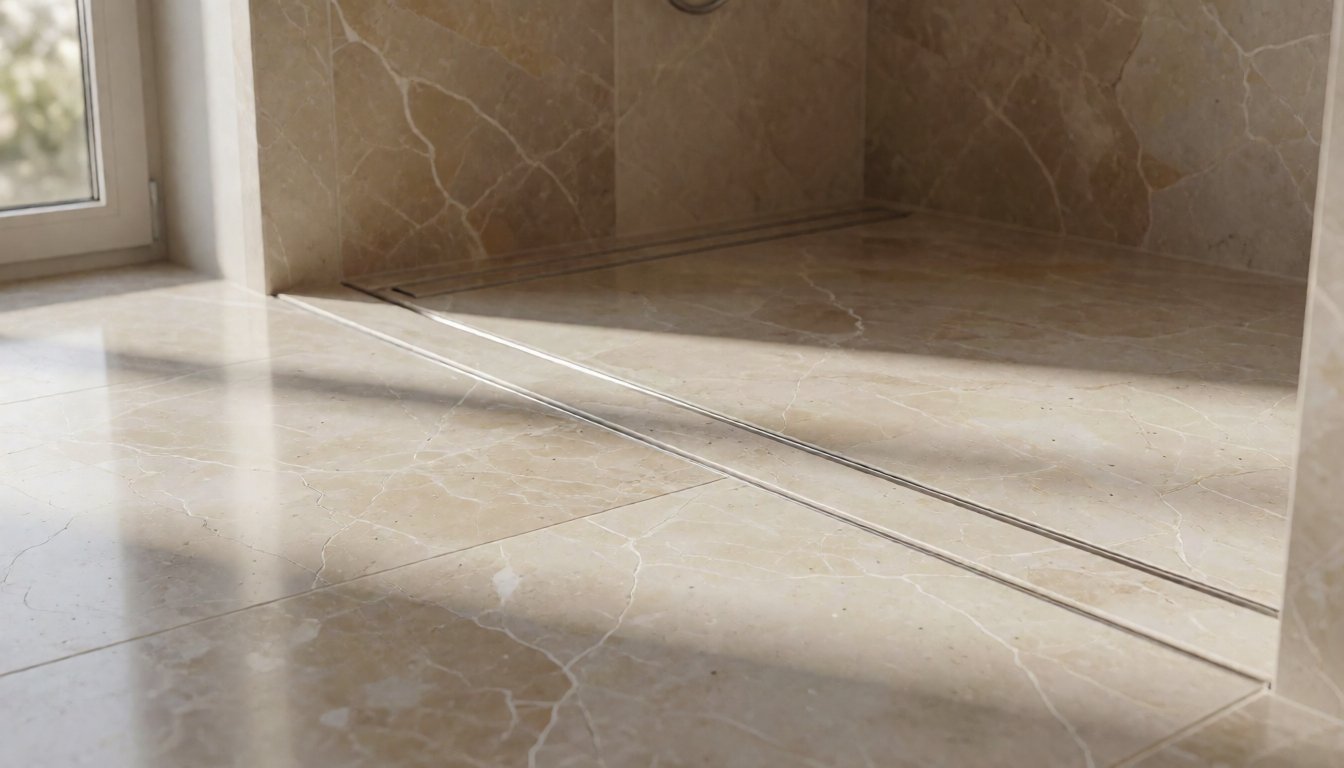
The single most important rule of a stone wet room is the tanking membrane—a fully bonded, continuous waterproof layer beneath the stone that prevents any seepage to the structure below. Builders apply a liquid or sheet membrane across floor and lower wall zones, lap it into the linear drain, and pressure-test before a single slab is set. Slope must be a precise 1–2% toward the drain; too little and water pools, too much and the floor reads visibly tilted. Use large-format, slip-resistant honed stone on the floor (mosaics only inside the immediate shower for grip) and extend the same material up the walls for the seamless look. Seal all stone with a penetrating impregnator before grouting, and re-seal high-humidity wet rooms every 6–12 months. Done correctly, a stone wet room delivers a lifetime of spa-like calm with almost no visual clutter.
| Element | Standard shower | Stone wet room |
|---|---|---|
| Drainage | Curbbed tray | Linear, drain-level |
| Waterproofing | Local pan | Full-room tanking |
| Stone use | Walls only | Floor-to-ceiling |
| Install cost | $ | $$$ |
Frequently Asked Questions
Is a stone wet room more expensive than a standard shower?
Typically 30–60% more, driven by tanking labor and large-format slab waste, but it delivers a premium, hotel-grade result.
Which stone is best for a wet room floor?
Honed travertine, limestone, or textured marble with a penetrating sealer; add mosaic only in the immediate shower for slip resistance.
How often should a stone wet room be sealed?
Every 6–12 months in high-humidity bathrooms, verified with a simple water-bead test on the floor and walls.
Glady Stone: Stone for Seamless Wet Rooms
Glady Stone supplies bookmatch-compatible large-format marble, travertine, and limestone slabs with consistent veining for floor-to-ceiling wet room installations across hospitality and residential projects.
View the Glady Stone large-format stone slab collection for wet-room-ready materials and trade pricing.