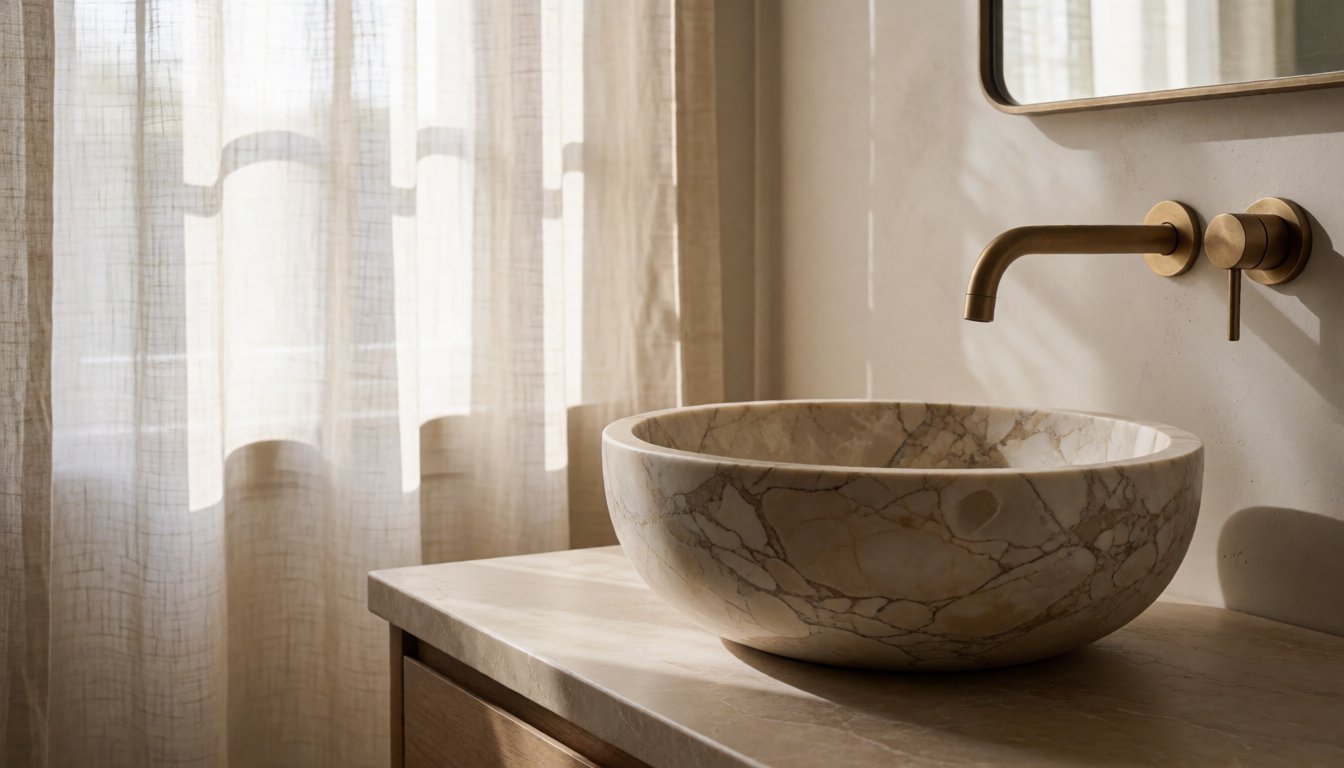
Shopify dropshipping for natural stone lets you sell marble sinks, vessels, and decor to B2B and prosumer buyers without holding inventory—your supplier ships direct. In 2026 the model works best as a branded, higher-ticket niche where 20–50% margins beat the 10–15% open-marketplace average.
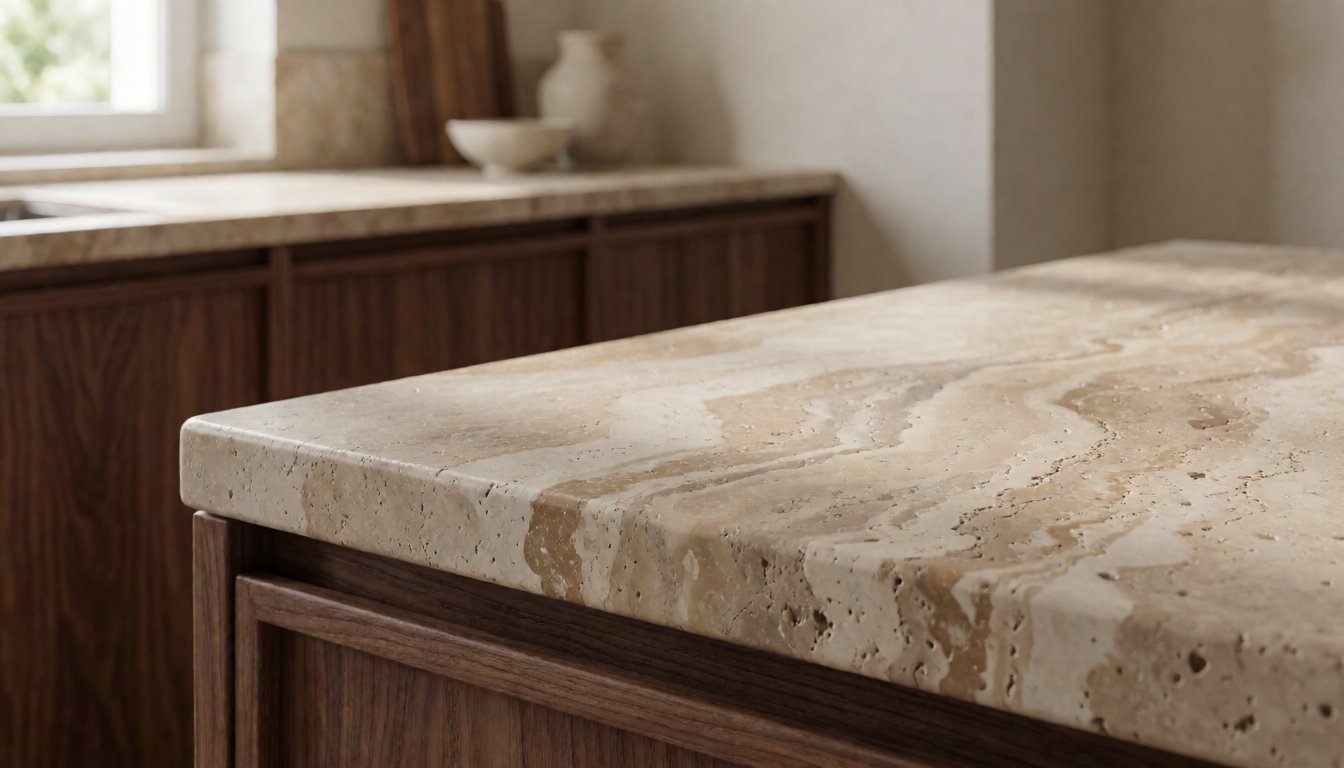
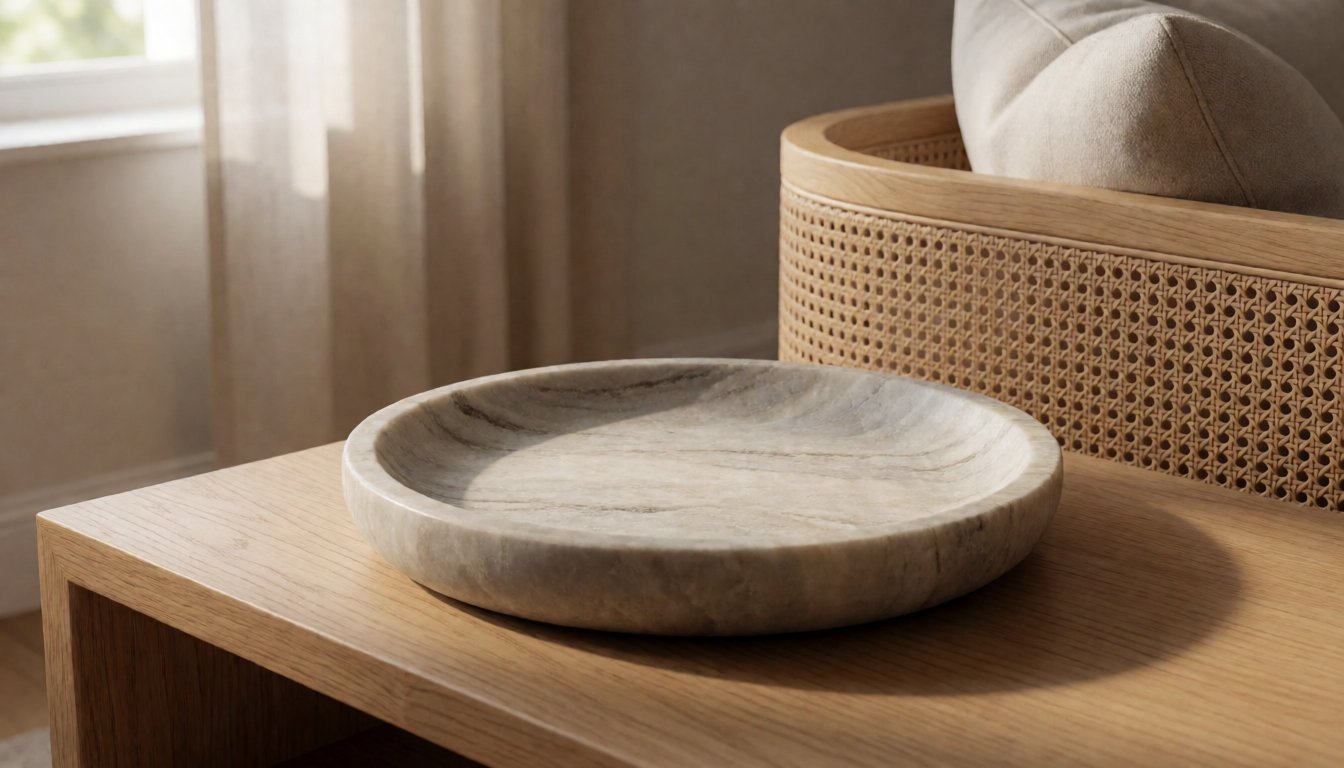
What Is Natural Stone Dropshipping on Shopify?
Stone dropshipping is a retail-fulfillment model: a customer orders a marble basin, travertine tray, or stone decor piece from your Shopify store, you forward the order to a downstream supplier, and that supplier packs and ships the physical product to the customer. You never touch inventory. For natural stone—a heavy, fragile, high-perceived-value category—this removes the two biggest barriers for a new seller: warehouse space and breakage risk during storage. The trade-off is thinner control over shipping speed and finish quality, which is exactly why 2026 stone dropshipping succeeds only as a branded niche, not a generic $9-product store.
Why Natural Stone Fits the 2026 Dropshipping Model
- Higher ticket, healthier margin: Stone pieces priced $80–$400 give dollar profit even at modest percentage margins, unlike $15 commodities.
- Low return propensity: A honed marble vessel is a considered purchase, not an impulse apparel buy with size issues—so return rates stay far below fashion.
- Brandable: Material honesty (veining, origin, finish) is a story customers pay a premium to trust, which protects you from price wars.
- Year-round demand: Bathroom, kitchen, and decor stone is not seasonal, smoothing ad spend across quarters.
The dropshipping market reached roughly $590 billion in 2026 and keeps growing near 22% a year, but open-marketplace sellers net only 10–15% after ads and returns. Stone’s defensible positioning lifts that band toward 20–50% once you control branding and sourcing. The citable block below distills the economic logic every new stone seller should internalize before spending on traffic.
Natural stone dropshipping in 2026 rewards sellers who treat the model as a branded business, not a shortcut: net contribution—the retail price minus product, shipping, processing, returns provision, and pre-ad acquisition cost—is the number that keeps you solvent, and it caps every ad dollar you spend. Because stone is fragile and freight-heavy, a vetted domestic or near-port supplier that ships in 3–7 days does more for margin than any storefront tweak, while accurate photography and honest lead-time statements cut the returns that otherwise erase contribution. The structural upgrade path is clear: validate demand with dropship, then move winning SKUs to a 3PL or your own bonded inventory to lift landed cost and protect the 20–50% margin band that generic marketplaces cannot reach.
Step 1 – Choose a Profitable Stone Niche
Avoid saturated “marble everything” stores. Pick a tight angle—vessel sinks for boutique hotels, travertine decor for warm-minimalist homes, or stone vanity trays for spa retailers—and build authority there. Every SKU should clear three tests: a retail price above $80, a return risk you can mitigate with specs, and a story (origin, finish, sustainability) worth a premium.
| Model | Net margin | Capital needed | Control | Best for |
|---|---|---|---|---|
| Open dropship | 10–15% | Low | Low | Demand testing |
| Branded dropship | 20–30% | Low | Medium | Niche stone stores |
| 3PL / own inventory | 30–50% | Medium | High | Proven winners |
| Private label / OEM | 40–50%+ | Medium | High | Scaling brands |
Step 2 – Vet and Qualify Suppliers
Your supplier is your brand. A single broken basin or missed lead time becomes a 1-star review on your store. Screen every candidate with a written scorecard before you list a single SKU.
| Check | Pass standard | Red flag |
|---|---|---|
| Sample order | Matches listing photos | Off-color, chipped edge |
| Transit time | 3–7 days domestic | 21–30 day ePacket only |
| Communication | Reply <24h | Silent for days |
| Defect policy | Clear replace/refund | “no returns” |
| Scalability | 500–5,000/mo | Unknown capacity |
| Tracking | Valid per shipment | None provided |
Step 3 – Build a Brand, Not a Store
- Use a custom domain—never sell from a
.myshopify.comURL. - Replace supplier images with your own lifestyle and spec photography.
- Add an About page with a real material story (quarry region, finish, care).
- Use branded, insert-ready packaging where the supplier allows it.
- Set up a margin and pricing model before you launch ads.
| Function | Shopify app | Purpose |
|---|---|---|
| Order routing | DSers / Zendrop | Auto-forward orders to supplier |
| US/EU stock | Spocket / CJ | 2–5 day local shipping |
| Reviews | Judge.me | GDPR-compliant UGC trust |
| Klaviyo | Repeat-purchase flows |
Step 4 – Model Unit Economics Before You Advertise
Never scale a SKU you have not costed to the cent. A $120 marble vessel with a $38 product cost, $9 freight, $4 processing, and a 4% returns provision leaves roughly $67 contribution before ad spend; at a $35 cost-per-acquisition you still net about $32. Anything below that math should not be scaled.
| Line | Example |
|---|---|
| Retail price | $120.00 |
| Product cost | $38.00 |
| Freight to customer | $9.00 |
| Processing (2.9%+$0.30) | $3.78 |
| Returns provision (4%) | $4.80 |
| Ad CPA | $35.00 |
| Net per order | $29.42 |
Step 5 – Cut Returns With Better Photography & Specs
| Tactic | Effect |
|---|---|
| 3+ angle shots + scale object | Fewer “smaller than expected” returns |
| Exact dimensions & weight | Fewer fitment returns |
| Honest 7–12 day lead time | Fewer “too slow” chargebacks |
| Finish swatch video | Fewer color-mismatch returns |
Step 6 – Scale: From Dropship to 3PL to Private Label
- Validate with pure dropship on 5–10 SKUs at small ad budgets.
- Consolidate winners into a 3PL warehouse near your market for 2–4 day delivery.
- Private-label proven winners with your own packaging and a supplier like Glady Stone.
- Diversify channels (Amazon, TikTok Shop, Pinterest) once margins are stable.
| Fulfillment | Speed | Margin | Risk |
|---|---|---|---|
| Dropship | 7–15d | Low | Supplier-dependent |
| 3PL | 2–4d | Medium | Inventory cost |
| Own inventory | 1–3d | High | Capital tied up |
Standards & Authority Buyers Expect
Professional buyers ask for proof. Reference wholesale quality standards such as ASTM C503 for marble dimension stone and ASTM C615 for granite, plus CE/EN 1469 for the EU and NSF/ANSI 51 for surfaces in contact with food. Stating the standard a product is finished to is a low-cost trust signal that separates a real stone brand from a generic listing.
Frequently Asked Questions
Is Shopify dropshipping natural stone still profitable in 2026?
Yes, but only as a branded niche. Open-marketplace dropshipping nets about 10–15%; a focused stone brand with a vetted supplier and strong content reaches 20–50%.
What stone products are best to dropship first?
Higher-ticket, low-return pieces such as marble vessel sinks, travertine decor, and stone vanity trays. See our list of best-selling stone dropshipping SKUs for 2026.
How fast must my supplier ship in 2026?
Domestic or near-port delivery in 3–7 days is the 2026 expectation; anything over three weeks invites chargebacks and 1-star reviews.
Do I need a margin model before advertising?
Absolutely. Model product, freight, processing, returns, and ad CPA per SKU; only scale what stays net-positive after acquisition cost.
When should I move from dropship to private label?
After a SKU proves repeat demand. Shift winners to a 3PL or your own inventory—or partner with a stone OEM—to lift margin and control quality.
Which standards should I cite to build trust?
ASTM C503 (marble), ASTM C615 (granite), CE/EN 1469 (EU), and NSF/ANSI 51 for food-contact surfaces. Naming the finish standard signals a serious supplier.
Glady Stone: Your Stone Dropshipping Supply Partner
Glady Stone supplies bracket-ready marble basins, travertine decor, and stone surfaces finished to ASTM and EN standards—engineered for clean dropshipping fulfillment and consistent batches.
Send your dropshipping SKU shortlist to Glady Stone for trade pricing, sample lead times, and a fulfillment-ready quote.
Natural stone dropshipping in 2026 rewards sellers who build a branded niche, vet a fast supplier, and protect contribution margin through honest specs and photography—the model turns a no-inventory start into a defensible 20–50% margin business.
More B2B Stone Buying Guides
- 10 Best-Selling Stone Dropshipping SKUs for Shopify Sellers in 2026
- Dropshipping Margin & Pricing Model for Stone Products (2026)
- Natural Stone Wholesale in 2026: MOQ, FOB/CIF & Batch Quality Control