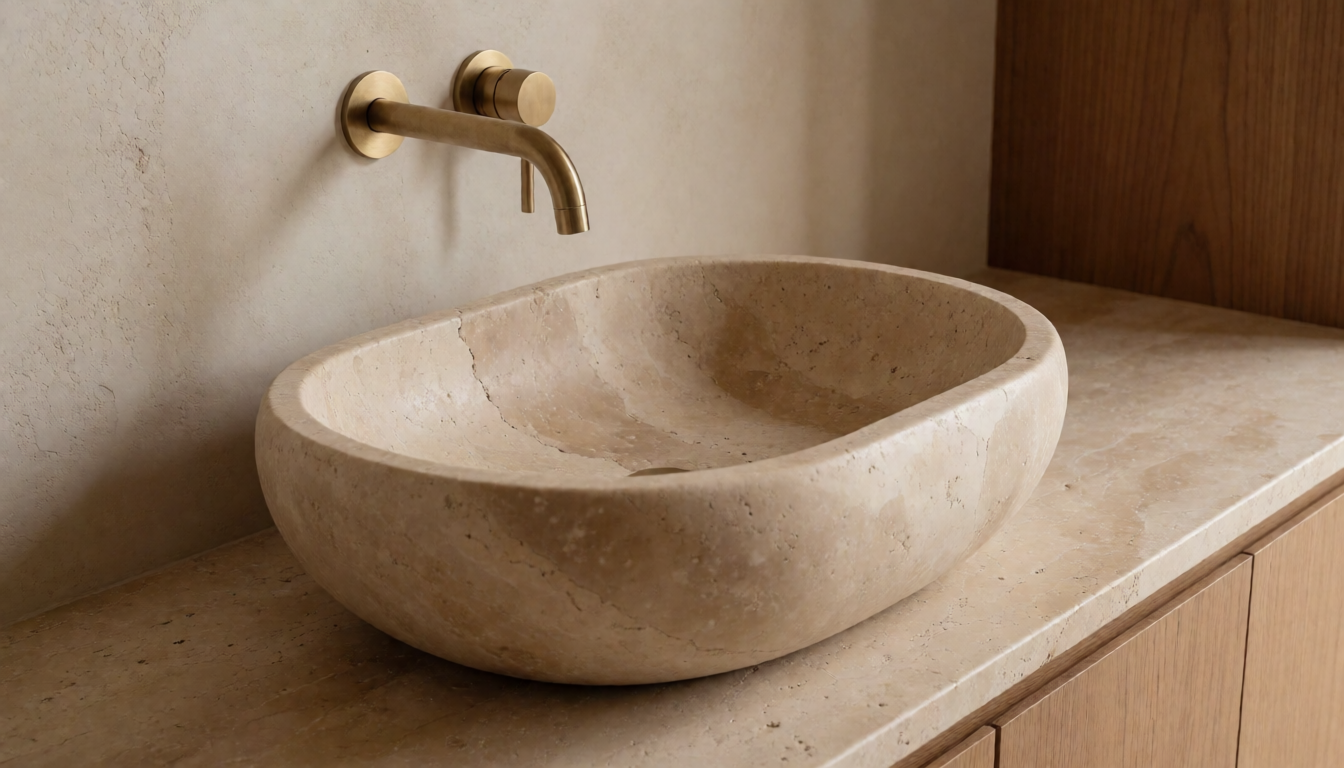
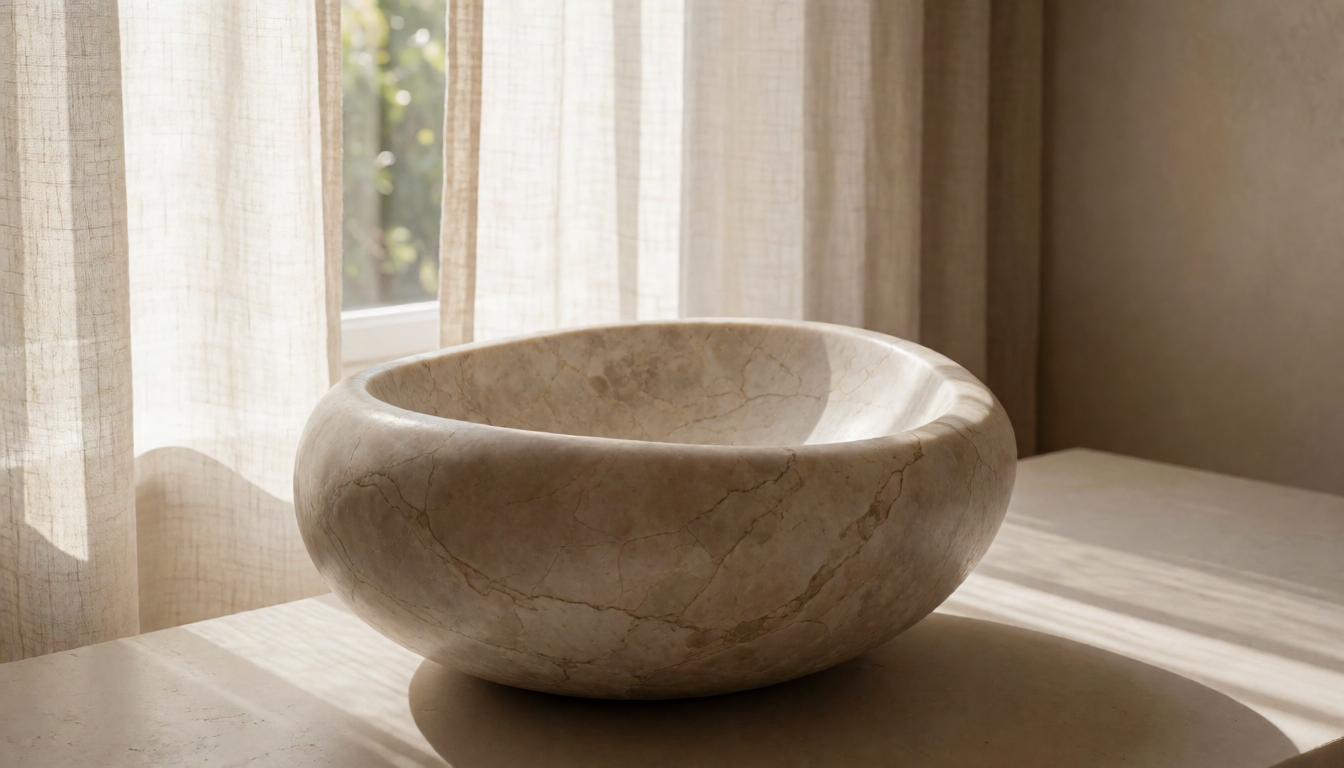
Bathroom design in 2026 has a new centerpiece — and it isn’t the faucet or the mirror. It’s the sink. After years of minimalist, factory-produced basins, architects and designers are pivoting toward natural stone sinks that bring character, warmth, and a sense of permanence to the space.
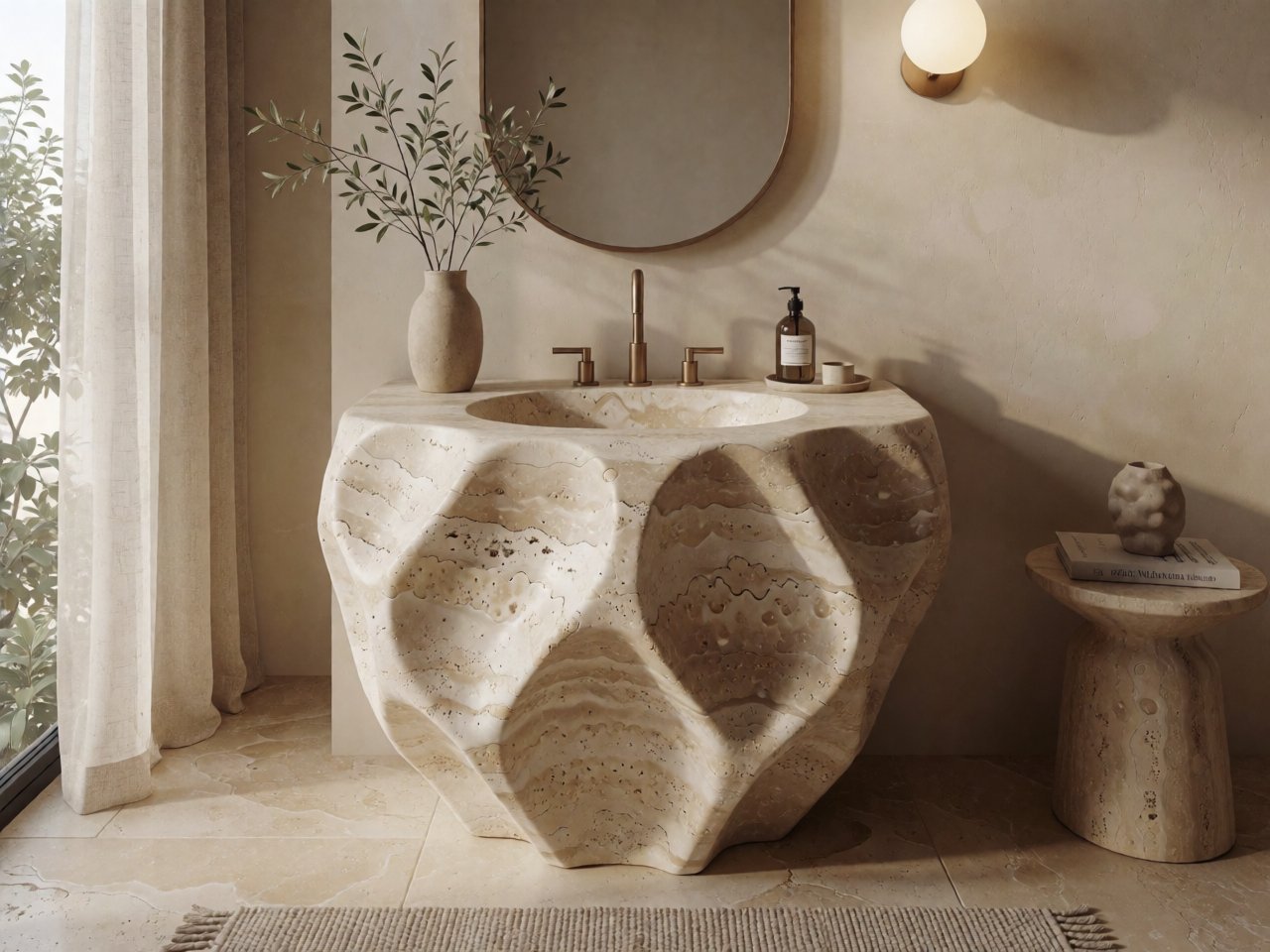
Travertine Leads the Comeback
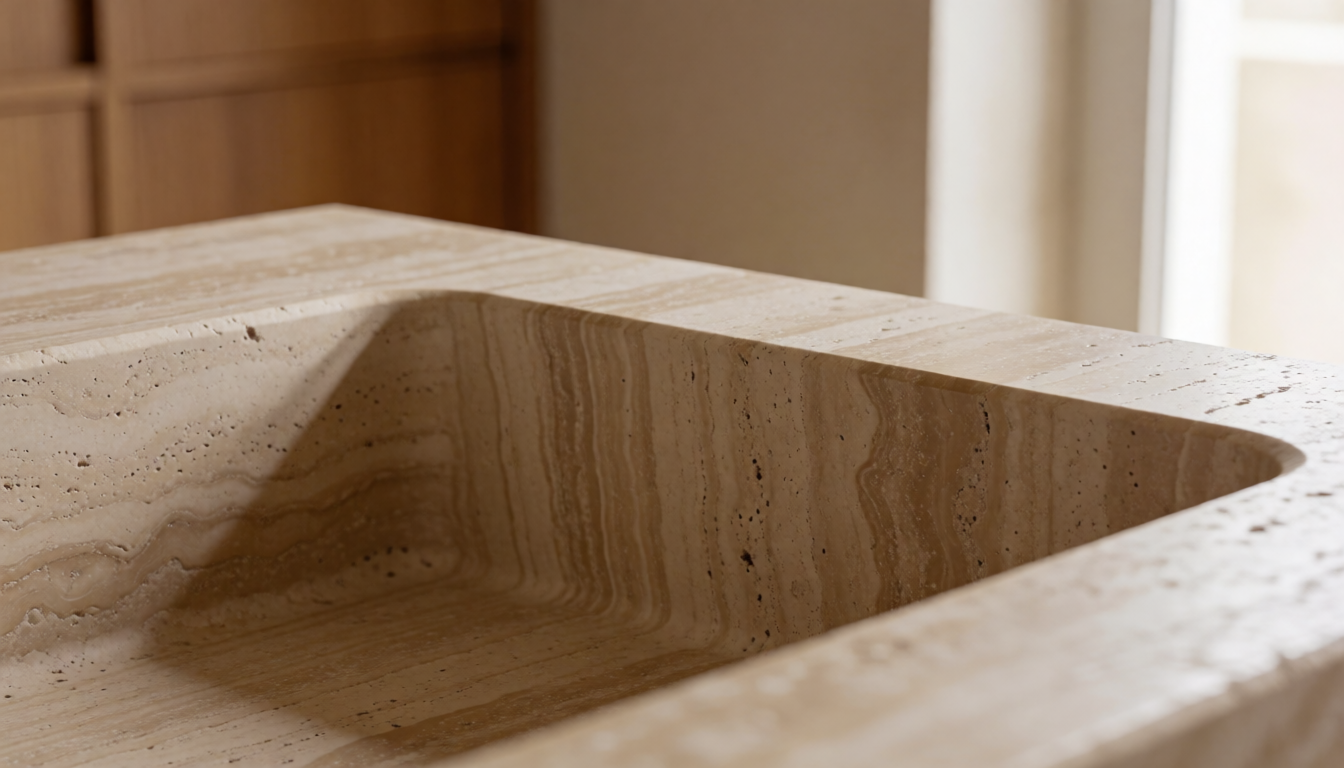
The most notable material story of 2026 is the return of travertine. Once associated with overly rustic or dated interiors, travertine has been reimagined by leading stone brands and designers. Its warm beige, honey, and sand tones pair beautifully with the soft-plaster walls, brushed-brass fixtures, and warm wood vanities that define current luxury bathroom aesthetics. A travertine vessel sink — whether honed to a soft matte finish or left slightly textured — instantly becomes the room’s focal point.
Beyond the Rectangle: Sculptural Sinks
The “anti-rectangle” movement that began in furniture design has reached the bathroom. In 2026, sculptural, organically shaped stone sinks are gaining serious specification momentum. On platforms like Accio.com, curated selections of hand-carved marble and travertine basins are being marketed not as plumbing fixtures, but as “bathroom sculpture.” Round, oval, and asymmetrical stone sinks create a softer, more inviting feel — particularly powerful in powder rooms and boutique hospitality projects where the sink is often the only basin in the space.
Raw Sustainability: The New Luxury Narrative
Sustainability is no longer a side note in stone specification — it’s central to the sales narrative. In 2026, natural stone sinks are being specified specifically because they are durable, natural, and low-waste. A properly maintained marble or travertine sink lasts decades; compare that to ceramic or engineered stone alternatives that chip, stain, or go out of style within a few years. For clients pursuing LEED or WELL certification, specifying natural stone demonstrates a commitment to long-lifecycle, low-embodied-carbon materials.
Hand-Carved vs. Precision-Cut: Two Markets
The 2026 market has cleary split into two distinct segments. The artisanal/hand-carved segment emphasizes visible tool marks, organic edges, and one-of-a-kind character — targeting high-end residential and boutique hospitality. The precision-cut segment uses CNC technology to create perfect geometry in natural stone — sharp architectural lines that appeal to contemporary minimalist projects. Both segments are growing; the key for wholesalers and retailers is knowing which aesthetic aligns with their client base.
Specifying Stone Sinks: Practical Considerations for Architects
For architects and designers specifying stone sinks in 2026 projects, several practical considerations have emerged:
- Sealing: All natural stone sinks should be factory-sealed with a high-quality impregnating sealer before installation. Specify re-sealing every 3–5 years.
- Mounting: Vessel (above-counter) mounts remain dominant for stone sinks, but undermount stone basins in thick-stone countertops are a growing niche.
- Drainage: Ensure the sink has a slight internal slope and a properly positioned drain. Hand-carved sinks sometimes require custom drain fittings — specify these in advance.
Glady Stone: Hand-Finished Natural Stone Sinks
At Glady Stone, we specialize in premium natural stone sinks crafted from marble, travertine, limestone, and granite. Each piece is individually finished to showcase the stone’s natural character while meeting modern performance standards. Browse our vessel sink collection to find the perfect centerpiece for your next bathroom project. Contact our team for trade pricing, custom dimensions, and finish options.