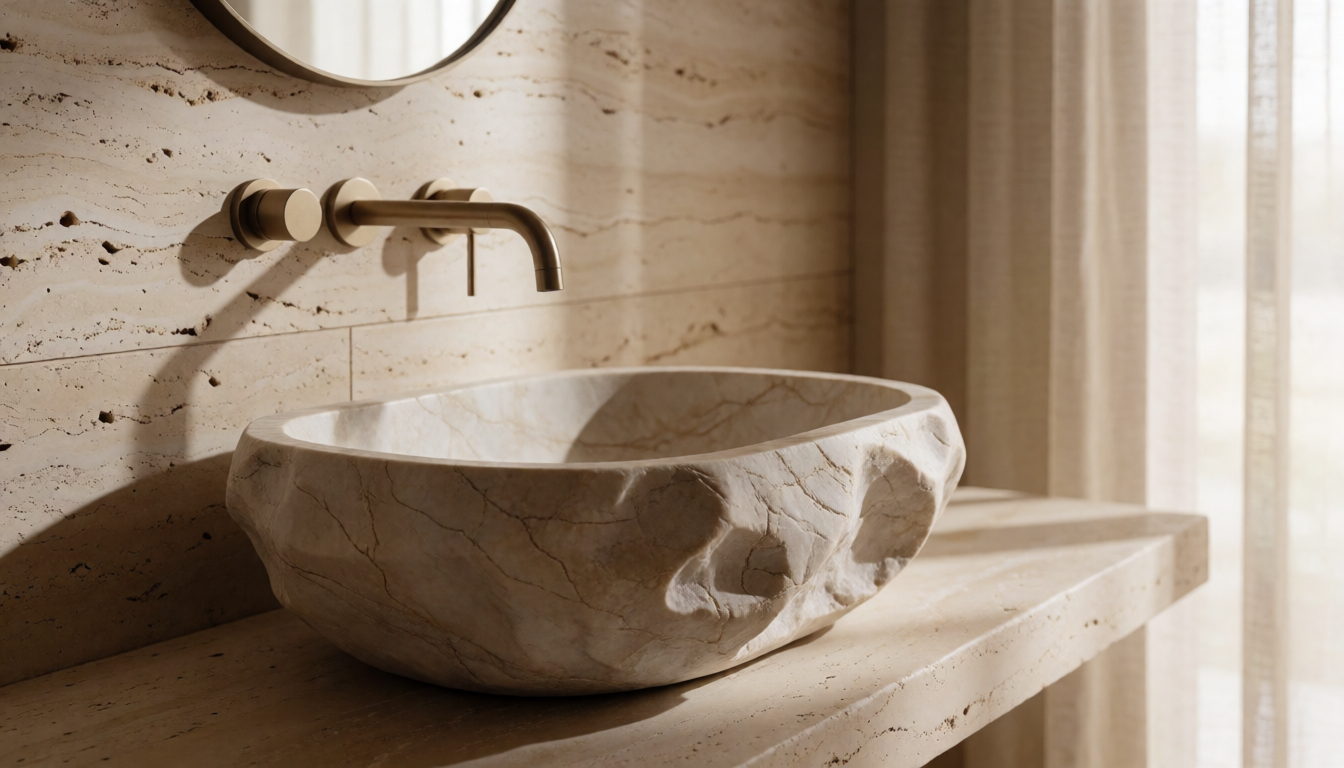
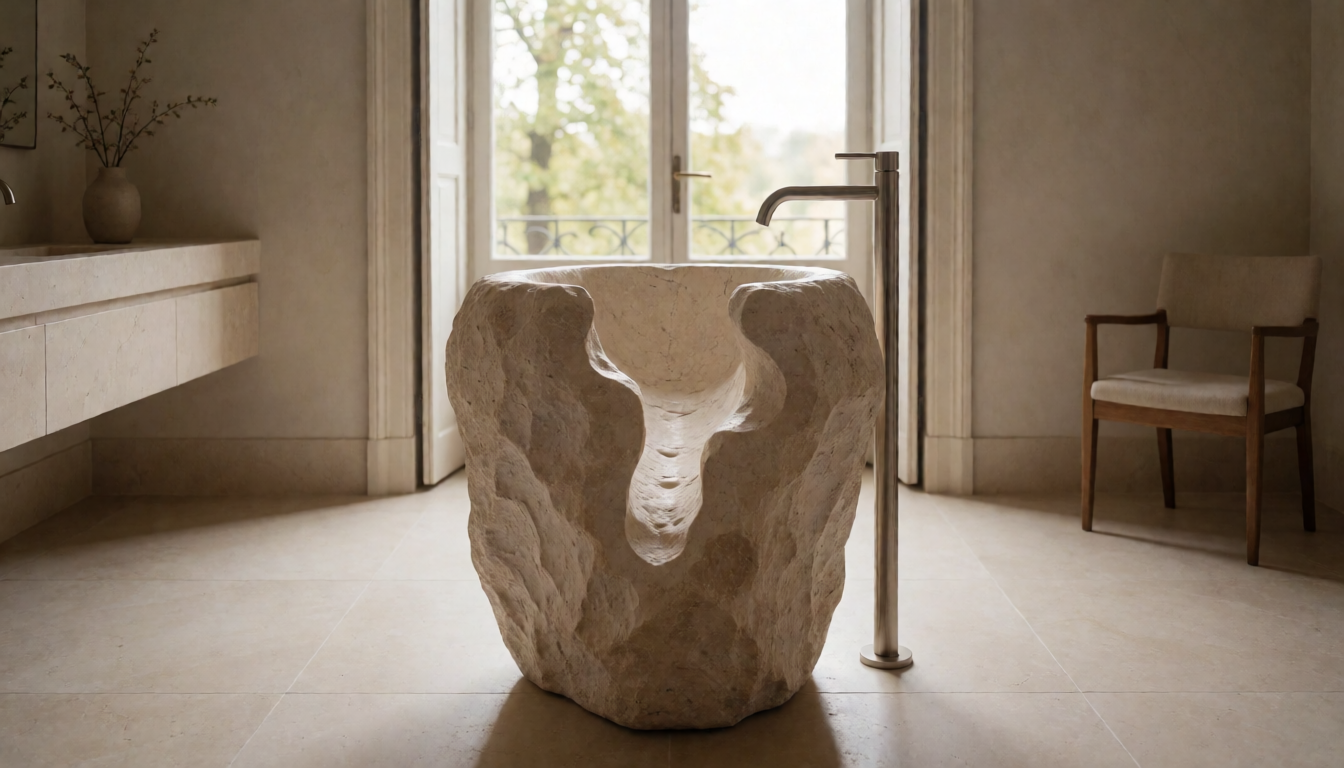
The modern bathroom is no longer just a utilitarian space—it’s a gallery. In 2026,
sculptural stone basins are redefining the boundary between functional fixture
and artistic statement, with hand-carved marble sinks leading the charge.
Why Sculptural Basins Are the New Luxury Focal Point
For decades, bathroom sinks were hidden beneath countertops or tucked into standardized
vanities. Today’s architects and designers are flipping the script—making the basin itself
the hero of the space.
1. Hand-Carved vs. Precision-Cut: The Beauty of Imperfection
Mass-produced, CNC-cut sinks offer consistency—but they lack soul. The 2026 trend is
toward hand-finished basins where the artisan’s touch is visible in every
curve. Subtle tool marks, organic edge profiles, and celebrations of the stone’s natural
fissures are what discerning buyers now seek.
Stones like travertine, with its natural pitting and warm tones, are particularly
suited to this aesthetic. Each hand-carved sink is genuinely one-of-a-kind.
2. Sculptural Shapes: Beyond the Bowl
The “rectangular vessel sink” is fading from luxury specifications. In its place:
- Organic, river-rock-inspired forms that look carved by water over centuries
- Asymmetric pedestal basins that stand like sculptures in the center of the room
- Monolithic stone blocks with gently hollowed interiors—minimalist yet monumental
3. Sustainability as a Design Driver
The most compelling sculptural basins in 2026 are made from reclaimed stone offcuts—
transforming what would be waste into functional art. For eco-conscious specifiers, this is a powerful
narrative: a sink that tells a sustainability story.
For architects and designers: Glady Stone’s artisan basin collection includes
hand-carved marble, travertine, and limestone sinks in sculptural shapes that cannot be replicated
by machine. Explore our sculptural basin collection
to elevate your next hospitality or high-end residential project.
Pro tip: Pair a sculptural stone basin with a wall-mounted or floor-standing faucet to let the stone’s form shine—avoid enclosing it in a vanity that hides its beauty.
Integrating sculptural basins into high-end hospitality and residential projects requires careful consideration of spatial dynamics beyond mere installation. These functional art pieces demand a deliberate approach to lighting design, where directional illumination highlights the depth of hand-carved grooves and the play of light across natural fissures in marble or travertine. Furthermore, the surrounding architecture must support this bold statement; open-concept layouts with minimal vanity cabinetry are ideal for allowing these monolithic forms to breathe. Designers should view the basin not just as a plumbing fixture but as an anchor that dictates the room’s flow and aesthetic rhythm, ensuring that every curve complements rather than competes with existing architectural lines.
Beyond aesthetics, the tactile experience of hand-carved stone basins offers a sensory engagement mass-produced alternatives simply cannot match. When users run their hands over the organic edge profiles or feel the subtle vibration of water against natural travertine pits, they connect with centuries-old geologic processes and artisanal craftsmanship. This emotional resonance transforms daily routines into moments of mindfulness, elevating the user experience in luxury bathrooms globally. For manufacturers like Glady Stone, this shift represents a move from selling commodities to curating experiences that merge durability with ephemeral beauty, ensuring longevity while celebrating the unique narrative each individual stone block brings to life through skilled human intervention.
The maintenance philosophy for sculptural basins has also evolved alongside their popularity in 2026. Unlike standard ceramic sinks, hand-carved natural stones require a specialized care regimen that respects their porosity and texture without compromising their structural integrity or artistic finish. Owners are encouraged to use pH-neutral cleaners specifically formulated for calcareous materials like marble and limestone, avoiding harsh chemicals that can etch the surface or dull the warm tones inherent in reclaimed stone offcuts. By educating clients on these nuances, designers ensure the longevity of these investment pieces, proving that true luxury involves a commitment to preservation as much as initial acquisition.
Frequently Asked Questions
Why choose hand-carved marble sinks over CNC-cut alternatives?
Hand-carved marble sinks offer unique organic edge profiles and subtle tool marks impossible to replicate with machines. They celebrate the stone’s natural character, providing a one-of-a-kind functional art piece that adds soul and distinctiveness compared to mass-produced consistency.
Can reclaimed offcuts be used for sculptural basins?
Yes, utilizing reclaimed stone offcuts is a major 2026 trend. This approach transforms industrial waste into high-value functional art, offering an eco-conscious narrative that appeals to sustainable specifiers and architects looking to reduce material footprint in their projects.
What are the best care practices for hand-carved travertine?
Travertine requires pH-neutral cleaners specifically designed for calcareous stone. Avoid harsh acids or abrasive pads that can scratch natural pits, and regularly seal the surface to protect against staining while maintaining its warm tones.
How does basin shape affect bathroom spatial flow?
Organic river-rock forms and asymmetric pedestal basins act as room anchors rather than hidden fixtures. Their monumental presence defines circulation paths in open layouts, whereas vessel sinks require ample clearance to prevent water splash interference.
Are sculptural stone basins suitable for commercial hospitality?
Absolutely. Glady Stone’s artisan collection is tailored for high-traffic hotels and luxury residences where durability meets design statement. Reclaimed materials offer cost-effective sustainability, while hand-carved forms elevate guest experience through tactile engagement.
Stone Comparison
| Stone/Product | Best For | Key Feature | Care Level |
| Hand-Carved Marble | Luxury Residential Art Statements | Subtle tool marks and organic curves visible to touch. | High – Requires pH-neutral sealants. |
| Reclaimed Travertine | Eco-Conscious Hospitality Projects | Natural pitting, warm tones, unique offcut narratives. | Medium-High – Needs regular sealing against stains. |
| Monolithic Limestone Block | Monumental Architectural Anchors | Gently hollowed interiors with solid stone presence. | High – Porous nature demands gentle cleaning. |