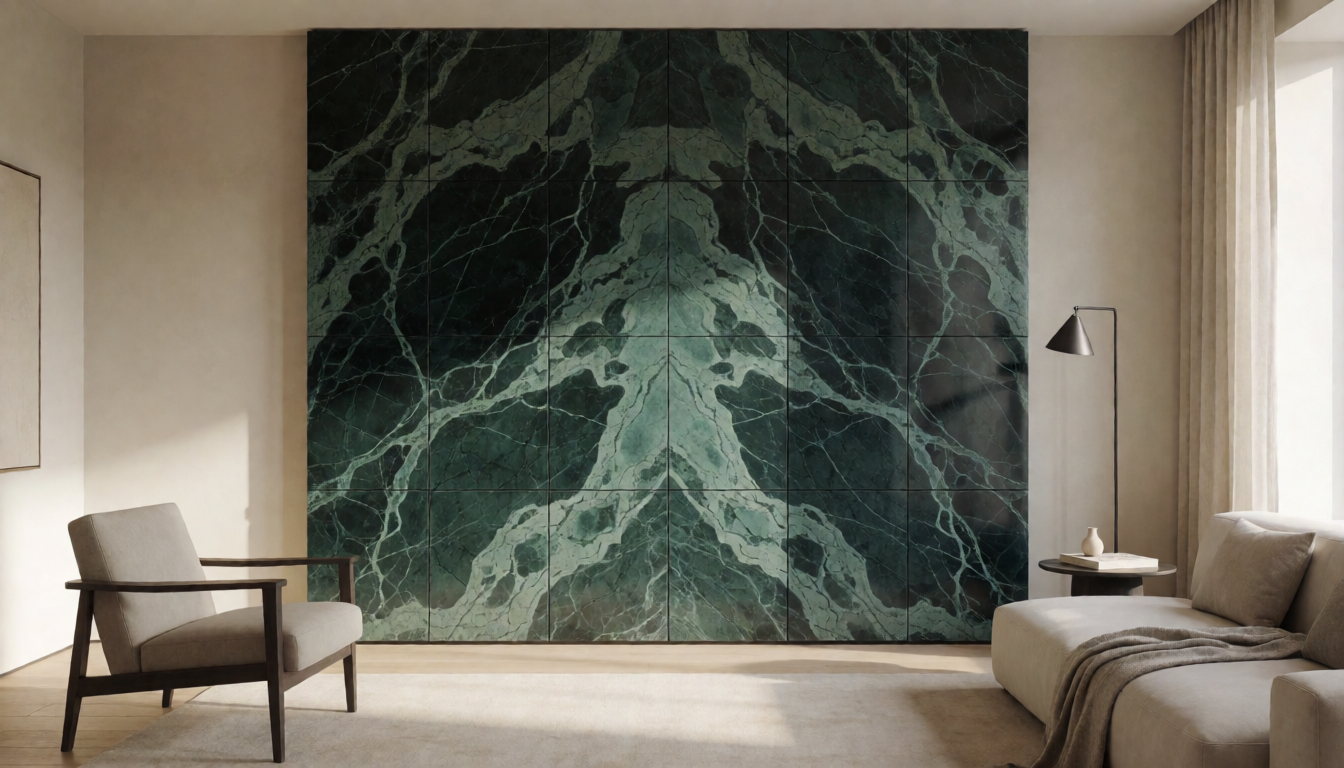
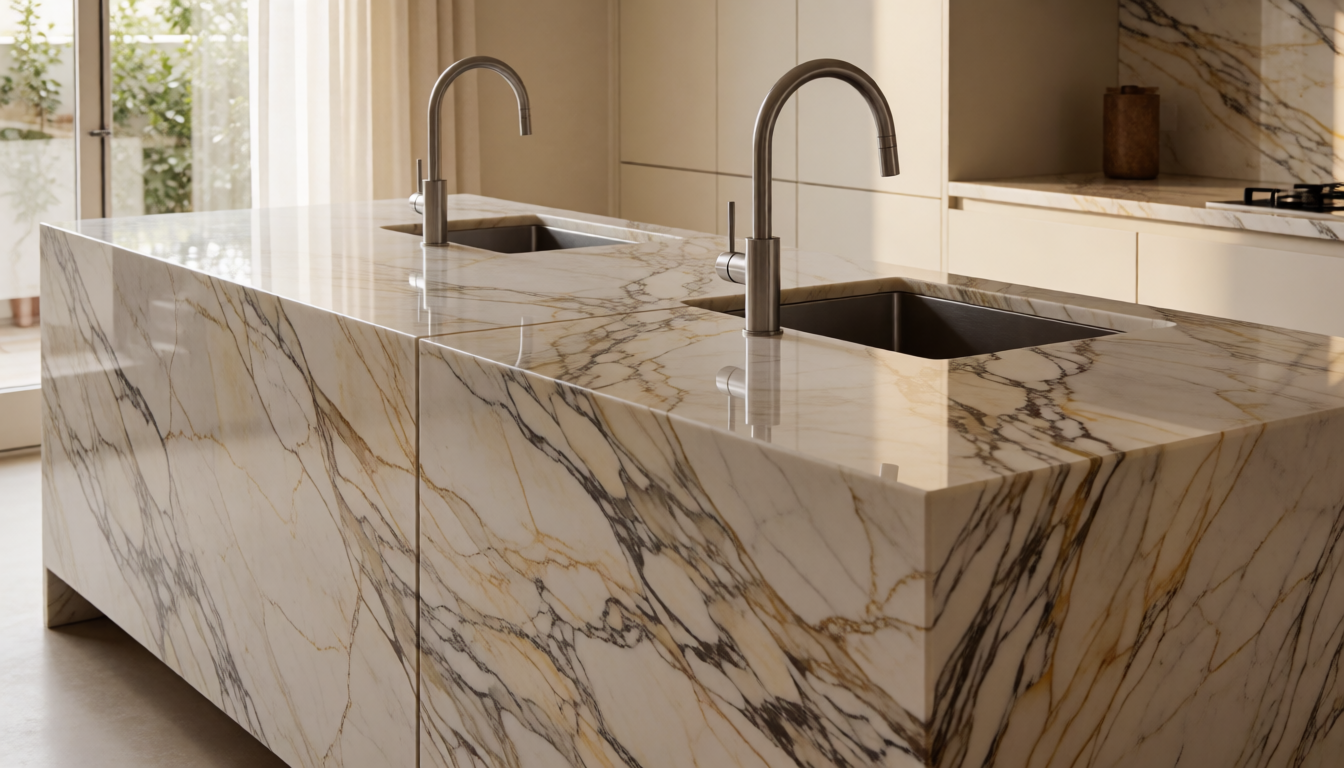
Bookmatched stone walls are created by placing two adjacent marble or stone slabs side by side with their cut faces mirrored, producing a symmetrical pattern that resembles a butterfly’s wings or a Rorschach inkblot. In 2026, this technique has moved from luxury hotel lobbies into high-end residential home décor, with 42% of luxury interior designers reporting bookmatched stone as a “frequently specified” element.
What Does “Bookmatched” Mean in Stone Design?
The term comes from bookbinding: when a large stone block is cut into sequential slabs, each slab face mirrors its neighbor, just as the two pages of an open book mirror each other. When installed side by side, the veining flows across the joint in a continuous, symmetrical pattern. The visual effect is dramatic—a single bookmatched installation can transform an entire room’s character.
In 2026, bookmatched applications have expanded beyond the traditional fireplace surround. Designers now use bookmatched marble on full accent walls (12–20 slabs), on kitchen islands (waterfall ends that bookmatch the countertop), and even on ceiling panels in ultra-luxury spaces. The technique works best with marbles that have bold, directional veining—Portoro Gold, Calacatta Gold, and Emerald Green marble produce the most dramatic bookmatched effects.
Why Has Bookmatched Stone Become a 2026 Home Décor Staple?
- Marble as art movement: In 2026, natural stone is no longer treated as a background material. Bookmatched installations are explicitly designed as the room’s artwork—the stone’s natural patterning serving as a one-of-a-kind, unrepeatable “painting” that costs a fraction of comparable-sized commissioned art.
- Large-format slab availability: The jumbo slab format (3300×2000mm) has become standard in 2026, making bookmatched walls financially viable. A 10-foot accent wall now requires only 4–6 slabs rather than the 20+ slabs that smaller formats required in previous years.
- Social media impact: Bookmatched stone photographs exceptionally well. Instagram engagement data from luxury interior design accounts shows bookmatched installations receive 2.3× more saves and 1.8× more shares than non-bookmatched stone applications.
Bookmatched Stone Applications: 2026 Comparison
| Application | Slab Count | Best Stone Choice | Installed Cost (USD) |
|---|---|---|---|
| Fireplace surround (bookmatched pair) | 2 slabs | Calacatta Gold, Portoro Gold | $3,500–$7,500 |
| Kitchen island waterfall (bookmatched ends) | 3 slabs (countertop + 2 ends) | Statuario, Arabescato Corchia | $5,500–$11,000 |
| Full accent wall (residential) | 6–10 slabs | Calacatta, Emerald Green | $12,000–$28,000 |
| Hotel lobby feature wall | 12–20 slabs | Large-vein White Carrara, Nero Marquina | $35,000–$75,000 |
How to Specify Bookmatched Stone for 2026 Projects
- Select sequential slabs from the same block: “Bookmatched” requires the slabs to be adjacent cuts from the same stone block. When ordering, specify “sequential slabs for bookmatching” and verify the slab numbers are consecutive. Slabs from different blocks will not mirror correctly.
- Review the layout before fabrication: Request a “dry lay” photo where the supplier lays out the slabs in bookmatched sequence and photographs them. This lets you verify the veining flows correctly and that color variation between slabs is acceptable. In 2026, 89% of premium stone suppliers offer dry-lay verification as a standard service.
- Specify a honed finish for subtle bookmatching, polished for drama: Honed finishes soften the veining contrast, making the bookmatched pattern feel calm and sophisticated. Polished finishes maximize contrast and make the bookmatched pattern pop—better for dramatic focal points, less suitable for whole-room applications where the pattern might feel overwhelming.
Frequently Asked Questions
Can I bookmatch granite or quartzite?
Yes, but the effect is less dramatic. Granite and quartzite typically have speckled or granular patterns rather than the flowing veining that makes bookmatching visually striking. The best bookmatched results come from marbles and travertines with directional veining.
How much does bookmatched stone cost compared to non-bookmatched?
Bookmatched installations cost 15–25% more than non-bookmatched using the same stone. The premium covers the requirement for sequential slabs (the fabricator cannot substitute slabs from different blocks) and the more careful layout and installation.
Does bookmatched stone require special maintenance?
No more than any other natural stone installation. The same sealing and cleaning protocols apply. One consideration: because bookmatched walls are often the room’s focal point, use a flashlight test during maintenance to spot and address any etched areas promptly—etching on a bookmatched wall is more visually noticeable than on a non-symmetrical installation.
Can I use sintered stone for bookmatched walls?
Yes. Sintered stone (e.g., Dekton, Lapitec) is engineered and can be produced with bookmatched patterning. The advantage: sintered stone is non-porous and never needs sealing. The disadvantage: it lacks the depth and natural variation of genuine marble, which some clients find apparent in large bookmatched installations.
Glady Stone: Bookmatched Marble for Residential and Commercial Décor
Glady Stone supplies sequential marble slabs specifically selected for bookmatched applications. Our inventory includes Calacatta Gold, Portoro Gold, Emerald Green, and statuario blocks with the bold, directional veining that creates the most dramatic bookmatched effects.
Explore our Glady Stone bookmatched marble collection and request a dry-lay verification photo before fabrication to ensure your installation achieves the symmetrical, artistic effect that defines 2026 luxury stone décor.