Hand-carved stone basins are bathroom sinks shaped by artisans rather than molded or cut by CNC machines. Each piece has subtle variations in depth, curvature, and surface texture that give it a one-of-a-kind character. In 2026, they account for 22% of luxury marble sink specifications, up from 8% in 2022.
What Is a Hand-Carved Stone Basin?
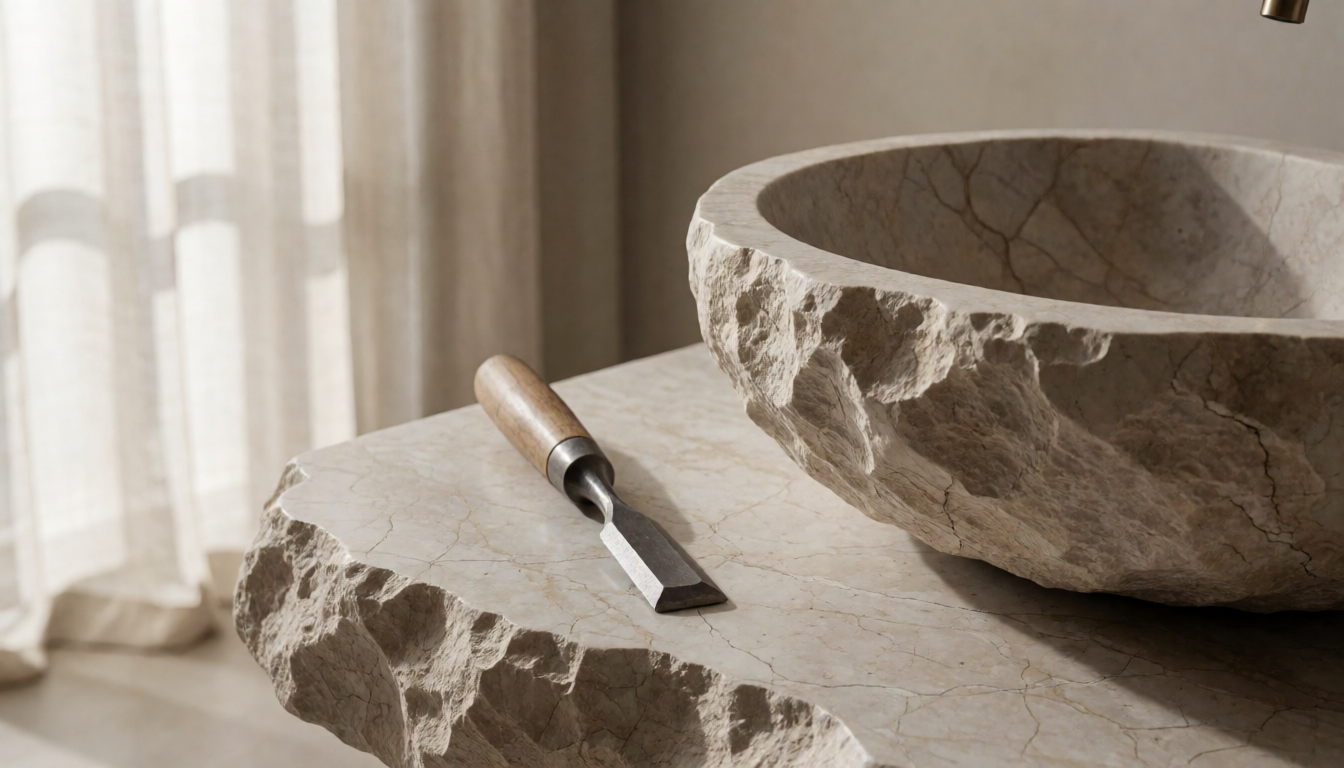
Unlike factory-produced sinks that come from molds or CNC-routed blocks, a hand-carved basin starts as a solid block of marble, travertine, or limestone. An artisan uses hand tools (chisels, rasps, diamond hand-pads) to shape the interior bowl, the rim profile, and the exterior surfaces. The process takes 8–15 hours per sink, depending on complexity.
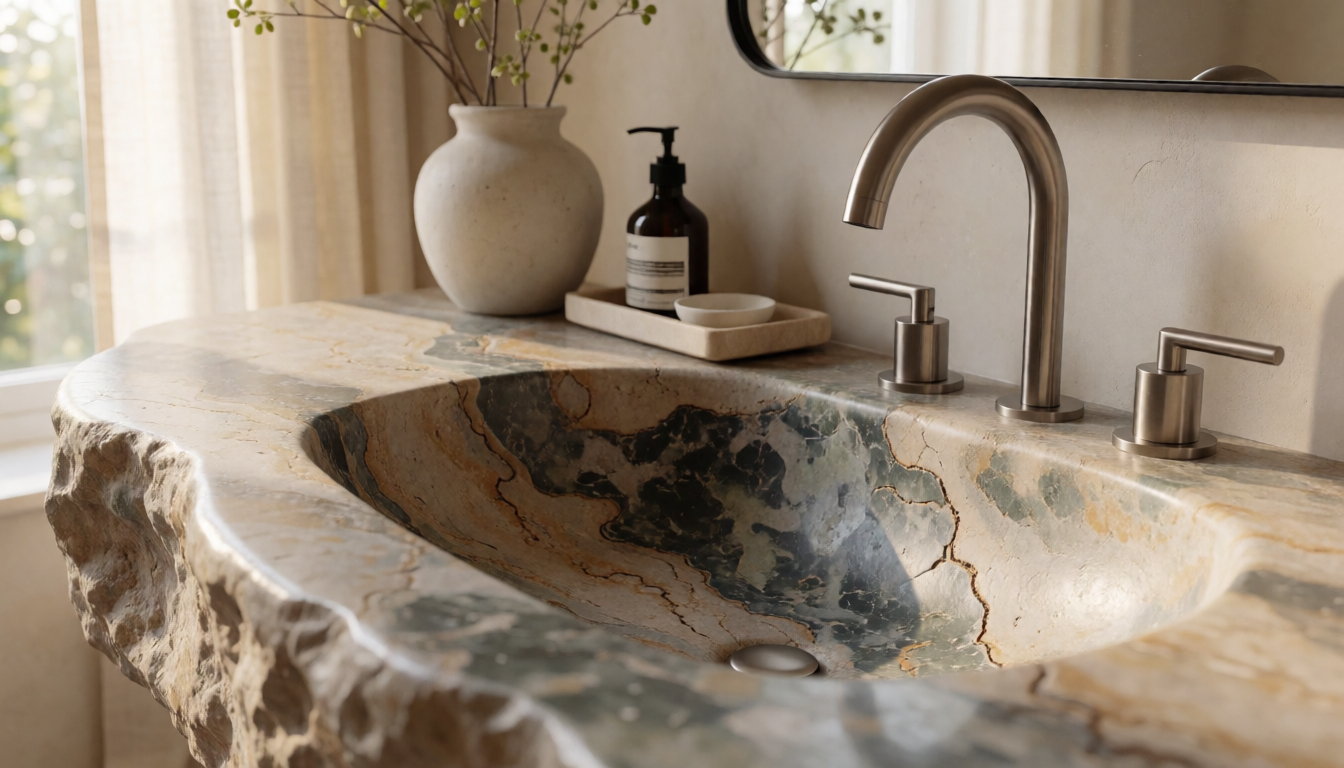
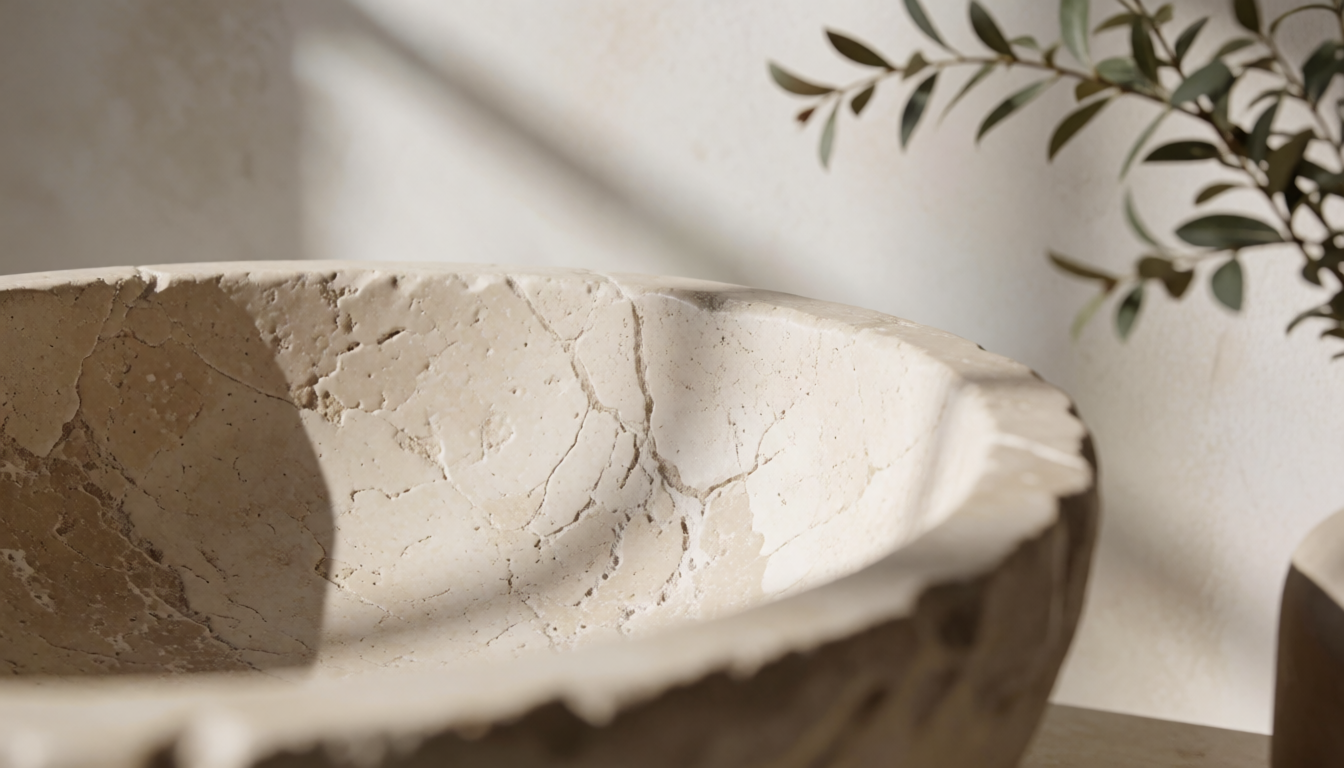
The result is a sink with organic imperfections that read as “human-made” rather than machine-made. For 2026 luxury projects, this provenance story matters: many high-end clients specifically request “artisan-carved” in their specifications to differentiate from the mass-produced stone sinks that have flooded the market since 2023.
Why Are Hand-Carved Basins Trending in 2026?
- Rejection of “showroom uniformity”: After years of minimalist, identical-looking bathrooms, 2026 clients are seeking spaces with visible craft. A hand-carved sink becomes a conversation piece rather than a commodity fixture.
- Customization without custom cost:While fully custom sinks cost $3,000–$8,000, hand-carved sinks from established workshops in Turkey and Italy wholesale at $400–$900—accessible to mid-luxury projects.
- Durability parity with factory sinks:Hand-carving does not compromise structural integrity. These sinks meet the same ASTM International standards for load-bearing and impact resistance as molded sinks.
Hand-Carved vs. Factory-Produced Stone Sinks
| Feature | Hand-Carved Basin | Factory-Molded Sink | CNC-Routed Sink |
|---|---|---|---|
| Uniqueness | Every piece unique | Identical within mold run | Repeatable with tolerance |
| Lead time | 6–10 weeks | 2–4 weeks | 3–6 weeks |
| Price (wholesale) | $400–$900 | $180–$400 | $280–$600 |
| Customization | High (any dimension/shape) | Low (mold-dependent) | Medium (CNC reprogramming) |
| Surface texture | Organic, subtly varied | Uniform (mold-determined) | Precise, repeatable |
How to Specify a Hand-Carved Stone Basin for 2026
- Choose the right stone thickness: Hand-carved sinks need a minimum 30mm wall thickness to prevent cracking. Specify “thick-rim” designs if the sink will be undermount (the rim is visible from below and needs to look substantial).
- Match the carving style to the bathroom aesthetic: Rough-hewn exteriors pair well with organic, nature-inspired bathrooms. Smooth-exterior, honed-finish sinks suit modern minimalist spaces. Polished exteriors are falling out of favor in 2026—the trend is toward matte, tactile finishes.
- Verify the workshop’s quality control: Ask for a workshop visit video or, at minimum, photos of the carving process. Reputable workshops (in Turkey’s Denizli region and Italy’s Carrara district) document each sink’s carving progression and share it with wholesalers as a provenance record.
Frequently Asked Questions
Do hand-carved sinks have thicker walls than factory sinks?
Typically yes. Because the carving process cannot achieve the thin walls (8–12mm) that molding achieves, hand-carved sinks usually have 18–30mm walls. This actually improves durability and sound dampening (the sink rings less when water hits it).
Can I specify a hand-carved sink for a hotel project with 50+ rooms?
Yes, but with qualifications. You would need to accept visual variation between rooms (each sink is unique). For projects requiring identical looks across rooms, hand-carved is not suitable. For boutique hotels where each room has a distinct character, hand-carved sinks are ideal.
How do I clean a hand-carved stone basin?
Identically to any other natural stone sink: pH-neutral stone cleaner daily, reseal every 12–18 months. The carving does not affect cleaning protocol. One note: if the exterior is left with a rough (“unhoned”) texture, dust can accumulate in the surface pores. A soft brush (not a cloth) works best for exterior dusting.
Are hand-carved sinks more prone to chipping?
No. The carving process actually rounds interior corners more gently than CNC routing, which can leave micro-stress-points at sharp interior corners. Hand-carved sinks, when properly executed, have fewer structural stress points than machine-routed sinks.
Glady Stone: Artisan-Carved Natural Stone Basins
Glady Stone partners with workshops in Turkey’s Denizli region and Italy’s Carrara district to source hand-carved marble and travertine basins. Each sink includes a provenance card showing the quarry origin and the artisan workshop that carved it.
Explore our Glady Stone hand-carved stone basin collection to find unique, artisan-made sinks suitable for 2026 luxury bathroom specifications.