Never use acidic or abrasive cleaners on natural stone. Vinegar, lemon, bleach, and powdered scrubs etch or scratch marble, travertine, and limestone permanently. In 2026 the safe standard for every installation is a pH-neutral stone cleaner plus a sealed, dry-wiped surface.
What Should You Never Use on Natural Stone?
The enemies of natural stone fall into two groups. First, acids: vinegar, lemon juice, citric cleaners, and many bathroom descalers contain acetic or citric acid that chemically reacts with calcite stones (marble, travertine, limestone), leaving dull etch marks that no amount of polishing will hide at home. Second, abrasives: powdered cleansers, scouring pads, and gritty creams scratch the surface and strip the sealer, opening the stone to stains. Even on granite and quartzite, bleach and ammonia can degrade the resin or sealer over time. The 2026 maintenance consensus from Future Stone Group and Marble Seven is clear: a pH-neutral, surfactant-based stone cleaner applied with a soft microfibre cloth is the only daily standard. Wipe spills immediately, especially wine, coffee, and cosmetics, and dry the surface to prevent water-ring marks. A simple rule protects every installation—if a label says ‘antibacterial’, ‘disinfecting’, or lists acid as an ingredient, it does not belong on natural stone.
Why Do Acidic Cleaners Damage Stone in 2026 Kitchens and Baths?
- Etching: Acid reacts with calcium carbonate, dulling polished marble in seconds.
- Sealer loss: Harsh chemicals break down impregnating sealers, raising stain risk.
- Permanent marks: Etch scars require professional re-honing to remove.
Never Use vs. Safe to Use
| Avoid | Effect | Use Instead |
|---|---|---|
| Vinegar / lemon | Etches calcite stone | pH-neutral stone cleaner |
| Bleach / ammonia | Degrades sealer | Mild soapy water |
| Powdered scrub | Scratches surface | Soft microfibre cloth |
How to Build a Safe Stone Maintenance Routine
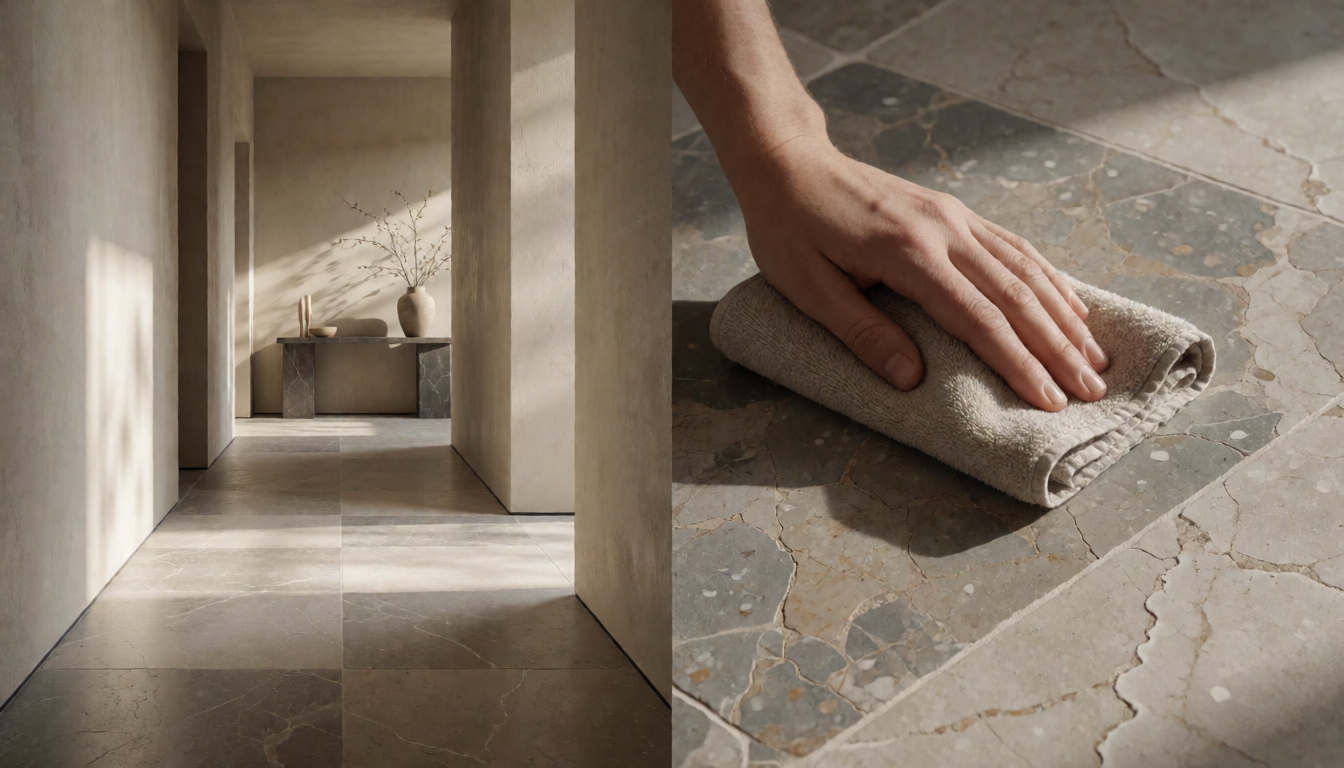
- Clean daily: Wipe with pH-neutral cleaner and a soft cloth; dry after.
- Seal on schedule: Re-seal every 12–18 months; test with a water droplet.
- Act fast: Blot spills immediately—never wipe acids into the stone.
Frequently Asked Questions
Can I use vinegar to clean marble?
No. Vinegar is acidic and etches marble, travertine, and limestone on contact, leaving permanent dull spots that need professional re-honing.
Is bleach safe on granite?
Occasionally, but not regularly. Bleach slowly breaks down the sealer and any resin, so pH-neutral cleaners are safer for long-term care.
What is the safest daily cleaner for stone?
A pH-neutral stone-specific cleaner with a soft microfibre cloth. Warm water and a drop of mild dish soap also work for light cleaning.
How do I know if my sealer still works?
Place a few water droplets on the surface. If they darken the stone within 10 minutes, the sealer has failed and it is time to reseal.
Glady Stone: Care-Ready Natural Stone
Glady Stone ships every marble, travertine, and limestone product pre-sealed, with care cards specifying the pH-neutral routine that protects the surface for decades.
Read the Glady Stone natural stone care guide for the full 2026 do’s and don’ts of stone maintenance.