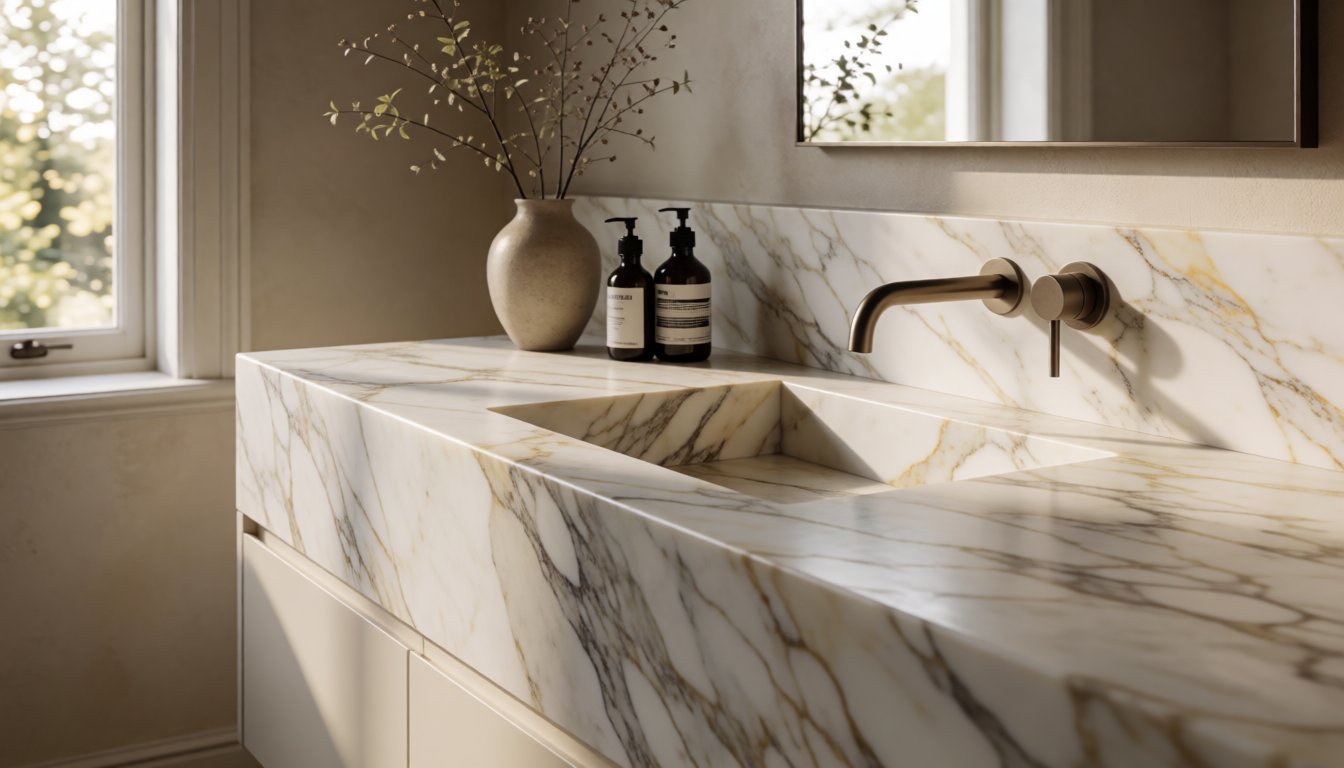
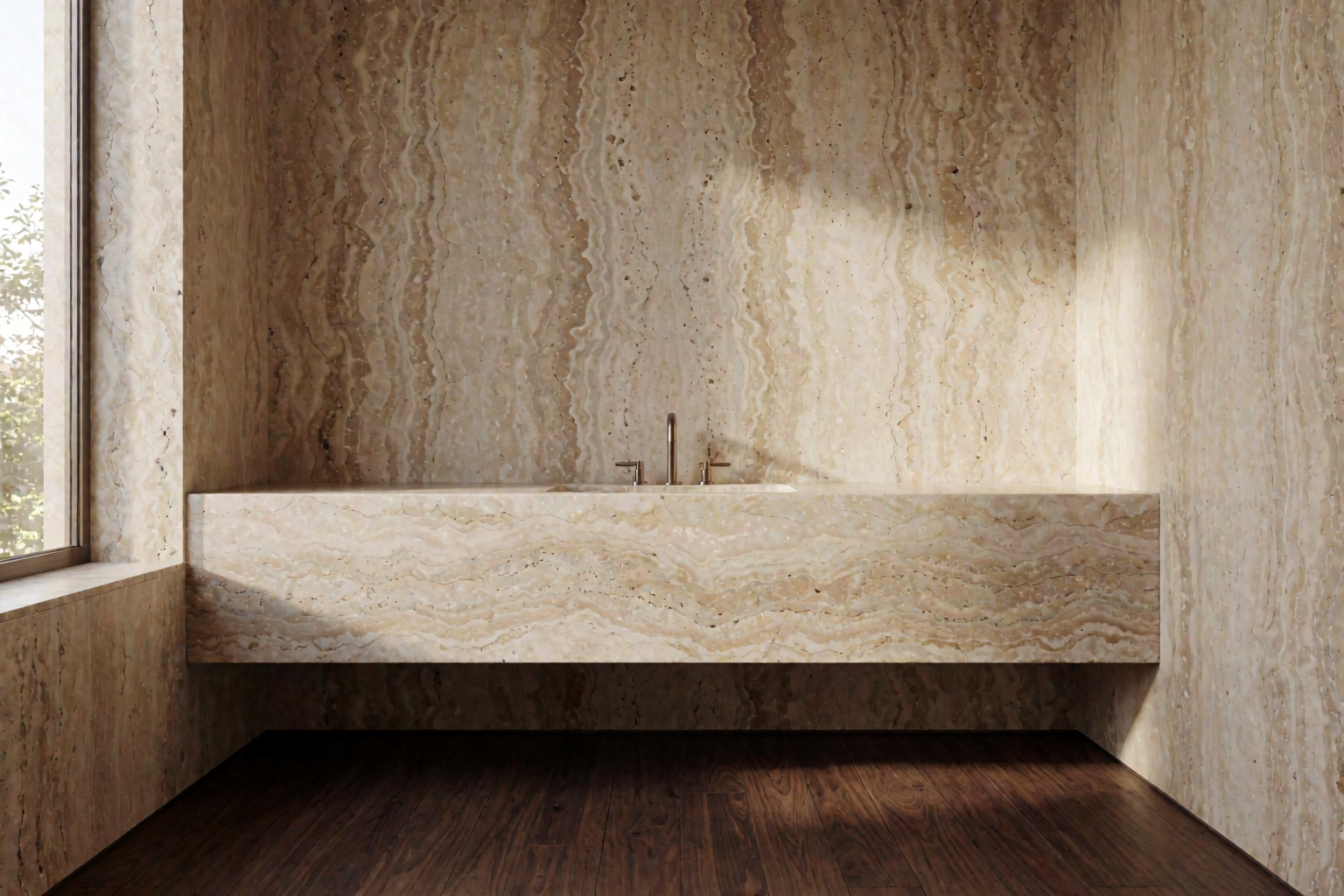
A countersplash is a bathroom detail where the same natural stone runs continuously from the countertop up the wall, erasing the usual break between surface and backsplash. In 2026 designers specify it to create a seamless, monolithic stone plane that makes small bathrooms feel larger and more luxurious.
What Is a Countersplash?
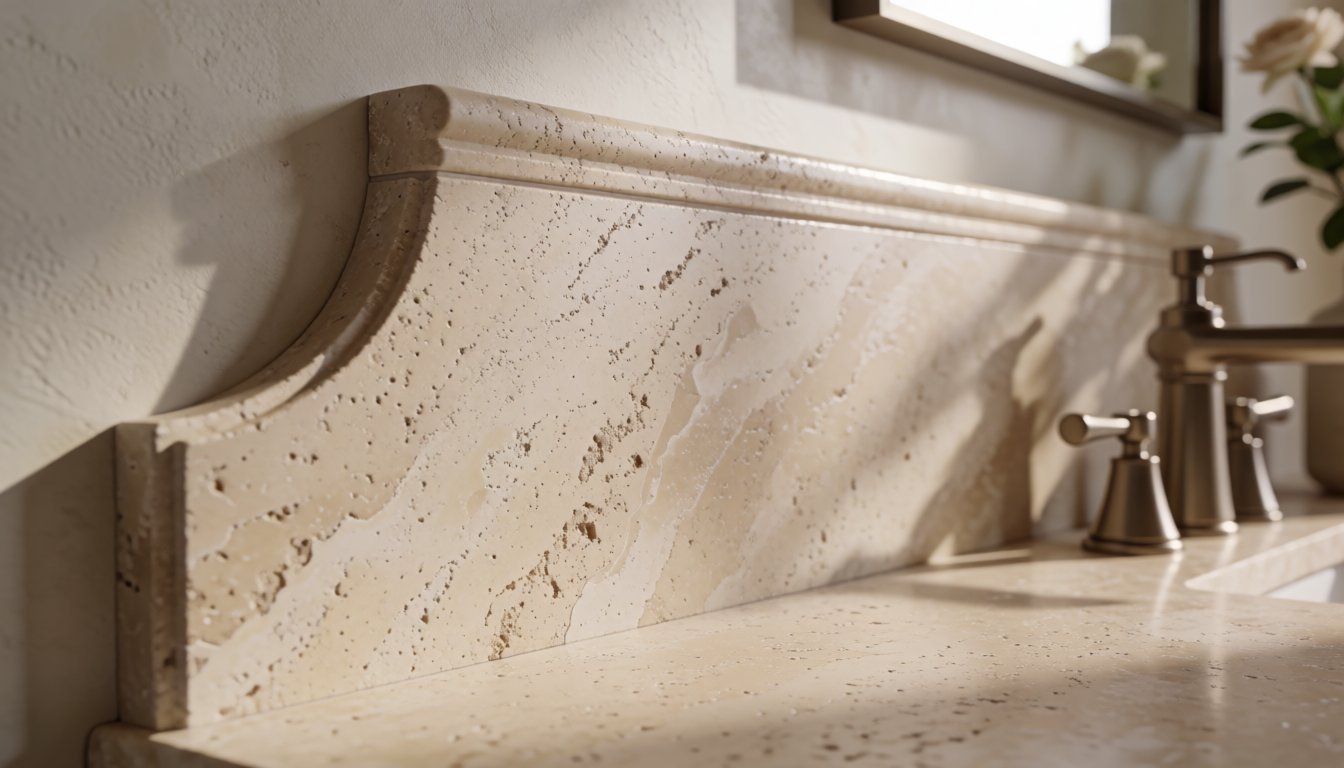
A countersplash is the evolution of the traditional tiled backsplash. Instead of stopping the countertop at the wall and starting a separate tile above it, the same slab of marble, quartzite, or travertine continues upward — sometimes 4 to 6 inches, sometimes the full height of the wall. The result is one uninterrupted plane of stone. For architects, it solves a classic detailing problem: the grout line and material change that usually interrupt the eye are simply gone.
Why Is Seamless Stone Trending in 2026?
- Visual expansion: Continuous stone removes breaks, so compact powder rooms read as bigger and calmer than tiled schemes.
- Warmth over sterility: Honed and leathered finishes on a single slab feel tactile and personal, matching 2026’s move away from cold minimalism.
- Easier upkeep: With no grout joints behind the sink, there is far less place for soap film and mildew to collect.
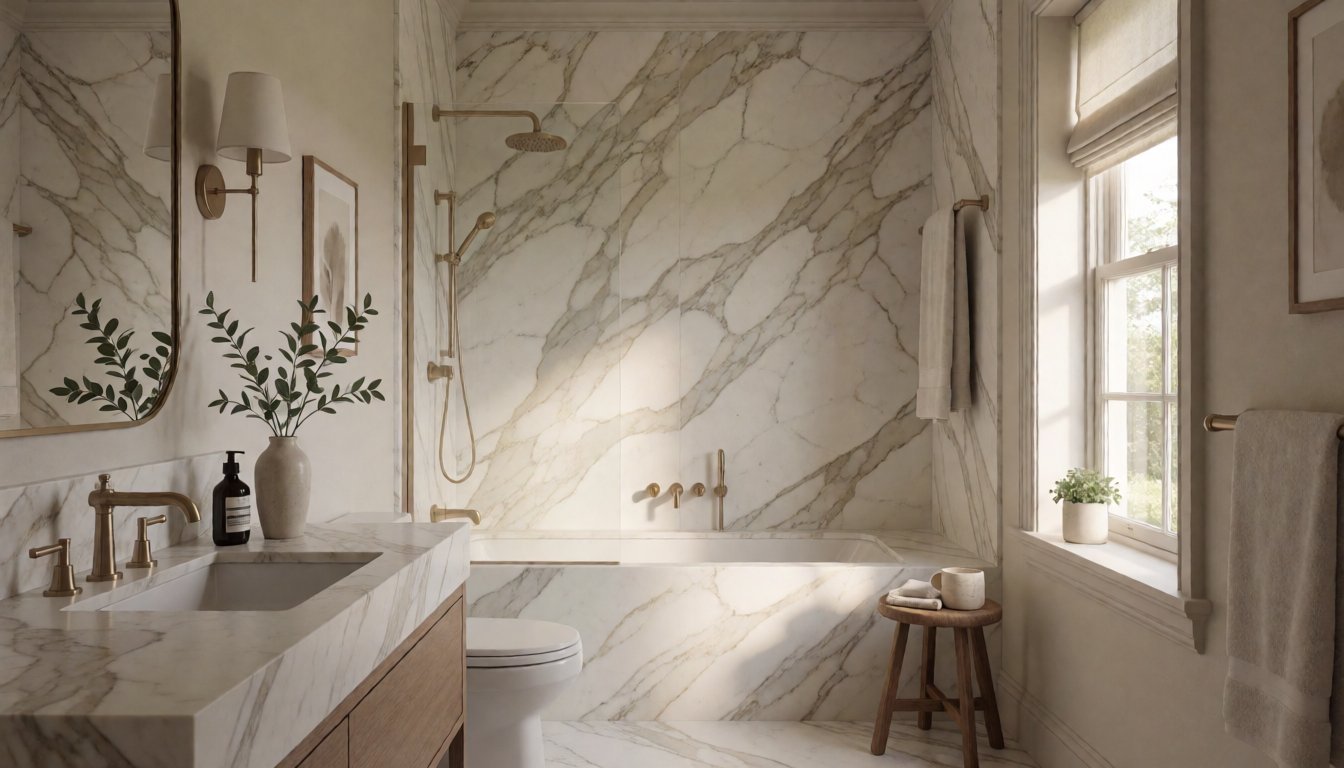
The countersplash works because it treats the vanity as architecture rather than a stack of components. A single Calacatta or travertine slab is templated so the veining flows from the counter into the wall without a visible seam, which is impossible with off-the-shelf tile. Designers report that the detail reads as quietly expensive precisely because nothing draws attention to itself — the stone simply continues. According to 2026 specification data from luxury residential projects, seamless stone transitions now appear in roughly 1 in 3 high-end bathroom renovations, up sharply from pre-2024 levels when tile-and-counter pairings dominated. For wholesalers, the countersplash also means larger slab orders and fewer cut-tile SKUs, simplifying inventory.
Countersplash vs. Other Backsplash Styles
| Detail | Look | Grout Lines | Best For |
|---|---|---|---|
| Traditional tile | Patterned, busy | Many | Budget updates |
| Slab backsplash | Single stone panel | Edge only | Feature walls |
| Countersplash | Counter flows to wall | None | Seamless luxury |
| Stone drenching | Full-room stone | Minimal | Spa suites |
How to Specify a Countersplash
- Choose one full slab and template the vanity and wall together so veining aligns.
- Pick a honed or leathered finish to avoid glare and hide water marks.
- Seal the whole plane before grout-free installation to protect both surfaces at once.
Frequently Asked Questions
Is a countersplash more expensive than tile?
Usually yes, because it uses a continuous slab rather than cut tiles, but it reduces labor and grout maintenance over time.
Can I add a countersplash to an existing vanity?
Often. A fabricator can scribe a matching slab piece to the existing counter, though perfect veining continuity is easier in new builds.
Which stone suits a countersplash best?
Calacatta, travertine, and warm quartzite all work; honed finishes hide water spots better than polished stone.
Glady Stone: Stone for Seamless 2026 Interiors
Glady Stone supplies full marble and travertine slabs sized for countersplash and vanity runs, with templating support for architects and wholesalers.
Browse the Glady Stone natural stone slab collection to plan a seamless 2026 bathroom.