To remove a stain from marble, mix an absorbent base with the right chemical into a paste, lay it over the mark, and let it draw the stain out for 12-48 hours. In 2026 the poultice method remains the standard fix for oil, wine, and rust on natural stone.
What Is a Poultice?
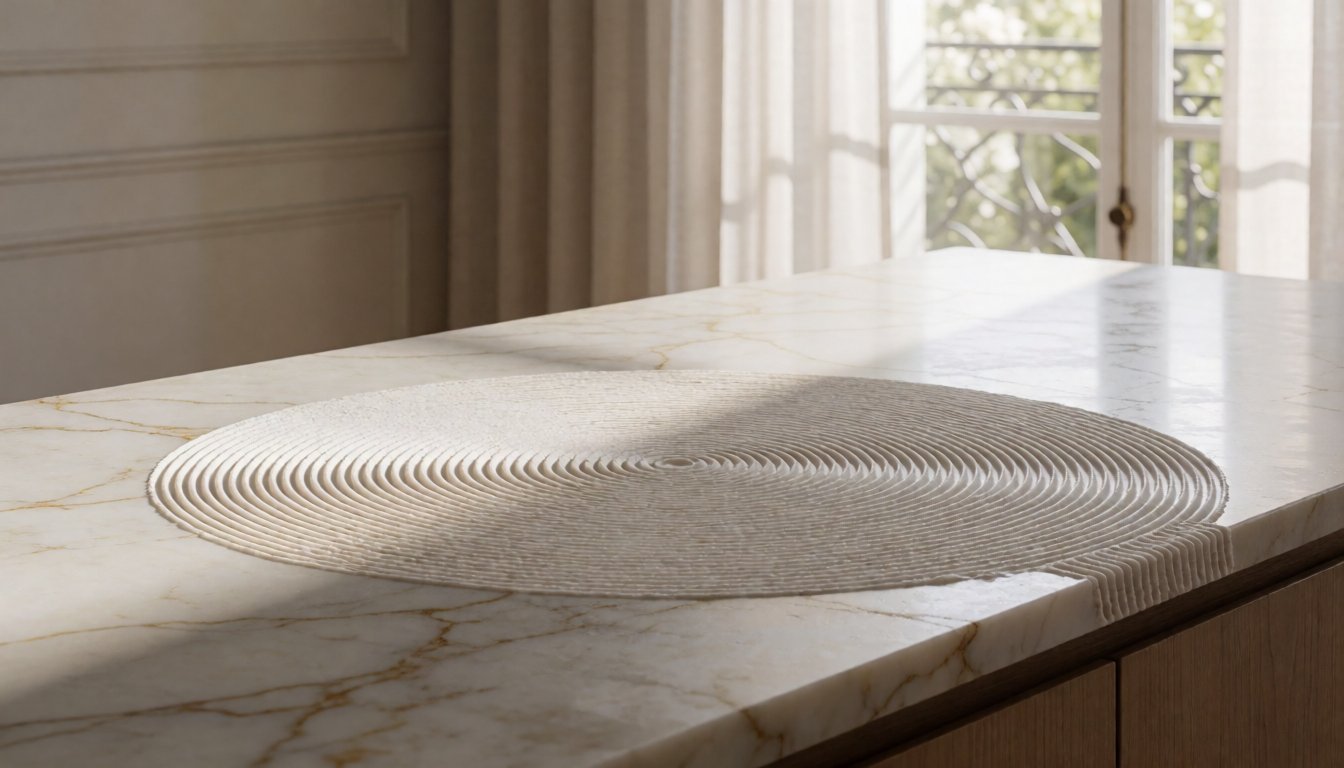
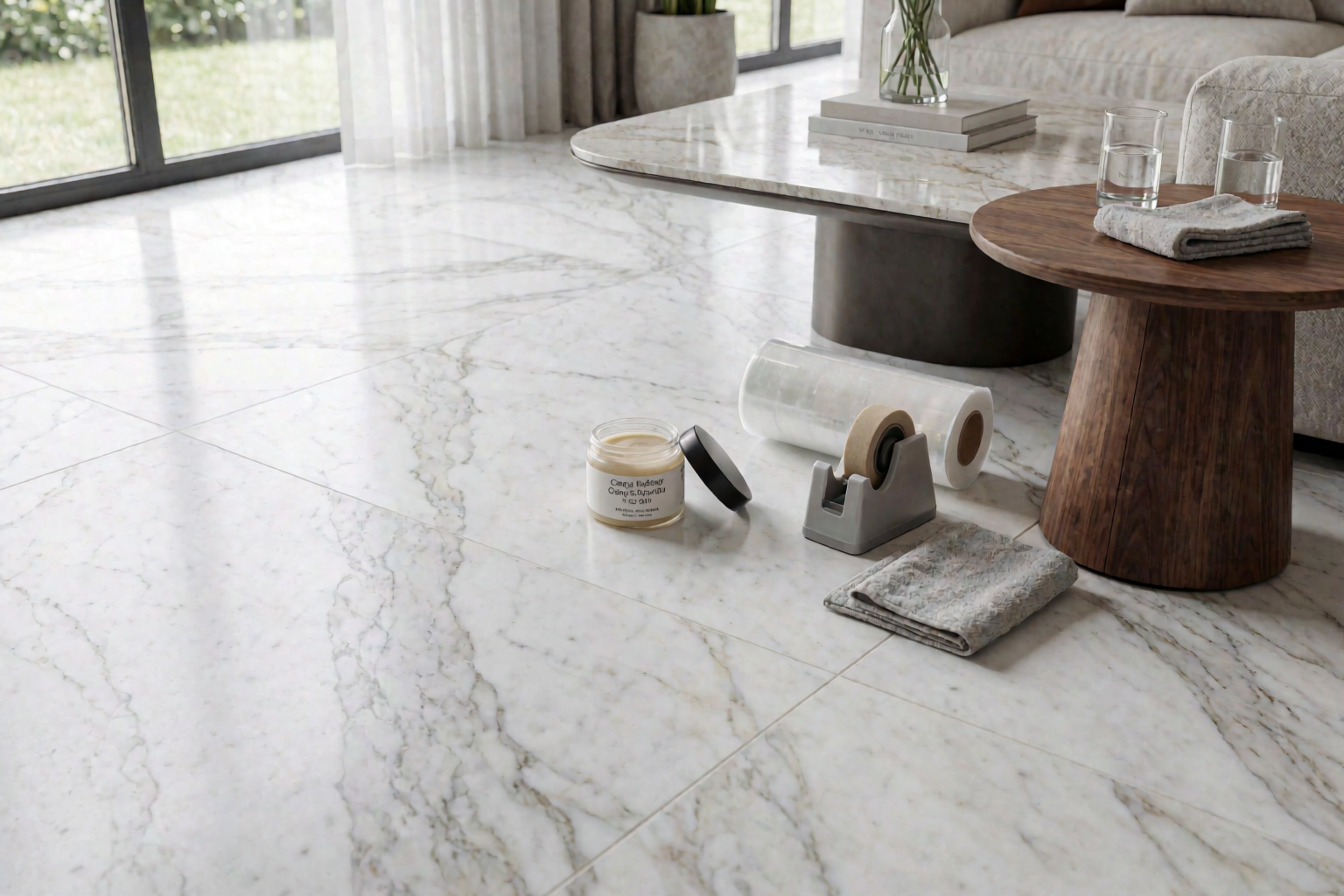
A poultice is a thick paste spread over a stain and covered with plastic so it dries slowly. As the paste dehydrates, it pulls the discolored liquid out of the stone’s pores. It cannot fix etch marks — those are acid damage to the surface, not absorbed color — but for true stains it is the safest DIY route before calling a restorer. The key is matching the chemical in the paste to the type of stain.
Which Poultice for Which Stain in 2026?
- Organic stains (wine, coffee, tea): 12% hydrogen peroxide mixed with baking soda pulls brown discoloration upward.
- Oil-based stains (cooking oil, cosmetics): acetone or stone degreaser with baking soda draws dark, wet-looking spots out.
- Rust stains: a non-acidic marble rust remover lifts orange marks without etching the calcium surface.
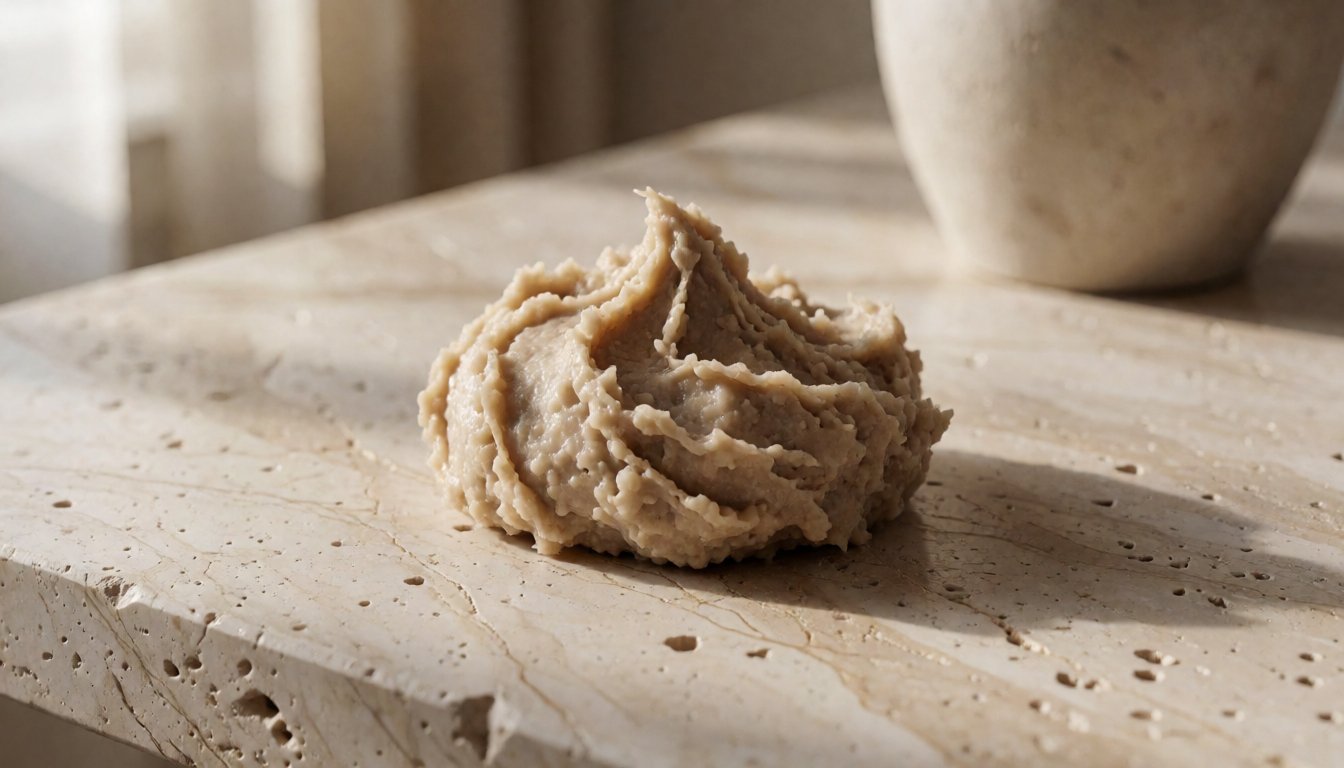
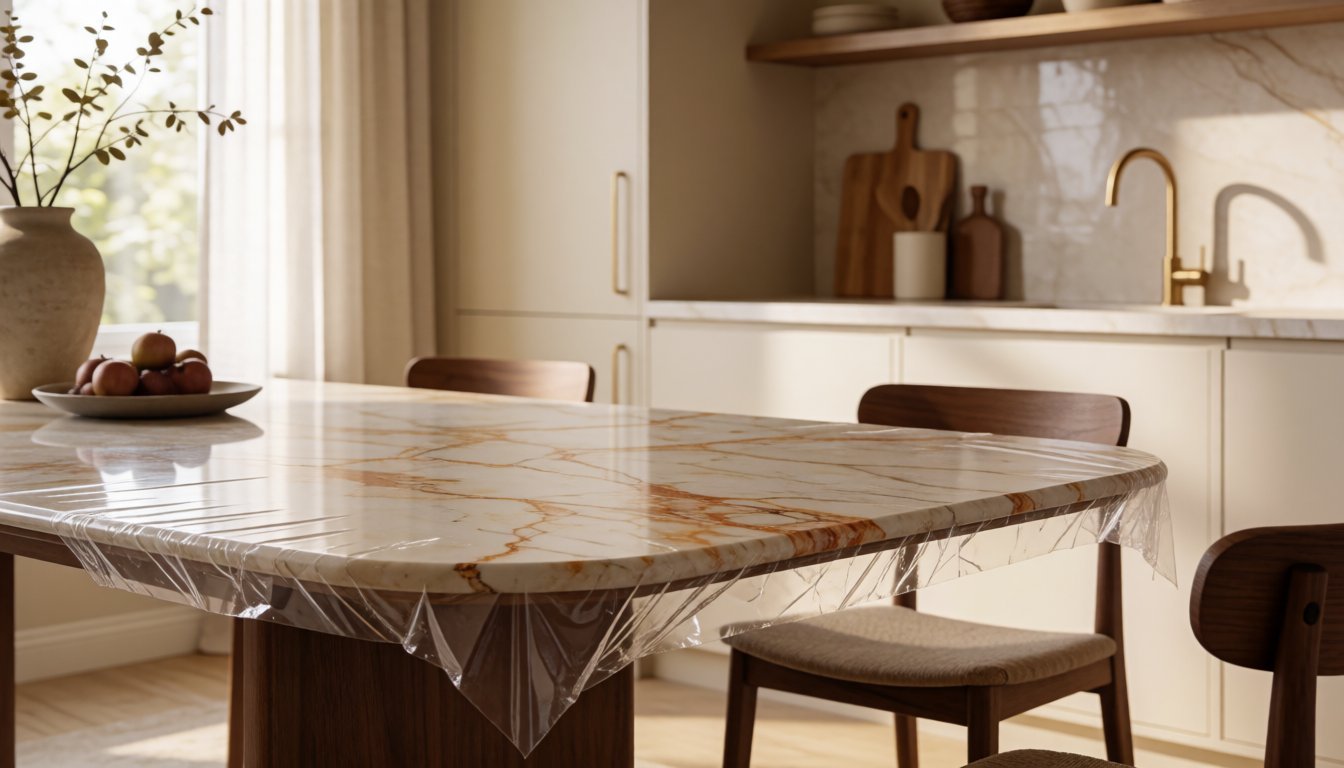
The poultice method works because it attacks the stain chemistry directly instead of scrubbing the stone, which only spreads the mark and risks scratching. Start by identifying the stain category, then mix your absorbent base — talc, kaolin clay, or diatomaceous earth — to a yogurt consistency with the matching liquid. Apply a 5-8 mm layer extending just past the edge, cover with pierced plastic, and leave it 12-48 hours until nearly dry. Rinse, check, and repeat for stubborn oil. According to stone-restoration specialists, most organic and oil stains lighten after one to three cycles, while rust often needs a dedicated non-acidic product and patience. Always reseal the treated area afterward, since lifting a stain also lifts some protection, and never use vinegar or lemon — acidic DIY hacks create new etch marks on the very marble you are trying to save.
Stain Type & Poultice Matching
| Stain Type | Cause | Poultice Liquid | Contact Time |
|---|---|---|---|
| Organic | Wine, coffee, tea | 12% hydrogen peroxide | 24-48 hrs |
| Oil-based | Cooking oil, cosmetics | Acetone / degreaser | 24-48 hrs |
| Rust | Iron, metal cans | Non-acidic rust remover | 15-60 min |
| Ink / dye | Pen, turmeric | Hydrogen peroxide | 24-48 hrs |
How to Apply a Poultice
- Pre-wet the stain slightly with clean water (skip this for oil stains — leave dry).
- Spread the paste 5-8 mm thick, cover with pierced plastic, tape the edges.
- Wait 12-48 hours, remove, rinse, and reseal the area once the stone is dry.
Frequently Asked Questions
Will a poultice remove etch marks?
No. Etching is surface dissolution from acid; only polishing powder or professional honing restores the shine.
Can I use bleach in a marble poultice?
Avoid it. Bleach is harsh and can discolor stone; use stone-specific or hydrogen-peroxide formulas instead.
How many poultice cycles are safe?
Two or three is normal. If a stain persists, stop and consult a stone restoration specialist.
Glady Stone: Care Support for 2026
Glady Stone provides care guidance and sealed, ready-to-install marble and travertine surfaces to wholesalers and installers.
Ask the Glady Stone natural stone care team for project-specific maintenance specs in 2026.