Importing stone fixtures like bathtubs requires more than just finding good designs; it demands precision in logistics. The cost of sea freight is calculated per container, yet the revenue comes from individual units sold online or through retail partners. Maximizing your cargo space directly impacts your landed cost and profit margins. At Gladystone, we manufacture sinks, vanities, dining tables, fireplaces, and decor using high-quality stone. When you source stone bathtub shipping solutions here, understanding how to pack these heavy items is critical for avoiding damage claims at the destination port. This guide breaks down exactly how many units fit in a standard container and what packing protocols ensure your inventory arrives intact.
Calculating Capacity: Units Per Container
The number of stone bathtubs you can load onto a vessel depends on volume, weight limits, and the specific dimensions of your models. A typical 40-foot High Cube (HC) container offers roughly 67 cubic meters of space but is restricted by a maximum payload. Stone products are heavy; exceeding the Gross Vehicle Weight Limit (GVWL) at customs can result in fines or stranded cargo.
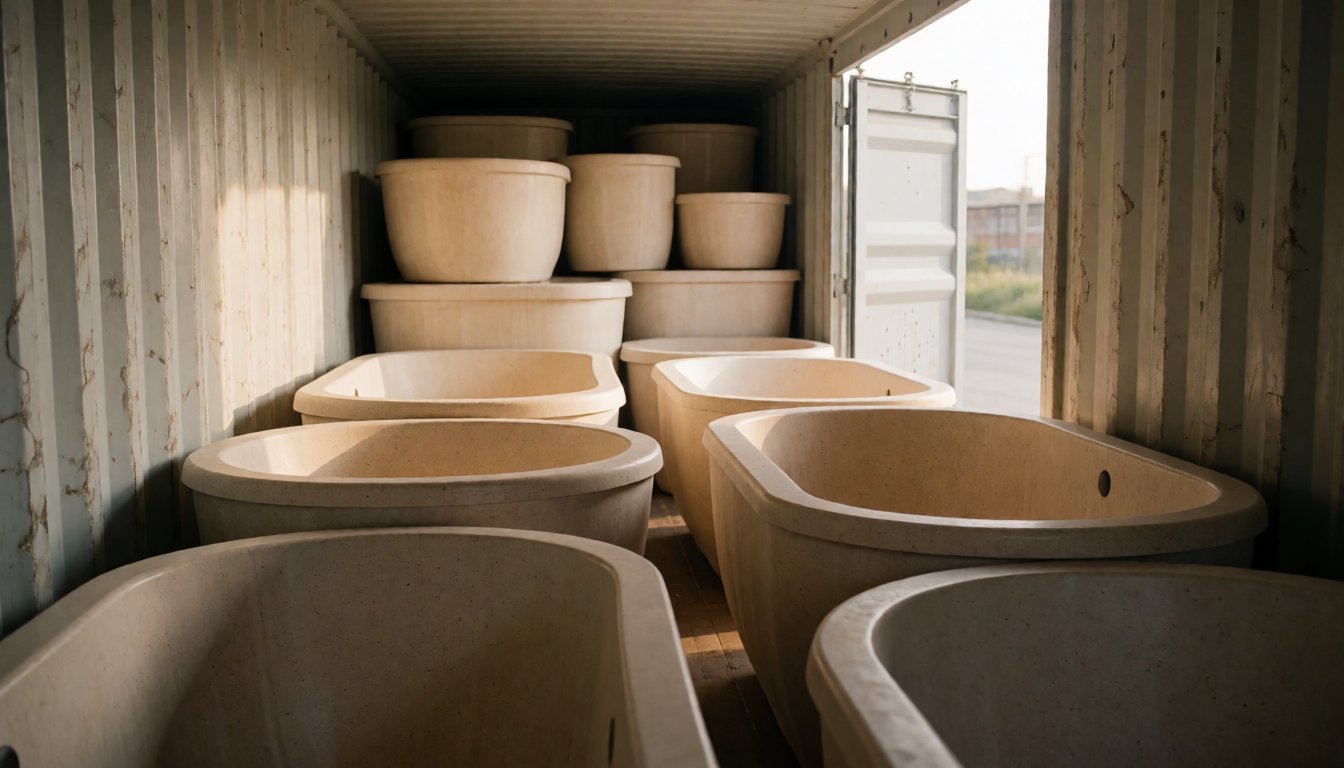
For standard rectangular bathtubs, here are realistic loading estimates:
* Small Bathtub (150cm x 70cm): Roughly 24 units per TEU. Each unit weighs approximately 80kg including packaging. You might fit up to 36-40 total units before hitting weight limits on a standard FEU, though volume often fills first with these compact shapes.
* Medium Bathtub (170cm x 80cm): Expect around 20 units per container. The larger footprint reduces the count significantly. Weight becomes the primary constraint here rather than cubic space.
* Large/Luxury Tub (190cm+ or irregular shapes): Capacity drops to roughly 15-16 units. These often require custom crating and careful positioning to prevent tipping during transit.
Always request a loading plan from your freight forwarder based on the specific weight of your SKU. If you are mixing sizes, use smaller bathtubs to fill gaps around larger ones, but ensure they do not shift. Shifting cargo causes stone cracks upon impact with other units or container walls.
Structural Packaging Standards for Heavy Stone
How container loading stone is crated defines whether the product survives a 40-day ocean voyage across rough seas. Wooden pallets are standard in China and Europe, but they must be reinforced specifically for dense natural stone like marble and quartzite. Gladystone utilizes high-grade plywood or steel-reinforced wooden crates depending on the order size.
The packaging structure usually follows these layers:
1. Base Layer: A heavy-duty plastic sheet covers the pallet bottom to prevent moisture transfer from humidity inside the container, which can stain porous stones like Travertine over time.
2. Inner Cushioning: Use high-density foam inserts or specialized stone-cutting boards placed directly against the basin surface and rim. Do not use loose bubble wrap; it compresses under weight and offers no structural support for sharp edges.
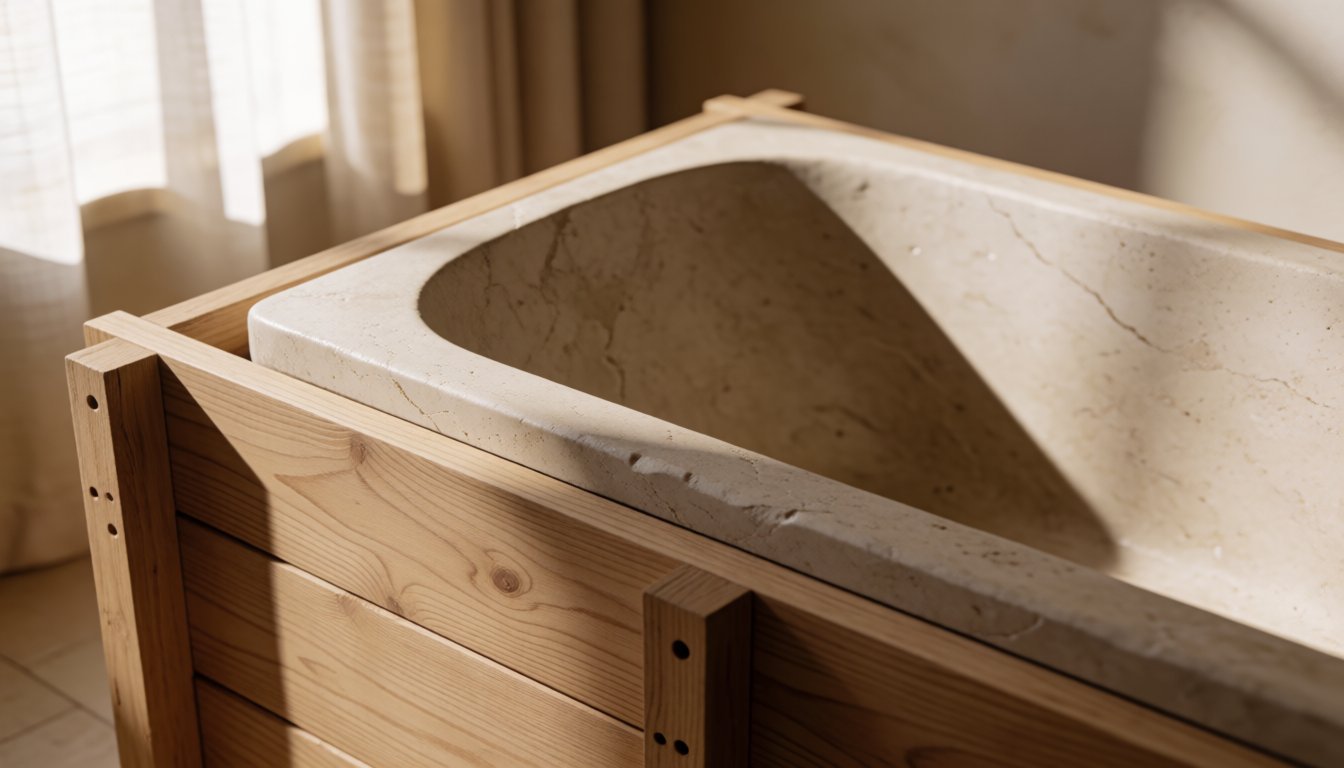
3. Outer Crate Construction: The crate must be built to withstand stacking loads of up to three pallets deep in a container stack. Use corner posts (2×4 timber) at every intersection. Glue joints rather than relying solely on nails, as vibration loosens fasteners quickly during the long haul from our Guangzhou or Foshan factories to US/EU ports.
4. Sealing: Wrap each crate in two layers of stretch film and secure with strapping bands around the middle and near corners. This prevents crates from sliding off pallets when the ship tilts.
For irregularly shaped fireplaces or vanities, custom foam molds are often necessary to hold the shape during transit. If you skip this step for marble container packing, water ingress can cause internal cracking that only reveals itself after unpacking, leading to expensive returns.
Key Logistics Questions Before Booking Freight
Before placing a bulk order with Gladystone or any other factory, clarify these operational details to avoid surprises at the destination port. Shipping costs fluctuate based on fuel prices and geopolitical factors, so locking in rates early is wise for stone bathtub shipping projections.
- Incoterms Clarification: Confirm if your price quote includes freight prepaid (DDP) or free carrier (FOB). Under FOB terms, you hire the forwarder to pick up from our warehouse door. Ensure they have experience handling heavy cargo documentation required by US Customs and CBP.
- Documentation Requirements: Natural stone requires specific export declarations regarding origin and material composition. Ask Gladystone for their standard packing list format that includes HS Codes (usually 6810 in this category). Incomplete paperwork leads to demurrage charges at the port of discharge, costing thousands per day.
- Insurance Coverage: Standard marine insurance often excludes breakage unless specific “All Risks” coverage is purchased and declared for fragile goods like stone sinks or tubs. Declare your full replacement value including packaging costs when insuring the shipment. Do not rely solely on carrier liability limits; they are rarely sufficient for high-value natural stone inventory.
Strategies to Reduce Costs Without Compromising Quality
One of the biggest challenges in importing heavy furniture is balancing cost efficiency with product safety. You cannot simply reduce packing materials to save money, as damaged goods mean lost margins and unhappy dropshippers or designers who rely on your stock. However, you can optimize your logistics strategy through these methods:
* Consolidation Orders: Instead of shipping one container every month, consider accumulating orders from multiple clients into a single 40ft HC shipment if volume allows. This spreads the freight cost across more units. Just ensure all items are compatible in weight and dimensions to maximize cube utilization efficiently.
* Optimizing Crate Dimensions: Work with Gladystone’s engineering team during the design phase to standardize sizes where possible. If a specific model leaves large empty spaces, ask if slight dimension adjustments can allow for tighter stacking patterns without reducing internal volume too much. Every extra cubic meter utilized reduces your per-unit shipping cost by roughly $50–$120 depending on origin and destination rates.
* Direct Port Delivery: Utilize direct port services where the container is unloaded directly onto a truck destined for a bonded warehouse or distribution center near major cities like Los Angeles, Houston, or Rotterdam. Avoid inland transshipment if possible to minimize handling cycles that increase breakage risk.
By mastering these loading principles and partnering with reliable manufacturers like Gladystone who understand B2B logistics needs, you can build a resilient supply chain capable of delivering premium stone furniture globally.