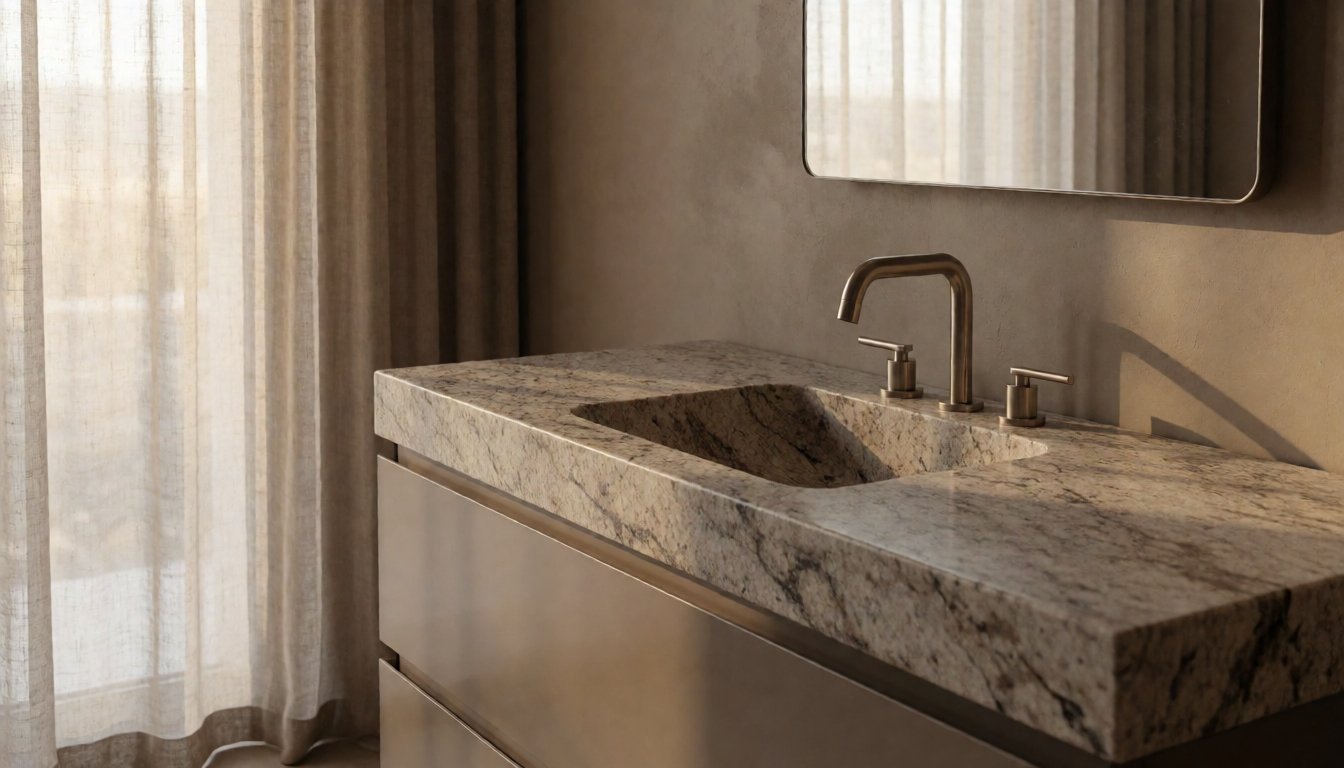
Importing stone furniture involves managing a material that is as beautiful as it is unforgiving. When you order sinks, vanities, or dining tables from a manufacturer like Gladystone, the finished product arrives ready for installation. However, if your project requires custom modifications after delivery, understanding the mechanics of drilling natural stone is critical. One wrong angle can crack a slab worth thousands of dollars before it ever reaches a showroom. This guide covers the technical realities of creating holes for plumbing and fixtures, helping you specify orders correctly or troubleshoot field issues with confidence.
Understanding Stone Tensile Strength and Tooling Limits
Natural stone, including granite, marble, and quartzite, has high compressive strength but low tensile strength. This means it can handle heavy weight on top of it, but it shatters easily if pulled apart or stressed from the side. When you attempt to drill natural stone, the primary risk is not the bit slipping, but the vibration causing a radial fracture that starts at the hole’s edge and spreads outward.
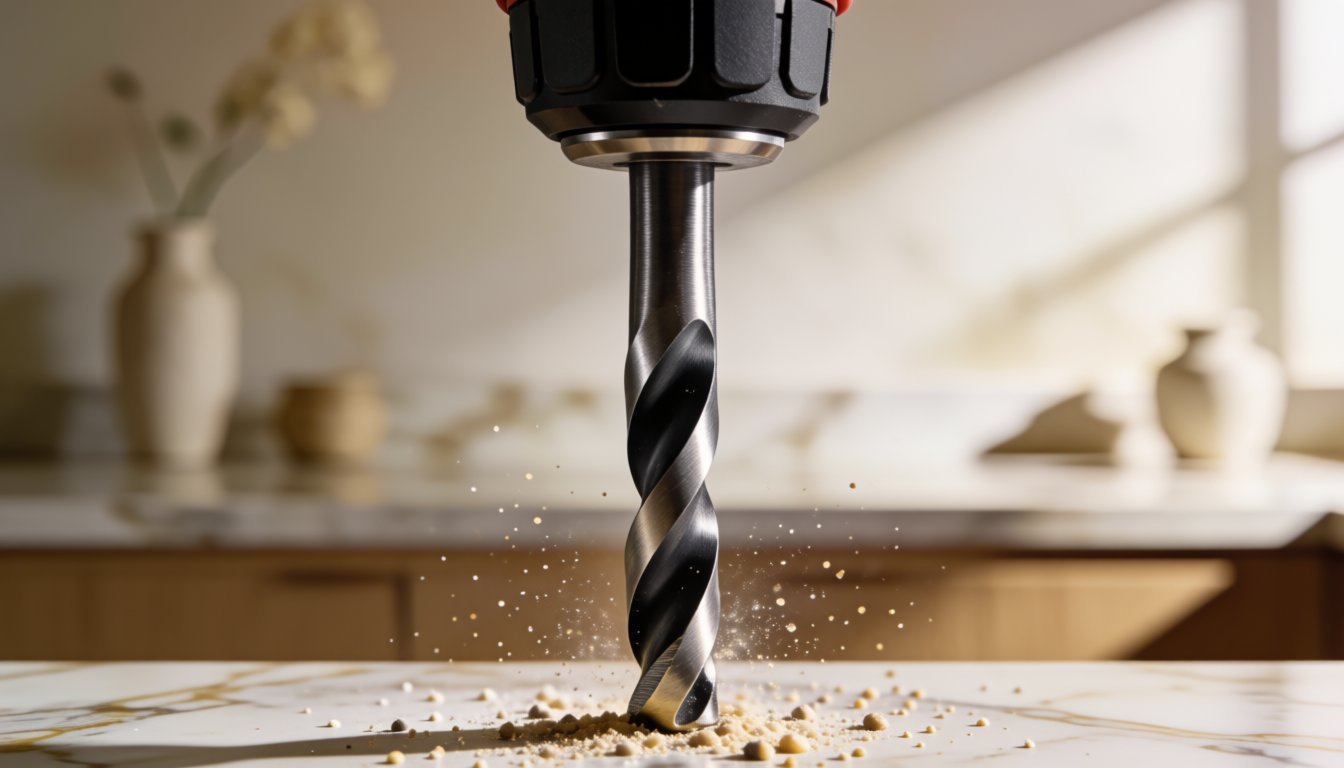
For B2B buyers, this dictates your order specifications. If a client needs a specific hole added to a vanity top after arrival, do not send them a standard twist drill. You must specify carbide-tipped bits designed for masonry or stone. These tools have a sharper geometry that shears through the material rather than grinding it.
The size of the hole matters significantly for structural integrity. A standard faucet cutout is roughly 13 cm to 15 cm in diameter. While this seems large, the surrounding rim must remain thick enough to support the sink weight and prevent cracking under load. If you are customizing a slab on-site, keep any remaining wall thickness above 12 mm where possible. Below that threshold, the stone becomes brittle and prone to spontaneous failure during installation or future plumbing adjustments.
The Mechanics of Stone Faucet Cutouts and Sink Installation
A stone faucet cutout is more than just an empty space; it defines the load path for the countertop. When installing a vessel sink or an undermount basin into a slab, the hole must be precise. A deviation of even 5 mm can force the sink flange to rest unevenly on the rim, creating stress points that lead to cracks over time.
When specifying cutouts for your orders, consider the weight of the fixture you are pairing with the stone. Heavy granite sinks (often weighing between 8 kg and 12 kg) require a wider margin of safety around the cutout than lighter marble or soapstone options. The vibration generated by running water can also cause micro-fractures if the sealant underneath is not applied perfectly, especially in porous stones like travertine or limestone.
If you are white-labeling for a specific brand that requires unique hole patterns, communicate these needs clearly during the design phase. Do not attempt to enlarge an existing cutout on-site unless you have diamond-tipped core bits and a water-cooled drill setup. Trying to widen a 13 cm hole into a 15 cm hole with a handheld router will almost certainly result in chipping that requires professional repair or replacement of the entire slab.
Managing Thermal Shock and Moisture During Drilling
One of the most overlooked factors in drilling natural stone is thermal shock. Diamond-tipped bits generate significant friction heat as they cut through dense granite or quartzite. If this heat accumulates at the hole’s edge, it can cause micro-fractures that only become visible days later when the stone cools and contracts.
To mitigate this, always use water cooling during the process. In professional settings, a continuous stream of water keeps the bit sharp and prevents the stone from overheating. For field jobs, a simple wet sponge held against the cutting edge can help dissipate heat, though it is less effective for deep cuts.
Moisture absorption is another concern specific to certain stone types. Marble and travertine are sensitive to sudden changes in humidity and temperature. If you drill these materials in a humid environment without proper drying time afterward, water trapped inside the cutout can freeze or expand, causing the edge to split. Always seal the drilled area immediately after cutting, even if the stone is intended for an indoor installation. A high-quality penetrating sealer reduces porosity and protects against staining from cleaning products that might be used near the new hole.
Verifying Quality Control Before Shipping Custom Orders
When placing large orders with a manufacturer like Gladystone, you must verify their quality control protocols regarding drilling and cutting. Ask for photos or videos of their cutting process, specifically focusing on how they handle edge finishing after creating holes. A rough edge indicates poor technique that can lead to customer complaints about chipping or leaking.
Request samples if you are unsure how a specific batch will behave. A sample slab allows you to test the drilling parameters on-site before committing to a full production run. Check the consistency of the hole diameter across different slabs from the same quarry. Variations in grain direction can cause bits to wander, resulting in misaligned cutouts that look sloppy in a finished vanity or dining table.
Lead times for custom drilling specifications vary based on complexity. Standard holes (faucet and drain) typically add no extra time if included in the initial CAD design. However, adding non-standard hole patterns or enlarging existing cutouts after production can extend lead times by 3 to 7 days depending on the factory’s workload. Be transparent about your project timeline; rushing a custom stone project often compromises quality as suppliers may cut corners on cooling and finishing steps.
For wholesalers and dropshippers, these details protect your reputation. A cracked sink returned from Europe or the US due to poor drilling quality can cost far more in shipping and restocking than the price difference between two factories. By understanding the physics of drilling natural stone, you ensure that every piece leaving Gladystone’s facility meets the high standards expected by interior designers and end consumers.