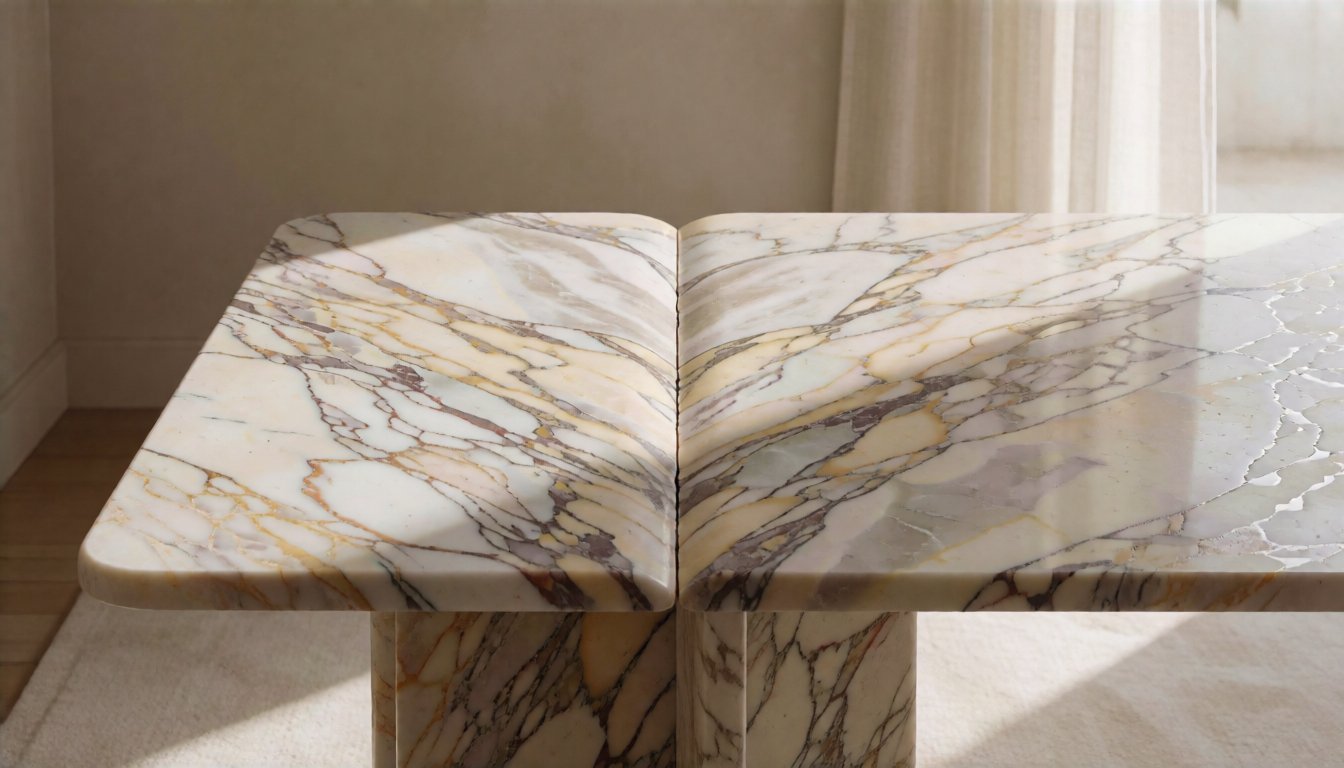
When you import stone furniture for your Shopify store or white-label brand, few items confuse buyers more than bookmatched tops. A bookmatch marble table looks like an open book where two slabs reveal a mirrored vein pattern across the surface. This aesthetic creates immense value but comes with specific sourcing challenges that generic suppliers often cannot meet. As an importer looking for high-margin products in the US or EU markets, you need to understand exactly what makes this finish expensive and how to structure your stone bookmatch order without getting stuck on impossible MOQs or low-quality rejects.
Why Bookmatched Tops Cost Significantly More
The primary driver of cost is waste. To create a true mirror image, the supplier must cut two slabs from adjacent sections of the same original block. They then carefully match the veins and color variations between them before polishing. If one slab has even a minor crack or uneven vein flow that ruins the visual symmetry, both pieces are considered scrap for that specific design goal.
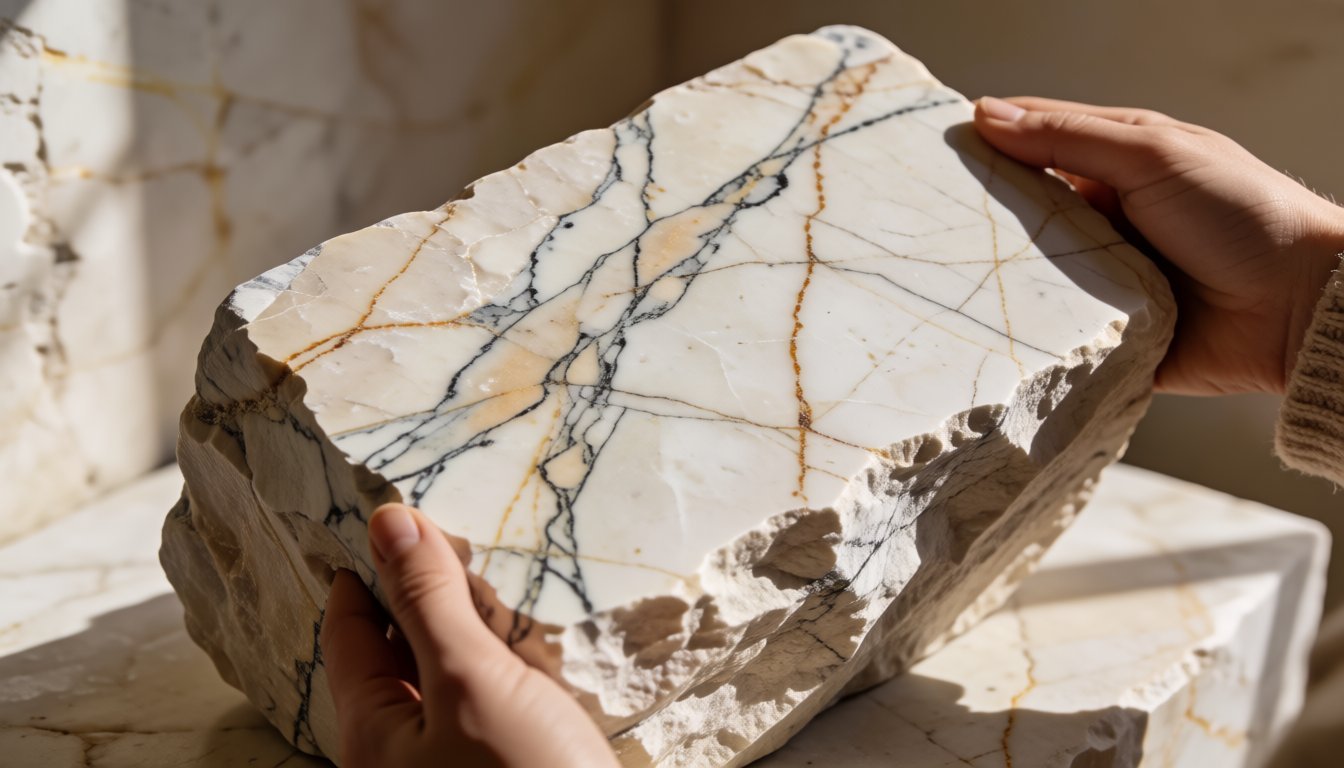
Standard marble tables use random layouts where any cut works. A bookmatched stone top, however, requires pre-selection of at least four to six large blocks per finished unit on average before production begins. This inventory risk is built into your landed cost. Expect the base price difference between a standard Calacatta slab and a matched pair to be roughly 30% to 50%.
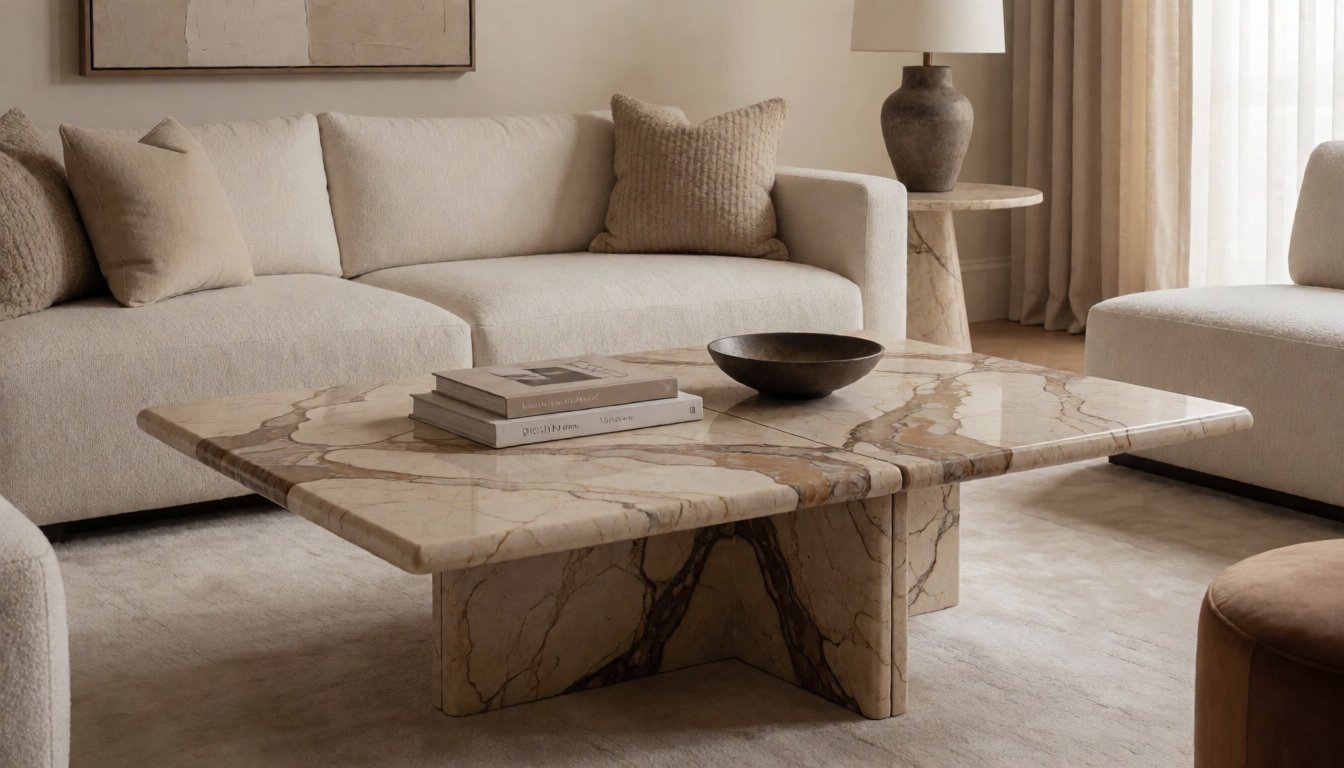
Beyond material waste, labor costs are higher because technicians must manually align patterns rather than relying on computerized cutting optimization software used for random layouts. Shipping also plays a role; these pieces often require more careful handling due to their irregular shapes after the matching process is complete. When calculating your B2B budget, factor in that you will likely pay roughly $150–$300 USD extra per square meter compared to non-bookmatched equivalents depending on stone rarity and vein density.
How to Structure Your Stone Bookmatch Order
Ordering these pieces requires a different workflow than standard bulk orders. Do not send a single request for “20 tables” expecting random results; you will receive mismatched pairs that look nothing like your marketing photos. Instead, structure your stone bookmatch order as follows:
- Define the Pattern First: Provide clear reference images of vein continuity and color contrast you want to achieve. Specify if you prefer high-contrast veins (rare) or subtle tonal matches (more common).
- Request Block-Level Sampling: Ask Gladystone to send photos of available blocks before cutting. For a serious order, request digital scans of the slab faces so your design team can approve the match digitally prior to physical production.
- Set Realistic MOQs: Standard bulk orders might start at 50 units for generic designs. For bookmatched items, ask for an initial run of 10–20 matched pairs rather than hundreds. Large volumes are unnecessary and increase your risk if the specific block runs dry mid-production.
- Clarify Cut Dimensions: Bookmatching often results in irregular outer edges because you cannot cut perfect rectangles from a curved natural surface without ruining the match. Confirm whether dimensions include material left for matching or if they are tight-fit custom cuts.
Lead times will vary based on how many blocks you have available versus those that need to be quarried specifically for your project. For bookmatch marble table projects using existing stock, expect a lead time of 25–30 days from order confirmation. If the supplier must quarry new material, add another 14–21 days for extraction and transport before matching can even begin.
Critical Quality Checks Before Production Starts
Before finalizing your contract or paying deposits, you must verify specific quality parameters that apply only to matched pairs. Generic suppliers often fail here because they lack the expertise to explain why a match failed. As an importer, you should request:
- Vein Continuity Reports: Ask for photos showing exactly where the cut was made relative to the vein flow. A good supplier will show you that minor breaks in the pattern are unavoidable due to natural stone flaws but can be hidden behind sink basins or decorative edges.
- Thickness Consistency Check: Both slabs must have identical thickness (usually 2–3 cm for countertops) after edge profiling. If one slab is thinner, the mirror effect fails visually when installed side-by-side. Request a tolerance limit of ±0.5 mm on thickness variation before accepting the pair.
- Edge Profile Compatibility: Confirm that both slabs will accept your chosen edge profile (e.g., bullnose or ogee) without chipping one slab more than the other during fabrication. Mismatched hardness can cause issues here even if veins align perfectly.
Always ask for a mock-up of at least two pairs before committing to full production runs. While this increases upfront communication time, it prevents costly returns later when customers reject products that don’t match your brand’s aesthetic standards. For US and EU dropshippers where return shipping is prohibitively expensive, getting the first few stone bookmatch order samples right is essential for long-term profitability.
Managing Risks with Domestic vs. Overseas Sourcing
Working directly with a Chinese manufacturer like Gladystone offers distinct advantages over local suppliers regarding pricing flexibility but introduces logistics complexities specific to pattern matching. Local US/EU quarries rarely have the volume of exotic stones needed for consistent high-end bookmatched stone tops, often forcing you to pay 2–3 times more per square foot than importing from China even with shipping costs included.
However, communication gaps regarding vein alignment can occur if suppliers do not fully understand your visual references. To mitigate this:
* Use video calls rather than just email exchanges when approving matches.
* Request that the factory keeps rejected blocks in inventory for future matching attempts before sending them back to you as scrap.
* Negotiate a “no-match” clause where unsold matched pairs can be converted into standard random tables at your discretion after production, preventing dead stock losses if market trends shift slightly away from bookmatching styles seasonally.
By understanding the mechanics of vein alignment and structuring orders around block availability rather than just unit count, you can build a profitable line featuring these high-value items without sacrificing margins to excessive waste or return rates.