When sourcing stone sinks for your Shopify store or wholesale catalog, you are essentially choosing between two distinct manufacturing philosophies that dictate the final price point and customer experience. The debate often centers on whether a hand-carved marble basin offers superior craftsmanship compared to a modern CNC stone sink. While both methods produce functional basins from materials like Carrara, Emperador Dark, or Calacatta Gold, the structural integrity, installation complexity, and margin for error differ significantly. Understanding these nuances is critical before placing an order with a factory partner in China.
Structural Integrity and Material Thickness
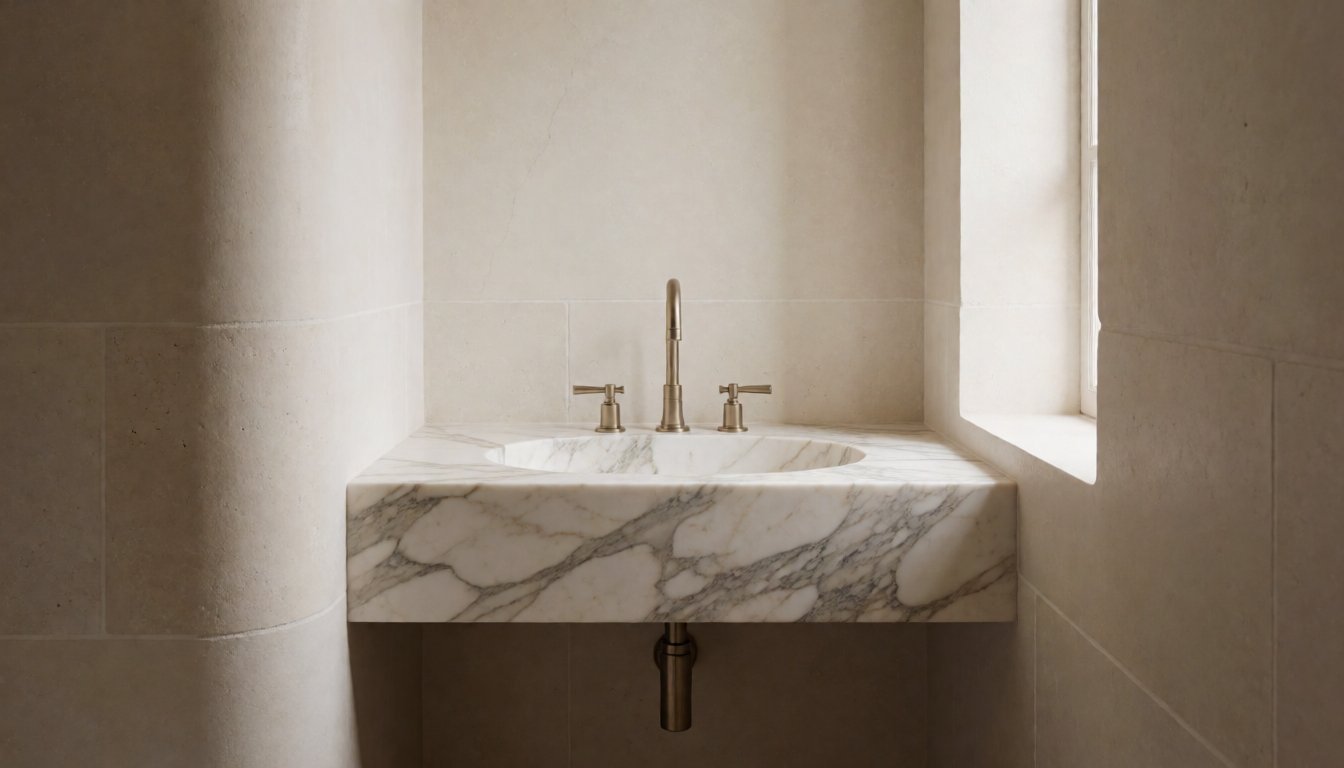
The most immediate difference lies in how the stone itself is handled during production. A true hand-carved marble basin usually starts as a solid block of stone that is hollowed out manually or via coarse grinding, followed by extensive manual polishing. This process naturally removes material from all sides, resulting in significant wall thickness. Typical hand-polished basins feature walls between 20mm to 35mm thick and rounded corners with minimal internal stress points.
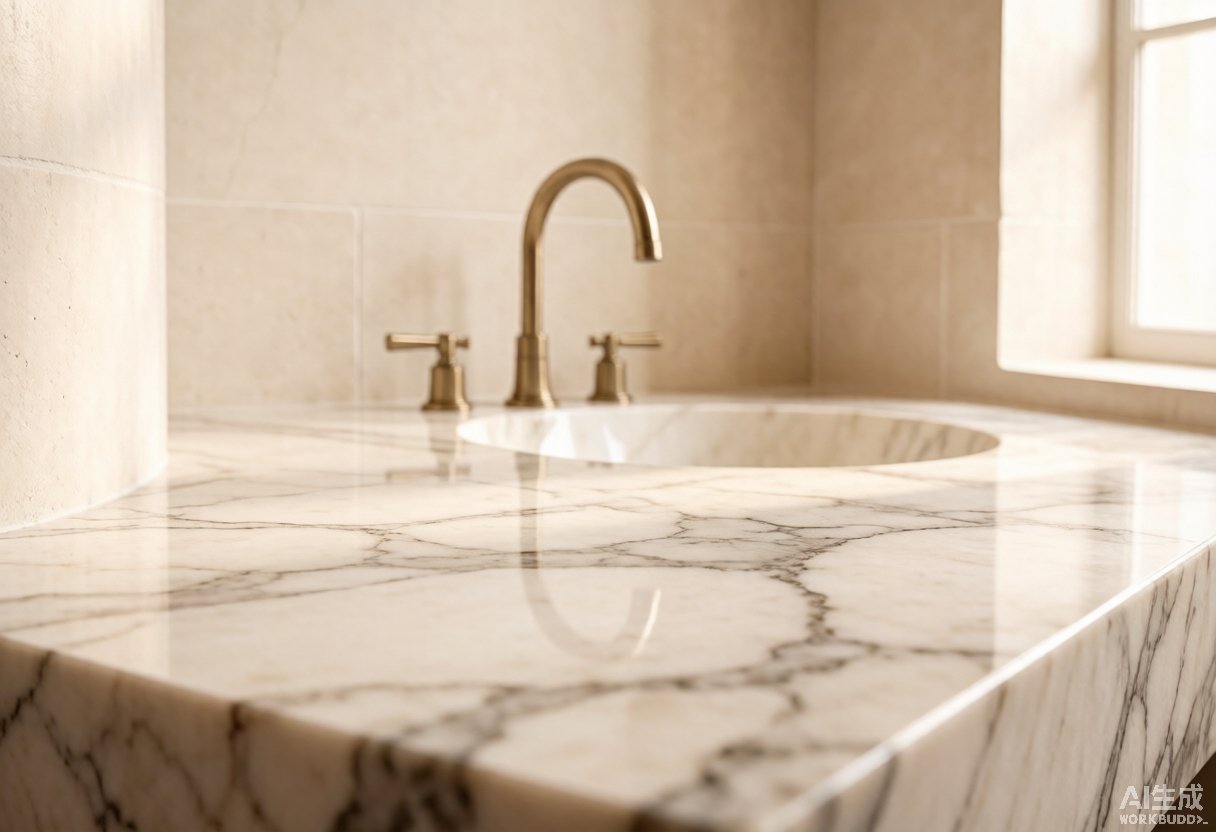
In contrast, many mass-market CNC stone sinks utilize a different approach known as “inlay” or composite slab cutting. While high-end CNC machining exists on solid blocks, the cheaper alternative involves routing out pre-slabbed material where walls can be exceptionally thin (under 15mm) and corners are sharp rather than rounded. Sharp internal angles create stress concentration points; over time, this often leads to hairline cracks or full fractures under heavy impact from pots or tools dropped into the sink. When evaluating stone basin quality, always request specifications on wall thickness. Solid blocks used for hand-finishing generally offer a lifespan that exceeds 15 years without structural failure, whereas thin-walled inlay sinks may struggle with thermal shock and physical stress after just five to seven years of heavy use.
Surface Finish and Vein Integrity
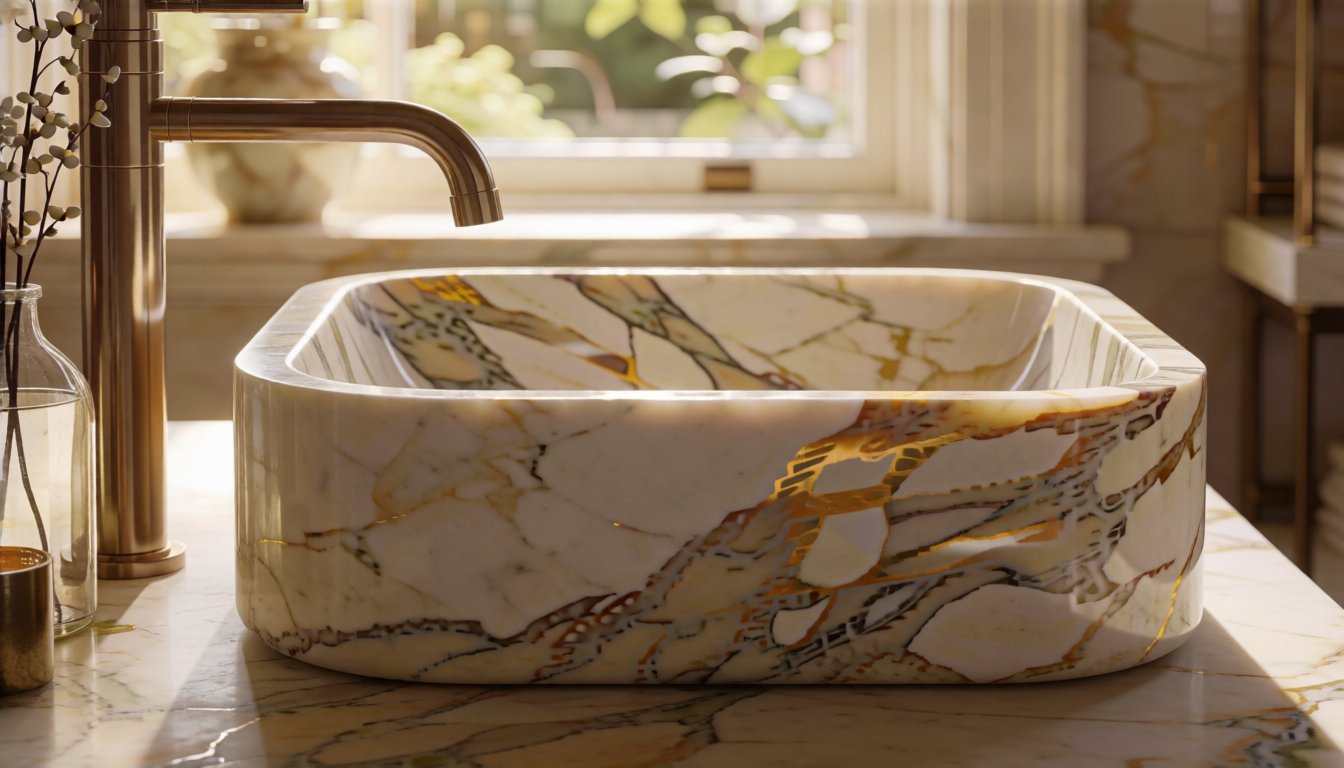
Visually, the distinction is clear upon close inspection under bright lighting. A hand-carved marble basin typically displays a soft mirror finish that highlights the natural depth of the stone’s veins without exposing underlying layers unevenly. Because artisans work slowly with abrasives rather than high-speed routers that generate excessive heat, there is less risk of “burning” the surface or dulling specific grain patterns in rare stones like Statuario.
However, not all CNC machines are created equal. Low-cost CNC stone sinks often suffer from chipping along the rim due to aggressive cutting speeds and a lack of dust extraction systems that remove slurry efficiently. Buyers should look for samples with perfectly smooth edges free of micro-fractures. If you offer interior design services, clients will notice immediately when they touch the basin; hand-polished surfaces feel uniformly cool and dense, while poorly finished CNC rims can feel greasy or rough to the touch due to embedded grit left by inferior polishing compounds. Always insist on seeing a “burn test” sample where we intentionally polish one section with heat control and another without, if possible, though reputable factories like Gladystone maintain strict thermal protocols regardless of the method used.
Lead Times, MOQs, and Customization Flexibility
From an operational standpoint for dropshippers or wholesalers, production timelines vary drastically between these two methods. A standard CNC stone sink can often be produced from raw slabs in roughly 10 to 25 days depending on current inventory levels of your chosen material (e.g., Calacatta Gold vs. Black Galaxy). This speed makes them attractive for fast-turnaround orders, but it comes with a trade-off: customization limits. CNC machines follow digital files; changing the shape or size requires reprogramming and can extend lead times significantly if you deviate from standard catalogs.
Hand-carved basins require more time because every unit is essentially unique to some degree due to natural stone variations handled by individual artisans at Gladystone. Expect a typical production window of 30 to 45 days for custom shapes or specific thickness requirements, though we can expedite this if you order from existing stock blocks. Minimum Order Quantities (MOQ) also differ; while standard CNC models might have an MOQ as low as 10 pieces per color/size combination due to their modular nature, bespoke hand-carved designs often require a higher initial commitment of at least 20 units or one full container load for specific artistic requests. For large interior design projects requiring multiple identical sinks in a luxury home, the CNC route is faster and more cost-effective initially, whereas high-end residential developments benefit from the exclusivity factor that hand-carved marble basin pieces provide to justify premium pricing tiers of $150–$300+ per unit depending on weight.
Installation Complexity and Shipping Risks
Finally, consider how your product arrives at the final destination in Europe or North America. A well-executed hand-polished sink with thick walls is less prone to breaking during international shipping because it has a higher tolerance for minor impacts compared to thin-walled alternatives. However, the weight difference matters: a solid Carrara block basin might weigh 45kg (100lbs) and requires specific palletizing techniques to prevent shifting inside containers.
CNC inlay sinks are lighter but more fragile due to their sharp internal corners and thinner walls; they often arrive with protective foam inserts that add $2–$3 per unit to your landed cost. If you sell directly to consumers, explain clearly why a heavier sink is better for longevity. When calculating total landed costs including freight insurance, remember that breakage rates on thin-walled CNC stone sinks can occasionally spike during peak shipping seasons if not packed with extra reinforcement. We at Gladystone recommend specifying “corner radius” requirements above 15mm to ensure your customers receive a product they will use for decades without worry of cracking under normal kitchen conditions.