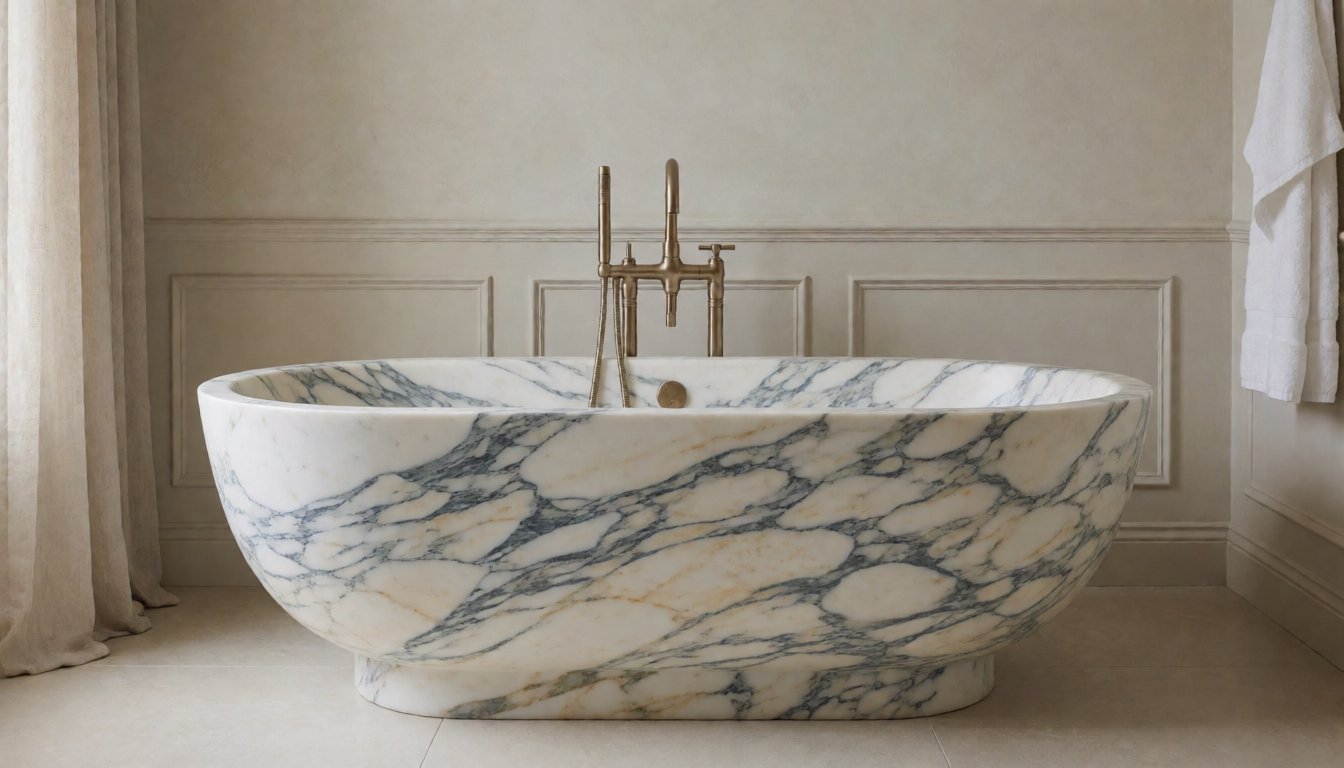
Determining the custom marble bathtub cost requires looking beyond a single sticker price to understand the raw material variables and manufacturing steps involved in stone fabrication. As an importer or B2B buyer, you know that a final retail mark-up of 3x is standard for dropshipping brands, but your landed cost as a wholesaler depends entirely on how the factory structures its quote. A typical small marble tub might sit between $40 and $80 at source depending on dimensions and stone grade, while large custom pieces often range from $120 to $350 per unit before shipping. This breakdown reveals exactly what drives the stone tub price so you can negotiate better terms with suppliers like Gladystone or avoid hidden fees that kill margins.
Raw Material Variability Defines Base Price Range
The single biggest factor in your budget is the specific stone type and its origin. Carrara marble from Italy remains the industry standard for high-end projects, but it carries a premium compared to domestic Chinese equivalents. For a buyer planning a 120cm x 80cm rectangular tub, Italian Carrara typically commands roughly $65–$95 per piece at factory gate. In contrast, local white marble or engineered quartz composites can drop the base cost significantly, sometimes below $45 for similar dimensions.
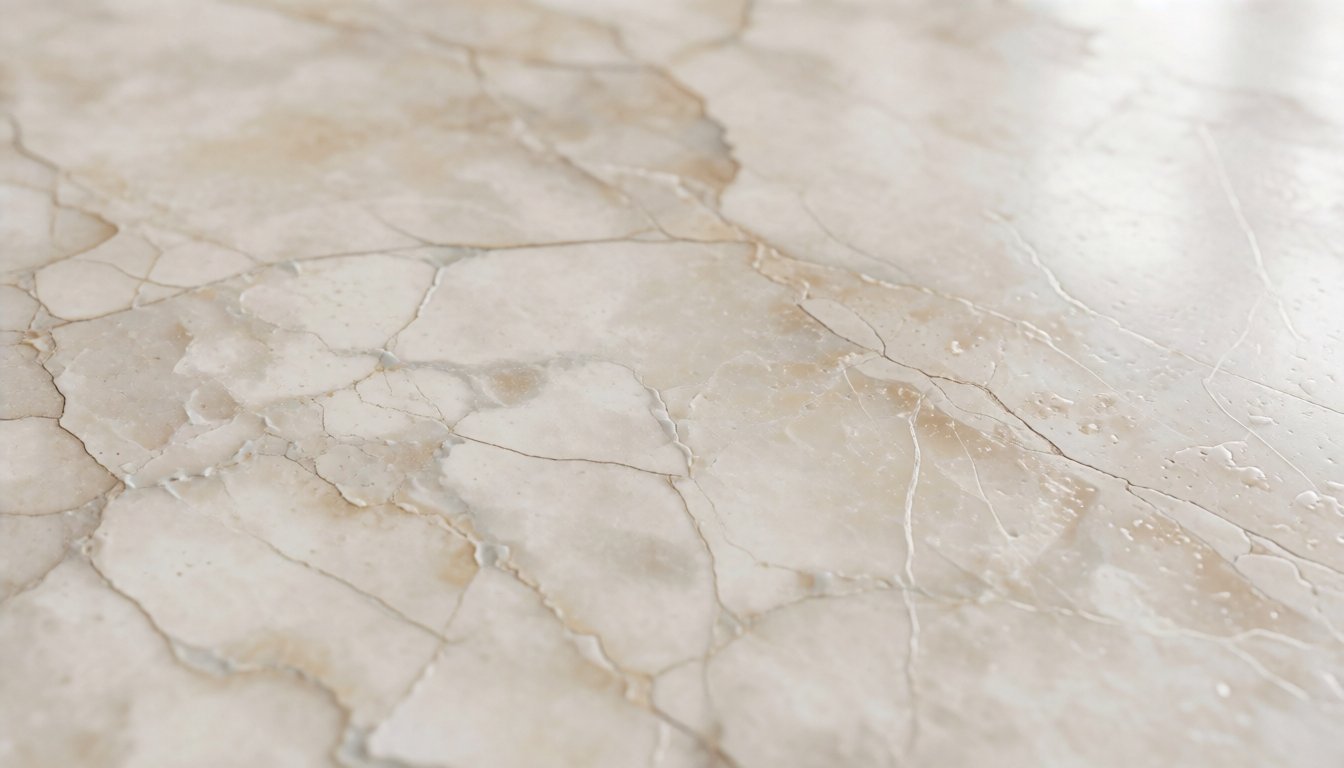
You must also account for stone rarity and veining patterns. A slab with dramatic blue-grey veins might double the price of a standard cloudy white finish because yield rates are lower; more material is wasted during cutting to isolate those specific designs. When you request a quote, ask explicitly about the quarry source. If a supplier claims to use “local” stone but quotes near Italian rates without explaining why, that number often includes hidden logistics costs or inflated markup. Always verify if the quoted price assumes standard defect tolerance (usually 15–20% wastage allowance) or if you are paying for premium flawless slabs which drastically reduce available inventory options.
Dimensions and Weight Impact Shipping Logistics Heavily
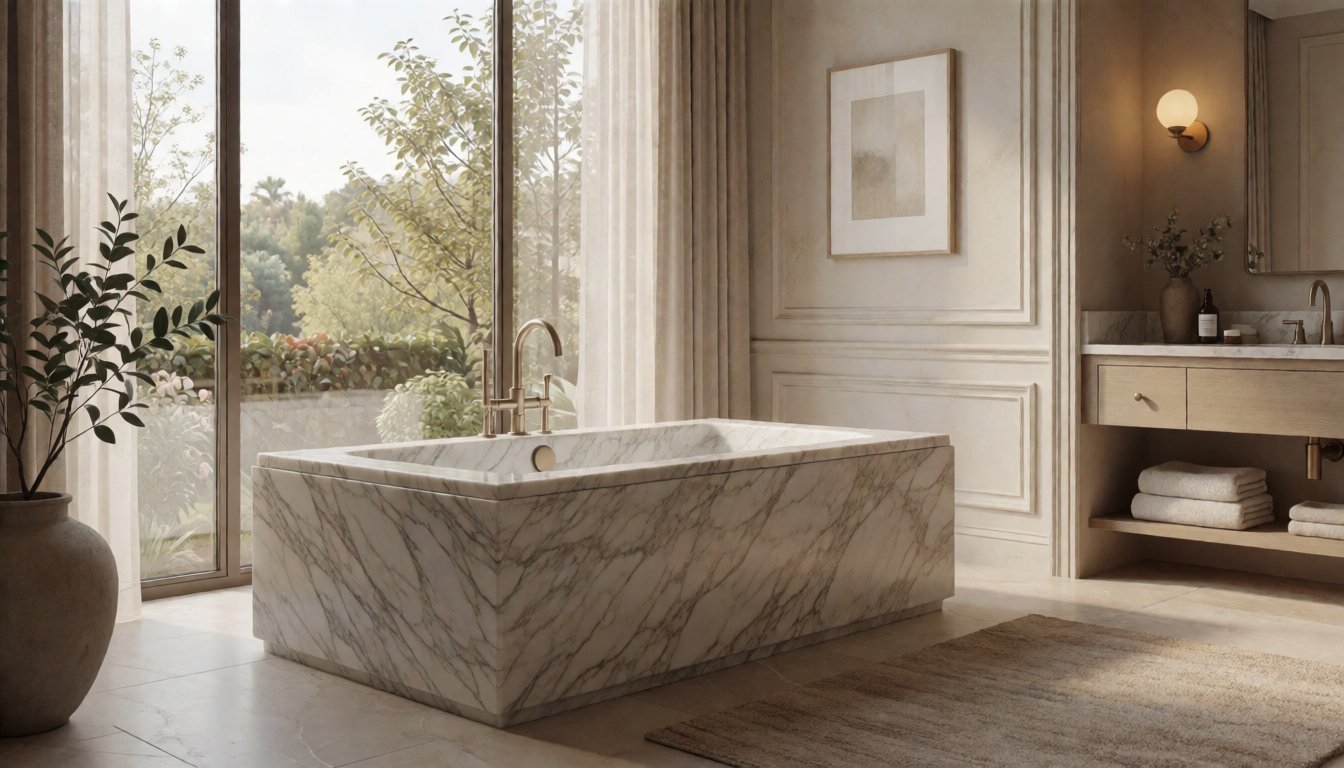
No matter how cheap a tub appears on paper, shipping logistics will quickly erode your margin if the dimensions exceed standard container capacities. A standard 120cm x 80cm soaking tub weighs roughly 45–60 kg depending on thickness (usually 3.5cm to 5cm). However, custom shapes like oval freestanding models with flared lips or built-in benches can push the weight closer to 90kg per unit once packaged in wooden crates.
Consider a standard shipping container load: you might fit only six large marble tubs due to their fragility and stacking requirements compared to thirty smaller sinks. The freight cost difference is massive—airlifting these items costs roughly $15–$25 per kg, while ocean LCL (Less than Container Load) rates hover around $0.30–$0.60 per cubic meter depending on the port destination from China. If you order a custom deep soaking tub measuring 140cm in length and requiring double-wall reinforcement for stability, that extra volume eats into your container space efficiency. Always ask the factory to calculate total volumetric weight including packaging materials like foam corners, wood planks, and strapping before committing to an order quantity below MOQ thresholds.
Customization Complexity Adds Direct Labor Hours
A generic oval shape is fast to mold or carve; a custom curved edge designed specifically for your brand’s aesthetic adds significant labor hours at the factory floor. For every unique design request—whether it involves hand-polished rims, integrated backrests, or specific drainage hole placements—you add roughly $15–$30 in direct manufacturing labor per unit on top of material costs. This is where many buyers miscalculate their bathtub factory price.
If you want a tub with asymmetrical legs or an internal shelf for storing bath toys, the CNC machinery setup time increases, and skilled artisans must spend extra hours finishing those irregular surfaces by hand to ensure water tightness and aesthetic perfection. Ask your supplier if they charge separate fees for complex carving versus standard templating. Some factories bundle these costs into a higher base price, while others list them as line-item charges in the Bill of Materials (BOM). For white-label partners producing 50+ units per month, negotiating to include minor customizations within a flat rate is often more profitable than paying per-hour labor fees for every slight variation requested by end customers.
Quality Tolerances and Finish Standards Dictate Final Yield
The level of finish you specify directly impacts the final unit cost through yield loss rates during polishing. A standard polished surface requires fewer passes on the diamond grinding wheels compared to a mirror-polished or honed texture with high-gloss depth. Expect a price premium of roughly $20–$40 per tub if you demand a glass-like reflective finish that hides minor grain inconsistencies better but takes longer to achieve without creating heat damage in sensitive marble layers.
Furthermore, the factory’s quality control (QC) standards determine how much defective stock gets scrapped versus passed as “seconds.” A reputable manufacturer like Gladystone will typically offer two tiers: Grade A with zero visible veins or cracks and mirror polish for luxury markets, and Commercial Grade allowing minor grain variations suitable for budget-conscious dropshippers. If you opt for lower tolerance to save costs on the stone tub price, be prepared for potential returns from US/EU retailers who expect perfection in natural stone products. Always request photos of actual samples before mass production runs rather than relying solely on digital renderings, as lighting conditions online often misrepresent color saturation and translucency inherent in real marble slabs.