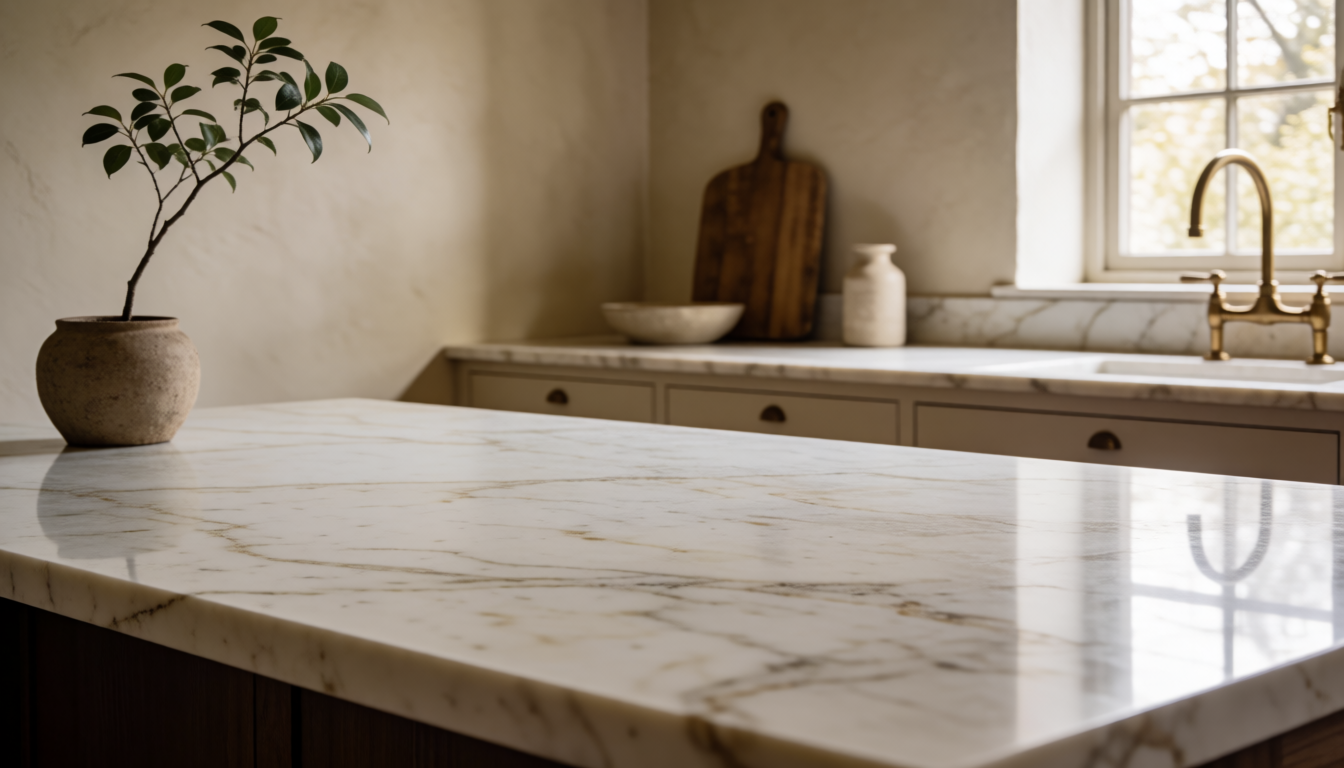
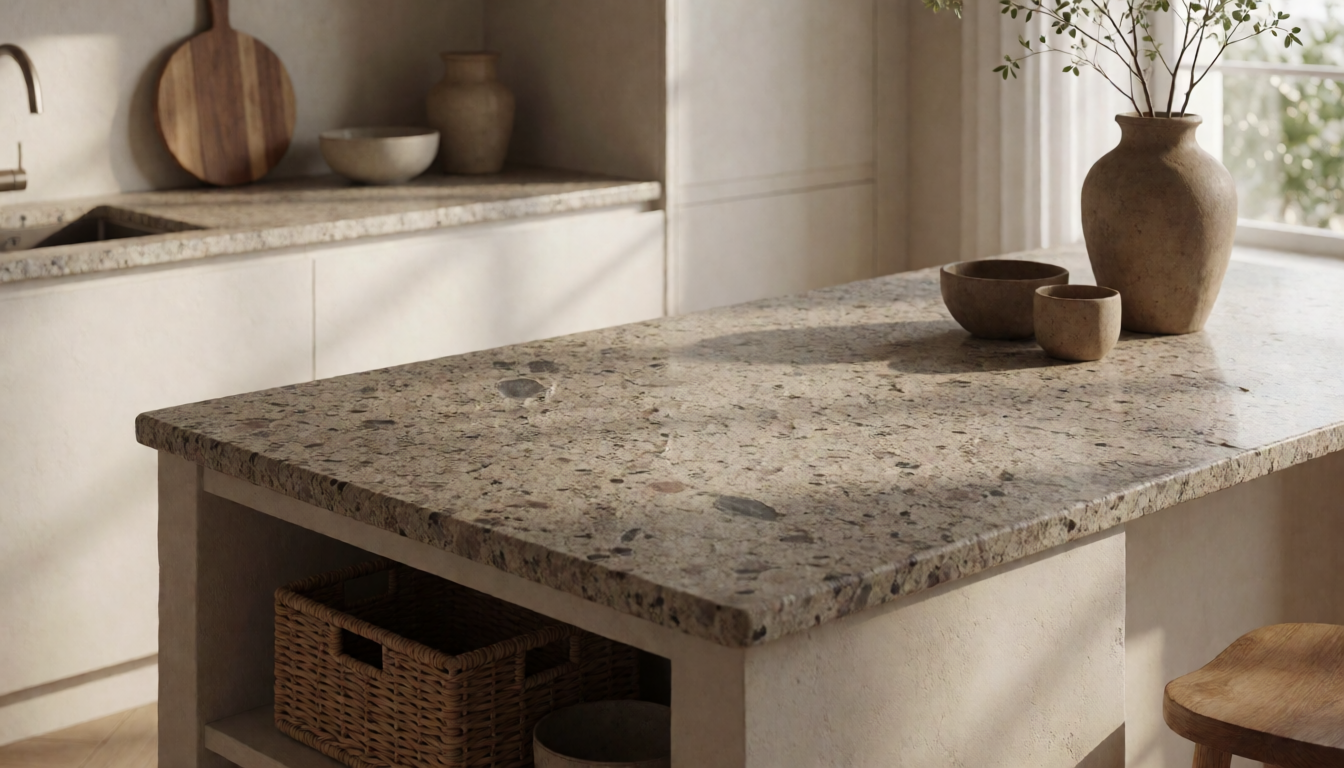
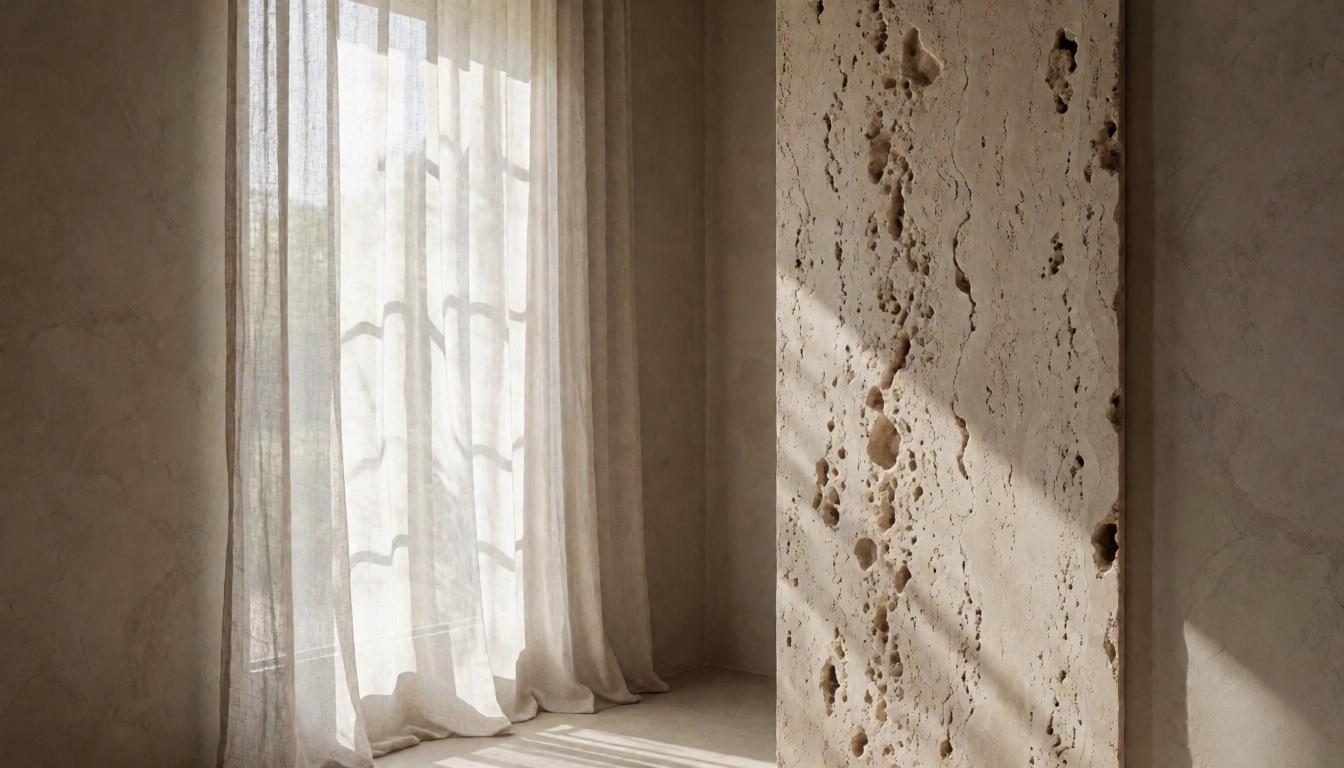
Natural stone maintenance depends on stone type: calcareous stones (marble, travertine, limestone, onyx) are acid-sensitive and require pH-neutral cleaners; siliceous stones (granite, quartzite, slate) are acid-resistant and more forgiving. Using the wrong cleaner—particularly acidic products like vinegar or lemon-based solutions—causes permanent etching on calcareous stone.
What Is the Difference Between Calcareous and Siliceous Stone?
| Property | Calcareous (Marble, Travertine, Limestone) | Siliceous (Granite, Quartzite, Slate) |
|---|---|---|
| Primary composition | Calcium carbonate | Silica (quartz) |
| Acid reaction | Etches immediately (permanent dull spot) | Resistant to most household acids |
| Sealing frequency | Every 12–18 months | Every 2–5 years |
| Best cleaner | pH-neutral stone cleaner only | pH-neutral preferred; mildly acidic acceptable |
| Common applications | Bathrooms, low-traffic floors, feature walls | Kitchens, high-traffic floors, outdoor |
Daily Stone Care Routine (2026 Protocol)
For both stone types, a simple daily routine prevents the vast majority of damage:
- Wipe with pH-neutral cleaner or warm water daily. Avoid multi-surface cleaners, which often contain acids or waxes that build up over time.
- Blot spills; do not wipe. Wiping spreads acidic spills (wine, coffee, citrus) across a larger area. Blotting lifts the liquid vertically and minimizes the etched area.
- Use coasters and trivets. Even granite benefits from coasters—condensation can leave mineral deposits on honed surfaces.
How Often Should Natural Stone Be Sealed?
Sealing frequency depends on stone type, finish, and location:
- Marble (honed, bathroom): Every 12–18 months
- Marble (polished, low traffic): Every 18–24 months
- Travertine (honed): Every 12–18 months
- Granite (all finishes): Every 3–5 years
- Quartzite: Every 2–3 years
The water-bead test: Sprinkle 3–4 drops of water on the stone. If the water beads up, the seal is intact. If the water darkens the stone and is absorbed within 5–10 minutes, reseal immediately.
How to Remove Stains from Natural Stone
The poultice method is the only reliable way to remove deep stains from natural stone:
- Mix an absorbent material (baking soda or diatomaceous earth) with a solvent appropriate to the stain type.
- Spread the paste over the stain, cover with plastic wrap, and tape the edges.
- Let it sit for 24–48 hours. As the poultice dries, it draws the stain out of the stone.
- Remove, rinse with clean water, and repeat if necessary.
| Stain Type | Solvent | Stone Type |
|---|---|---|
| Oil, grease | Baking soda + water (alkaline poultice) | All |
| Wine, coffee, organic | Hydrogen peroxide (3%) | Light stone only |
| Rust | Commercial rust remover (pH-neutral) | Granite/quartzite preferred |
| Ink | Denatured alcohol | Granite/quartzite |
Frequently Asked Questions
Can I use vinegar to clean granite?
While granite is acid-resistant, vinegar is still not recommended. Over time, acidic cleaners can degrade the sealant and dull the finish. pH-neutral cleaners are safer for all stone types.
What causes etching on marble, and can it be fixed?
Etching is a chemical reaction between acid and calcium carbonate. Light etching can be polished out with marble polishing powder. Deep etching requires professional restoration (honing and repolishing).
Is there a stone cleaner that works for all natural stone?
Yes. pH-neutral stone cleaners (available from stone suppliers and flooring retailers) are safe for all stone types. Avoid any product containing citric acid, vinegar, or “anti-bacterial” claims (these often contain acids).
Glady Stone: Premium Natural Stone with Care Specifications
Every slab and surface supplied by Glady Stone comes with material-specific care recommendations. Our technical team provides maintenance protocols, sealer recommendations, and care product specifications for every order—supporting wholesalers, architects, and installers in delivering long-term value to their clients.
Contact Glady Stone for trade pricing, care specifications, and sample materials at gladystone.com.