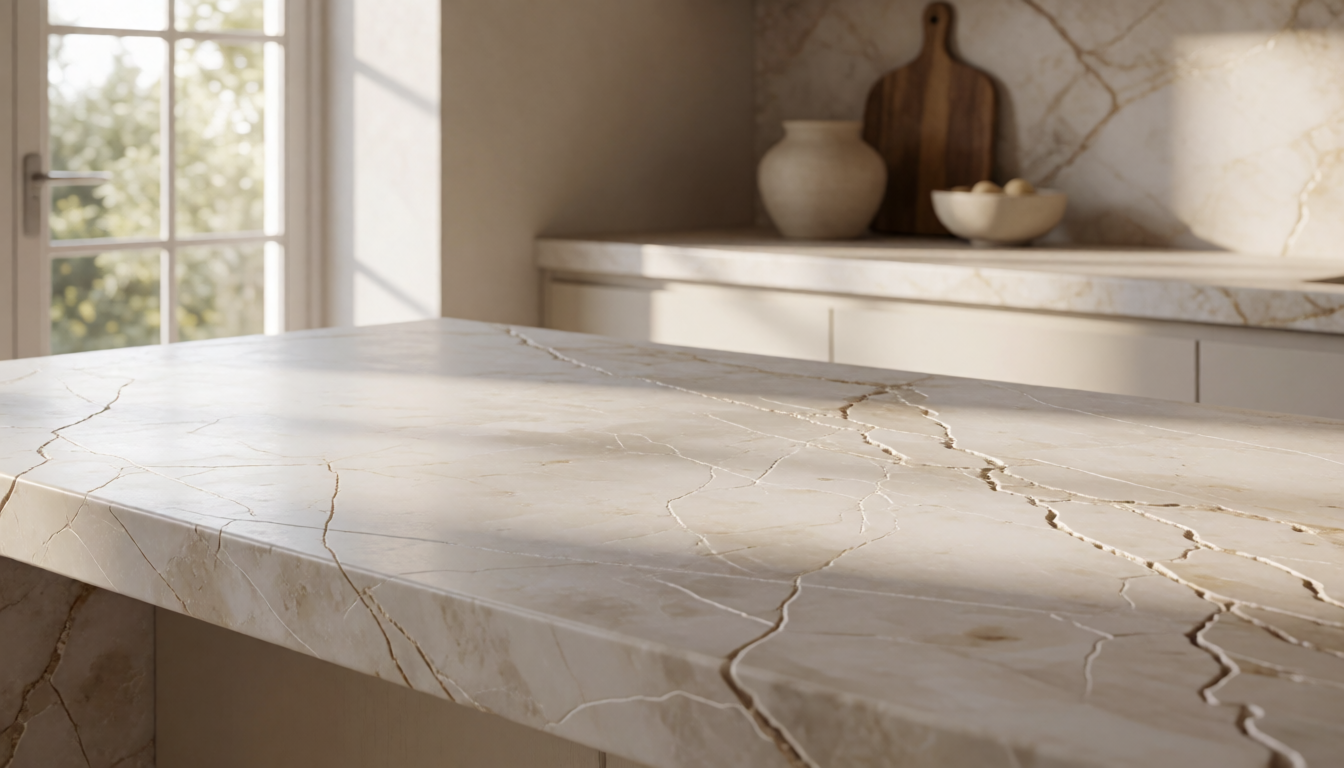
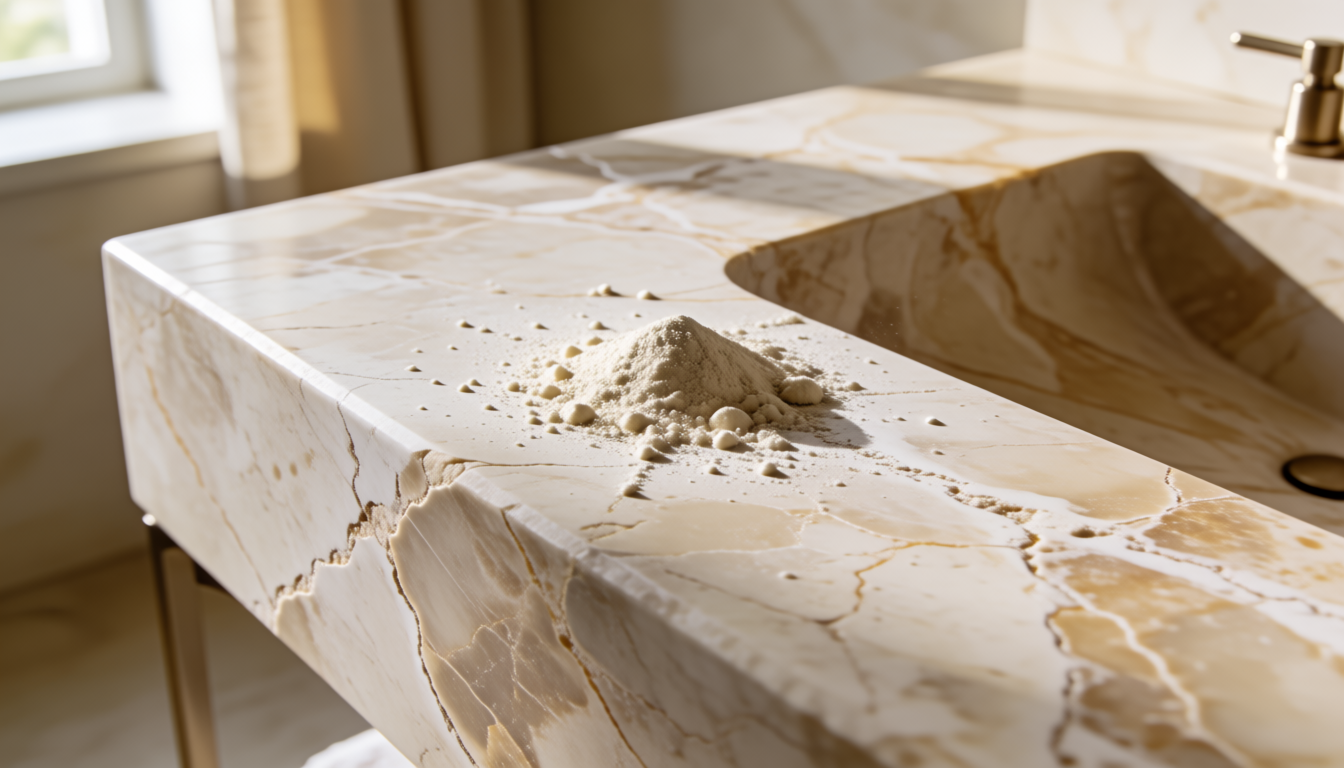
Etch marks are dull spots where acid has dissolved a thin layer of the marble’s surface—not stains. In 2026 the fix is mechanical: light etching is restored with polishing powder, while deep etching needs professional diamond honing and re-polishing.
What Is an Etch Mark on Marble?
An etch mark is physical surface damage, not a stain. When an acid—lemon, vinegar, wine, or low-pH bathroom cleaner—touches calcite-rich marble, it chemically dissolves a microscopic layer, leaving a rough, dull patch where the polish used to be. Etches are most visible on polished stone because they kill the mirror reflection; on honed or leathered finishes they barely show. This is why sealing alone never prevents etching: a sealer slows absorption but cannot block acid reacting with the stone itself.
Why Does Etching Happen in 2026 Homes?
- Acidic cleaners: Vinegar and citrus sprays remain the top cause of preventable etching.
- Open-plan living: More marble in kitchens and baths means more acid exposure points.
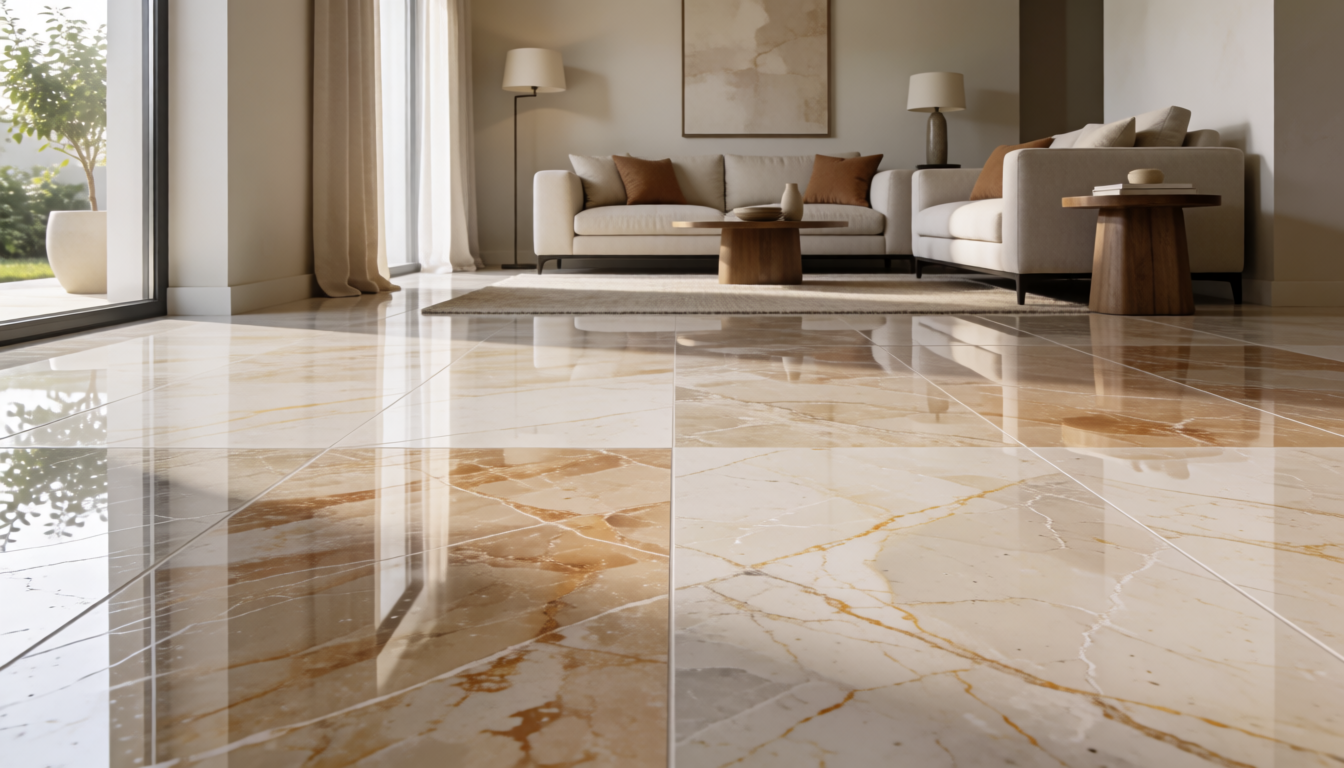
- Warm-stone trend: Honey and cream marbles are often polished, so etches show clearly.
- Daily habits: The 60-second rule—wipe spills instantly—remains the only real defense.
Etch repair depends entirely on severity, and the right method saves both money and stone. For light etching on polished marble, a homeowner can sprinkle an oxide-based polishing powder, mist with water, and rub in small circles with a white pad until the gloss returns—then rinse and dry. Deeper etches, widespread dull “traffic lanes,” or an uneven honed surface require a professional stone restorer using progressive diamond honing followed by mechanical polishing; DIY sanding usually makes the problem worse. The single most effective prevention is behavioral: keep a bottle of diluted pH-neutral stone cleaner within arm’s reach in both kitchen and bath, and blot—never wipe—acidic spills within 60 seconds. Sealers help against stains but not etches, so prompt response, not product, is the true defense. Reseal every 6–12 months and test with a water drop to stay ahead of damage.
How to Remove Etch Marks Step by Step
- Identify the damage: Drop water on the spot; if it darkens it is a stain, if it is dull and rough it is an etch.
- Light etch: Apply polishing powder with a soft white pad, work in circles, rinse and dry.
- Deep etch: Call a stone restoration specialist for diamond honing and re-polishing.
Etch Behavior by Finish: 2026 Comparison
| Finish | Etch Visibility | Seal Frequency | Repair Ease |
|---|---|---|---|
| Polished | High | Every 6–12 mo | Pro polish needed |
| Honed | Low | Every 6 mo | Self-camouflages |
| Leathered | Very low | Every 12 mo | Self-camouflages |
| Brushed | Very low | Every 12–18 mo | Easy |
Frequently Asked Questions
Can a sealer stop etching?
No. Sealers slow staining but cannot prevent acid from chemically dissolving the calcite surface. Only quick cleanup helps.
Will polishing powder fix a deep etch?
Rarely. Deep or widespread etching needs professional diamond honing and re-polishing to blend evenly.
How do I tell a stain from an etch?
An etch is dull and rough; a stain is a discolored dark spot. Test with a drop of water—darkening means stain.
Glady Stone: Sourcing Stone That Ages Well
Glady Stone supplies honed and leathered marble that camouflages etching, plus care guidance for wholesalers and installers protecting client investments.
Read the Glady Stone natural stone care guidance before specifying polished surfaces.